

Ho Chi Minh City – After work, Lam Tung drove straight to Ong Pagoda on Nguyen Trai Street, District 5, to attend the ritual of borrowing blessings during the Lantern Festival on the evening of February 23rd.
Upon arriving, Tung found the area around the temple already packed with people. Ong Temple, also known as Quan De Temple or Nghia An Assembly Hall, is where the Teochew and Hakka Chinese have maintained the centuries-old custom of "borrowing blessings."
After paying respects at all the shrines, people arrive at the temple and line up to receive blessings. Unlike many other temples, here pilgrims don't ask for blessings but "borrow" them, consisting of two green tangerines still attached to the branch, a red envelope, and cinnamon paper. Following the principle of "borrow and repay," the recipient will return the blessings in double the amount during the Lantern Festival the following year.
Tung, residing in District 8, is of Teochew Chinese descent and inherited this custom from his parents. For the past few years, he has been going to Ong Pagoda alone to "borrow blessings," hoping for smooth sailing in his work and good fortune.
"All customs are based on sincerity; even though I'm busy, I still make time to go to the temple to give thanks for last year's blessings," Tung said.
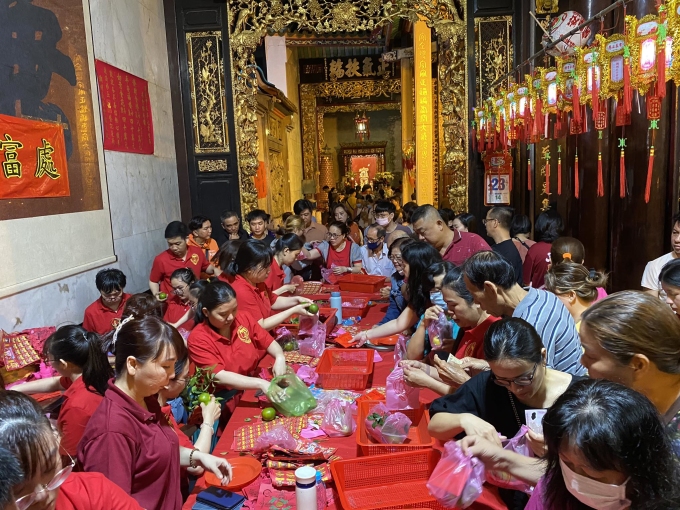
People come to seek blessings at Ong Pagoda, Nguyen Trai Street, District 5, Ho Chi Minh City, on the evening of February 23. Photo: Ngoc Ngan
The organizers of the "borrowing blessings" ritual at Ong Pagoda arranged for 20 volunteers to clean the tangerines, prevent the branches from breaking, and pack the blessings into bags for the recipients.
During the Lantern Festival, the temple is open from 6 am until the last visitor, with the busiest time being from 6 pm to 9 pm. A volunteer said that this year's Lantern Festival falls on a weekend, so the number of visitors has increased by 10-20% compared to last year.
Ms. Tran Ly, 34 years old, owner of a business in District 5, brought a two-kilogram bag of tangerines to offer as a blessing at Ong Pagoda on the evening of February 23rd.
Although she is Kinh (Vietnamese), Ly was introduced to the custom of "borrowing blessings" last year by a friend of Chinese descent, so she came to pray for good fortune. Despite the rule of repaying double, this year she brought a bag of tangerines worth four times that amount to repay the borrowed blessings. "I pray for a prosperous year of business," Ly said.
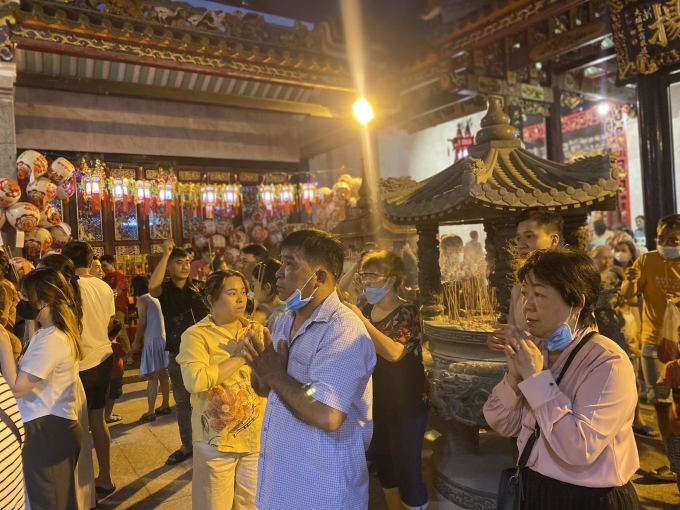
People perform rituals at Ong Pagoda, Nguyen Trai Street, District 5, Ho Chi Minh City, on the evening of February 23. Photo: Ngoc Ngan
According to Dr. Nguyen Thanh Phong, a lecturer in the Department of Cultural Studies at the University of Social Sciences and Humanities in Ho Chi Minh City, the custom of "borrowing blessings" originated from the desire of the Chinese community, who are primarily involved in trade and services, to borrow blessings for good fortune.
Along with the need to attract followers, this custom arose and has been maintained over time in many folk temples and shrines of the Chinese community. They believe that in addition to their own hard work, wealth is also bestowed by the deities in charge.
Specifically, these include numerous deities belonging to the group of gods of wealth such as Tài Bạch Tinh Quân, Phước Đức Chánh Thần, Triệu Công Minh, Quan Thánh Đế Quân, Nhất Kiến Phát Tài, etc.
Mr. Phong believes that behind the "borrowing blessings" ritual lies the concept of gratitude to the gods for bestowing blessings upon people, as well as the principle of fairness—the principle of give and take, receiving and giving—aiming for a prosperous and fulfilling life. This is what allows the humanistic values of these rituals to be maintained and preserved.
Furthermore, the Chinese community is concentrated in urban areas, primarily engaged in trade and services. The custom of borrowing blessings fulfills their aspirations for stable and prosperous business, dispelling anxieties about risks and uncertainties, as they believe in divine protection.
Spiritually, this custom serves to reassure them and instill confidence in them to strive for career advancement.
The Lantern Festival, originally a traditional festival for farmers , has over time evolved into an occasion for "seeking blessings" and "borrowing blessings" to pray for a prosperous and fulfilling year ahead.
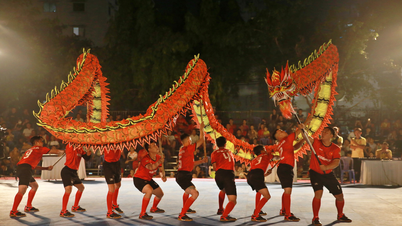
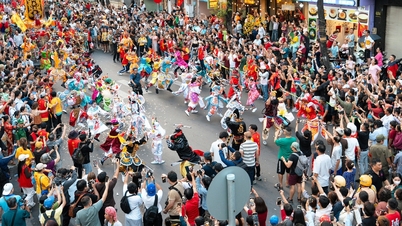
The Lantern Festival activities in Ho Chi Minh City are most vibrant on the 14th and 15th of the first lunar month each year, especially in residential communities in District 5 and throughout the Chinese community halls, with parades, artistic performances of singing and acting, lion and dragon dances, and more.
Ngoc Ngan
Source


![[Image] National Assembly discusses the implementation of the socio-economic development plan.](https://vphoto.vietnam.vn/thumb/1200x675/vietnam/resource/IMAGE/2026/04/20/1776696707422_ndo_br_img-20260420-185419-jpg.webp)
![[Photo] General Secretary and President To Lam meets with National Assembly delegates from ethnic minorities.](https://vphoto.vietnam.vn/thumb/1200x675/vietnam/resource/IMAGE/2026/04/20/1776696701056_a1-bnd-8331-3342-jpg.webp)

























































Comment (0)