


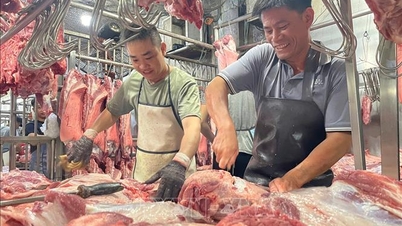
According to surveys at local markets, pork sales are currently very weak as many consumers are concerned about the disease and are switching to other food products.
Ms. Nguyen Chau Giang, a pork vendor at Quan Lau Market (Truong Thi Ward, Vinh City), said: “For the past two months, since the African swine fever outbreak, the demand for pork has dropped sharply. Normally, I sell about 80-100kg of pork per day, but for the past two months, I've only sold about 30-50kg, and some days I have very little to sell. I predict that if the outbreak continues to worsen, the pork market will not improve because consumers are hesitant.”

Sharing the same view, Ms. Nguyen Thi Quang, a resident of Quang Trung ward, said: “For a long time now, since the African swine fever outbreak, I have limited my consumption of pork in daily meals. During Tet (Lunar New Year), the demand for pork will be higher, but if the African swine fever continues to spread as it is now, I may switch to alternative foods. Or I may buy pork from reputable companies at clean food stores or supermarkets for Tet. Therefore, my main concern is the price, not the supply shortage.”
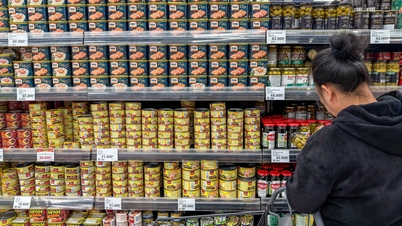
In contrast to the sluggish sales at local markets, supermarkets and organic food stores have seen a significant increase in pork sales compared to the previous two months. This is despite the fact that the prices of pork from these brands are 10,000-30,000 VND/kg higher than at local markets (depending on the type).

According to Mr. Tran An Khang, Director of GO!Vinh supermarket, at the end of the year and during the Lunar New Year holiday, the supermarket ensures a stable supply of pork for consumers at stable prices. This is because the supermarket's pork supply comes from farms and businesses with closed production processes and good disease prevention mechanisms, so the herd size remains stable and the supply is consistent. On the other hand, with 28 supermarkets in the chain nationwide, we can easily regulate the supply to balance demand.
Currently, live pig prices in Nghe An remain low, fluctuating between 48,000 and 51,000 VND/kg. This price is about 3,000-4,000 VND/kg lower than the cost of raising pigs. At this price, farmers are incurring losses. This indicates weak purchasing power and an abundant supply of live pigs; if the supply were limited, pig prices would have already risen by now.

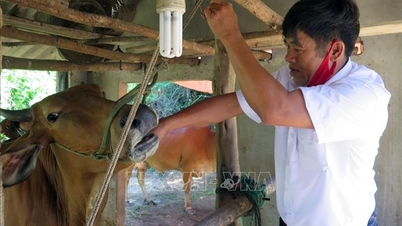
By raising pigs in a closed-loop system and ensuring disease safety, Mr. Pham Viet Duc's thousands of pigs (Thanh Huong commune, Thanh Chuong district) have remained safe from disease. While in previous years, the end of the year was the peak time for pork consumption, this year Mr. Duc is concerned that purchasing power will be weak and pork prices will not increase as they did in previous years.
“ Weak purchasing power, difficulty selling pork, and low prices. With only one month left until the Lunar New Year, and African swine fever still developing in a complex manner, purchasing power is not expected to increase dramatically, and prices, if they do rise, will only be slight, unlikely to increase significantly,” Mr. Duc said.

Processing facilities producing Vietnamese sausages, ham, pork patties, pork head cheese, pork floss, dried pork, and cured pork, all made with pork, are experiencing a slump in Tet (Lunar New Year) orders this year. Ms. Dinh Thi Anh, owner of a sausage and ham processing facility, said: "In previous years, by the 11th lunar month, I would have received orders for sausages totaling hundreds of kilograms, and I had to order pork from many suppliers to have enough ingredients. But this year, I've only received a few wholesale orders. Certainly, the volume of orders will decrease this year, and naturally, the consumption of pork will also decline sharply."
Currently, Nghe An province has a total pig population of 1 million. Even if disease outbreaks occur, there will be no shortage of pork. Regarding prices, demand increases towards the end of the year, so pork prices may rise, but not significantly.

The reason is that consumer demand will be lower this year due to people's lower incomes. At the same time, market-leading companies must balance supply and demand to avoid high prices, which would lead consumers to reduce spending or switch to other food products.
Source





![[Photo] General Secretary and President To Lam and the President of the Philippines hold talks.](https://vphoto.vietnam.vn/thumb/1200x675/vietnam/resource/IMAGE/2026/06/01/1780286997787_anh-man-hinh-2026-06-01-luc-11-09-43.png)






















































































Comment (0)