Kidney transplant for a patient with kidney failure in Thanh Hoa - Photo: Provided by the hospital.
According to statistics from the Ministry of Health , Vietnam has over 10 million people with chronic kidney disease, including approximately 26,000 with end-stage chronic kidney failure. The incidence of kidney disease in Vietnam is high compared to other countries in the Asia-Pacific region, posing a significant health and economic burden on patients' families and society as a whole.
Shocked to learn that a young woman in her twenties has been diagnosed with terminal illness.
Frequent nausea, insomnia, and loss of appetite were symptoms that a 22-year-old man from Hanoi attributed to work stress and digestive problems, so he didn't seek medical attention.
When his condition worsened, with constant nausea and extreme fatigue, he decided to go to the hospital for a general check-up. After blood tests, urine tests, ultrasound, and kidney function tests, the doctor informed him that he had end-stage chronic kidney failure, leaving him with only two options: regular dialysis or a kidney transplant.
The young man was stunned, never imagining that at the age of 20 he would contract a disease commonly seen in the elderly or those with long-standing underlying health conditions.
Thanh Hoa Provincial General Hospital has successfully performed a kidney transplant on a 22-year-old patient with end-stage chronic kidney failure, using a kidney donated by his mother. Prior to the transplant, the patient had been hospitalized multiple times in critical condition, suffering from severe respiratory failure, acute pulmonary edema, and refractory hypertension, requiring mechanical ventilation and emergency dialysis.
After the recovery phase, patients must maintain dialysis three times a week. Long-term dependence on dialysis leads to health deterioration, severely impacting quality of life and ability to work.
Xuyen A General Hospital also reported that last year it performed three kidney transplants for patients aged 25-28, a heartbreaking testament to the reality of kidney failure "lurking" among young people.
Dr. Nghiem Trung Dung - Director of the Nephrology and Dialysis Center at Bach Mai Hospital - stated that many young people are currently receiving inpatient treatment at the center, with most of them being hospitalized due to chronic glomerulonephritis. Some very young people have already developed end-stage kidney disease.
Previously, kidney disease only appeared in people aged 60 and over, but now the rate of people aged 18-30 suffering from the disease is increasing, accounting for 20-30%.
The International Society of Nephrology states that chronic kidney disease is a serious health problem, the third fastest-growing cause of death globally and the only non-communicable disease with a continuously increasing age-adjusted mortality rate. By 2040, chronic kidney disease is projected to be the fifth leading cause of death globally.



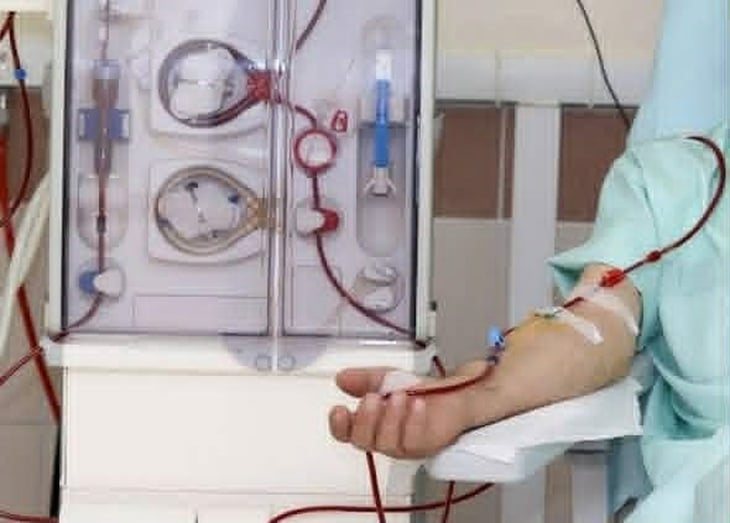
A dialysis session - Photo: HA TUONG
Reducing late-night hours can help avoid long-term effects.
Dr. Dung stated that the kidneys are vital organs for filtering blood and eliminating toxins, but many people are unknowingly harming them. Common habits that silently harm the kidneys and should be avoided include: Drinking too little water; frequently holding back urine, which causes urine retention, increases the risk of urinary tract infections, and affects kidney function.
Eating too much salt: Salt puts a strain on the kidneys, contributing to high blood pressure.
Painkiller abuse: Frequent use of painkillers (especially NSAIDs) can cause kidney damage if left unchecked.
Self-medication with drugs and dietary supplements of unknown origin: Some "kidney tonics," traditional Vietnamese medicines, and herbal remedies may contain substances that are toxic to the kidneys without the user's knowledge.
Drinking lots of sugary drinks and carbonated beverages increases the risk of kidney stones and metabolic disorders.
Neglecting regular health checkups: Early-stage kidney disease often has no obvious symptoms, so it's easy to overlook if it's not examined and tested.
Dr. Dinh Minh Tri (Ho Chi Minh City University of Medicine and Pharmacy Hospital) warns that, looking back at the reality: staying up late is not the cause, but it silently paves the way for more dangerous disorders if it continues for a long time.
When you stay up late, your body not only lacks sleep but also experiences a disruption in its entire circadian rhythm, leading to increased stress, elevated cortisol levels, and fluctuating blood pressure. But what many people overlook is that staying up late is almost always accompanied by nighttime snacking.
A packet of instant noodles, a cup of bubble tea, a few pastries... these may seem insignificant, but they can cause blood sugar levels to spike and blood lipids to rise. When this happens daily, the kidneys have to constantly filter a much larger amount of "excess waste" than normal. And it is this prolonged overload that silently weakens the kidneys over time.
Dr. Tri emphasized that kidney failure is not caused by a single or immediate action, but develops silently over many years due to a prolonged series of metabolic disorders. Diabetes, hypertension, and high cholesterol are the leading causes of chronic kidney failure.



Notably, staying up late, eating late at night, and lack of exercise are the three factors that increase the risk of these diseases. Even more dangerous is that in the early stages, kidney failure shows almost no obvious signs. You may feel perfectly normal until it's detected, at which point kidney function has already significantly decreased.
Dr. Tri advises that if we can't go to bed early, we should reduce risks in this way: maintain a consistent sleep-wake schedule each day; avoid nighttime snacking, especially on sweets and fast-digesting carbohydrates; drink enough water during the day, not concentrating it in the evening; exercise regularly to stabilize blood sugar and blood pressure; and have regular health checkups to detect kidney problems early.
Note the signs of illness.
Young people who show signs of glomerulonephritis, such as unexplained high blood pressure, sudden foamy urine, blood in the urine, or sudden edema, should seek immediate medical attention for screening.
When suffering from glomerulonephritis, patients need to strictly adhere to the treatment plan prescribed by a nephrologist because the disease progresses very rapidly. Neglecting treatment for just 1-2 months can lead to loss of kidney function and progression to end-stage renal failure.
Source: https://tuoitre.vn/nguoi-tre-bi-benh-than-vi-sao-2026050408571592.htm