

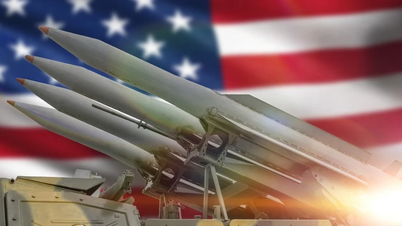
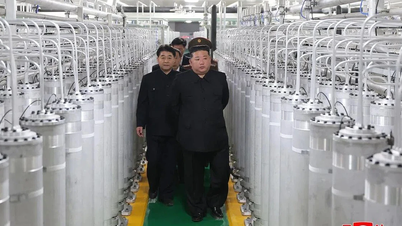
In a report published on June 17, the Stockholm International Peace Research Institute (SIPRI) stated that the world is facing an increased threat from nuclear weapons, as possessing nations accelerate the modernization of their arsenals and international tensions escalate.
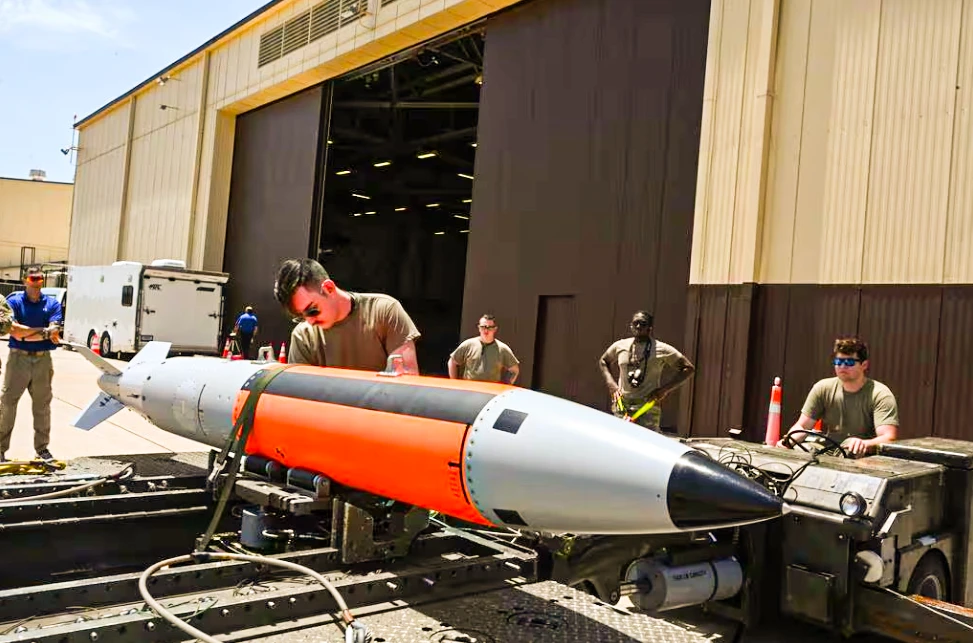
Spending has skyrocketed.
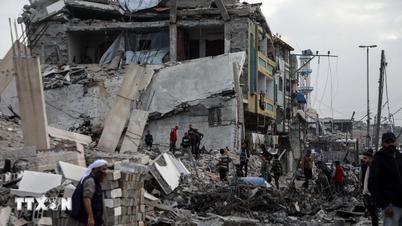
SIPRI notes that diplomatic efforts to control nuclear weapons are facing significant obstacles due to international tensions surrounding the conflicts in Ukraine and Gaza. Wilfred Wan, Director of SIPRI's Weapons of Mass Destruction Research Program, emphasized: "Since the Cold War, we have never seen nuclear weapons play such a prominent role in international relations as they do today."
According to a SIPRI report, as of January 2023, the world possessed approximately 12,121 nuclear warheads, with about 9,585 in military stockpiles ready for deployment. Of these, approximately 2,100 were placed on a "highly operational readiness" status for ballistic missiles. SIPRI Director Dan Smith expressed deep concern about the increasing number of nuclear warheads, warning that this worrying trend could accelerate in the coming years.
A report by the International Campaign to Abolish Nuclear Weapons (ICAN), released on June 17, also indicated that the nine nuclear-armed nations in the world spent a combined $91 billion on their nuclear arsenals in 2023, an increase of $10.8 billion from the previous year. The United States accounted for 80% of that increase with $51.5 billion; China with $11.8 billion; followed by Russia with $8.3 billion. Meanwhile, the UK's spending increased significantly for the second consecutive year, rising 17% to $8.1 billion. Spending for 2023 by nuclear-armed nations – including France, India, Israel, Pakistan, and North Korea – has increased by more than 33% compared to the $68.2 billion spent in 2018, when ICAN first began collecting this data. The report indicates that since then, nuclear-armed nations have spent a total of approximately $387 billion on lethal weapons.
Potential risks
Researchers also emphasized that the conflicts in Ukraine and Gaza increase international tensions, jeopardize global security, hinder nuclear arms control efforts, and raise the risk of nuclear war. ICAN Director Melissa Parke criticized the “billions of dollars wasted on nuclear weapons as a deeply flawed and unacceptable misallocation of public funds.” Parke stressed that this amount is more than what the World Food Programme estimates is needed to end world hunger.

Against this alarming backdrop, SIPRI researchers are urging world leaders to carefully assess the potential risks posed by nuclear weapons and their negative impact on global security. SIPRI also urges countries to strengthen diplomatic efforts through dialogue and international cooperation to address common security challenges, mitigate the risks of nuclear weapons, and enhance global security.
VIET ANH
Source: https://www.sggp.org.vn/nguy-co-tu-bong-ma-hat-nhan-post745085.html














































![[Video] Sunset at Lap An Lagoon – Where the sun sets over the fishing nets](https://vphoto.vietnam.vn/thumb/1200x675/vietnam/resource/IMAGE/2026/05/31/1780192137701_beach-landscape-sea-water-nature-grass-745871-pxhere-com.jpeg)





























Comment (0)