

Acne on the chest is often caused by genetics, improper use of cosmetics, poor diet, or stress.
Acne commonly affects areas of the skin such as the face and chest, where there is a high density of sebaceous glands. Acne on the chest can spread to other parts of the body, often appearing as whiteheads, blackheads, pimples, or cysts. Below are the causes of this condition.
Hereditary
Acne can be hereditary. A 2006 study by the University of Nantes, France, on over 200 people aged 25 and older, showed that those with family members who had adult acne (such as parents or siblings) were more likely to develop the condition.
Wearing non-breathable clothing
People who wear tight, non-breathable clothing during strenuous exercise or in hot weather may develop acne. This is because it creates a favorable environment for bacteria to thrive, leading to clogged pores. Athletes or gym-goers are more prone to chest acne than the average person.
You should wear dry, loose-fitting clothes and shower or change clothes immediately after sweating. The purpose is to allow air circulation between your skin and clothing, preventing bacteria from accumulating in your pores.
Using cosmetics incorrectly
Some beauty and skincare products can irritate the skin or clog pores on the chest. Specifically, perfumes, makeup, and scented or oil-based products such as lotions and moisturizers.
Besides products designed for skin, scented laundry detergents can also cause acne. Families should consider buying detergents that are free of dyes and fragrances.
To reduce acne and prevent its appearance, everyone can use body wash containing salicylic acid and benzoyl peroxide. Avoid scrubbing the body as this can easily damage the skin.
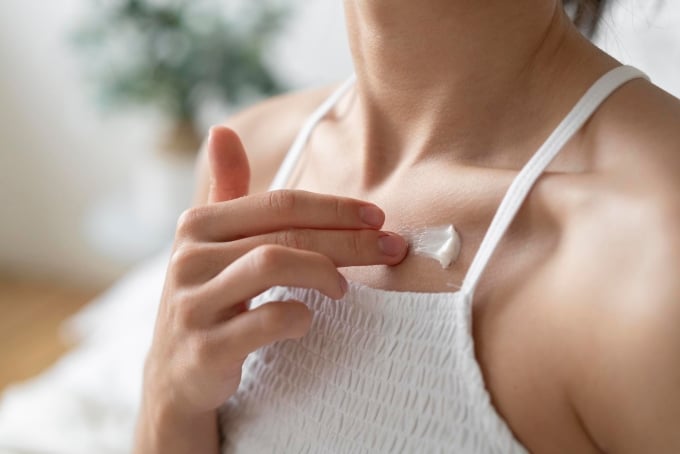
Using the wrong moisturizer on your skin can cause acne. (Image: Freepik)
Hormones
Puberty, pregnancy, or the use of birth control pills lead to hormonal changes. This process can cause hormone glands to produce more oil, resulting in acne.
When stressed, the body releases androgen hormones that can stimulate hair follicles and oil glands, leading to increased inflammation and acne development.
Diet
Some studies suggest that eating chocolate and carbohydrate-rich foods can worsen acne. People with acne should limit these foods. Dehydration can also trigger oil production in the body, leading to clogged pores.
Dietary changes can reduce acne breakouts on the chest and other areas. In addition to reducing sugar and dairy intake, everyone should increase their daily water intake to keep their skin hydrated.
Huyen My (According to Verywell Health, Mayo Clinic, Real Simple )
| Readers can submit their dermatological questions here for the doctor to answer. |
Source link

![[Photo] General Secretary and President To Lam meets with National Assembly delegates from ethnic minorities.](https://vphoto.vietnam.vn/thumb/1200x675/vietnam/resource/IMAGE/2026/04/20/1776696701056_a1-bnd-8331-3342-jpg.webp)
![[Image] National Assembly discusses the implementation of the socio-economic development plan.](https://vphoto.vietnam.vn/thumb/1200x675/vietnam/resource/IMAGE/2026/04/20/1776696707422_ndo_br_img-20260420-185419-jpg.webp)





































































































Comment (0)