

According to "Urban Architecture and Landscape of Saigon-Chợ Lớn Past and Present ," in the late 17th century, there was a small chapel belonging to the Chợ Quán parish. In 1723, a Jesuit priest came to preach and converted the chapel into a church. In 1882, the church was rebuilt and inaugurated in 1896 with a capacity of approximately 1,500 people. The church grounds cover a total area of about 1.6 hectares, planted with many trees.

Inside the Cho Quan church - a sketch by architect Bui Hoang Bao.
Similar to Notre Dame Cathedral, Cho Quan Church was built in a Romanesque-Gothic style. The Romanesque elements are evident in the thick walls and the facade with long, narrow semicircular arched windows. The floor plan faces west-east (*), with an oval-shaped apse. The Gothic elements are shown in the wavy dome and stained-glass windows. The stepped entrance arches gradually decrease in size, creating a perspective effect and emphasizing the entrance.
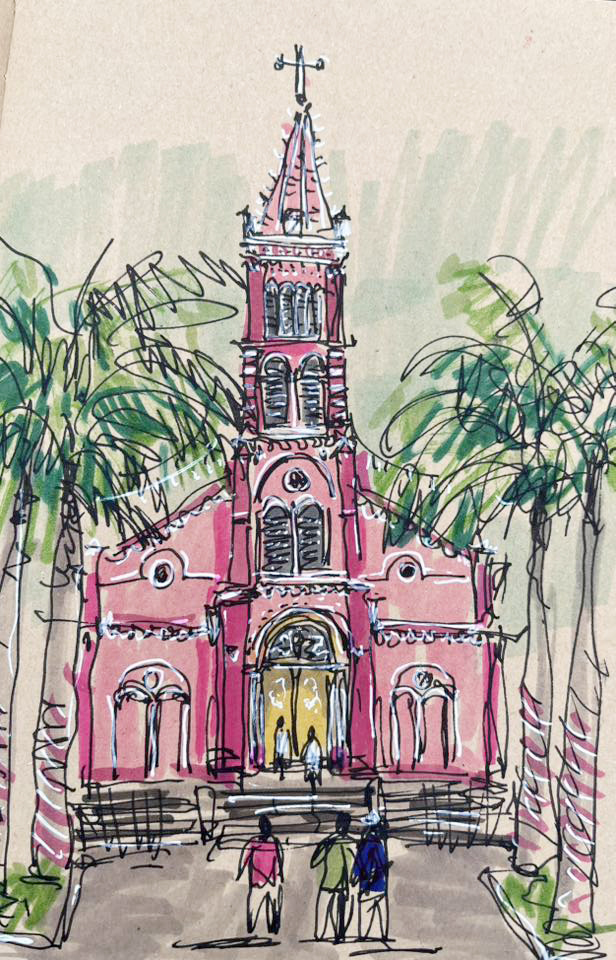
Sketches by artist Tran Binh Minh
The interior of the cathedral is high-ceilinged and filled with numerous statues of various sizes. Near the sanctuary lies the tomb of Father Nicolas Hamm, the builder of Cho Quan Church.
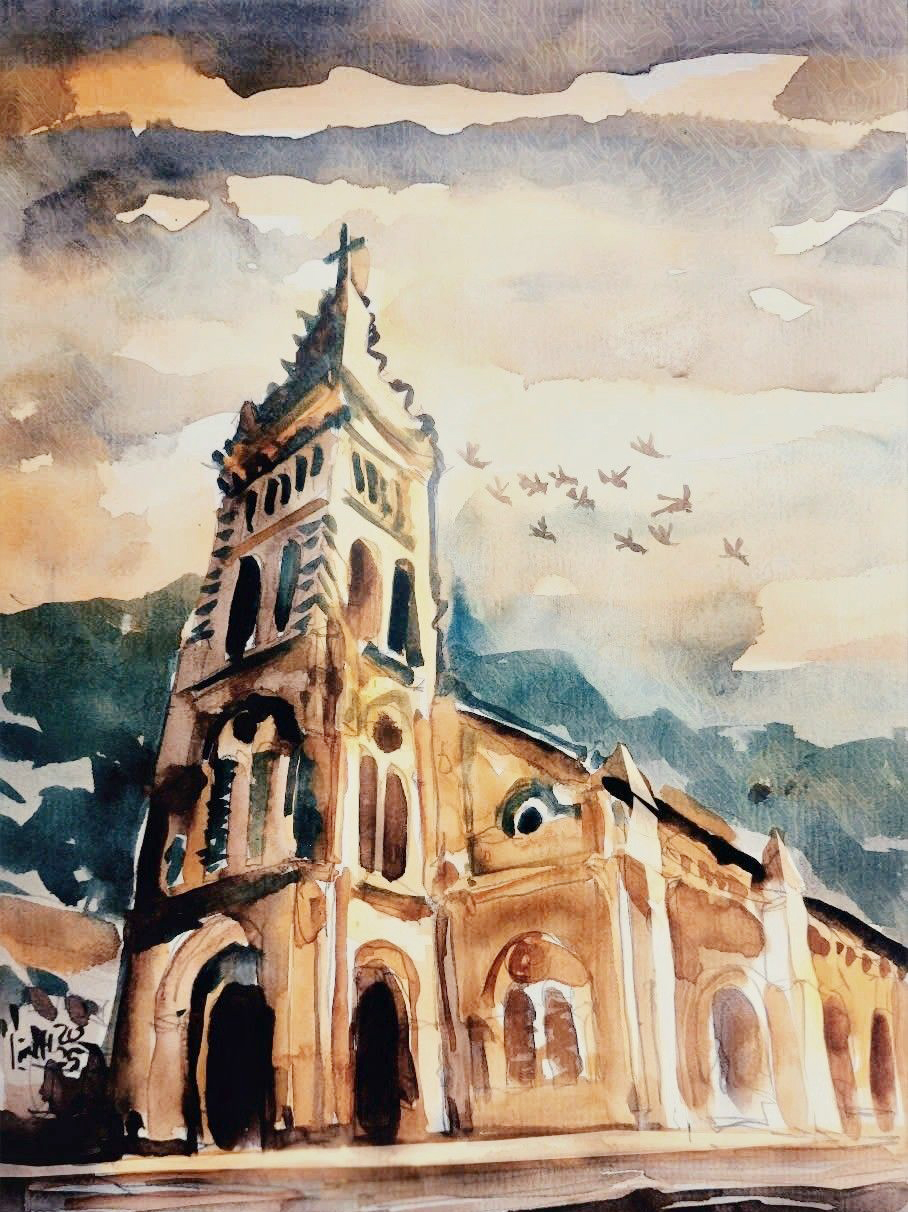
Sketches by architect Linh Hoang
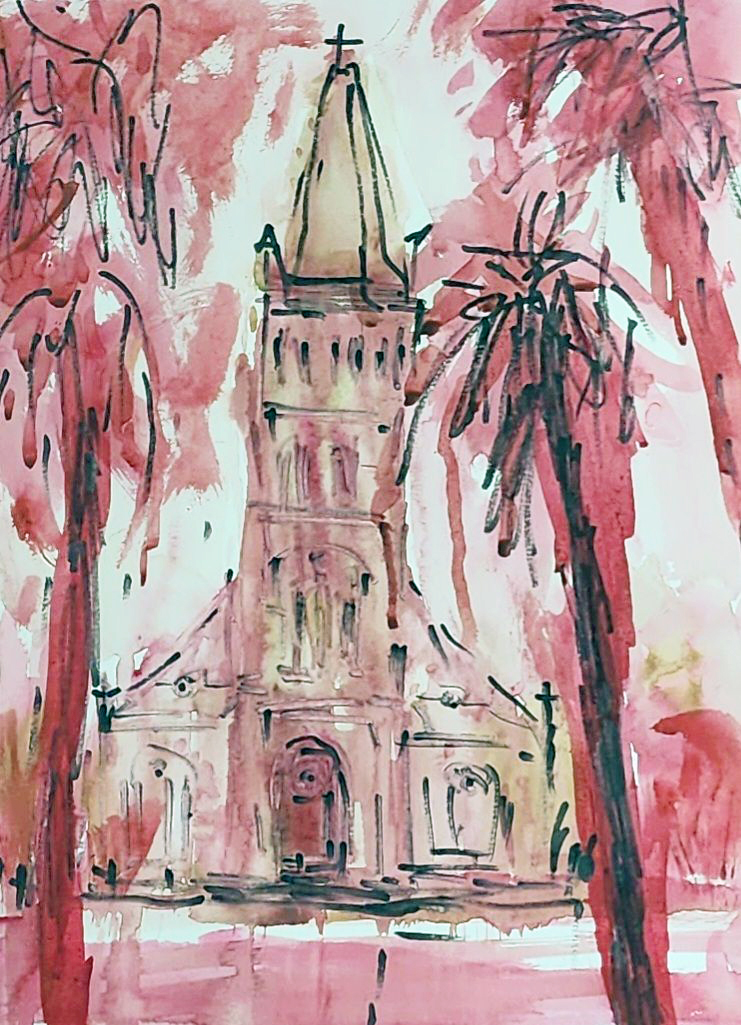
Sketch by architect Phung The Huy
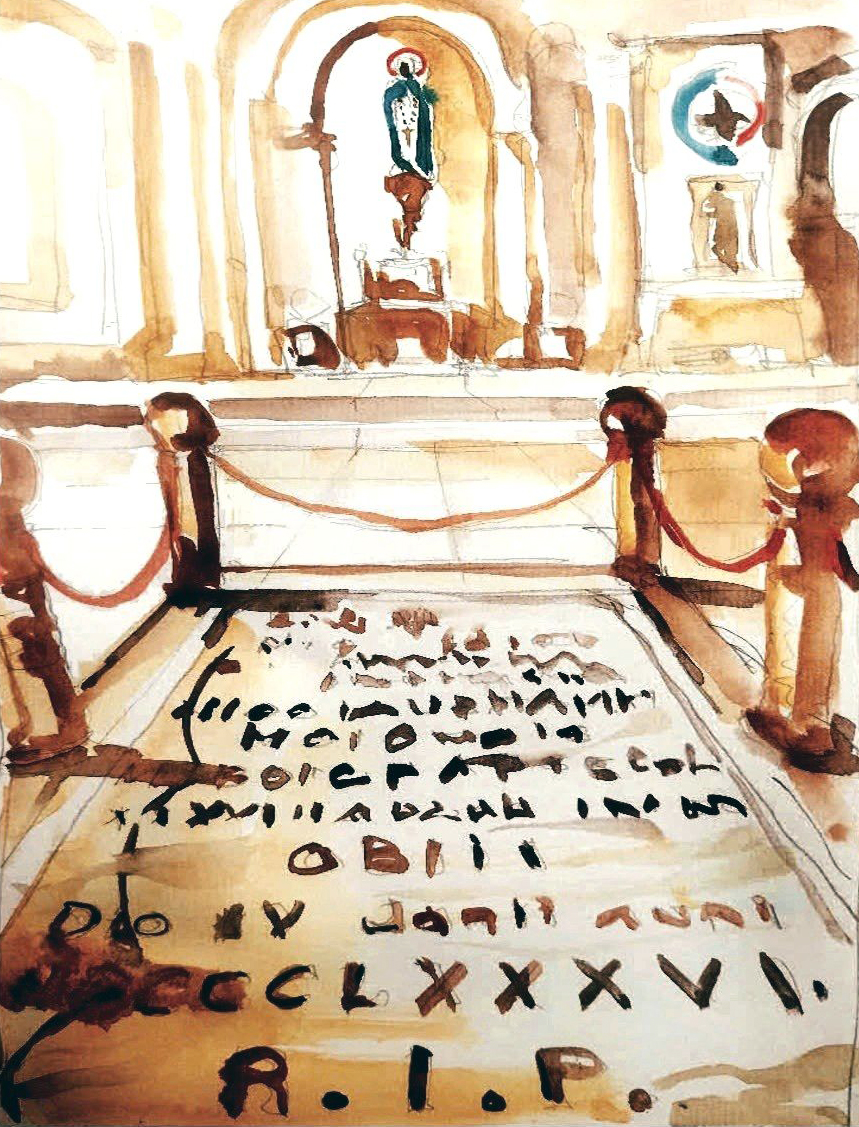
The resting place of the church builder, Father Nicolas Hamn, right within the church grounds - a sketch by architect Linh Hoang.
The church has a three-tiered bell tower with five bells cast in France. Two are rung on weekdays, two on holidays, and the fifth is for announcing deaths. On special occasions, all five bells are rung simultaneously. It is said that five elephants were used to pull the bells up the tower.
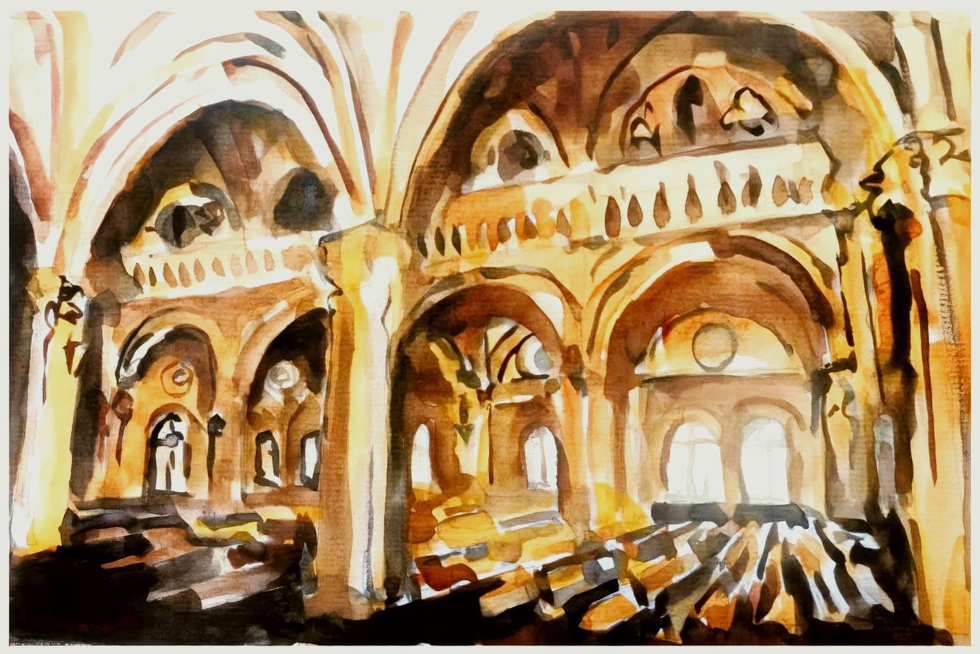
The cathedral has a capacity of approximately 1500 people - sketch by architect Linh Hoang.
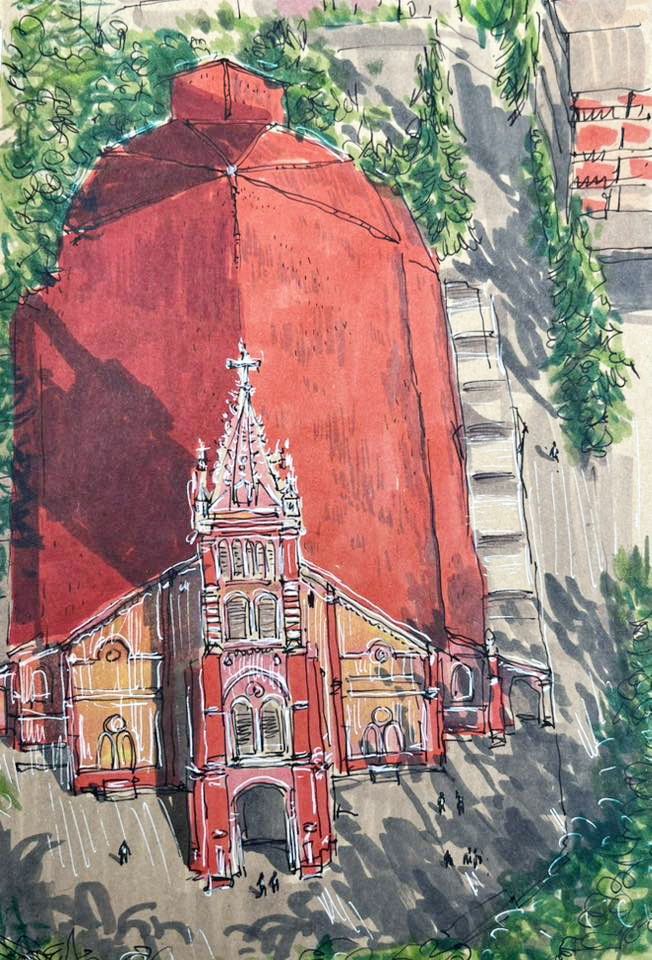
Sketches by artist Tran Binh Minh
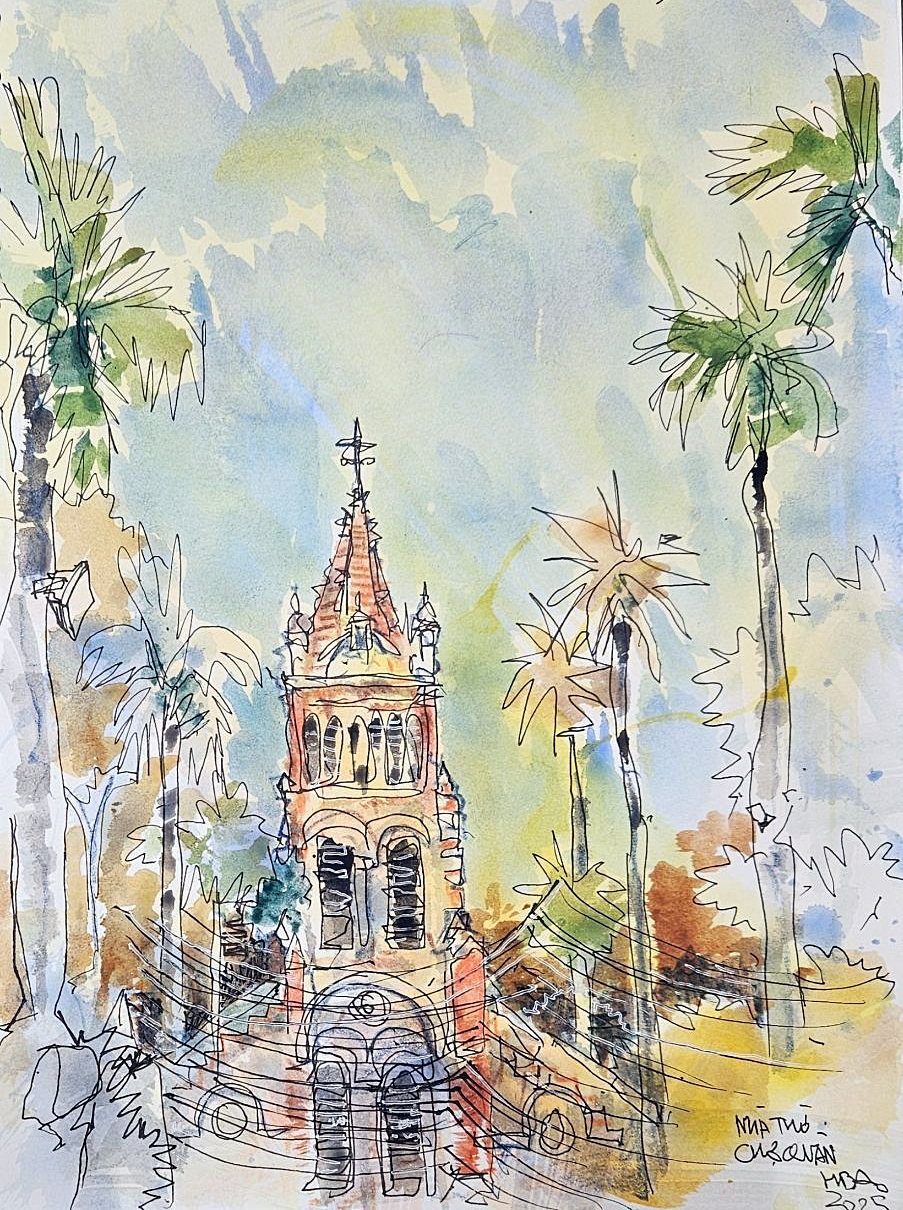
Sketch by architect Bui Hoang Bao
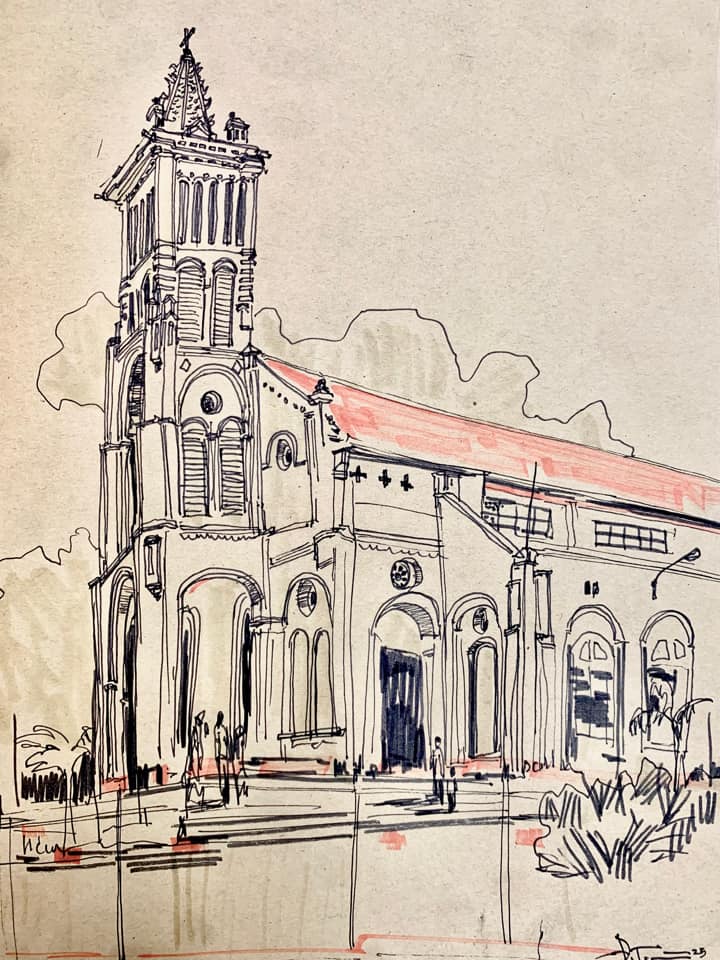
Sketches by artist Nguyen Duc Toan
(*): The entrance is on the west, the sanctuary on the east. This layout is intended so that worshippers, when attending services, will always be facing the Holy Land of Jerusalem (located east of Europe).
Source: https://thanhnien.vn/nha-tho-xua-nhat-tphcm-185250329203502696.htm
![[Photo] Standing Committee member of the Party Central Committee Tran Cam Tu presents the Decision appointing the Secretary of the Party Committee of the Ho Chi Minh National Academy of Politics.](/_next/image?url=https%3A%2F%2Fvphoto.vietnam.vn%2Fthumb%2F1200x675%2Fvietnam%2Fresource%2FIMAGE%2F2026%2F02%2F02%2F1770039902160_le-cong-bo-bt-hvctqg-11-7880-jpg.webp&w=3840&q=75)


Comment (0)