

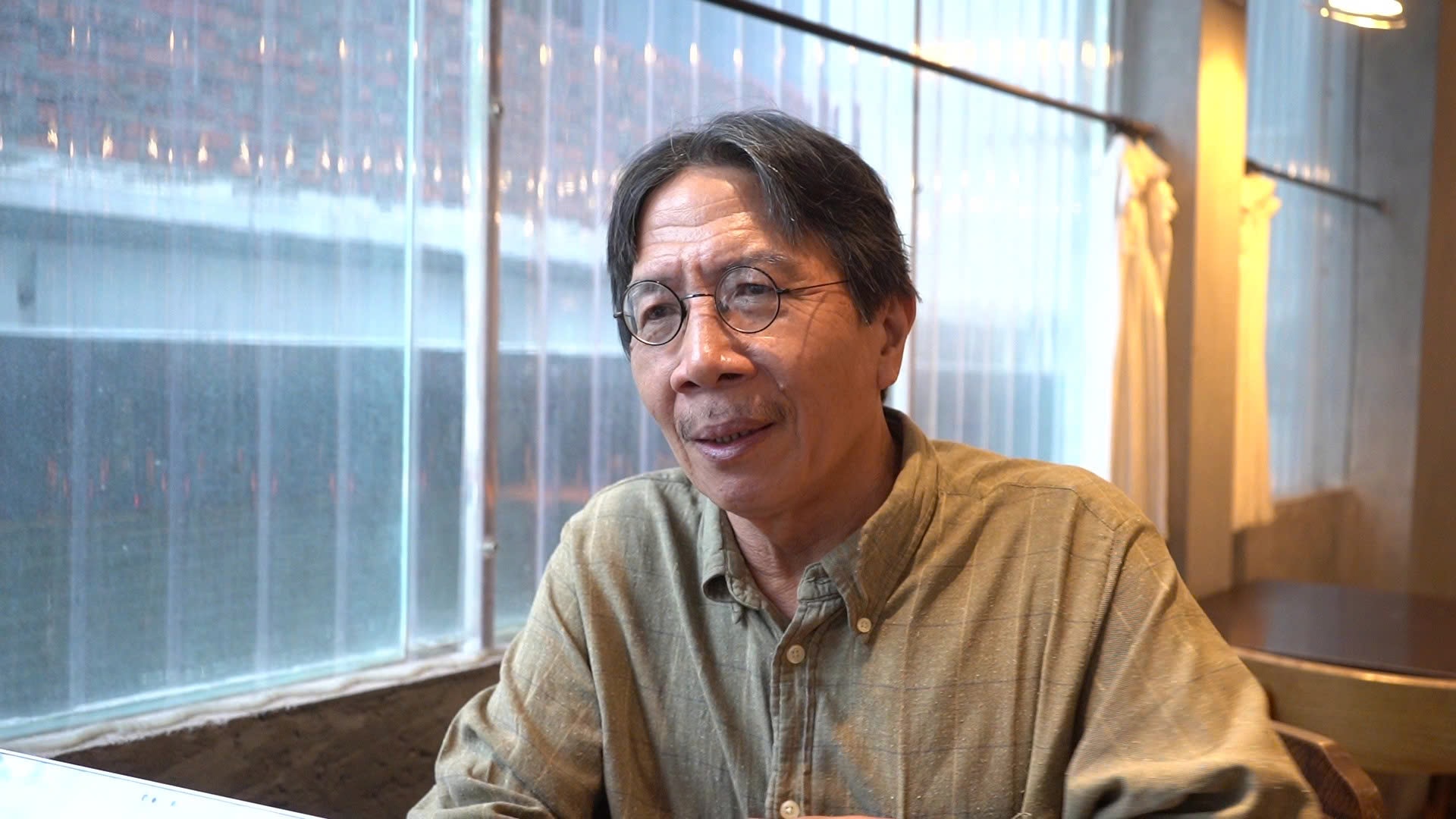
- Mr. Nguyen Ngoc Tien, whenever people think of Tet in Hanoi , they often remember its meticulousness, attention to detail, and sophistication. If you were to give the most general description of the Tet feast of the people of Hanoi in the past, what would you say?
Writer Nguyen Ngoc Tien : The most distinctive feature of the traditional Hanoi Tet feast is the complete convergence of products from all three regions, what the ancients called: "half mountain, half water." On that feast, the essence of the mountainous region is evident in bamboo shoots, wood ear mushrooms, shiitake mushrooms, and banana leaves used to wrap banh chung (traditional Vietnamese rice cakes). The abundance of the plains is present in white rice, fragrant sticky rice, chicken, pork, and various vegetables. And the essence of the coastal region is indispensable with a bowl of pure fish sauce or the luxurious shark fin dish.
In the minds of Hanoians, a Tet feast must include a variety of products from both the forest and the sea to be considered complete, reflecting their reverence for their ancestors and their wish for a prosperous and abundant new year.
-People often hear the saying that a traditional Hanoi Tet feast usually consists of four bowls and six plates when talking about the standard of a lavish feast in Hanoi. Could you explain this structure in more detail?
-That's right, 4 plus 6 equals 10, representing completeness and fulfillment. Over time, the four bowls have changed, but they basically consist of: bamboo shoot soup, vermicelli soup, meatball soup, and especially mushroom soup - an elegant soup with broth simmered from bones, garnished with onions and small, pretty meatballs, unique to Hanoi. The six plates usually include: fried spring rolls (a dish that appeared in the early 20th century and is very characteristic of Hanoi), a plate of pork sausage, cinnamon-flavored pork sausage, chicken, green sticky rice cake, a plate of stir-fried pork sausage, and gac fruit sticky rice. When imported vegetables from temperate regions appear, a plate of kohlrabi with the red color of carrots stir-fried with beef may be added, and sometimes the plate of local pork sausage is replaced with an elaborate plate of marbled meatballs with five colors representing the five elements of the universe. Depending on each household's circumstances, the menu may change; some replace vermicelli soup with shark fin soup.
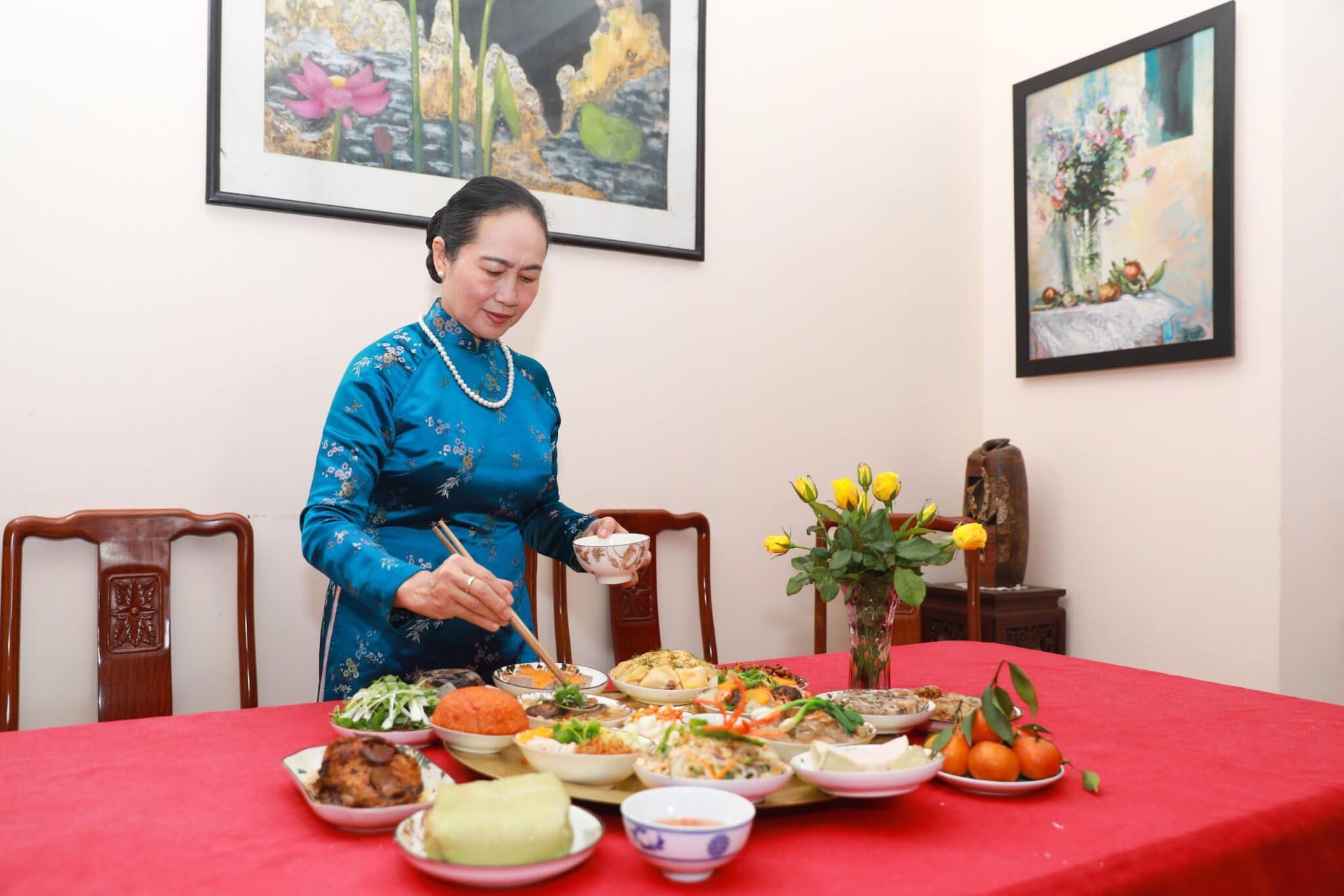
It's worth noting that in the traditional Tet feast, there's a dish considered the centerpiece: braised black carp from West Lake, with pieces of sugarcane lining the bottom of the pot. It has to be black carp from West Lake, not grass carp or any other fish. The sugarcane lining the bottom prevents the fish from burning and adds a very distinctive, sweet flavor. This is a unique feature that I think very few young people in Hanoi still know about.
In particular, there's mushroom soup, a signature dish found only on the Tet feast table in Hanoi, nowhere else. Bone broth and meat broth are simmered, then shiitake mushrooms are added along with onions and meatballs. Generally, the dishes in the traditional Tet feast are elaborately prepared to achieve a refined level of sophistication. Similarly, fried spring rolls (nem rán) are a dish that only appeared on the Tet feast table in Hanoi from the beginning of the 20th century. Other regions do not have spring rolls on their Tet feast table; this is a clear difference.
- Regarding culinary philosophy, could you elaborate on the concept of yin-yang balance in the Tet feast?
-In the traditional Vietnamese belief, food is not just about eating but also about medicine, and eating is a cause of illness, so it must be done correctly. For example, sticky rice cakes (bánh chưng) can cause bloating if eaten in large quantities, so eating them with pickled onions is both delicious and easy to digest. Ingredients include those with a cooling (yin) nature, often aquatic creatures or green vegetables, and those with a warming (yang) nature, often livestock and poultry meat, and red root vegetables. Therefore, the dishes on the feast table must be compatible to avoid causing illness and harmonious to avoid conflicting flavors. And eating is not just about the mouth, but also the eyes, so the feast table should be colorful to increase its appeal, and the smell of the dishes should be carefully chosen to avoid any adverse reactions.
The dishes are prepared with meticulous care and presented aesthetically. Typically, the ceremonial tray is gilded with gold leaf, adorned with cloud, mountain, or sometimes river motifs, and in the center is the character "Fu" (meaning good fortune). Chopsticks are also gilded, and the bowls are thin, white porcelain bowls decorated with patterns. These items are only used during Tet (Lunar New Year) and are put away after the holiday. While there isn't a strict rule for arranging the dishes, they must be visually appealing, with a bowl of fish sauce placed in the center. This central placement makes it convenient for everyone to dip their food in, thus symbolizing shared enjoyment.
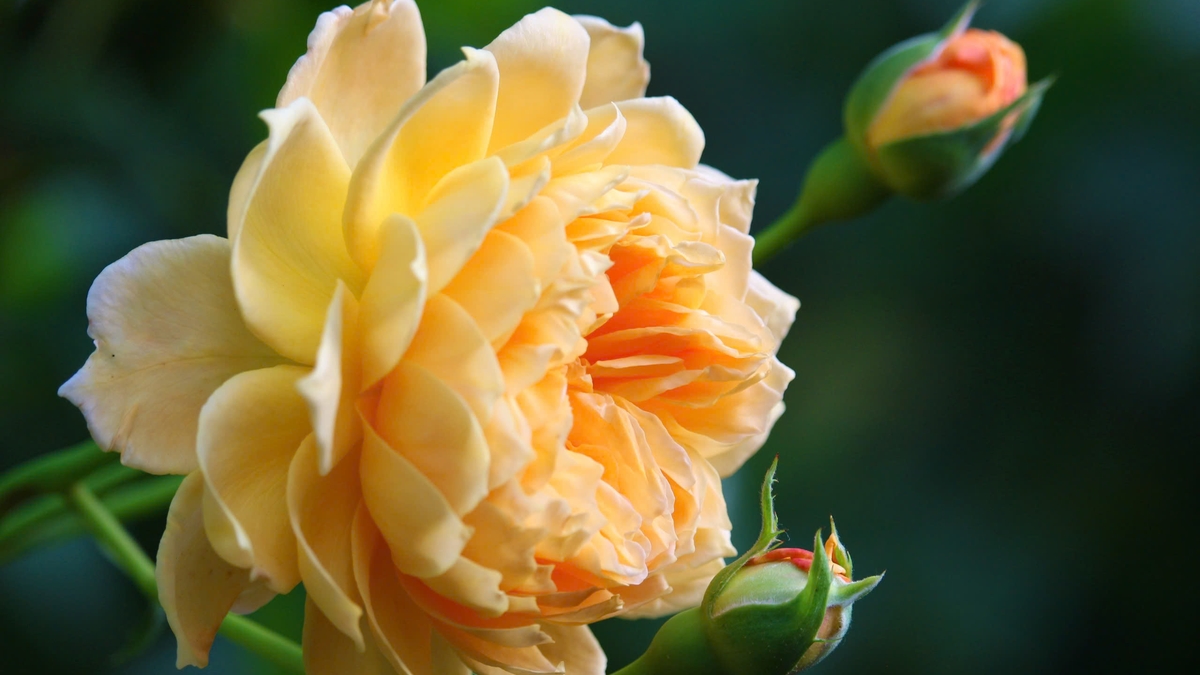
Besides the food offerings, Hanoians also place great importance on symbolism. The altar during Tet (Lunar New Year) must have a branch of begonia flowers, a flower symbolizing warmth and reunion. The sticky rice cakes (bánh chưng) offered are wrapped in lush green leaves and tied with red string. Why? Because, according to Eastern values, red is the color of good fortune and the color of rebirth. The drink offered during Tet is medicinal wine because Tet is spring, the weather is cold, and the warming effect of the wine helps prevent colds. It's drunk to add a rosy glow to the face and make conversations during meals more cheerful, not to get excessively drunk. However, the wine offered must be white wine, representing the purity of descendants towards their ancestors.
- In today's fast-paced life, the traditional Tet feast in Hanoi has changed considerably . Some people are concerned about its decline; how do you view this issue?
-I wouldn't call it a decline, but rather a change that adapts to social and economic conditions. Nowadays, many families choose to prepare simpler feasts or order ready-made meals because they are too busy. Some rare ingredients like shark fin are also no longer common. In fact, celebrating Tet today is different from before. Strict taboos and elaborate rituals are decreasing. For example, in the past, people avoided sweeping the first day of Tet for fear of losing good fortune, but now that belief is more relaxed. However, I believe that the essence of Hanoi culture remains. Many families still maintain old traditions, passing down to their children and grandchildren how to cook a bowl of mushroom soup or how to braise a pot of black carp. Culture is a flow; it may change in form, but the spirit of family reunion during Tet, filial piety, and respect for ancestors remain intact.
-Do you have any advice for young people who want to rediscover the traditional beauty of Tet in Hanoi ?
-You don't necessarily have to replicate exactly what your ancestors did if circumstances don't allow it. But understand the meaning behind a bowl of soup or a plate of sticky rice. Understand the three most important feasts: the New Year's Eve feast (on the 30th of Tet), the first day of the New Year's Day offering (inviting ancestors to share the first meal of the year), and the burning of offerings (bidding farewell to the ancestors). When we understand the value of reunion and gratitude, the Tet feast of each family will naturally become sacred and meaningful.
Thank you for this interesting conversation!
Source: https://hanoimoi.vn/nha-van-nguyen-ngoc-tien-mam-co-tet-ha-noi-la-su-giao-thoa-cua-ban-son-ban-thuy-va-triet-ly-am-duong-734149.html

![[Image] Vietnam's diverse colors on its journey of innovation](https://vphoto.vietnam.vn/thumb/1200x675/vietnam/resource/IMAGE/2026/03/09/1773041390813_anh-man-hinh-2026-03-09-luc-14-28-17.png)
![[Image] 20 islands in the Spratly Islands special administrative region hold early elections.](https://vphoto.vietnam.vn/thumb/1200x675/vietnam/resource/IMAGE/2026/03/08/1772949669607_img-20260308-112026-90-jpg.webp)




![[Photo] Diary of the photojournalism contest “Vietnam on the journey of innovation”](https://vphoto.vietnam.vn/thumb/1200x675/vietnam/resource/IMAGE/2026/03/09/1773041117692_anh-man-hinh-2026-03-09-luc-14-24-45.png)




























Comment (0)