Durian prices remain high.
Currently, durian prices in major growing regions across the country are relatively stable and remain at good levels due to scarce supply as the harvest in the Central Highlands has ended. For high-quality durian, the price of RI6 durian in the Central Highlands is fluctuating between 145,000 and 165,000 VND/kg, while high-quality Thai durian can reach up to 175,000 VND/kg. Other regions report prices for all types of high-quality durian at 145,000 - 170,000 VND/kg. Meanwhile, the price of durian purchased in bulk is about half that, reaching 60,000 - 75,000 VND/kg.
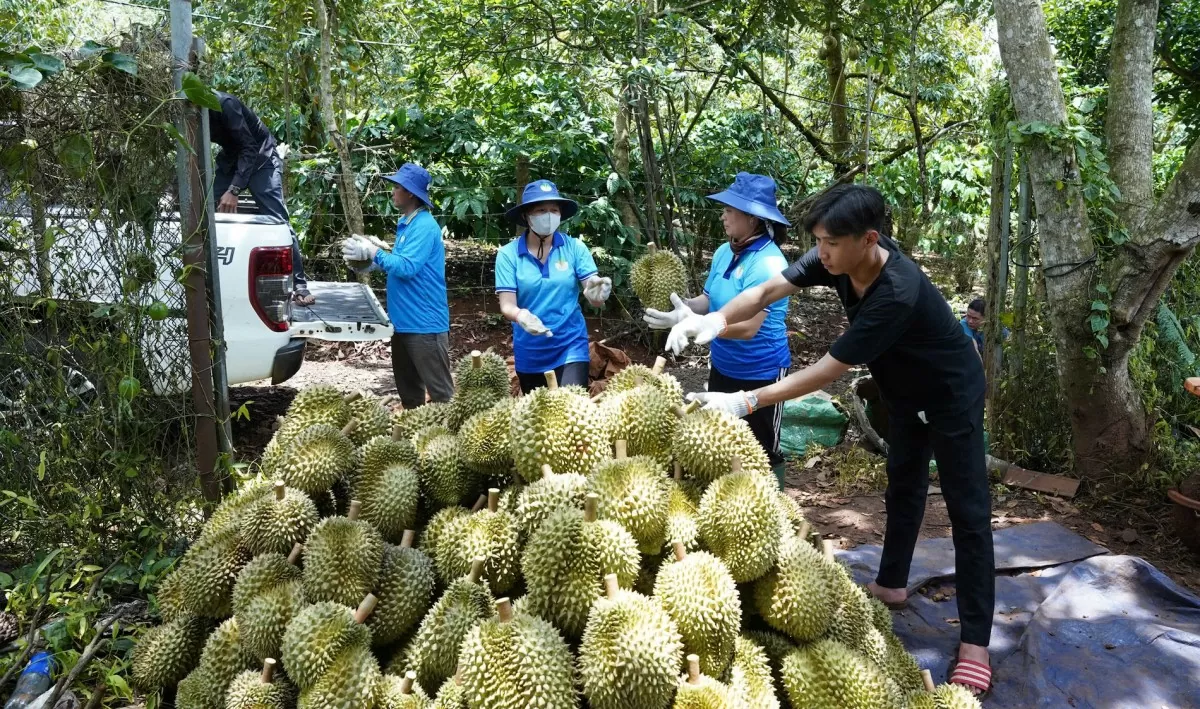 |
| Durian from Krông Pắc district, Đắk Lắk province. |
According to traders, the supply is insufficient after the durian harvest in the Central Highlands ends, forcing them to shift their sourcing of off-season durian from the Mekong Delta provinces. However, the off-season production is not enough to meet demand.
Export purchasing companies are also adjusting prices due to domestic supply shortages. A representative of a business in the Central Highlands said they are moving their purchasing stations to the Mekong Delta to collect off-season produce and meet the needs of their partners.
In the first 10 months of this year, fruit and vegetable exports are estimated at $6.4 billion, with durian accounting for nearly half, at $3 billion. China is the main export market for this fruit. Besides fresh fruit, the signing of the protocol on frozen durian exports between Vietnam and China has opened up significant opportunities for the agricultural sector. Exports of frozen durian to this billion-person market could reach $400-500 million this year.
Mr. Dang Phuc Nguyen, General Secretary of the Vietnam Fruit and Vegetable Association, predicts that durian prices will continue to rise as Chinese consumers increase their purchases as gifts during holidays and Tet (Lunar New Year).
Meanwhile, according to the Ministry of Industry and Trade , domestic and international demand for fruits and vegetables increased sharply in the last quarter of the year, along with the effectiveness of the new protocols. This is the driving force behind the sustainable growth of Vietnam's fruit and vegetable exports.
Forecasts for the whole year indicate that fruit and vegetable exports will exceed 7 billion USD, an increase of more than 25% compared to 2023. Of this, durian exports could reach a record 3.5 billion USD. This will be a new milestone for the fruit and vegetable industry, with durian continuing to play a leading role.
The picture isn't just rosy.



However, Vietnamese durian is not "the only product in the market." In recent years, durian farmers in several Southeast Asian countries have reaped huge profits thanks to soaring demand in China. However, concerns are now emerging that the passion of consumers in the world's most populous nation for this pungent fruit may diminish in the near future.
According to a report from China News Service, durian trees have been widely planted in areas such as Sanya and Yucai in Hainan. The durian trees have grown well, reaching the size of a volleyball. By 2024, approximately 500 trees had begun bearing fruit.
Hainan durian trees were planted four years ago, and 2024 marks the first harvest. A four-year-old durian tree can produce up to 19 fruits, each weighing about 2kg. It is estimated that durian will be planted on over 6,600 hectares in Hainan within the next 3 to 5 years.
However, Jeremy Chin, co-founder of LKE Group, a durian trading company based in Kuala Lumpur, Malaysia, noted that while China has good technology, unlike Malaysia, arable land across China is not suitable for durian cultivation. Although Hainan is considered a suitable location, its geological and climatic limitations mean that cultivation costs and retail prices will be much higher. Achieving durian self-sufficiency is a difficult task for China. They may still have to rely on imports.
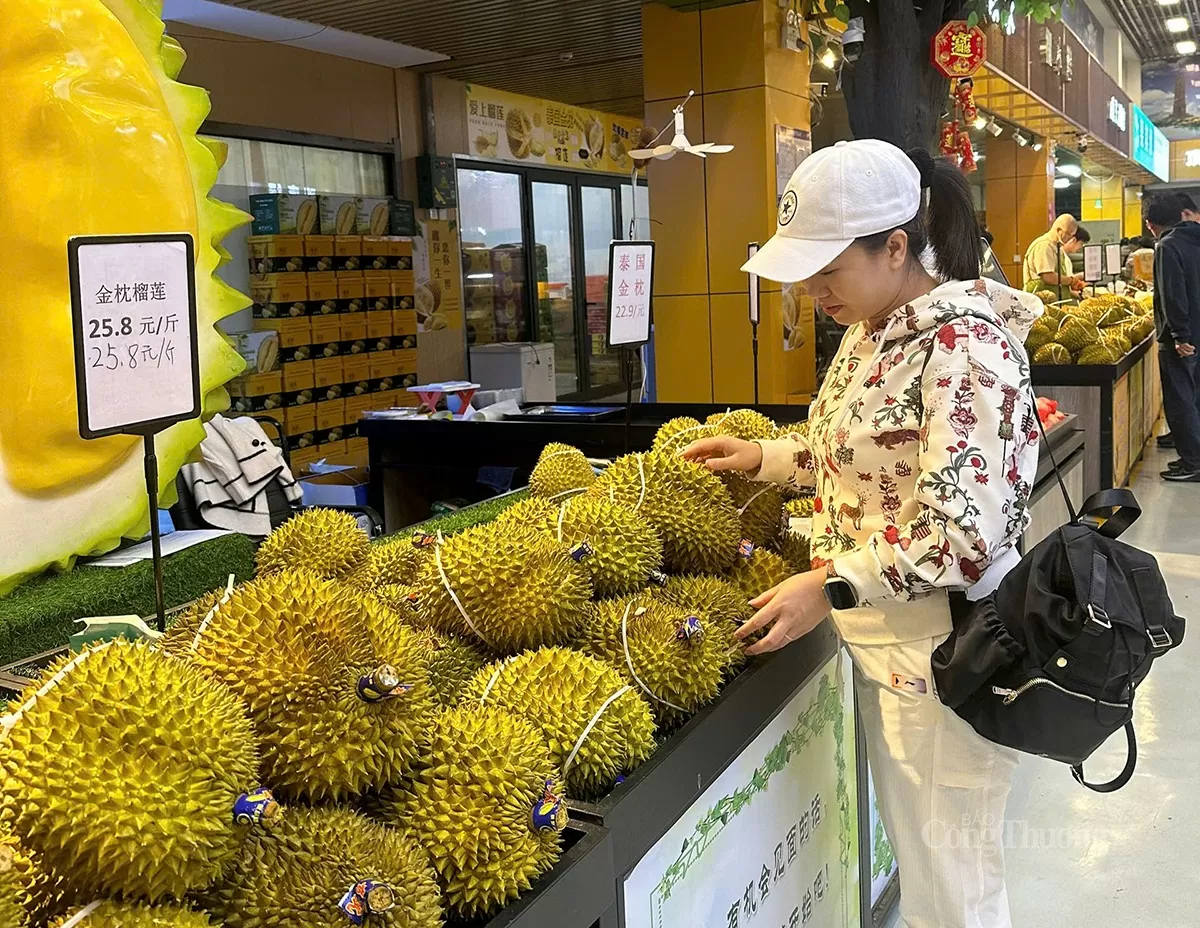 |
| Durian from Thailand is sold at a supermarket in Beijing, China. (Photo by Phan Mến) |
China is a large market that almost all exporting countries aim for. However, conquering this market is by no means easy. In an interview with a reporter from the Industry and Trade Newspaper after a field trip to the Chinese market, Ms. Phan Thi Men – General Director of SUTECH Science and Technology Consulting Co., Ltd. – shared her assessment of Vietnamese agricultural products compared to those of other countries, especially Thailand and Malaysia.
According to Ms. Mến, most durian stalls in Beijing's shopping malls do not stock Vietnamese durian; instead, they mainly feature durian from Thailand and Malaysia.
In shopping malls, fresh durian is mainly Dona durian from Thailand, while frozen durian is mainly whole frozen Musangking durian from Malaysia. While in Vietnam, grade C durian is often frozen, Thailand still sells grade C durian. Regarding frozen durian, in China, whole frozen durian from Malaysia is extremely popular.
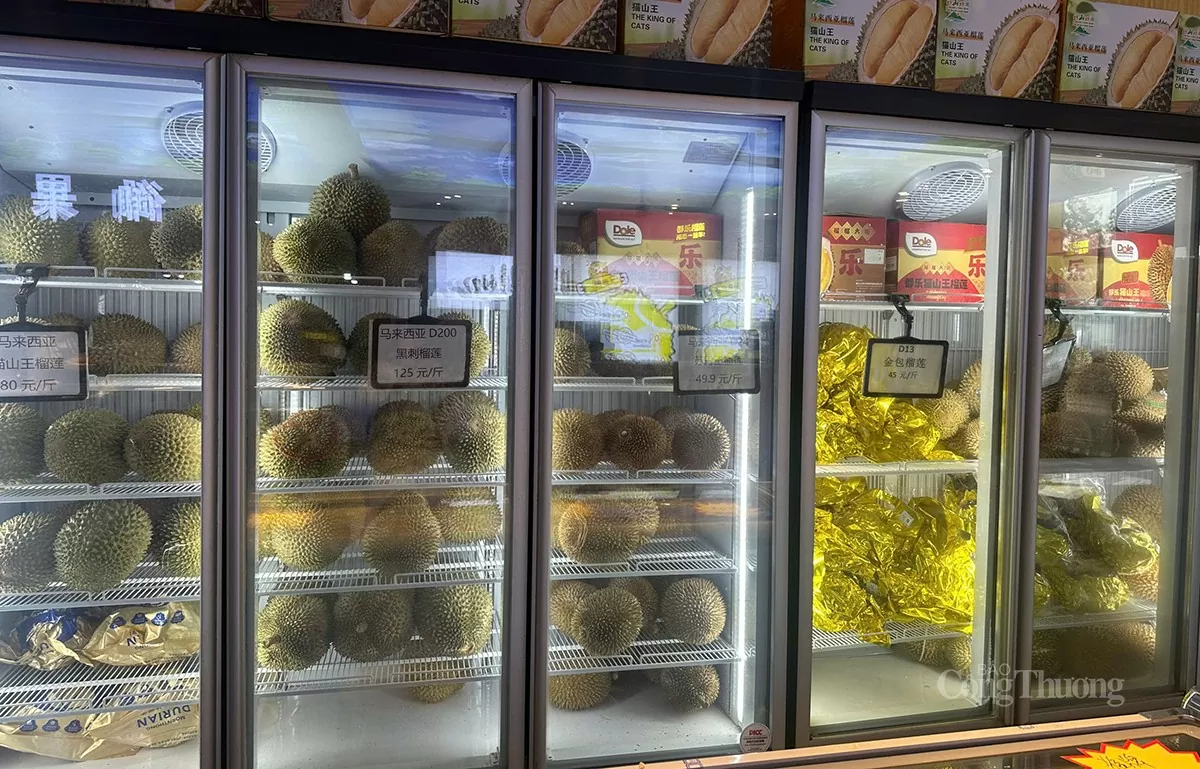 |
| Frozen durian from Malaysia is sold in supermarkets in China. (Photo by Phan Mến) |
The question is, what strategies do Thailand and Malaysia employ to gain such trust in the Chinese market for their durian?
Ms. Mến noted that, firstly , these two countries place particular emphasis on investing in quality and appearance. Thai durian is consistent in quality, ripens evenly, and fully complies with China's plant quarantine regulations. As for Malaysia, their frozen whole durian is mainly the round, uniform Musangking variety. Its smell is not as pungent or strong as Ri6 durian. Furthermore, the fruit is visually appealing. Meanwhile, Vietnamese durian still lacks consistency in quality. The problem of unripe durian is still prevalent. In addition, plant quarantine regulations are not yet fully implemented.



Secondly , Thailand and Malaysia are focusing on promoting their brands and increasing market reach. The recent Vietnamese Fruit Festival in China was Vietnam's first such festival. Meanwhile, Thailand and Malaysia regularly hold similar festivals (every three months). It's clear that their durian is already very familiar to Chinese consumers. People in China have experienced and regularly participated in similar festivals in Thailand and Malaysia, so the durian from these two countries has become deeply ingrained in their consciousness. This is one of the reasons why Vietnamese durian hasn't yet become widely popular and penetrated the Chinese market.
And this is also why Vietnam has a developed agricultural sector but still has many limitations compared to Thailand and Malaysia.
Given the above reasons, experts believe that to capture market share in this billion-person market, farmers, cooperatives, businesses, and the government need to implement changes and promote improvements in the quality and appearance of durian in particular and agricultural products in general. Simultaneously, strategies are needed to increase accessibility to Chinese consumers. Only then can Vietnamese durian truly dominate the Chinese market.
| Last year, Vietnam exported 500,000 tons of fresh durian, earning $2.3 billion, with 90% going to China. Currently, the country has 154,000 hectares of durian plantations, producing nearly 1.2 million tons, with an expected annual growth rate of 15%. |
Source: https://congthuong.vn/xuat-khau-sau-rieng-nhan-dinh-nao-ve-doi-thu-canh-tranh-358240.html