

"The idol of sticky rice"
In May, on the experimental fields of the Center for Technology Transfer and Agricultural Extension (CETDAE - Vietnam Academy of Agricultural Sciences), many rice varieties were ripening and preparing for harvest. Two plots of glutinous rice varieties, N97 and N98, were located next to each other, separated by less than a person's height. Even with the naked eye, it was possible to distinguish them: the N98 variety had plants about 15cm taller, upright stems, and heavier panicles than the adjacent N97 field.
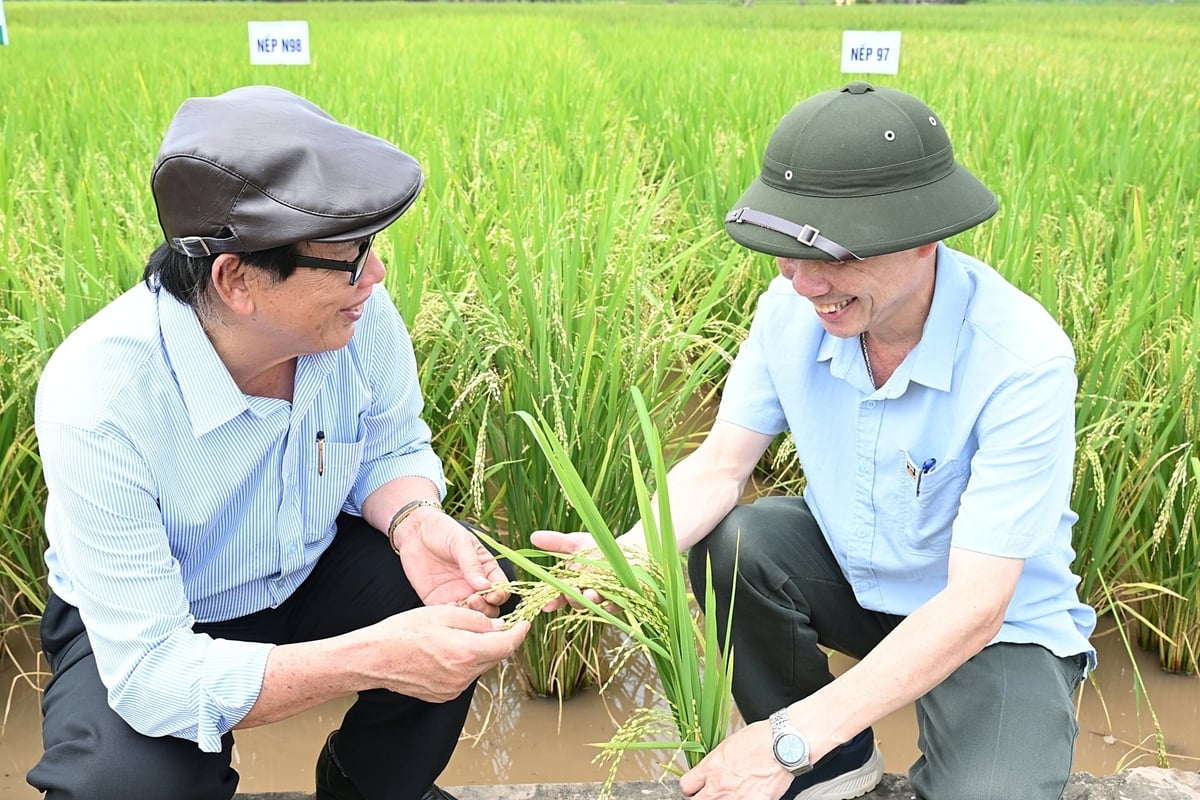
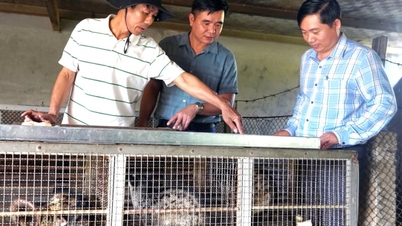
Assoc. Prof. Dr. Le Vinh Thao (left) and Assoc. Prof. Dr. Pham Van Dan - Director of the Center for Technology Transfer and Agricultural Extension. Photo: Bao Thang.
Associate Professor Dr. Le Vinh Thao bent down, plucked a firm, green rice panicle, and said that N98 has a more oval, rounder grain shape. According to the variety's circulation records, N98 has an average plant height of 110-115cm, a growing season of about 135-145 days in the spring crop and 110-115 days in the autumn crop, with a spring yield of about 5.8-6.5 tons/ha. The variety also has a higher percentage of firm grains and a higher number of effective panicles, making it more suitable for intensive cultivation conditions compared to N97.
But then he chuckled softly: "It's hard to tell the difference once you're out of the field." The remark, though seemingly a slip of the tongue, contained the lingering concerns of a seed breeding expert. In the field, N97 and N98 are distinctly different in morphology, planting season, and cultivation process, but once they're in circulation, packaged, and transported through many intermediaries, that boundary sometimes blurs to the point where even professionals find it difficult to distinguish them.
This similarity is not accidental because N98 was developed from the improvement of N97 – a glutinous rice variety that made its mark in many localities more than 20 years ago. In 1997, after nearly a decade of selection and breeding, Associate Professor Dr. Le Vinh Thao perfected the pure line of N97. By 2004, the variety began to be mass-produced and quickly gained popularity from Central Vietnam to the mountainous regions of Northern Vietnam.
At that time, many traditional glutinous rice varieties yielded around 5 tons/ha and had a long growing season. N97 was immediately welcomed because it was short-day, easy to cultivate, and suitable even for areas with limited intensive farming conditions.
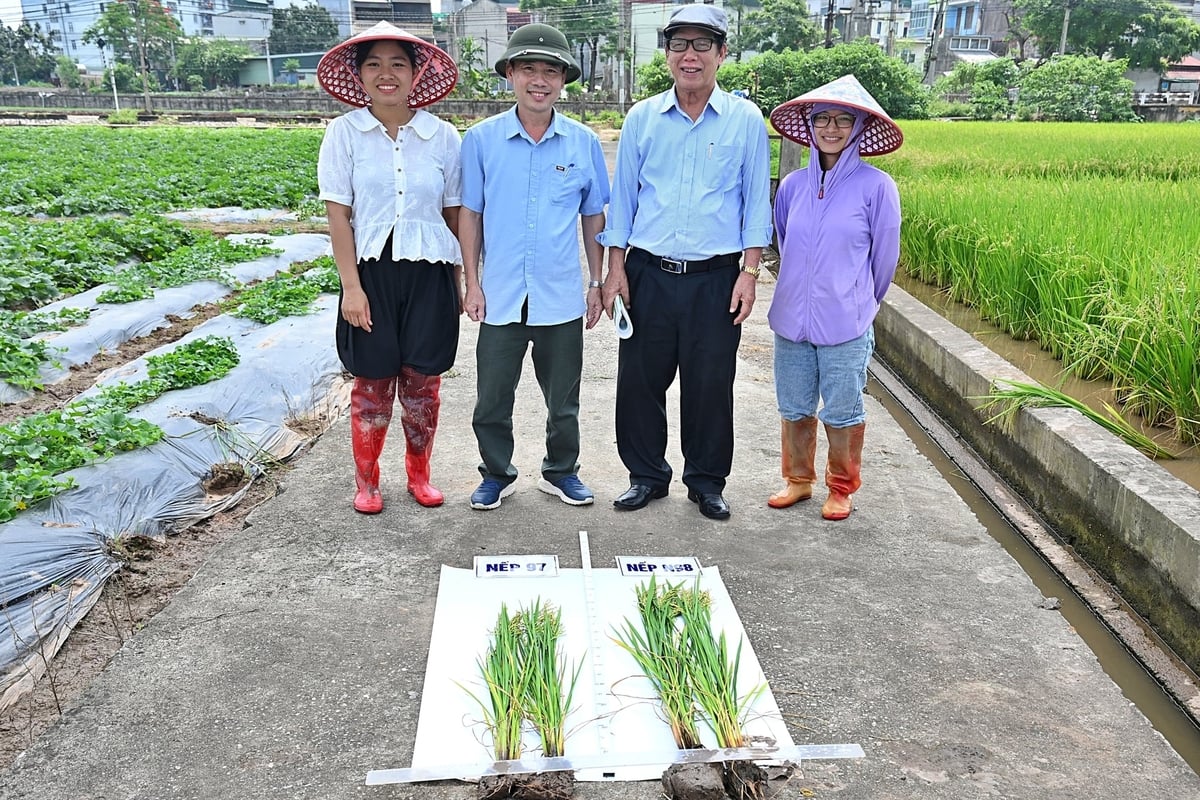
Associate Professor Dr. Le Vinh Thao (second from the right) with staff from the Center for Technology Transfer and Agricultural Extension. Photo: Bao Thang.
Having passed the testing phase, N97 became a popular commercial glutinous rice variety. In production linkage models in Quang Nam (formerly), farmers recorded significantly higher profits, in some places up to 50 million VND/ha compared to the old variety. To maintain quality, the production fields also organized multiple rounds of weed removal in the fields to avoid mixing varieties from the beginning of the season. These rigorous processes demonstrate that the reputation of a rice variety is truly maintained in the fields, not just on the packaging when sold on the market.
But for the creator of nearly 30 recognized rice varieties, improvement is a never-ending cycle. Retaining the flexibility and adaptability of N97, the former leader of the Center for Research and Development of Pure Rice Varieties (Institute of Food Crops and Food Plants) continued to develop N98 towards higher yield and better resistance to bacterial blight and blast.
In both field trials and field production, CETDAE - the unit protected by the N98 rice variety until 2024 - has compiled statistics showing that the yield of N98 can be 10-15% higher than N97, even reaching 8 tons/ha in favorable fields ( Dien Bien , Thanh Hoa, Quang Nam).
According to Associate Professor Dr. Le Vinh Thao, N98 is not simply a successor variety, but an improvement on the material base of N97 after many years of observing production practices. While N97 stands out for its short growing season, N98 is geared towards more intensive production, with a longer growing period of a few days, but in return, it offers higher and more stable yield potential.
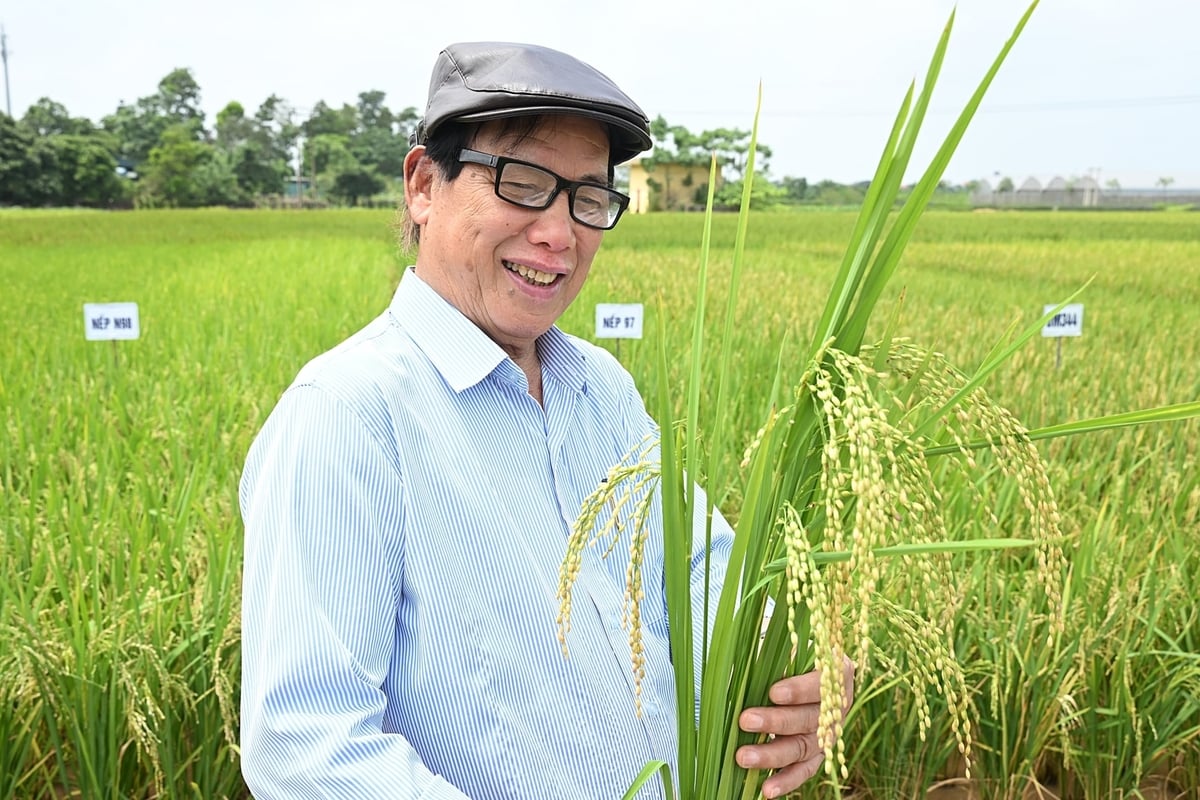
Associate Professor Dr. Le Vinh Thao - author of the N97 and N98 glutinous rice varieties, along with more than 20 other rice varieties. Photo: Bao Thang.
In the early 2010s, the N98 rice variety was rapidly expanded in many localities due to its high yield and rice quality. In Ha Tinh , farmers jokingly called this variety the "idol of glutinous rice" because it yielded a good harvest and sold at a good price thanks to its sticky and fragrant rice.
In Lai Chau, the N98 rice production model, covering approximately 20 hectares with over 100 participating households last year, recorded a yield of about 6 tons/ha. After deducting expenses, many households earned over 30 million VND/ha – a dream figure for the local people, not to mention its advantages of cold tolerance, pest resistance, and superior rice quality.
But it is precisely this shared characteristic that makes the two varieties easily confused. Mr. Thao vividly remembers a field trip to Bac Giang (formerly) around 2015. Many farmers confidently stated they were growing N97, even showing the seed packaging to experts, but a careful calculation of the planting schedule revealed that the harvest time was 3-5 days later than its usual characteristics. "I could tell at a glance that some fields were no longer pure N97," he confided.
To those outside the field, a difference of a few days might seem insignificant. But in agricultural production, that can be the difference between being on time or late for planting. Ironically, even the "father" of N97 and N98 can no longer say exactly how much land each variety is being cultivated on. He has been repeatedly told that N98 is among the most widely grown glutinous rice varieties. He's happy that his "brainchild" has been chosen by farmers, but the joy is accompanied by concern: is it really N98 or some other mistake? And how is the "identity" of a rice variety truly being preserved?
It's easy to lose brand recognition when entering the market.
Both N97 and N98 varieties can produce "miracles," and perhaps that's why the confusion between them is so complicated. N97 is a freely traded variety, while N98 is protected by copyright; in many cases, farmers will achieve higher yields and economic efficiency than with N97.
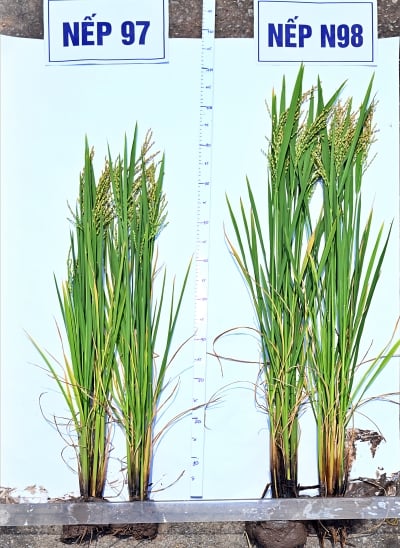
The N98 glutinous rice plant is about 15cm taller than the N97 plant.
However, according to Associate Professor Dr. Le Vinh Thao, the story of the two glutinous rice varieties is no longer just about yield. N97 was developed earlier, originally selected for regions requiring a short growing season. Meanwhile, N98 has a longer growing season and is more suitable for intensive cultivation conditions. If the same care methods as for N97 are still used, growing N98 may not necessarily be effective.
A rice variety can take 20 years or more to develop, test, and bring into mass production. But once it leaves the field, its "identity" sometimes depends on the label on the packaging. More worryingly, the motivation for plant breeding research will be affected. If a new variety quickly blends into the market under a different name, it will be difficult for breeders to pursue long-term programs.
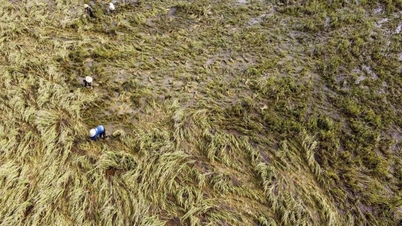
It also represents the seemingly invisible loss resulting from the hard work in the fields. In Tho Xuan (Thanh Hoa), Mr. Thao was surprised to see that N97 grew well even on low-lying land – where many other glutinous rice varieties are usually prone to lodging or are less stable.
He overheard a farmer excitedly talking about a sticky rice variety that was "easy to grow and sells at a good price," and then expressing his desire to thank its creator, without realizing that the person standing before him was the very person who had developed it. He said that there is no clearer recognition than stories like these.
For over three decades, Associate Professor Dr. Le Vinh Thao and his colleagues have dedicated themselves to the breeding of purebred rice varieties, introducing dozens of varieties to production. For him, each variety is not only the result of laboratory research but also the accumulated achievement from thousands of field experiments, across many seasons and different cultivation conditions.
Each rice variety, upon its creation, carries its own destiny. Therefore, he did not want N97 and N98 to be confused, even though both were his "brainchildren," created from the imported Yunshin complex in 1987. If the names of the varieties were ambiguous, what would be lost would not only be the copyright issue but also the accuracy of an entire system of research, statistics, and development.
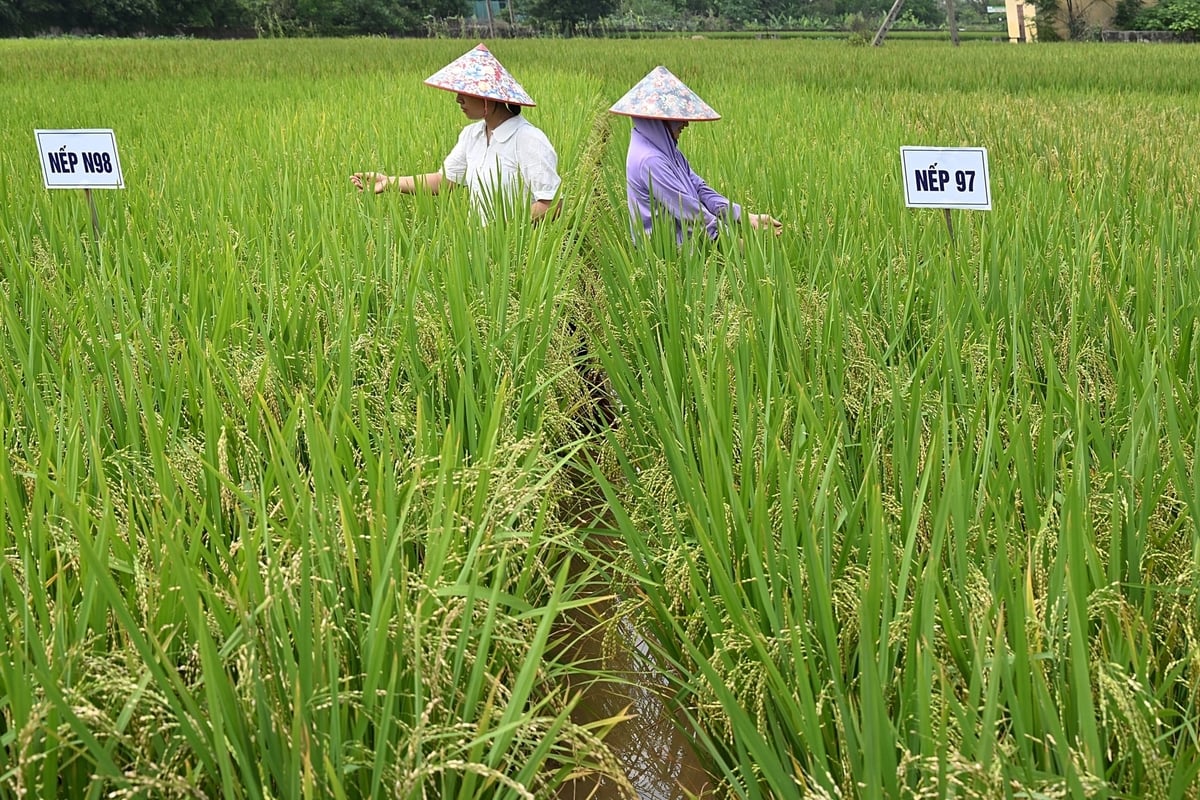
Two rice paddies, N97 and N98, are located next to each other at CETDAE. Photo: Bao Thang.
Although he retired nearly 15 years ago, the tall, slender figure of Associate Professor Dr. Le Vinh Thao can still be seen beside the CETDAE experimental rice paddies every rice flowering season. On the control plots N97 and N98, he can easily point out the differences in just a few minutes. Which plants are taller, which variety stands upright, and which field will be harvested a few days earlier.
But he also understood that when science enters mass production, the hardest thing to maintain is sometimes not productivity or quality, but the "identity" of the very varieties one creates.
The ambiguity regarding "identity" is even more worrying now that the field of plant breeding is no longer the exclusive domain of public institutes, universities, and research centers. Since 2010, an increasing number of private enterprises have invested systematically in everything from breeding and testing to processing, packaging, and commercialization. Plant breeding has become a long-term investment, where businesses have to spend tens of billions of dong on a single in-depth project.
According to statistics from the Department of Crop Production and Plant Protection, Vietnam currently has approximately 1,000 plant varieties that have been granted protection certificates. Many new, high-yielding, and high-quality varieties are continuously being introduced into production, expanding choices for farmers and increasing the value of agricultural products. However, this also makes the issue of maintaining the correct plant names in the market even more important.
Source: https://nongnghiepmoitruong.vn/nhap-nhang-danh-tinh-giong-nep-n97-va-n98-d812349.html

































































Comment (0)