


Many rice fields are being harvested while still unripe.
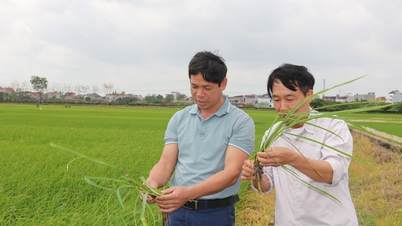
Mr. Nguyen Van Khuong, from Tan Ninh hamlet, Dien Nguyen commune (Dien Chau district), planted 4 sao (approximately 0.4 hectares) of rice, but he only harvested 1 sao of pure rice that had bloomed after April 15th. The remaining 3 sao in Ho Di rice paddy, planted with the Ha Xuyen variety, were completely lost. “The rice bloomed from around April 10th, but the cold weather during the heading stage caused the rice plants to bloom slowly, not as quickly or fully as usual. The rice panicles still had weeds but couldn't bend, and although there were many grains, when squeezed, they were empty, not full of milk, and lacked kernels,” Mr. Khuong lamented.
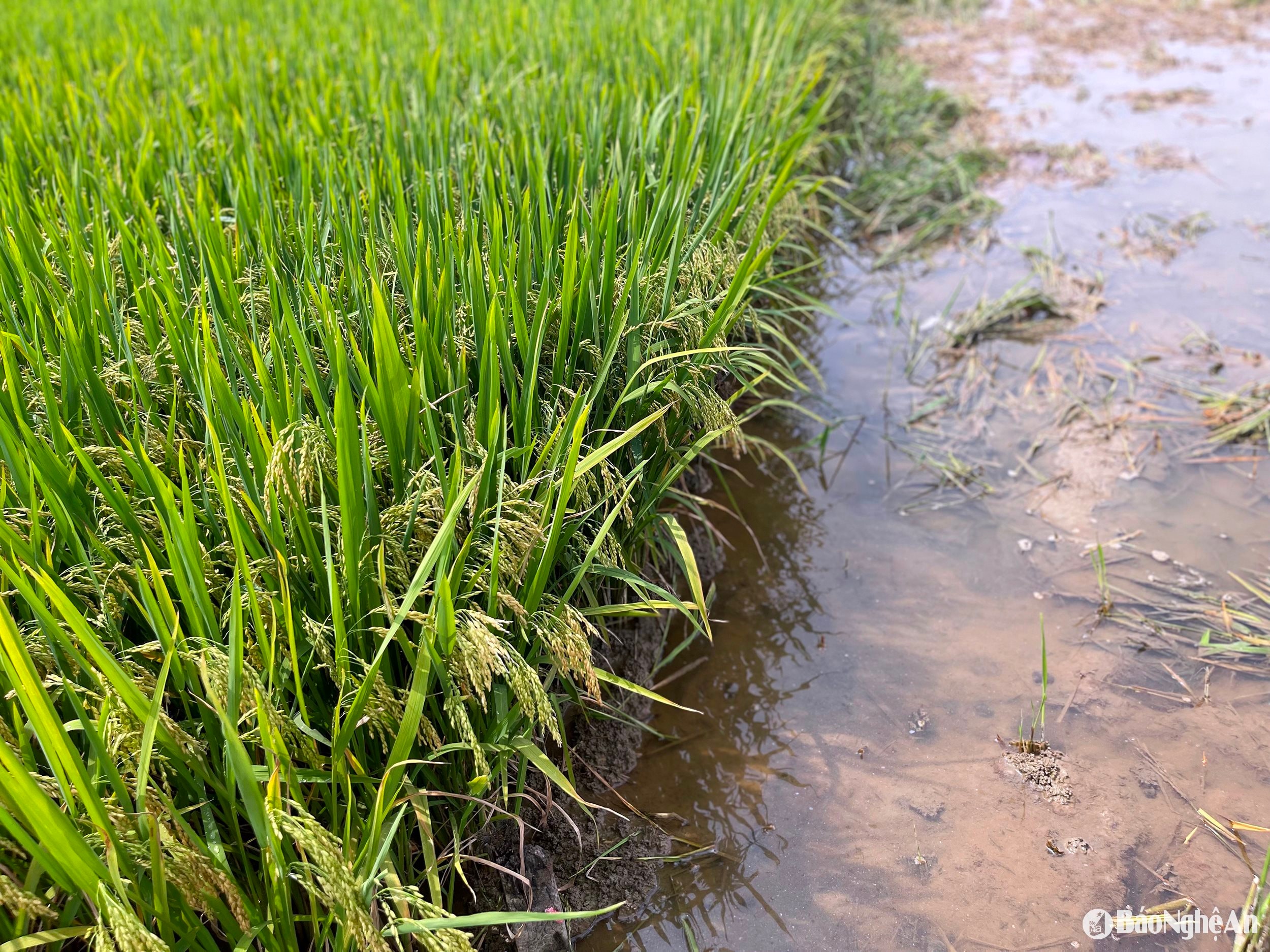
Dien Nguyen commune has over 391 hectares of rice fields. While last year's spring crop was very bountiful, this year, although full statistics are not yet available, many rice fields in the commune have experienced panicle degeneration, with incomplete flowering. In fact, farmers have cut down over 1 hectare of rice prematurely, resulting in total crop loss, to use as feed for cattle and buffalo. They are focusing on fertilizing and caring for the rice plants to encourage new shoots, which are expected to appear in about 20 days and be ready for harvest in a month and a half. The remaining rice is still being left in the fields, hoping for improvement, while simultaneously sowing seedlings for the summer-autumn rice crop.
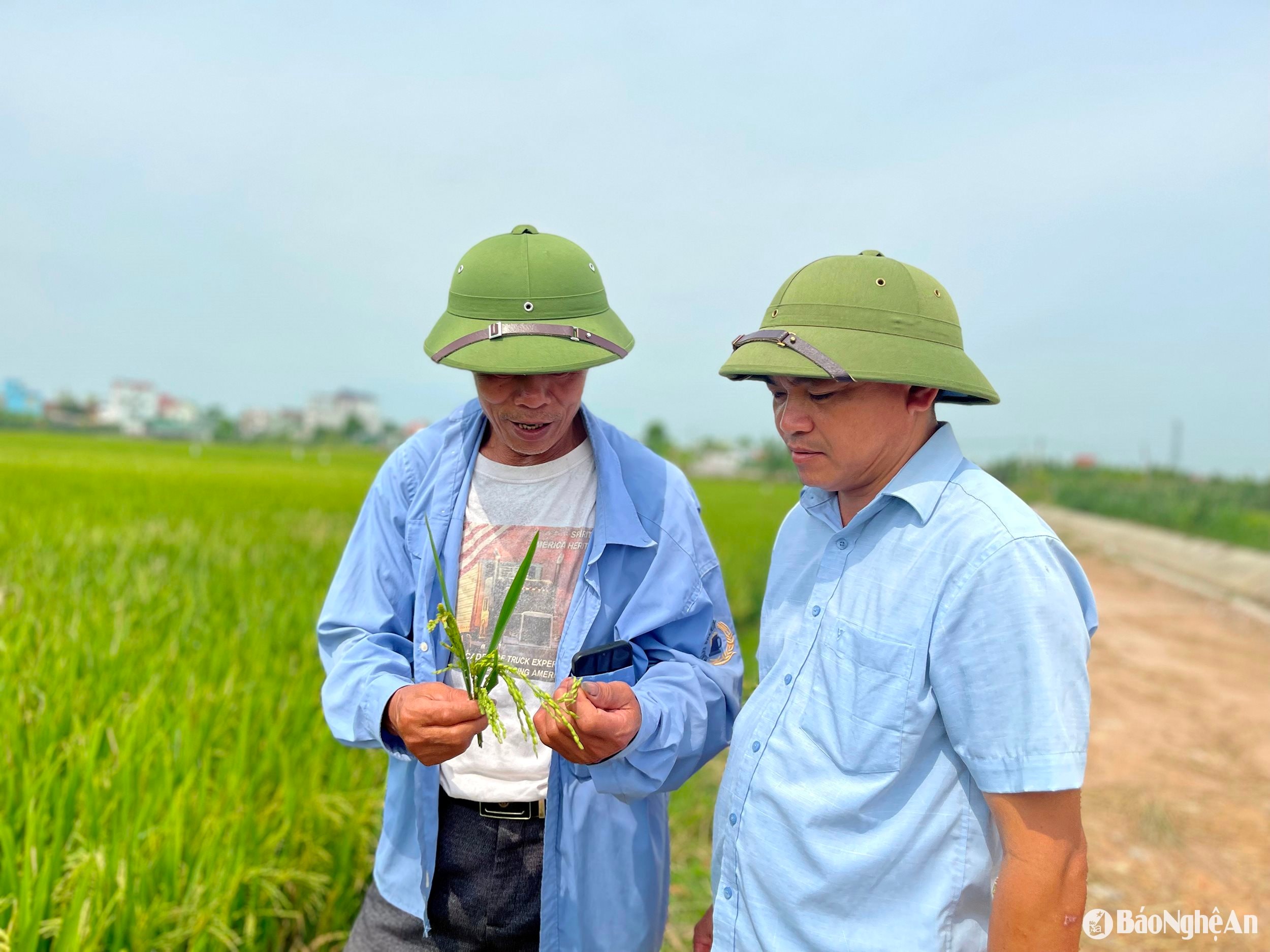
According to Mr. Dao Xuan Tu, director of the commune's agricultural service cooperative: Due to many fields being deeply inundated, Dien Nguyen often plants ahead of the district's planting schedule. This year, some varieties suffered severe crop failures, even complete loss of yield, most notably the Ha Xuyen rice variety; in some areas, the cold weather during the heading stage revealed degeneration even before the panicles were fully formed.
Besides total crop failure, some rice fields planted with ADI and HDT varieties suffered less damage, still having firm grains and salvaging yields of 1.2-2 quintals/acre. Generally, these are areas where rice started heading from April 10th; while rice fields that headed from April 20th onwards had very long and well-developed panicles with firm grains, with only a small area experiencing panicle tip degeneration.
This year, Ms. Tran Thi Huong's family in Dong Yen hamlet, Dong Thanh commune (Yen Thanh district) planted 12 sao (approximately 12,000 square meters) of Ha Xuyen, VT404, and AJ73 rice varieties and suffered a complete loss of yield. This situation has affected many households in the commune with their spring rice crops. Currently, some households have cut the young rice plants to feed their cattle and are preparing to sow seedlings for the summer-autumn crop, although the extent of the loss varies. Ms. Nguyen Thi Hai, also from Dong Yen hamlet, who planted 3 sao of Thai Xuyen rice, said: “The rice was planted on January 10th, but the prolonged cold weather meant it only started flowering on April 15th. During the heading stage, there was rain and cold. While in previous years we achieved 4 quintals per sao, this season we might only get about 1.5-2 quintals. The fields that flowered later fared much better.”
This spring, Yen Thanh district planted over 12,000 hectares of rice. The phenomenon of rice panicle degeneration, incomplete flowering, and panicles not bending downwards is concentrated in Ma Thanh and Tan Thanh communes, in low-lying areas where farmers take advantage of available water to plant; in addition, it is scattered in some other communes, but all are affected in areas planted and flowering early.
Early planting despite warnings.
According to Mr. Le Van Hong, head of the Agriculture and Environment Department of Yen Thanh district, this year, due to the prolonged gloomy and cold weather with few sunny days, the rice growing season has been extended. Some rice fields experienced rain and cold weather without sunshine, resulting in incomplete flowering; the rice panicles only reached about 5-7 cm, whereas normally they should reach 20-30 cm. The flowering period also lasted 10-15 days, whereas normally it only takes 5-7 days; many areas suffered from panicle degeneration and empty grains. “The district established a planting schedule with concentrated sowing and transplanting starting after January 20th, and flood-prone areas were advised to sow and transplant 7-10 days earlier; however, farmers still transplanted 10-15 days ahead of schedule.”
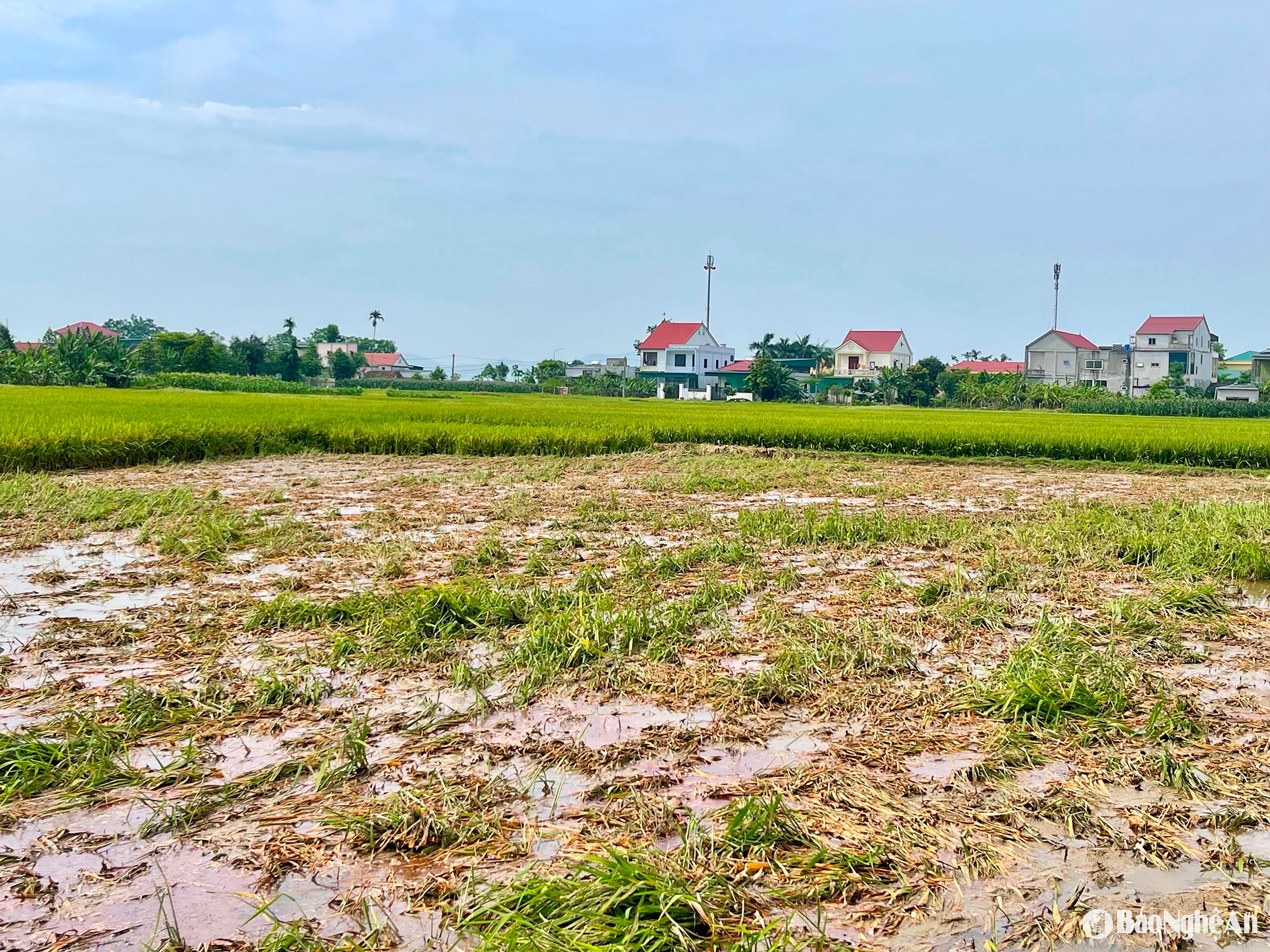
Recently, in several localities such as Dien Chau, Yen Thanh, Anh Son, Tan Ky, etc., there have been instances of spring rice plants failing to flower, unable to bend their panicles, and exhibiting panicle degeneration. This has affected most rice varieties, although the extent and percentage of damage vary among different varieties. Initial assessments indicate that most of these areas were planted before the scheduled planting time set by the Department of Agriculture and local authorities, with some areas even planting 15-20 days early. Unfavorable weather conditions during the panicle differentiation stage led to the aforementioned problems, resulting in significant yield reductions or even complete crop failure.

This spring, Nghe An 's rice seedling sowing schedule starts from January 2nd to 15th, and transplanting begins after the seedlings are 21 days old, meaning transplanting starts from January 22nd; for varieties with a growth period of less than 125 days, it is recommended not to sow seedlings before January 10th; if direct sowing is used, sow 5-7 days later than the seedling sowing schedule; in flood-prone areas during the summer-autumn season, planting can be done 5-7 days earlier than the scheduled timeframe.
The planting schedule developed by the agricultural sector is based on calculations of all relevant factors; aiming to ensure that rice plants flower between April 15th and April 30th, a period when weather is usually very favorable, avoiding late-season rain and cold weather that could affect the rice plants during heading and flowering. Planting early, despite expert recommendations, may still yield a good harvest, but the risk of crop failure due to weather is very high.
Mr. Nguyen Tien Duc, Head of the Provincial Department of Crop Production and Plant Protection.
Source: https://baonghean.vn/nhieu-dien-tich-lua-xuan-mat-mua-10297243.html























































![[Infographic] Vietnam's Economic Situation Report, Q1 2026: Strong Growth Momentum](https://vphoto.vietnam.vn/thumb/402x226/vietnam/resource/IMAGE/2026/04/04/1775298512042_tang-truong-kinh-te-viet-nam.jpeg)

![[Image] Close-up view of the 10-lane road connecting to Long Thanh Airport](https://vphoto.vietnam.vn/thumb/402x226/vietnam/resource/IMAGE/2026/04/04/1775291871988_ndo_br_1-resize-5690-jpg.webp)

























Comment (0)