

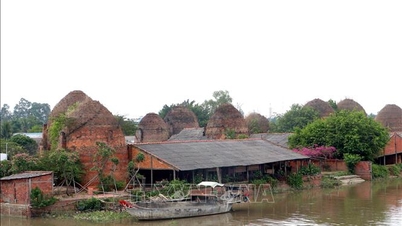
Chau O town (Binh Son district) is home to My Thien pottery village, renowned far and wide for its history spanning over 200 years. To develop tourism linked to the potential of My Thien pottery, the local authorities are strengthening connections to promote the products and facilitating tours from the pottery village to other locations in the area.
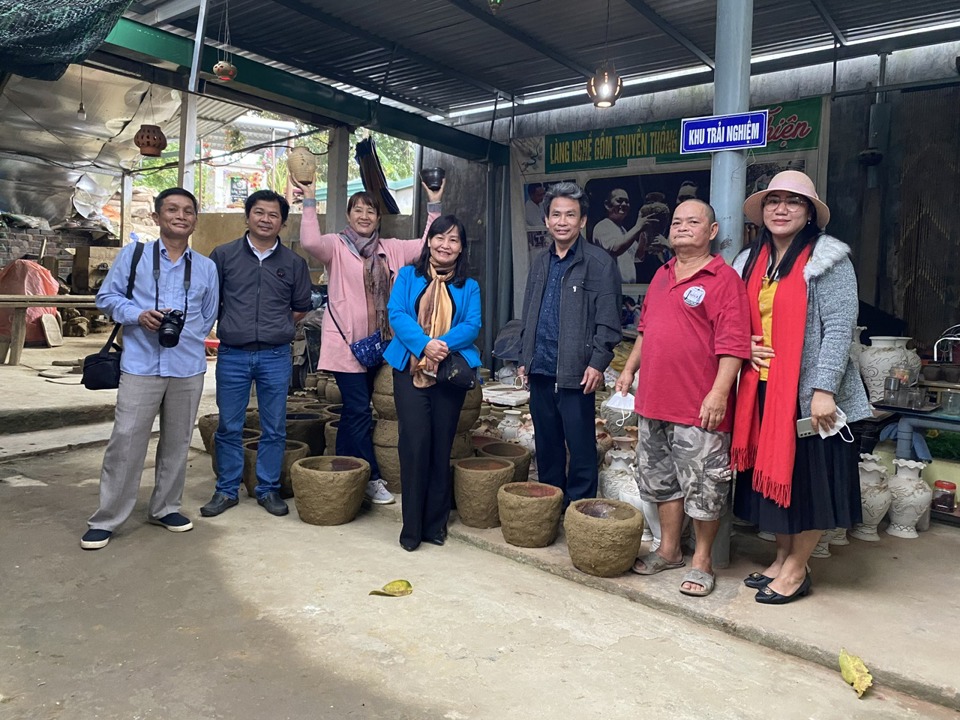
In recent times, Quang Ngai province and Binh Son district have also provided financial support to pottery production facilities to build infrastructure aimed at preserving and developing the craft village and exploiting tourism.
In Nghia Hanh district, the land along the Phuoc Giang river was once famous for mulberry cultivation and silkworm farming. However, this industry only flourished for a short time due to a lack of planning, strict breeding techniques, and an unstable market.
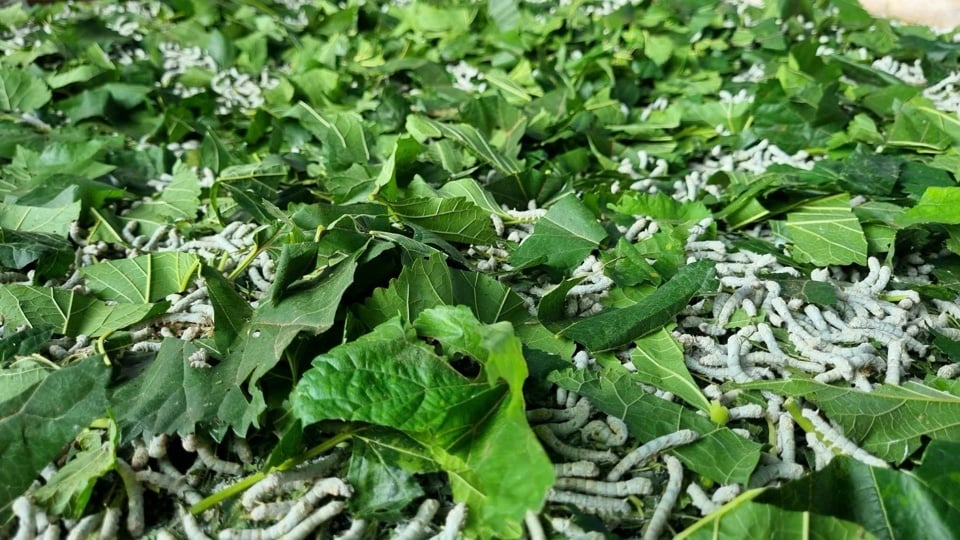
It seemed as though the mulberry cultivation and silkworm farming industry had died out, but since 2015, the price of silkworm cocoons has stabilized, and the products are being sold through guaranteed markets, so the industry is gradually reviving. Local authorities encourage people to preserve and develop silkworm farming in conjunction with experiential tourism and promote the image of the traditional craft village.
The silkworm farm of Ms. Vo Thi Thu An's family (Hanh Nhan commune, Nghia Hanh district) is one of the places that regularly welcomes tourists to visit and take photos.
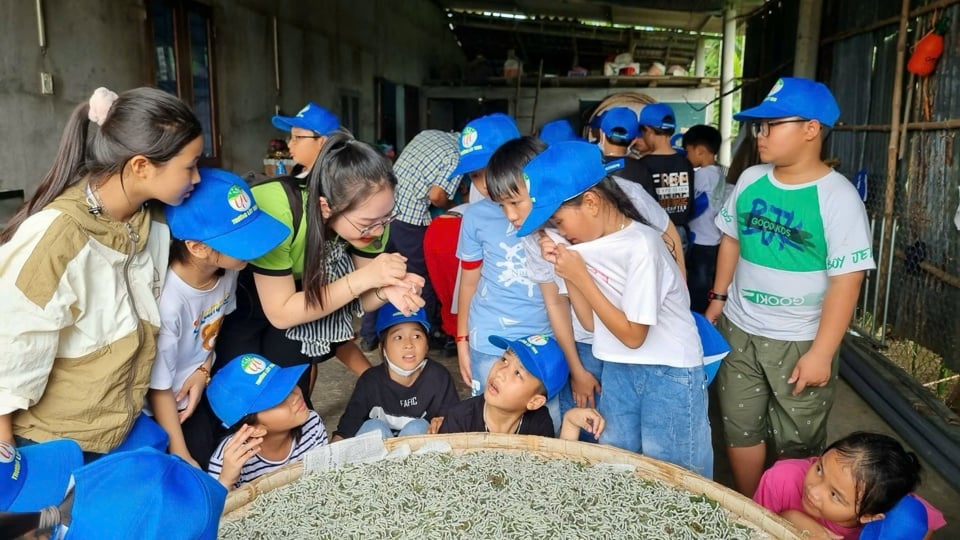
"The mulberry cultivation and silkworm farming business brings in significantly higher income compared to crops like cassava, corn, and peanuts... Now, with the development of tourism, more and more visitors are coming. We have even more income, so we are very happy," Ms. An shared.
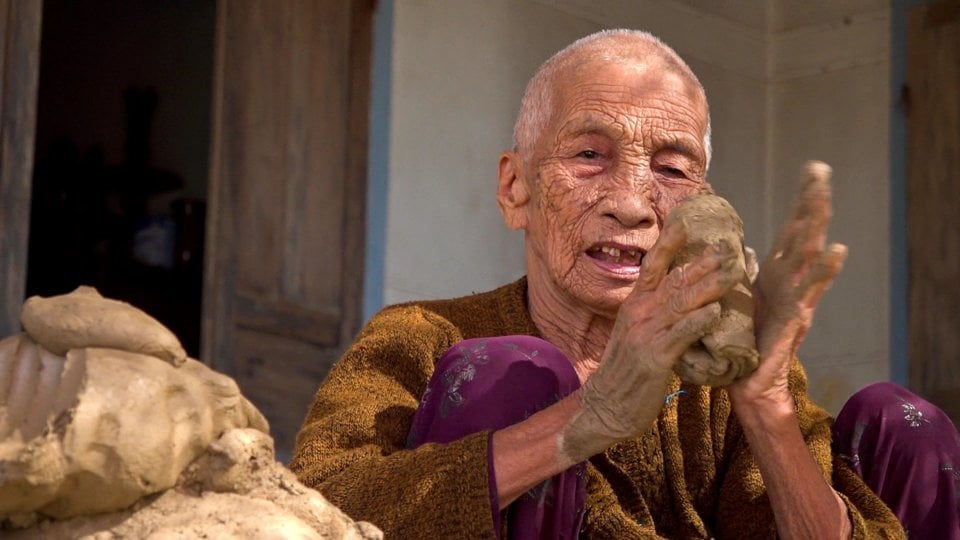
Similarly, in Duc Pho town, the Sa Huynh pottery craft is becoming an attractive destination. Over thousands of years, the ancient Sa Huynh pottery craft gradually faded into oblivion. However, in 2023, with the support of the local government, the Sa Huynh Prehistoric Pottery Cooperative was established in Vinh An village (Pho Khanh commune) with 7 members.
The cooperative accompanies and supports the remaining pottery artisans in Sa Huynh in restoring and replicating everything from shaping techniques to patterns, aiming to revive the ancient pottery tradition of the Sa Huynh people dating back 2,000-3,000 years and organize activities for tourists to visit and experience pottery making.
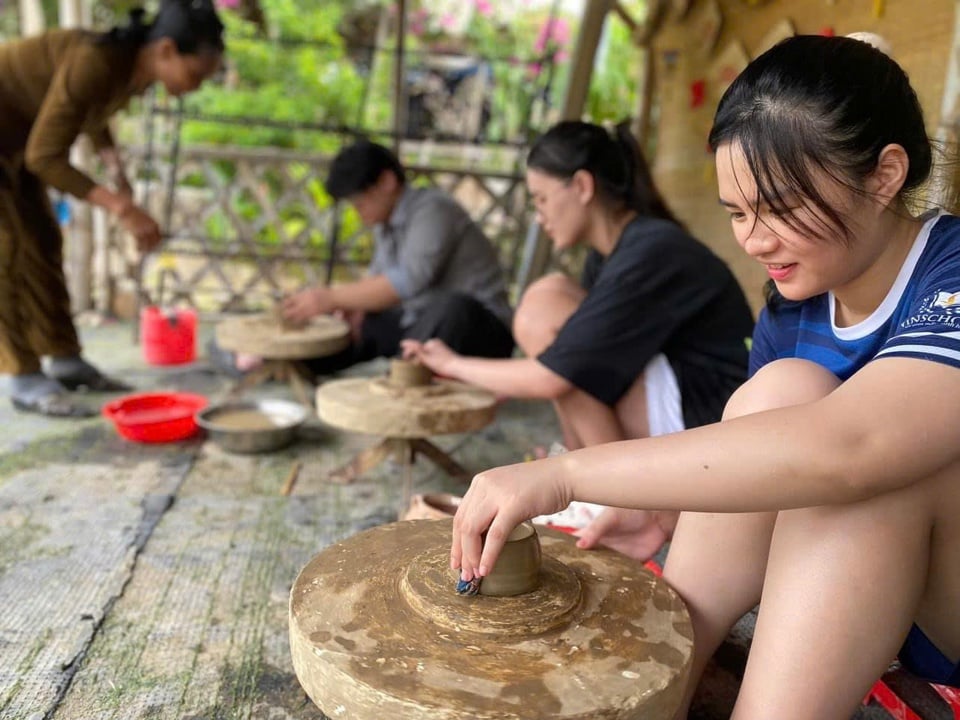
Pham Thi Thu Hanh (Duc Pho No. 2 High School) expressed: “Experiencing a day of pottery making was a very interesting activity. By molding the clay and shaping it myself, I also learned more about the traditions of my hometown.”
According to statistics from the Department of Agriculture and Rural Development, the province currently has 1 recognized craft village, 5 traditional craft villages, and 7 recognized traditional crafts. The craft villages in the province are diverse in type and rich in products, developed into various groups such as agricultural, forestry, and aquatic product processing, handicrafts, mechanics, and ornamental plants.
According to Nguyen Tien Dung, Director of the Department of Culture, Sports and Tourism of Quang Ngai province, in recent times, many community tourism models associated with experiencing traditional crafts such as pottery making, salt making, brocade weaving, and farming experiences have been formed.
These tourism models not only contribute to promoting local economic development and increasing people's income by allowing tourists to experience products and services, and boosting consumption of handicraft products, but also help promote the products and values of the handicraft villages. This is an effective way to preserve and promote the cultural values of the handicraft villages.
However, according to Mr. Dung, in order to develop craft villages in conjunction with tourism in a systematic and sustainable way, more investment is needed in many aspects. At the same time, the products created must meet the needs of tourists and be specifically identifiable.
“To develop craft villages sustainably in conjunction with tourism, in the coming time, the industry will support artisans to stay committed to their craft and promote the transmission of skills. In addition, we will support investment in craft village infrastructure, plan concentrated production areas, plan raw material zones, and grant management and exploitation rights to local communities... Furthermore, we need to strengthen communication and promotion of craft village tourism products,” Mr. Dung said.
Source: https://kinhtedothi.vn/quang-ngai-nhieu-du-dia-de-phat-trien-du-lich-lang-nghe.html


![[Photo] General Secretary and President visit the China-ASEAN AI Application Cooperation Center](https://vphoto.vietnam.vn/thumb/1200x675/vietnam/resource/IMAGE/2026/04/17/1776404277677_vna-potal-tong-bi-thu-chu-tich-nuoc-tham-trung-tam-hop-tac-ung-dung-ai-trung-quoc-asean-8706616-2286-jpg.webp)

















![[Photo] National Assembly Chairman Tran Thanh Man attends the policy seminar to promote Vietnam-Türkiye cooperation.](https://vphoto.vietnam.vn/thumb/1200x675/vietnam/resource/IMAGE/2026/04/16/1776351415367_vna-potal-chu-tich-quoc-hoi-tran-thanh-man-du-toa-dam-chinh-sach-thuc-day-hop-tac-viet-nam-tho-nhi-ky-8705791-jpg.webp)


















































Comment (0)