Diverse options after grade 9
In recent years, after completing lower secondary school, students have more options instead of focusing solely on the entrance exam to public upper secondary schools. Besides private high schools, students can attend vocational training centers, continuing education programs, or participate in vocational secondary education programs following the 9+ model.
According to Mr. Nguyen Van Binh, Head of the Examination Management and Educational Quality Assurance Department of the Hanoi Department of Education and Training, the choice of path after lower secondary school should be based on academic ability, family circumstances, and long-term career orientation. He believes that the current education system is diverse enough to meet the needs of many different groups of students, no longer limited to the traditional upper secondary school path.
In Hanoi, nearly 58,000 students are currently enrolled in continuing education programs at 29 vocational training centers, 53 secondary and college-level schools, and 4 art schools. The majority of these students are pursuing a model that combines academics and vocational skills, thanks to advantages such as shorter training time, reasonable costs, and early job opportunities.
The 9+ model allows students, after graduating from 9th grade, to simultaneously study the prescribed general education curriculum and pursue vocational training at secondary or higher education institutions. After approximately 4-5 years, students can receive a college diploma and enter the labor market or continue their studies at a higher level.
Ms. Tran Thi Hai Yen, Deputy Director of the Hoai Duc Vocational Education and Continuing Education Center (Hanoi), said that this model offers many clear advantages. Students studying at public institutions receive the same tuition fees as high school students. At the same time, the vocational training program is free of charge according to the general government policy, significantly reducing costs for families.
An important point is that the training time is shortened, helping students to quickly adapt to the work environment and enter the labor market.
Besides reducing the pressure of prolonged studying, the 9+ model also helps students orient their careers earlier, limiting the tendency to choose majors based on trends but lacking suitability to their abilities.



Changing mindsets and the challenges they present
One of the key factors driving the development of the 9+ model is supportive government policies.
According to Government Decree 238/2025/ND-CP dated September 3, 2025, students enrolled in this model are exempt from all tuition fees for the intermediate level for two years in all training programs. When continuing their studies at the college level, students also receive a 70% tuition fee subsidy for some key programs such as industrial electricity, automotive technology, fashion design, refrigeration and air conditioning technology, and welding.
These policies not only help reduce the financial burden on families but also contribute to attracting students to fields that are experiencing a shortage of high-quality technical workers.
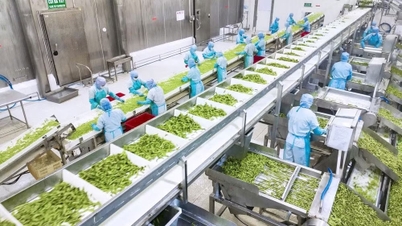
In many vocational education institutions, students also receive enhanced practical training and hands-on experience at businesses during their studies. This is a crucial factor in improving vocational skills and increasing their employability after graduation.
According to Mr. Le Dinh Chien, Deputy Principal of Thanh Oai B High School (Hanoi), in recent years, parents have had a more realistic view when choosing a path for their children.
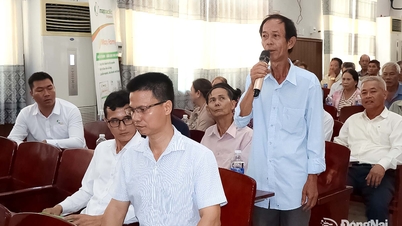
"Previously, many families wanted their children to attend public schools at all costs, but now they are more concerned about what environment suits their children and what abilities they possess. Some parents are also proactively researching vocational training, intermediate-level programs, and colleges instead of avoiding them as before," Mr. Chien shared.
This change has helped vocational education and continuing education gradually gain a more open perspective. However, according to experts, there are still limitations that need to be overcome. Some vocational education and continuing education centers lack uniformity in quality, and there are disparities in facilities between different units. In addition, social prejudices against vocational training still persist, with many people considering it a "lower" option compared to university.
Furthermore, not all 15-year-old students are mature enough to determine their future career. If they choose based on trends or lack understanding, they may easily become discouraged or change careers midway. Therefore, the guiding role of family and school is crucial.



Experts emphasize that diversifying post-secondary education pathways is an inevitable trend, helping to effectively channel students and meet the workforce needs of society. However, the most important thing is not choosing which path to take, but rather finding one that suits each student's abilities.
With proper guidance, students can develop their strengths, reduce academic pressure, and have a sustainable development path. In fact, many students who pursue continuing education or vocational training have found stable employment early on, while some students following the traditional academic path struggle if they lack clear direction. Therefore, instead of viewing public high school as the only path, parents should consider vocational education as a normal option with equivalent value within the education system.
Source: https://daidoanket.vn/nhieu-huong-di-sau-thcs.html
![[Image] Paris's oldest bridge goes viral after transforming into a giant cave.](https://vphoto.vietnam.vn/thumb/1200x675/vietnam/resource/IMAGE/2026/06/24/1782283441197_ndo_br_dsc05314-jpg.webp)


![[Photo] Opening Ceremony of the 13th National Congress of the Ho Chi Minh Communist Youth Union](https://vphoto.vietnam.vn/thumb/1200x675/vietnam/resource/IMAGE/2026/06/24/1782286753905_ndo_br_1-8510-jpg.webp)
![[Photo] Overview of the renovation and upgrading of the Ho Chi Minh Museum - Ho Chi Minh City Branch](https://vphoto.vietnam.vn/thumb/1200x675/vietnam/resource/IMAGE/2026/06/24/1782287051250_ndo_br_01-jpg.webp)