

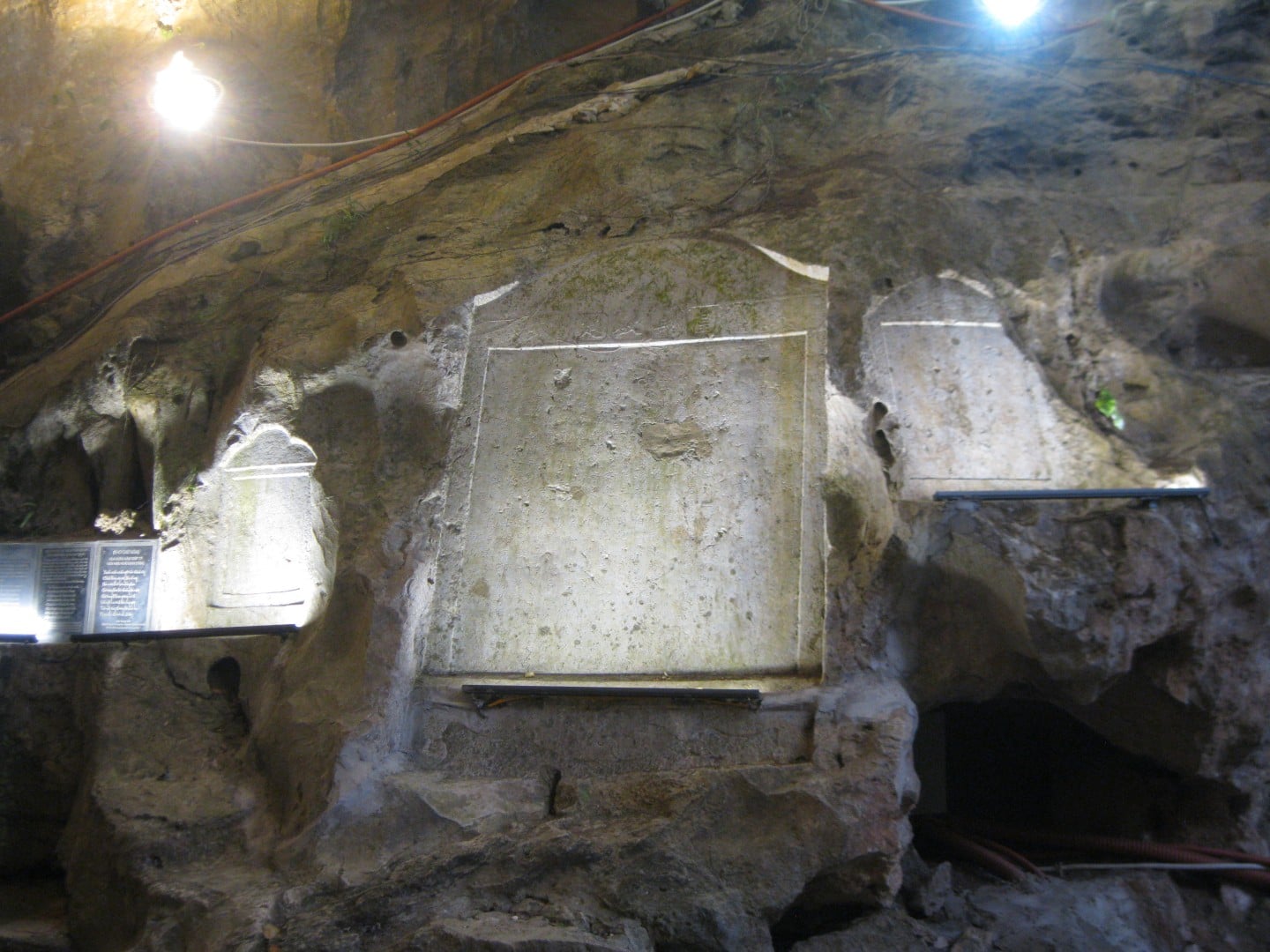
As a strategically important region, the "gateway and frontier" of the North of the Fatherland, Lang Son was once the workplace of many officials appointed by the Vietnamese feudal court to govern and rule the border; a place where envoys stopped on their way, and where officials passed through on official business... Among them were many outstandingly talented literary figures, renowned authors of medieval Vietnamese literature such as: Tran Nhan Tong (1258-1308), Nguyen Trung Ngan (1289-1370), Pham Su Manh (Tran Dynasty, 14th century), Ngo Thi Si (1726-1780), Nguyen Du (1765-1829), Ngo Thi Vi (1774-1821), ... Deeply moved and impressed by the sacred border region of the Fatherland with its beautiful and fascinating natural landscapes, they wrote poems full of emotion, recording memories of the places where they lived and the lands they traveled.
From the 13th to 14th centuries, there were poems written specifically about Lang Son, but poems and inscriptions on stone in Lang Son appeared much later. The earliest known examples are the stelae of Ngo Thi Si. He was the pioneer of this style of stone-carved poetry in Lang Son with his poems written in 1779. Following him were Dr. Le Huu Dung, his successor, from Lieu Xa village, Duong Hao district, Thuong Hong prefecture, Hai Duong province; the brothers and descendants of Ngo Thi Si from Ta Thanh Oai ( Hanoi ); the governors and generals of Lang Son during the Nguyen dynasty such as Phan Dinh Hoe and Nguyen Trong Van; and court and provincial officials such as Ton That To, Doan Dinh Duyet, Nguyen Van Ban, and Nguyen Van Co. The latest is a poem inscribed during the reign of Emperor Bao Dai (1930) in Chua Tien cave. There are approximately 30 poems in total.
The poems inscribed on rock walls in Lang Son are mainly concentrated at the province's famous scenic spots: Nhi Thanh and Tam Thanh caves (Tam Thanh ward), and Tien Pagoda (Luong Van Tri ward). Scattered among them are some poems in other communes of the province: Hang Slec mountain (Na Sam commune), Nang Tien mountain (Quoc Khanh commune), Dan Lai mountain (Khanh Khe commune)... Most are written in Chinese characters, with only two poems in Nom script: one at Nhi Thanh cave and one at Tam Thanh cave. The poems on the steles are usually written in the Tang Dynasty style, in the form of seven-word eight-line stanzas (8 lines, each with 7 words) or seven-word four-line stanzas (4 lines, each with 7 words)... The chosen locations for inscribing the poems are high, easily visible rock walls at cave entrances, along roadsides, in places with beautiful and picturesque natural scenery. The characters on the steles are small to medium in size at lower positions, with larger strokes at higher positions, making them easily readable even from below. Each poem is elegantly engraved on a flat surface, within a rectangular frame, resembling open pages of a book, offering a poetic and refined viewing experience.
The content of the stone-carved poetry in Lang Son is very rich. The main, overarching inspiration in the stone-carved poetry is the beauty and uniqueness of the natural landscape and people of Lang Son. Lang Son – the borderland at the northernmost point of the country, with its azure waters, green mountains, and majestic rivers – always evokes many emotions in the hearts of visitors, especially those who set foot here for the first time. The most representative are the works of the renowned figure Ngo Thi Si. During his years as Governor of Lang Son (1777-1780), deeply in love with the land and people, and captivated by the wondrous beauty of nature, Ngo Thi Si composed many poems praising the landscape. These are poems inspired by the famous landmarks of Lang Son, and the regions he passed through on his border inspection tour in the districts of Cao Loc, Van Lang, and Trang Dinh (formerly)... The nature of Lang Son in his poetry is both poetic and lyrical, yet vivid and expressive.
Tourism promotion expenses Recalling the dark side of lustful thoughts The clear spring and the hundred rocks can all speak of it. The feudal system established a system of waiting for a husband. (Riding leisurely on a donkey to explore ancient caves) Hesitating between the bustling scenery makes one even more fond of it. The stream flows through the rocks, seemingly calling out. The mountain before Lady Tô has endured sun and rain. (Tam Thanh Beer No. 2) |
Through the eyes of Ngo Thi Si, Lang Son not only possesses the magnificent beauty of a "splendid landscape" but is also a strategically important, heroic and enduring land at the forefront of the nation's defenses:
The gold ladder becomes a shop with a master craftsman. The Legend of the Beautiful Landscape Peaceful love, the image of the sword, no hope for the Mother. Cranes and pines near the river seek immortals. (The moat is strong thanks to the treacherous mountains) The landscape is a magnificent tapestry of rivers and mountains. Beautiful clouds cast shadows on the Mother Goddess rock formation. Cranes and pine trees are growing near the Fairy Cave. (Eight Scenic Views of the Garrison) |
The poems he wrote during his inspection tour of the border region of Lang Son in 1779 are a combination of narrative and factual account. From his perspective, Lang Son in the late 18th century not only possessed the picturesque beauty of nature and the majestic grandeur of the border region of the Fatherland, but also the peaceful and prosperous life of its people.
Mountains and rivers mark the border between the two countries. The water flows into the confluence of three rivers. The horseman also possesses considerable strength. The path of silkworms is a good place to collect high-quality silk. A people without foul mouths will have no trouble on the border... (Green mountains mark the border between the two countries) The azure waters of three streams converge here. People, horses, boats, endless stores. Silk, rice, lush green fields. The people are at peace, the border is tranquil... (Beer Pulled Along) |
Following Ngo Thi Si, many tourists and literati from the scholarly and official classes continued the tradition of inscribing poetry on rocks. Besides the deeply moving narrative poems, which subtly captured the ethereal beauty of Lang Son, there were also poems composed by authors during their travels. These included poems by the former Governor of Hai Duong, Nguyen Van Ban, and the Prefect of Thuong Tin, Nguyen Van Co, written in the 4th year of Bao Dai's reign (1929) at Chua Tien Cave. The poetic natural setting of Lang Son became the venue for the refined "game" of Confucian scholars.
Notably, among the poems commemorating the event, many include introductory notes clearly stating the reason, time, and context of their composition. Typical examples include: "Battlefield Recitation" by Ngo Thi Si (written in 1779) in Na Sam; poems from Nhi Thanh Cave by Doctor Le Huu Dung (1779) and Ngo Thi Vi (1814); and poems from Tam Thanh Cave by Ton That To and Doan Dinh Duyet (1918)... These are very interesting details, rich in documentary value, giving us a clearer understanding of the events that took place in Lang Son in the past. Before composing the Tang Dynasty-style poem about the scenery at Tam Thanh, Ton That To – a court official of the Nguyen Dynasty during the reign of Emperor Khai Dinh – wrote: “On the 16th day of the 3rd month of the spring of Mau Ngo year, the Emperor ascended the throne in the 3rd year (1918), and the Emperor traveled to Northern Vietnam to admire the scenery. I, To, was assigned to the royal entourage. On the 20th, we arrived in Lang Son and went to Tam Thanh cave to admire the scenery. I accompanied him and respectfully composed a poem to record the event.” Through this, the authors show us the circumstances of the poem's creation in a very specific and accurate way.
Besides the poems of praise, the cliffs of Nhi Thanh Cave also feature beautifully carved personal poems. During his time as Deputy Governor of Lang Son (1813-1817), Ngo Thi Vi (the youngest son of Ngo Thi Si) meticulously had a series of eight poems carved on the cliffs by Ngoc Tuyen stream. These poems were blessings, encouragements, and admonitions from his family, relatives, and fellow officials before he followed in his father's footsteps to take up his post in Lang Son. His purpose, as clearly stated in the introduction, was "to always remain steadfast," to remember the encouragement and reminders of his loved ones, and to fulfill his assigned responsibilities, worthy of his father and the traditions of his family and lineage. Although private, these poems are rich in historical documentation. They help us understand more about Ngo Thi Vi's family background, career, and his important role on the northern border of the country.
The Emperor's decree arrives, the phoenix comes. Half-year festival, the two halves open. Di Linh Tuyen Khon Chiem Van Dieu The clown from the neighboring country brought in a fortune. The vibrant green grass and joyful flowers The group of childhood sweethearts is destined to bring misfortune. Chính tòng kế thuật phu thần quyến The baby was born prematurely. (The royal decree bestowed by the king shines brightly) For half a year, they were busy guarding the border twice. Tuyen Quang province has demonstrated its literary talent. Which neighboring country would begrudge such a talented person? The flowers and plants of Nhi Thanh were overjoyed. The horse race of Đoàn Thành has been arranged. Reuniting the father fulfills the king's affection. Congratulations to the esteemed official for mentioning him! (Nhi Thanh Beer No. 2) |
Inscribing poems on rock walls is a beautiful custom of our ancestors. Stone-carved poems are a highly valuable form of cultural heritage, both historically and literaryly; they are works that significantly contribute to shaping the "face" of Lang Son's poetry in the Middle and Modern periods. These original documents help us better understand Lang Son's past, especially aspects not mentioned in official historical records. They also contain fascinating messages, imbued with the feelings, souls, and aspirations that our ancestors wished to convey to future generations. Today, these poems on stone truly are open pages that captivate visitors whenever they come to the sacred mountains of Lang Son.
Source: https://baolangson.vn/nhung-ang-tho-tren-vach-da-5077342.html




































































Comment (0)