




Opta's data, compiled from every World Cup final since 1966, shows that football doesn't change in a linear fashion. Each era sees the emergence of new trends, which in turn give rise to countermeasures. From long passes over the top to patient passing combinations against low defensive blocks, the World Cup is like a miniature history book of world football tactics.
The era of long balls and the 1970 Brazilian Revolution
If you were to replay the 1966 World Cup final between England and West Germany, many viewers today might be surprised by the vastly different pace of play. Back then, 25% of the passes from both teams were at least 18 meters long. For comparison, at the 2022 World Cup, only one match achieved a similar ratio.
The tactical thinking back then was very simple: get the ball forward as quickly as possible. Statistics show that at the 1966 World Cup, the distance the ball traveled forward was seven times greater than the distance it traveled backward. By 2022, this ratio had dropped to about three times.
In the era of long ball play, Brazil's 1970 World Cup victory emerged as a team from the future. While most opponents prioritized quick passes forward, Brazil played short passes, circulated the ball, and patiently searched for space.
Less than 10% of their passes were long balls. The midfielders connected closely, the full-backs participated in the attack, and the team maintained a clear structure instead of being fragmented into separate groups.
Total Football and the Age of Defense



By the 1974 World Cup, Rinus Michels and Johan Cruyff's Netherlands team had taken tactical revolution to a new level. While the heat map of the 1966 World Cup showed a relatively empty midfield, by the late 1970s, much of the match activity was concentrated in this area.
The Netherlands not only expanded the role of midfielders but also involved center-backs in the build-up play. From here, the idea of controlling space through a passing system began to spread throughout the world.
As teams became increasingly adept at controlling the midfield, defensive systems evolved to counter them. In the 1980s, the offside trap became a common tactical weapon. The number of offsides increased so dramatically that FIFA had to amend the rules in 1990. This was also the period when football became more pragmatic.
The 1990 World Cup averaged only 2.2 goals per match, a significant decrease from the 2.8 goals of the 1982 tournament. Following this tournament, FIFA banned goalkeepers from catching back passes, causing the number of back passes to goalkeepers to decrease by approximately 70% in just one World Cup after that.

From transitional play to ball control and breaking down low defensive blocks.
From 1994 to 2006, the World Cup entered a transitional period with Arrigo Sacchi's 4-4-4 zonal defense system. Teams were tightly organized and moved in sync. As a result, the pass accuracy rate at the World Cup dropped from 82% in 1986 to 76% in 2002. Football during this era was closely associated with high-speed counter-attacks and crosses from the flanks.
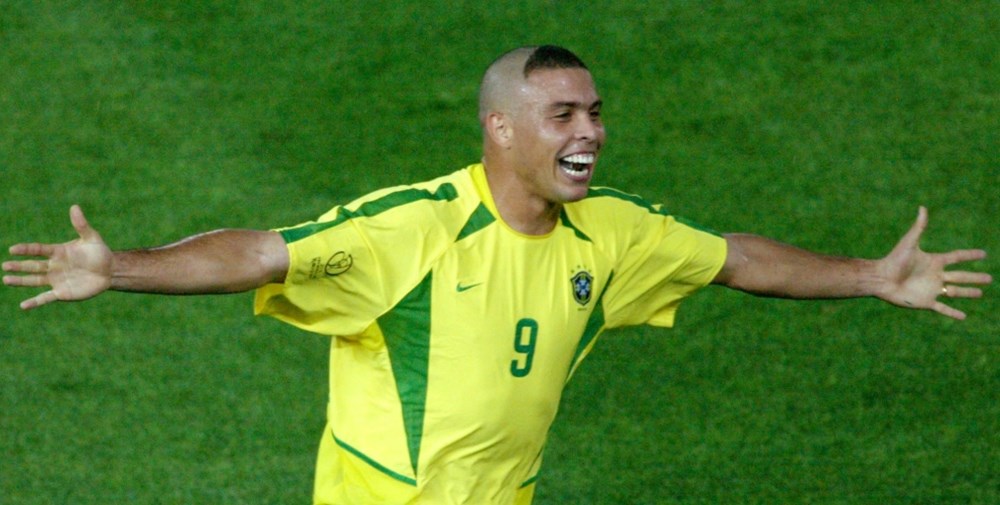
The Spanish national team from 2008-2012 took ball control to its peak. At the 2010 World Cup, they averaged 525 passes per match. Only 7.7% of those passes were long balls. The time between passes was only about 2.5 seconds. Spain passed frequently to draw their entire team into the opponent's half, while also creating opportunities for counter-pressing immediately after losing possession.




The 2022 World Cup once again showed that football is moving in a new direction: breaking down low defensive blocks. Many teams use medium or low defensive blocks with very high organization. As a result, only 16% of the ball's movement into the final third of the pitch occurs through the center. Teams look to the flanks and then pass the ball back to the second line, creating an average of 2.3 chances per match.
As a result, the average shooting distance dropped to 16.4m, the lowest in World Cup history, with 63% of shots taken inside the penalty area.
Source: https://baovanhoa.vn/the-thao/nhung-chien-thuat-lam-thay-doi-lich-su-world-cup-235105.html