1. At what age are cervical polyps most commonly found?
Cervical polyps are small, benign growths that develop on the cervix (the lower part of the uterus that connects to the vagina). They typically develop from the stromal tissue of the cervix and are covered by epithelium. They originate from the cervical canal and may or may not have a stalk. Polyps can range in size from a few millimeters (mm) to several centimeters (cm), can be single or multiple, may or may not have a stalk, and can develop anywhere within the cervical canal.
Polyps are fragile structures that develop from a stalk on the surface of the cervix or inside the cervical canal. Cervical polyps are usually pink, soft, and bleed easily to the touch.
Cervical polyps are a common gynecological condition in women aged 30-50 who have given birth multiple times. Cervical polyps are rare in adolescents. Most cervical polyps are asymptomatic and are only discovered incidentally during routine gynecological examinations.
The exact causes of cervical polyps are still unclear. However, several factors increase the risk of developing cervical polyps, including: high estrogen levels, especially in women of reproductive age and pre-menopause; vaginal and cervical infections; and hormone replacement therapy containing estrogen in postmenopausal women.
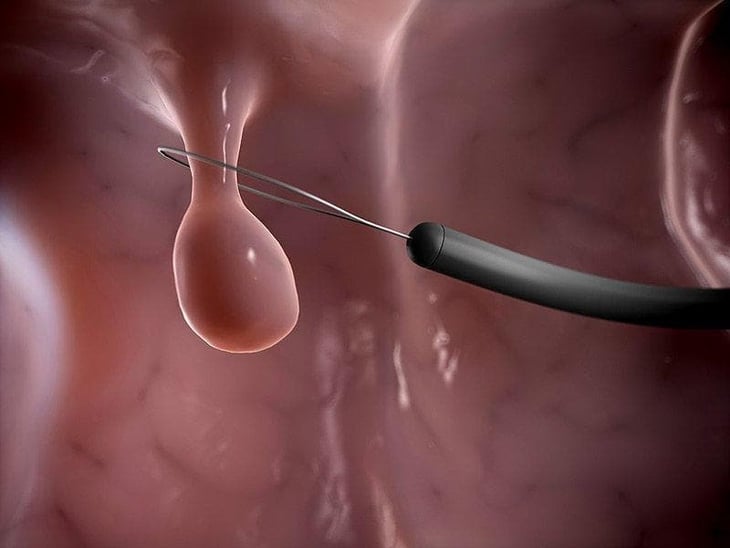
Cervical polyps are small, benign growths that develop on the cervix.



2. Signs and symptoms of cervical polyps
Patients with cervical polyps often have no symptoms, but may experience spotting, bleeding after intercourse, or excessive vaginal discharge. Cervical polyps are usually benign, but about 1% of cases can become malignant. These small tumors are typically pink, have a head, are soft, and bleed easily when touched.
Although the symptoms of this condition are often subtle, women should pay attention to the following signs to prevent it:
- Lower abdominal pain: This often occurs during menstruation and intensifies significantly during intercourse.
- Symptoms during urination include: painful urination, urgency to urinate, frequent urination but with small amounts of urine; if prolonged, this can lead to urinary retention.
- Abnormal vaginal discharge: the vagina secretes excessive discharge of an unusual color, accompanied by a foul odor, itching, and discomfort.
- Irregular menstruation: Cervical polyps often cause irregular menstruation, heavy bleeding, and prolonged periods, frequently resulting in menorrhagia or metrorrhagia.
- Vaginal bleeding: Cervical polyps can occur in women approaching or after menopause; postmenopausal women may only experience light vaginal bleeding. Abnormal uterine bleeding (AUB): 64-88% of cases of endometrial polyps have AUB. Bleeding characteristics: usually mid-cycle, spotting; or heavier bleeding during the cycle (menorrhagia), possibly accompanied by abdominal pain and anemia.
3. Treatment of cervical polyps
Based on the severity of the condition, the doctor will prescribe a specific treatment method for each patient; in some cases, only medical treatment is needed. For those with suspected symptoms, doctors will send samples for testing. Patients may be treated with antibiotics if the polyp shows signs of infection.
However, there are also many cases that require surgical treatment, such as electrocautery of the polyp base and polyp removal surgery. If the polyp is small, doctors can perform polyp twisting. This is a simple procedure, performed quickly and painlessly. If the polyp is malignant (cancerous), treatment will depend on the type and stage of cancer. If the polyp is too large, the doctor may recommend polyp removal and electrocautery of the polyp base to prevent recurrence.



Note: Although not extremely dangerous, cervical polyps can affect fertility in women, so regular health checkups are important. If you notice any suspicious symptoms, you should see a specialist for advice on appropriate treatment plans to avoid dangerous complications to your reproductive health.
Source: https://suckhoedoisong.vn/nhung-dau-hieu-de-nhan-biet-polyp-co-tu-cung-169260626133448634.htm