

More and more Vietnamese businesses are operating across borders. At the same time, an increasing number of "overseas leaders," mostly young people, are taking on entrepreneurial roles abroad.
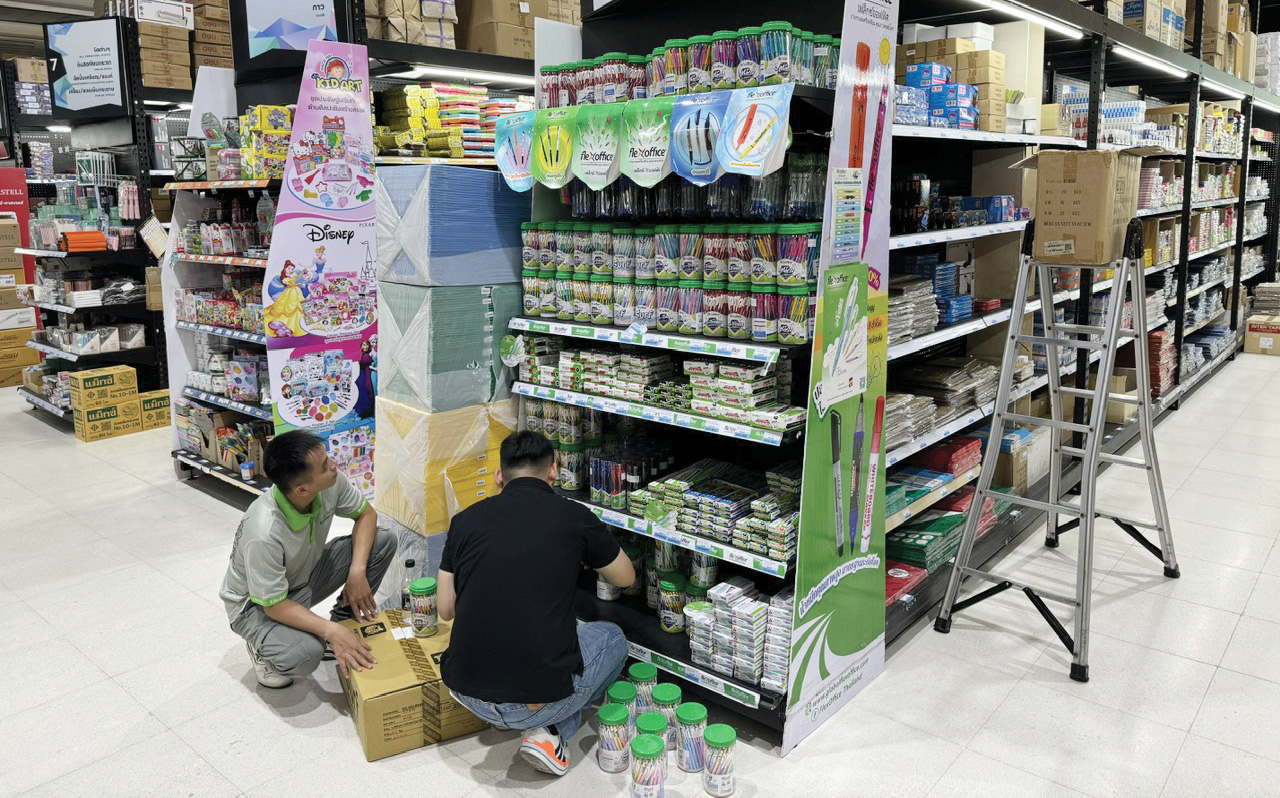
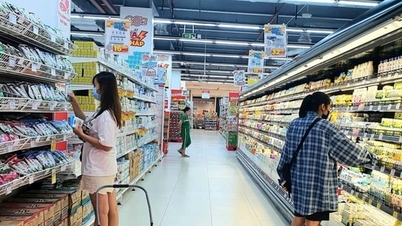
Shelves at a Thien Long store in Thailand - Photo: MT
Start-ups like KiotViet and Thien Long ballpoint pens are quite familiar to many Vietnamese people. But they are gradually becoming familiar in many other countries as well, thanks to "global entrepreneurs".
The pioneering journey
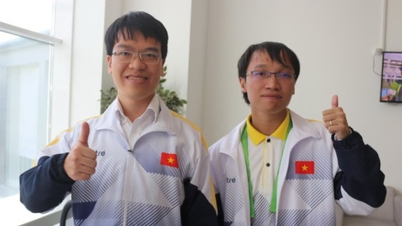
Lai Quoc Minh, born in 1990, graduated with a degree in international economics from the Ho Chi Minh City University of Foreign Trade, while Vo Tran Tung, one year younger, studied economics and finance at the Ho Chi Minh City University of Economics.
Both previously worked at fast-moving consumer goods companies before joining Thien Long in 2015. Initially, they were both market development employees. Currently, both are in charge of international market development departments.
Starting with developing the Philippine market, Vo Tran Tung quickly realized it was a difficult market to conquer due to cultural differences, consumer habits, and distribution systems. The stationery products there were primarily brands from the US and China.
"I used to be very worried about the negative feedback on the product design, the rejections from customers, and the intense homesickness," Tung recalled the period when he felt he couldn't hold on.
After thoroughly researching how Filipino consumers prefer affordable cap pens over click pens like those in Vietnam, Thien Long launched the FO-GELB08, which quickly became a best-selling item.
"We should prioritize choosing medium-sized companies that are cooperative and willing to build the brand together from the beginning," Tung shared. Thanks to applying this approach, Thien Long's growth in Nepal in 2023 reached over 100% compared to the same period.
Similarly, Minh also faced challenges in rebuilding the distribution system in Laos, a market where Thien Long had previously established a representative office and conducted business but had not met expectations. Leveraging his Thai language skills, Minh and his team rebuilt the distribution system, from wholesale and retail channels to mobile sales.
In just 1.5 years, the company's FlexOffice branded products dominated the market, leading in sales and market coverage. In terms of revenue per capita, the market of approximately 6 million people has become one of Thien Long's top 3 overseas markets.
Following their success in Laos, Minh continued to lead the team in exploring the Indonesian market in early 2018.
With a population of approximately 300 million people, the model of working with only one distributor, as in previous markets, was unsustainable. Minh and his team, including Thiên Long's local staff, had to divide the market into regions, each with its own distributor.
Through tireless efforts and adaptation, sales tripled annually in the first two years.
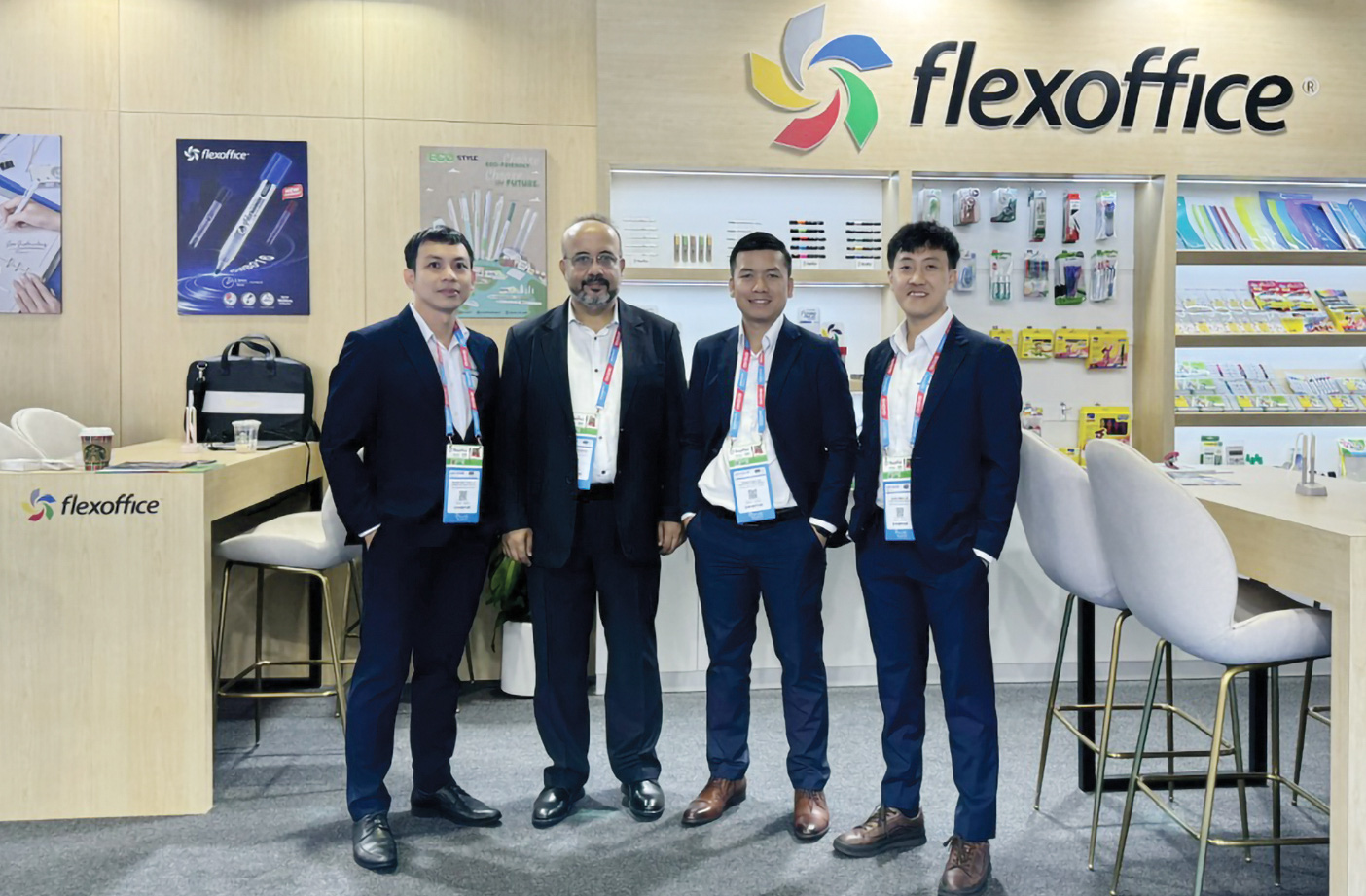
Minh (far right) and Tung (second from right) at the annual international trade fair and meeting clients in Dubai, UAE - Photo: MT
Bringing business management solutions to the world.
Initially, the KiotViet team focused on providing software development services to clients in the US, Australia, and Singapore. Recognizing the potential of the domestic market, KiotViet was launched in 2014, creating opportunities to transform manual management methods into more modern and efficient solutions for millions of businesses.
To date, KiotViet has become a familiar name in the software-as-a-service (SaaS) sector, serving over 300,000 customers across 20 different industries in Vietnam. Each month, the total value of goods traded on the KiotViet platform reaches approximately $4 billion USD.
With its SaaS model, KiotViet is not limited by geography. Mr. Vu The Tung, Director of International Market Development, played a crucial role in helping KiotViet achieve its goal of becoming the leading enterprise management technology solution in Southeast Asia.
In 2023, KiotViet officially expanded into the international market. Mr. Tung and his team had to thoroughly research target markets, build a distribution network, and ensure service quality met international standards.
But "when in Rome, do as the Romans do," according to Mr. Tung, one must adapt. For example, in Myanmar and Bangladesh, where internet access is only available for 3-4 hours a day and electricity is only supplied for 7-8 hours, KiotViet has added a feature that allows the software to function even without internet.
In markets that are more developed than Vietnam, demand focuses on advanced features such as intelligent reporting and AI-powered market trend prediction.
Over the past year, the KiotViet team has learned many lessons from its strategy of selecting target markets and positioning products: prioritizing markets with Vietnamese expatriates. Currently, South Korea, Japan, and Cambodia are the three overseas markets with the most KiotViet customers.

A store in the US using KiotViet software - Photo: KV
Expanding the reach of Vietnamese goods.
Mr. Tung shared the story of a Vietnamese woman in Taiwan who, during a visit to her homeland, came to the KiotViet office to receive support in installing a POS machine and took it back to her store in Taiwan to use. This not only made the KiotViet team proud but also motivated them to bring Vietnamese technology to support the businesses of overseas Vietnamese more effectively.
Mr. Tung said the team is also focusing on expanding in the Asia-Pacific and North America regions. "We want to be known as a provider of innovative, flexible solutions tailored to the specific needs of each market."
"This contributes to putting Vietnam's name on the map of pioneering countries in the global technology field," Mr. Tung shared, explaining his motivation for striving on the challenging journey abroad.
As for Lai Quoc Minh, after 10 years of "taking his talent abroad," the biggest lesson he learned was identifying and managing risks.
Potential markets with promising initial results, such as Indonesia, can quickly face difficulties after unforeseen events like COVID-19. Meanwhile, markets seemingly fraught with risk due to political instability, such as Myanmar, have delivered unexpected success.
Before the pandemic, Minh spent an average of about 30 days a year in Vietnam, the rest of the time abroad. During this time, Minh worked while immersing himself in local life and learning languages through daily communication. Through this gradual accumulation, Minh is now fluent in Thai, Lao, Bahasa Indonesia, and English.
After the pandemic, Minh returned to Vietnam and shifted to managing major markets such as Southeast Asia, East Asia, and Europe. Minh is proud to have helped his team bring Thien Long products, "Made in Vietnam," to a wider market, with a presence in 74 countries and a target of 100 countries within the next 5-10 years.
"Many times when we go to restaurants or schools in other countries, we see them using Thien Long pens to write the names of dishes. We are happy to contribute to spreading Vietnamese brands in many countries," Minh shared.

 The 'rejuvenation' journey of leading Vietnamese brands.
Source: https://tuoitre.vn/nhung-doanh-nhan-toan-cau-20250107175847928.htm


















































































Comment (0)