

Mr. and Mrs. Trinh Van Bo – the financial "midwives" of the Revolutionary government.
Revolutionary capitalist Trinh Van Bo (1914 – 1988) and his wife, Hoang Thi Minh Ho (1914 – 2017), were both awarded the First Class Independence Medal; posthumously bestowed the title of "Outstanding Vietnamese Entrepreneur" along with three other famous entrepreneurs: Luong Van Can, Bach Thai Buoi, and Nguyen Son Ha – the "first generation" of patriotic Vietnamese entrepreneurs. A beautiful street in Hanoi is named after him.
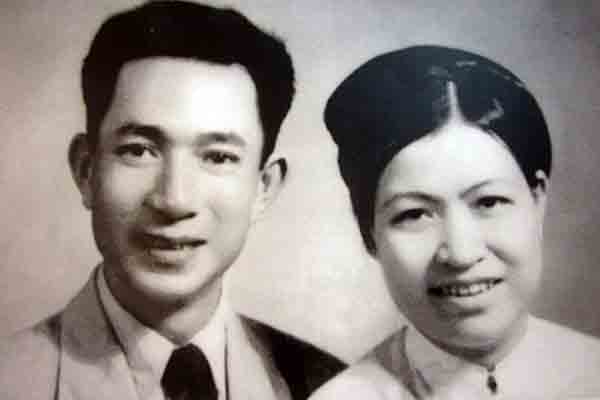
Mr. Trinh Van Bo and Mrs. Hoang Thi Minh Ho
Tracing back through history, businessman Trịnh Văn Bô was the youngest of three siblings, hailing from Bãi village, Cao Viên commune, Thanh Oai district, Hà Tây province (now part of Hanoi). His family had a long tradition of business; his father, Trịnh Phúc Lợi, was a successful Vietnamese businessman in the early 20th century, owner of the Phúc Lợi trading company. He married Hoàng Thị Minh Hồ, daughter of Hoàng Đạo Phương, a scholar and wealthy merchant from old Hanoi. The Phúc Lợi textile trading company, managed by Mr. and Mrs. Bô, was located at 48 Hàng Ngang Street. The second floor of this company once served as a residence for many high-ranking revolutionary leaders returning to Hanoi from the resistance zones before 1945. Notably, it was here that President Ho Chi Minh drafted and completed the historic Declaration of Independence, giving birth to the Democratic Republic of Vietnam.
By mid-1940, Mr. Bo was considered one of the wealthiest people in Hanoi, owning a textile factory and also involved in real estate. Despite his wealth, his family conducted their business based on the philosophy: "For every 10 dong earned, keep 7, and use the rest to help the poor and do charitable work." In the autumn of 1945, the newly established Provisional Government faced significant financial difficulties. The Central Treasury was then confronted with short-term debts totaling 564 million dong, while the treasury only had just over 1.2 million Indochinese dong, nearly half of which was torn banknotes awaiting exchange. At that time, President Ho Chi Minh initiated the establishment of the Independence Fund and the "Gold Week" to collect donations of money and goods from the people for the Government. Immediately, Mr. Trinh Van Bo's family donated 5,147 taels of gold, equivalent to 2 million Indochinese dong, to the Government. Furthermore, leveraging his prestige, he mobilized the business community and various segments of the population to donate 20 million Indochinese dong and 370 kg of gold to support the government.
Speaking of Mr. Trinh Van Bo, one cannot fail to mention Mrs. Hoang Thi Minh Ho and her simple yet profoundly philosophical statement recorded in history: "My husband and I have four hands and two brains; we will contribute everything we have and create something else. National independence cannot be lost, because once lost, when will future generations ever regain it?"
In 2014, to commemorate the 100th anniversary of the birth of Mr. Trinh Van Bo and to celebrate the 100th birthday of Mrs. Hoang Thi Minh Ho, the Ministry of Finance compiled the book "Businessman Trinh Van Bo and His Contributions to Vietnam's Finance," aiming to honor the merits and contributions of the family to the Party, the State, and the Vietnamese financial sector.
Buy a French printing press and donate it to the government for printing money.
Before the August Revolution, Mr. Ngo Tu Ha (1882 – 1973) was a patron and supporter of patriotic intellectuals who wanted to print books and newspapers. He was from Ninh Binh, grew up in a religious order, and was very proficient in French. Historical records show that at the age of 17, Mr. Ngo Tu Ha left his poor hometown to settle in Hanoi, working as a printer for the French printing house IDEO. Even at a young age, he dreamed of establishing a printing house, aspiring to be a place for printing and distributing the knowledge of humanity. More significantly, he cherished the desire to serve the revolution of his country by secretly supporting the printing of books, newspapers, documents, and leaflets supporting the Viet Minh in the years before 1945.
Then he built a printing house named Ngo Tu Ha near the Hanoi Cathedral (24 Ly Quoc Su Street), and he himself was among the top 300 influential capitalists in Indochina. What is particularly interesting and something to be proud of is that the first banknotes of the Democratic Republic of Vietnam, commonly known as "Uncle Ho's banknotes," were printed at the Ngo Tu Ha printing house. The timely printing and distribution of these "Uncle Ho's banknotes" not only met the people's spending needs but, more importantly, affirmed the nation's independence and sovereignty. This pride and responsibility were entrusted to the Ngo Tu Ha printing house by the government.
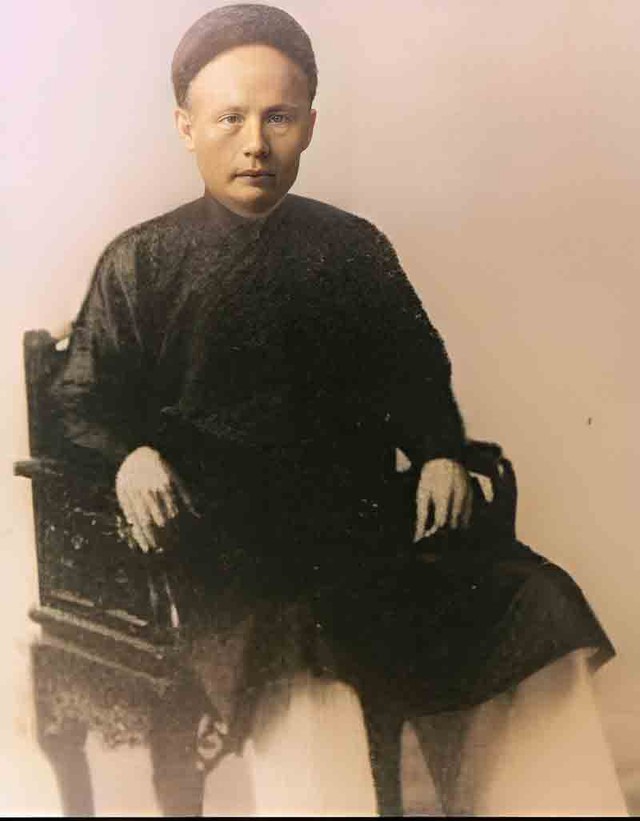
Mr. Ngo Tu Ha – the owner of the printing house that printed the first banknotes bearing President Ho Chi Minh's image in the Democratic Republic of Vietnam.
Before the August Revolution, Mr. Ngo Tu Ha (1882 – 1973) was a patron and supporter of patriotic intellectuals who wanted to print books and newspapers. He was from Ninh Binh, grew up in a religious order, and was very proficient in French. Historical records show that at the age of 17, Mr. Ngo Tu Ha left his poor hometown to settle in Hanoi, working as a printer for the French printing house IDEO. Even at a young age, he dreamed of establishing a printing house, aspiring to be a place for printing and distributing the knowledge of humanity. More significantly, he cherished the desire to serve the revolution of his country by secretly supporting the printing of books, newspapers, documents, and leaflets supporting the Viet Minh in the years before 1945.
Even more commendable, during the nine years of resistance against the French (1945-1954), the patriotic capitalist Do Dinh Thien chose not to live in the comfortable life of Hanoi, but instead abandoned all his possessions and moved his family to Viet Bac to support the fledgling government and the Revolution during the nine-year protracted resistance war. He and his wife entrusted the Chi Ne plantation in Hoa Binh to the Party's Economic and Financial Committee for management, and notably, he contributed nearly half of the shares to establish the Vietnam Industrial and Commercial Bank (the predecessor of the National Bank of Vietnam). After the victory of the resistance war, his family returned to Hanoi, settling in their private residence at 76 Nguyen Du Street.
"The King of Steamships" Bach Thai Buoi
In the early years of the 20th century, when talking about the first Vietnamese billionaires, no one could forget Bach Thai Buoi (1874 – 1932), the "king of Vietnamese shipping," one of the "four great tycoons" not only in Vietnam but also in the entire Indochina region at that time.
Born into a poor peasant family, the Do clan in Thanh Tri, Ha Dong (now part of Hanoi), Bach Thai Buoi was born into a poor family. His father died early, and he helped his mother earn a living from a young age. A wealthy man named Bach, recognizing his intelligence and quick wit, adopted him, and from then on, he took the Bach surname. Living in the wealthy household, he was provided with food and education, becoming fluent in both Vietnamese and French, and soon displayed a natural talent for business. According to historical records, thanks to his intelligence, he was sent by the Governor-General of Tonkin to France to attend the Bordeaux fair. His first trip to the West, observing and learning about French business practices, though short, sparked intense ideas of wealth creation in the mind of the 20-year-old Bach Thai Buoi from the moment he boarded the ship to return home. It seemed that opportunities for wealth were everywhere, if one dared and was determined to pursue their business ideas.
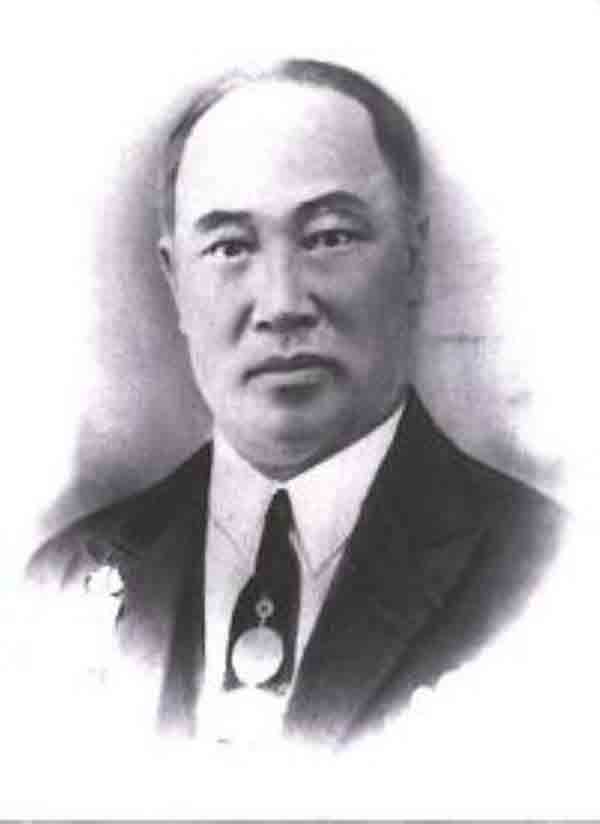
Mr. Bach Thai Buoi – the king of Vietnamese shipping.
At that time, the French began their colonial exploitation, expanding roads and building bridges in Vietnam. He quickly found an opportunity to become a supplier of materials for the largest railway project in Indochina at the time. Initially, he supplied materials for the French to build a 3,500-meter-long bridge connecting Hanoi with Gia Lam (the Long Bien Bridge today). In 1902, the bridge was inaugurated, and he had accumulated a significant amount of capital to expand his business. With this money, he bought a pawn shop in Nam Dinh, opened a Western-style restaurant in Thanh Hoa, a liquor agency in Thai Binh, and simultaneously acted as a tax contractor for markets stretching from the North to the Central region.
Long-distance business inevitably requires careful consideration of transportation. Inland waterway transport, a sector primarily dominated by Chinese merchants, caught the attention of the businessman Bach. In 1909, he established the Bach Thai Buoi Maritime Company – the beginning of his later title as "King of Vietnamese Waterways" or "Lord of the Northern Rivers." Initially, the company leased three ships, Phi Phung, Phi Long, and Bai Tu Long, to operate waterway transport on two routes: Nam Dinh – Ben Thuy (Nghe An) and Nam Dinh – Hanoi.
From initially leasing ships, after 10 years of operating these two inland waterway routes, his company owned nearly 30 ships of various sizes and barges operating on most of the rivers and waterways in Northern Vietnam, and on 17 domestic and international shipping routes, including Hong Kong, Japan, the Philippines, mainland China, and Singapore. Notably, among the fleet of ships owned by Mr. Bach Thai Buoi at that time, there were 6 ships from a bankrupt French shipping company, which he bought and renamed with names reflecting the historical events of Vietnam's nation-building and defense, including Lac Long, Hong Bang, Trung Trac, Dinh Tien Hoang, Le Loi, and Ham Nghi.
On September 7, 1919, the Bach Thai Buoi Shipping Company brought glory to the Vietnamese maritime industry by launching the Binh Chuan ship, entirely designed and built by Vietnamese people, at Cua Cam (Hai Phong). The ship, measuring 42 meters in length, with a tonnage of 600 tons and a 400-horsepower engine, arrived at Saigon port more than a year later, on September 17, 1920. This event shook the business community of Southern Vietnam, who proudly erected a bronze plaque inscribed with: "Presented to the Binh Chuan ship, the first Vietnamese ship at Saigon port." From then on, the title "King of Vietnamese Shipbuilding" was born.
Despite his grand ambitions, ambitious thinking, and extensive interactions with foreign merchants, the bourgeois Bạch Thái Bưởi always kept his roots in mind. His strong sense of national pride was evident in his choice of names for his ships. It is said that once, while defending the rights of the people at an economic and financial conference, Bạch Thái Bưởi was threatened by Governor-General René Robin: "Where there is Robin, there is no Bạch Thái Bưởi." Undeterred, he retorted: "As long as Bạch Thái Bưởi exists in this country, there will be no Robin."
During his time and for generations to come, he was always regarded as a nationalistic capitalist, a self-reliant businessman, a great merchant, and especially one with a high sense of national pride, a great role model for future generations of entrepreneurs to learn from. He was one of the patriotic capitalists and also the person who laid the first bricks for the country's maritime industry.
"The founder" of Vietnam's paint industry – Nguyen Son Ha
One of Vietnam's leading entrepreneurs during the French colonial period, Mr. Nguyen Son Ha (1894 – 1980) is considered the pioneer of oil paint production in Vietnam, or perhaps the "father" of the Vietnamese paint industry. He was born in Quoc Oai, Son Tay (now part of Hanoi) into a family with seven siblings. His father died early, forcing him to drop out of school and work as an office assistant for a French trading company, later moving to work for the Sauvage Cottu oil paint company in Hai Phong. Although he started as an apprentice, he was intelligent and eager to learn, so he began to study how the French made paint. Thus, during the day he worked for his employer, and at night he studied French, eventually reading through the entire library of his paint company owner.
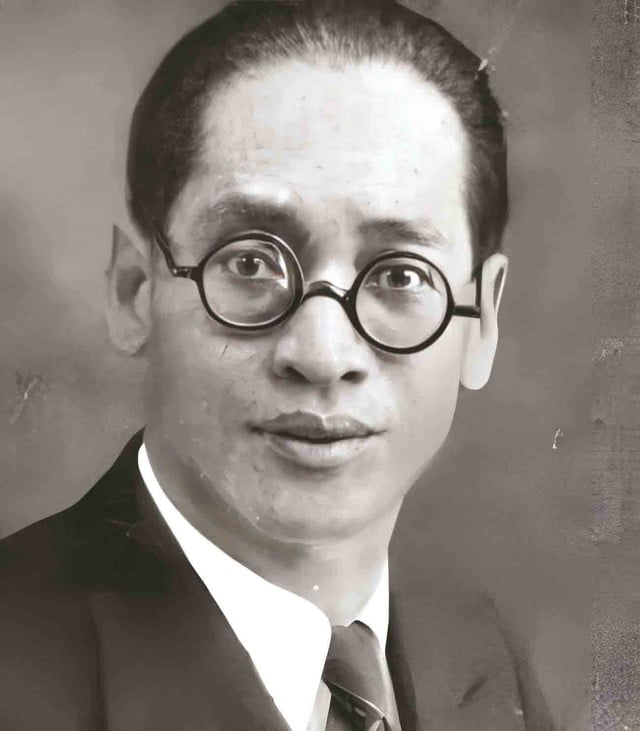
Mr. Nguyen Son Ha – the founder of the Vietnamese paint industry.
Having mastered the basic techniques of paintmaking and accumulated some capital, in 1917 he decided to quit his job and open his own paint shop.
In 1920, at the age of 26, Mr. Ha became the owner of the large Gecko paint company, located in the port city of Hai Phong. Spanning 7,000 square meters, it supplied customers from Hanoi to Saigon, and even crossed the border to Cambodia, Thailand, and Laos. The paint sold so quickly that production couldn't keep up with demand. Unwilling to accept that the Annamese could produce high-quality paint at a lower price than the French, the French sought to suppress it. However, with the acumen of a businessman, he overcame many difficulties to maintain the prosperity of the fledgling local industry.
However, Nguyen Son Ha's business career took a different turn when he met the patriot Phan Boi Chau – who was under house arrest by the French authorities in Hue – in 1939. This encounter profoundly impacted the worldview of the capitalist Nguyen Son Ha. Returning to Hai Phong, he ran for city council and participated in many patriotic associations and committees. He fought against the French and Japanese to demand the opening of rice and bran warehouses to alleviate famine; he established schools to educate orphans… During the “Golden Week,” he and his family donated all their jewelry, approximately 10.5 kg, to the Revolution. Then, his eldest son sacrificed his life in the early days of the nationwide resistance, and Nguyen Son Ha decided to follow the path of the national liberation revolution, abandoning all his assets, including factories, plantations, and money…
After the August Revolution, Mr. Nguyen Son Ha was elected as a representative to the first National Assembly of the Democratic Republic of Vietnam in Hai Phong. With a business mindset, he put forward many ideas to support the new government in the production of insulating plastic fabric, carbon paper, printing ink, rainproof fabric, dried food rations, cough medicine, etc. After the resistance war against the French, he returned to Hanoi and was re-elected to the Vietnamese National Assembly for four consecutive terms. He passed away in Hai Phong in 1980.
***
Intelligent, decisive, bold, and highly patriotic, Vietnamese merchants in the late 19th and early 20th centuries not only had brilliant careers, dedicated themselves fully to their country, but even earned the admiration of the French, who were invading and ruling Vietnam at that time.
Thanhnien.vn
Source: https://thanhnien.vn/nhung-doanh-nhan-yeu-nuoc-doi-dau-185241009000654848.htm







![[E-Magazine]: The Warmth of the Changing Seasons](https://vphoto.vietnam.vn/thumb/402x226/vietnam/resource/IMAGE/2026/03/27/1774616373750_e-magazine-hoi-w1200t0-di2612d199d5171010t11920l1-hagm-027.webp)








































Comment (0)