

At 5:30 AM, a premature baby girl let out a weak cry in a rented room in Hanoi . Nearly five hours later, she was finally taken to Duc Giang General Hospital in a state of cyanosis throughout her body, with a body temperature of only 31 degrees Celsius.

The baby was estimated to have been born at 31 to 32 weeks, weighing approximately 1.5 kg. Upon admission to the hospital at around 10:30 AM, the tiny body was almost completely exhausted after hours without any medical assistance.
In the Neonatal Unit, the resuscitation team quickly intubated the infant, provided mechanical ventilation, warmed the baby, and deployed comprehensive support to save the infant's life from a very precarious position.
Her life has been temporarily saved, but that's not the ultimate destination here.

The Neonatal Department at Duc Giang General Hospital is currently allocated 18 beds. In reality, the number of pediatric patients receiving treatment regularly exceeds this capacity. Currently, the department cares for 17 children, but at times it has to admit nearly 30 patients simultaneously.

Each brightly lit incubator represents a case requiring continuous monitoring. Each baby is a unique journey that doctors and nurses must patiently accompany from the very first hours after birth.

According to Dr. Vu Thi Thu Nga, Head of the Neonatal Department, premature babies, especially those born without adequate prenatal care or in special circumstances, often come with many risks.
Many babies are admitted to the hospital before their mothers have been screened for infectious diseases such as hepatitis B, HIV, and syphilis. Some babies are born prematurely due to improper prenatal care. Therefore, upon admission, the medical team must comprehensively assess respiratory status, weight, signs of infection, congenital defects, and a range of other risks.

The heart rate, breathing rate, oxygen saturation, and body temperature of each baby are closely monitored.
Newborns develop very rapidly. Even a small change in skin color, breathing rate, or reflexes can be a warning sign. Therefore, the work of doctors and nurses is not only to perform resuscitation techniques, but also to observe them persistently and continuously, with almost no breaks.

Under the green light, a tiny baby lies nestled in an incubator, surrounded by tubes and monitoring equipment. This is when the infant is receiving phototherapy treatment for jaundice, helping the delicate body eliminate excess bilirubin.

Beside the incubator, the nurse bent down to check the baby's position, gently adjusting it to maximize the skin's exposure to the light. Throughout the phototherapy session, the baby always wore a specialized eye mask to protect the retina from the direct impact of the high-intensity light source.


Tasks such as adjusting the baby's position, checking the eye patch, monitoring the IV line, and controlling the incubator temperature are repeated many times a day. For babies weighing just over 1kg, every action performed by the nurse must be gentle, precise, and patient.
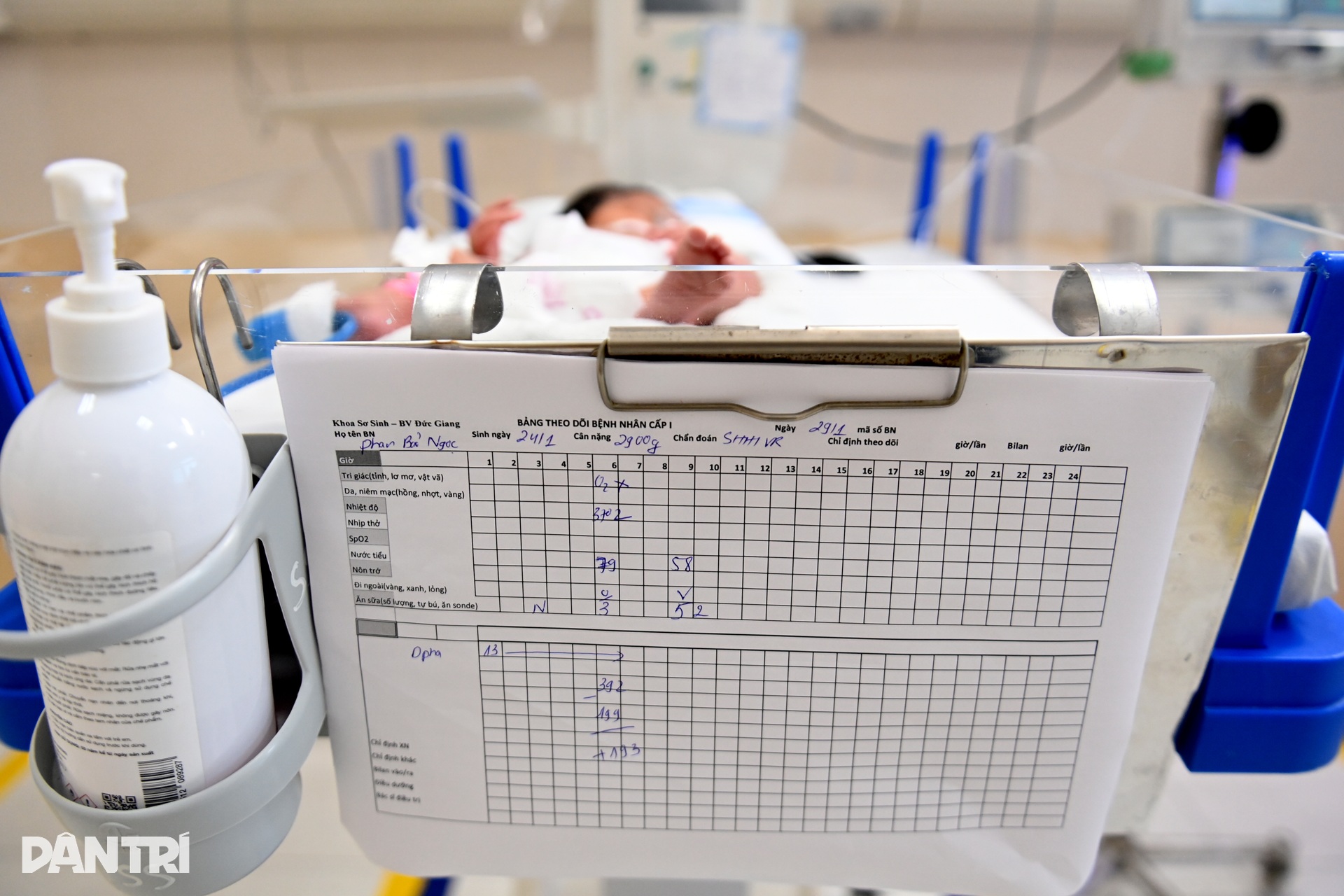
In the Neonatal Department, the goal is not simply to help infants overcome critical conditions, but to nurture these tiny lives through each feeding, each sleep, and each gram of weight gained after many days of treatment.
Some infant patients only begin to eat solid food on the sixth day of treatment, when the gestational age reaches 34 weeks and 4 days.

In the treatment ward, the caregiving cycle is almost non-stop. Shifts follow one another, with medical staff constantly monitoring the children's condition, checking vital signs, IV lines, providing respiratory support, and promptly addressing any abnormalities in the patients.
Behind each child patient may also be the story of young, inexperienced mothers, unfortunate circumstances, and families on the verge of collapse.
The case of the little girl mentioned above is one such tragic story.


This is the fourth pregnancy for the young mother from Lao Cai . The previous three times, she gave birth prematurely in the mountainous region and lost her babies. This time, she went to Hanoi to work as a factory worker, became pregnant but didn't receive adequate prenatal care. When the baby was born, she said she couldn't take care of it. Afterward, the mother left the hospital and returned to her hometown.
The Neonatal Department had to contact local authorities to verify the information and persuade the mother to return. "Keeping the mother with her child is sometimes even more difficult than saving the child's life," Dr. Nga shared.
During the day, the mother is guided on how to breastfeed. At night, while the baby is still being closely monitored, doctors and nurses return multiple times to check on her because they are still not completely at ease.

Some mothers are very young, very "carefree," and not yet fully aware of their responsibilities as mothers. But through the persistent efforts of doctors and nurses, many are gradually changing.
According to Dr. Nga, not all decisions to abandon a child stem from financial difficulties. Many cases involve difficult circumstances such as pregnancy outside of marriage, lack of family acceptance, psychological distress, or the inability to cope independently in the first few days after childbirth.

Here, doctors and nurses welcome babies from the moment they are born, still very fragile. They patiently accompany these children through long days of ventilation, phototherapy, learning to eat, and overcoming many complications. The ultimate goal is for the day these children can return to their families healthy and safe.
Source: https://dantri.com.vn/suc-khoe/nhung-em-be-lon-len-trong-long-ap-20260316172550037.htm





















































































Comment (0)