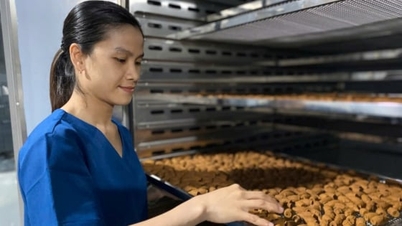
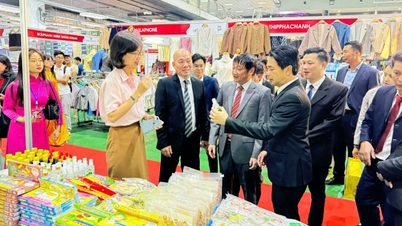
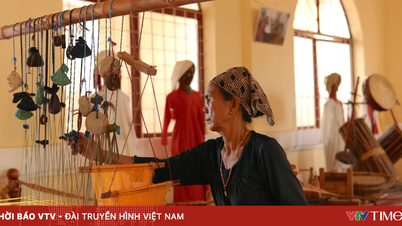
Actively digitize production.
In Hung Long commune, the civet breeding model of Mr. Nguyen Van Duc (Hamlet 32) is yielding high economic efficiency thanks to the application of technology in production. During the breeding process, Mr. Duc invested in an automatic water supply system and a semi-automatic sanitation system, ensuring clean water, limiting disease outbreaks, and reducing the time spent cleaning the cages by about 80% compared to manual methods. As a result, the breeding environment remains dry and airy, creating favorable conditions for the civet herd to thrive.
In early 2026, starting as a small-scale breeder, Mr. Nguyen Van Duc supported and encouraged five more families to join, forming a cooperative for civet breeding. To date, the total number of breeding pairs has reached 200. "Civet breeding pairs, raised for 8 months, have an average price of 10-15 million VND per pair. All the products are sold out, and the price is higher than other livestock," Mr. Duc said.
Located more than 10km from Hung Long, the solar-powered and IoT-enabled apricot blossom garden model of Mr. Bui Ngoc Duc (owner of Huu Duc apricot blossom garden, No. 852 Vuon Thom Street, Hamlet 3, Binh Loi Commune) is also a shining example of digital transformation in the locality. The IoT system helps reduce labor by 90%, save 20%-70% of water, and optimize the flower care process.



In addition, Mr. Bui Ngoc Duc has invested in a solar power system combined with smart sensors to monitor and control the care of the apricot trees, tracking humidity, temperature, watering levels, and the growth status of the trees. “Currently, the garden has over 20,000 mature apricot trees. Applying technology to production helps me save more than 100 million VND/hectare per year, while also significantly reducing labor and water costs,” Mr. Duc shared. During Tet (Lunar New Year), Mr. Duc uses Facebook and TikTok to livestream and introduce and sell his products. This method helps expand his customer base, increase interaction with buyers, and reduce advertising costs. As a result, the garden sells more than 1,000 apricot trees each year.
Building a sustainable agricultural ecosystem.
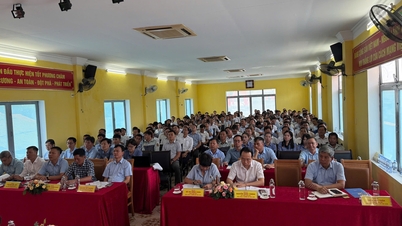
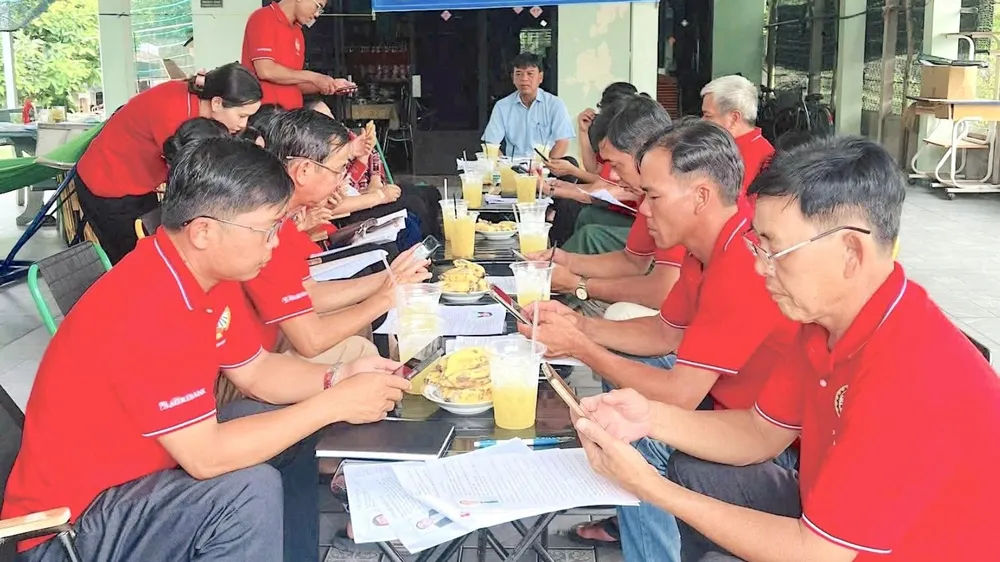
In An Nhon Tay commune, the conversations among farmers over their morning coffee used to revolve around the weather or fertilizer prices, but things have changed. At the "Digital Farmers' Club," members discuss QR code scanning, livestreaming sales, and installing the Farmers' Association app; they share experiences in digitizing products, tracing origins, combating counterfeit goods, and bringing agricultural, forestry, and aquatic products to e-commerce platforms to improve economic efficiency.
According to Pham Phu Cuong, Chairman of the An Nhon Tay Commune Farmers' Association, the association has implemented many programs based on the "Digital Farmers' Club" model, such as developing organic vegetable gardens, encouraging green, clean, and beautiful models, creating high-quality products; organizing training and introducing typical agricultural products; connecting farmers with cooperatives and businesses to develop production linkages, forming cooperative groups and cooperatives, and simultaneously guiding the development of eco -tourism areas along the river.
According to the Ho Chi Minh City Cooperative Alliance, the city currently has 425 registered cooperatives, 2 cooperative federations, and 1,232 cooperative groups. By 2030, the city aims to have 900 cooperative groups, 815 cooperatives, and 12 cooperative federations, with approximately 13,700 hectares of high-tech crop cultivation and over 133 hectares of high-tech aquaculture. The alliance's main focus in the coming period is to continue assisting individual households, cooperative groups, and cooperatives in accelerating their transition to modern urban agriculture models, using high technology, digital transformation, and sustainable development as pillars to optimize the increasingly limited land resources.
According to Nguyen Van Nhao, Chairman of the Hung Long Commune Farmers' Association, besides the civet breeding cooperative model of Mr. Nguyen Van Duc, many farmers in the commune are also actively applying technology to production and sharing it with others, especially the experience of using QR codes to trace the origin of products. Products such as organic ST25 rice, OCOP clean guava, livestock, and safe vegetables are all labeled with QR codes, helping consumers easily look up information about the production process (from seeds, care procedures to harvest time and production facility). This approach also contributes to building brands and increasing the value of local agricultural products.



From An Nhon Tay and Hung Long communes to many other localities, digital transformation is connecting farmers into communities that learn together, produce together, and develop markets. "Digital farmers' clubs," cooperatives, and agricultural associations are places where people share experiences in applying technology, linking production, building brands, and bringing agricultural products closer to consumers. This is also an important foundation for forming a digital economic ecosystem from the grassroots level.
Source: https://www.sggp.org.vn/nhung-hoi-quan-nong-dan-so-post857003.html
![[Image] Ho Chi Minh City: Ma Lang area, Chicken-Rice Market about to change its appearance](https://vphoto.vietnam.vn/thumb/1200x675/vietnam/resource/IMAGE/2026/06/25/1782377698627_ndo_br_m1-jpg.webp)


![[Photo] General Secretary and President To Lam receives Palestinian Ambassador Saadi Salama](https://vphoto.vietnam.vn/thumb/1200x675/vietnam/resource/IMAGE/2026/06/25/1782365384740_a1-bnd-9423-8322-jpg.webp)

![[Image] Schools organize meetings and introduce teaching models to students admitted to grade 10.](https://vphoto.vietnam.vn/thumb/1200x675/vietnam/resource/IMAGE/2026/06/25/1782368077271_ndo_br_z7970052192242-1ec8daeb77a6eed1a4e9f58c564ddd3e-jpg.webp)