

- Beautiful temples in Ca Mau City
- Discover the ancient temple in Ca Mau.
- The temple atop Linh Quy mountain is impressive.
- A temple receives a record for producing films.
During the resistance war, the Mekong Delta witnessed many fierce enemy sweeps. Amidst the smoke and fire of bombs and bullets, temples such as Nam Nha ( Can Tho City) and Giac Hoa (Ca Mau) quietly sheltered revolutionary cadres, organized secret meetings, transmitted information, and supplied food and medicine... making a significant contribution to the liberation of the South and the reunification of the country. Many abbots, monks, nuns, and Buddhist followers were not only religious practitioners but also true revolutionary fighters. The temples became places for transmitting information, hiding documents, and caring for wounded soldiers during enemy raids.
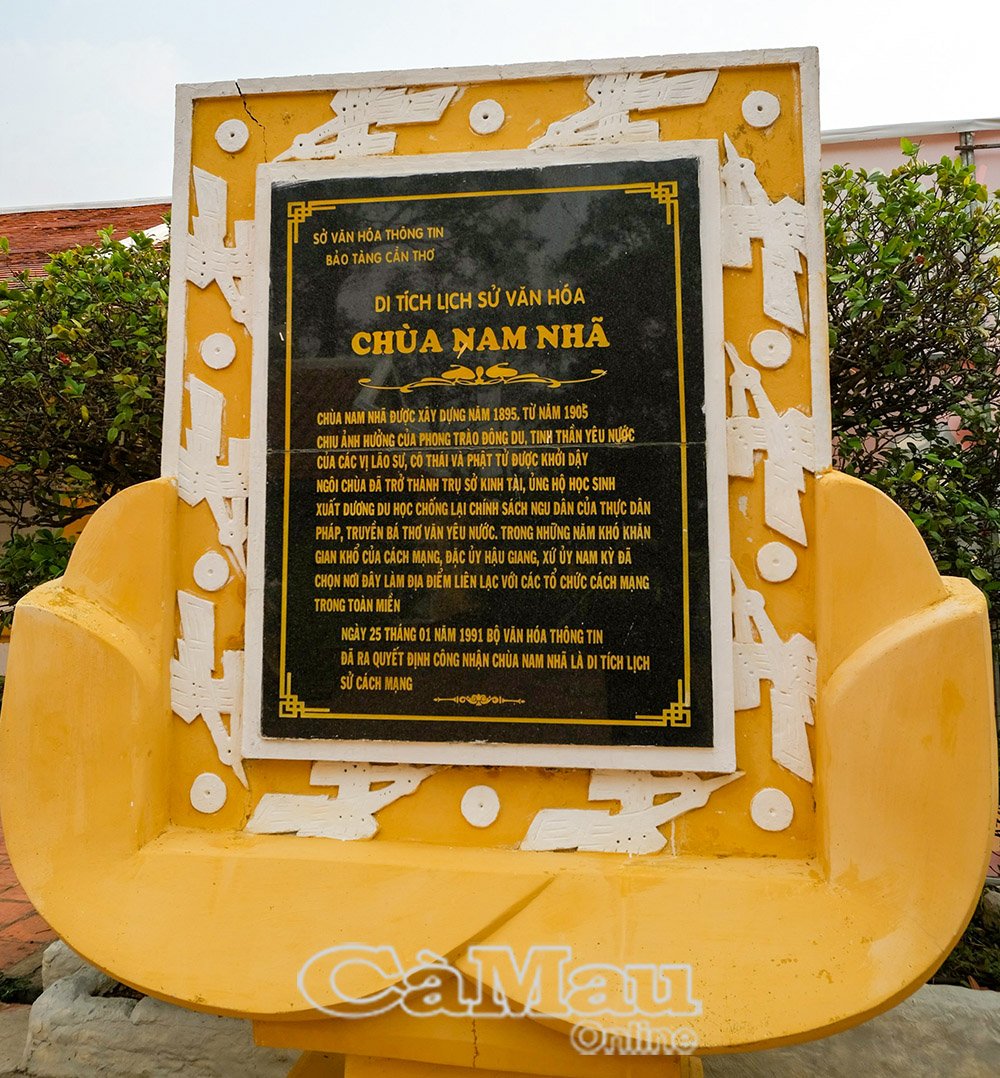
Nam Nha Pagoda, built by Mr. Nguyen Giac Nguyen in 1895, served as the headquarters of the Dong Du movement in Can Tho. Here, in February 1913, after returning from France, the patriotic scholar Cuong De, along with Mr. Nguyen Giac Nguyen, conducted patriotic activities in Southern Vietnam, but were discovered and monitored by the French colonial authorities. However, the pagoda continued to maintain its status as a secret base for revolutionary activities. In 1929, when the Hau Giang Special Committee of the Annam Communist Party was established in Binh Thuy, Nam Nha Pagoda became the liaison point between the Hau Giang Special Committee and the Southern Regional Committee of revolutionaries, including Comrade Ngo Gia Tu, Secretary of the Provisional Executive Committee of the Southern Party.
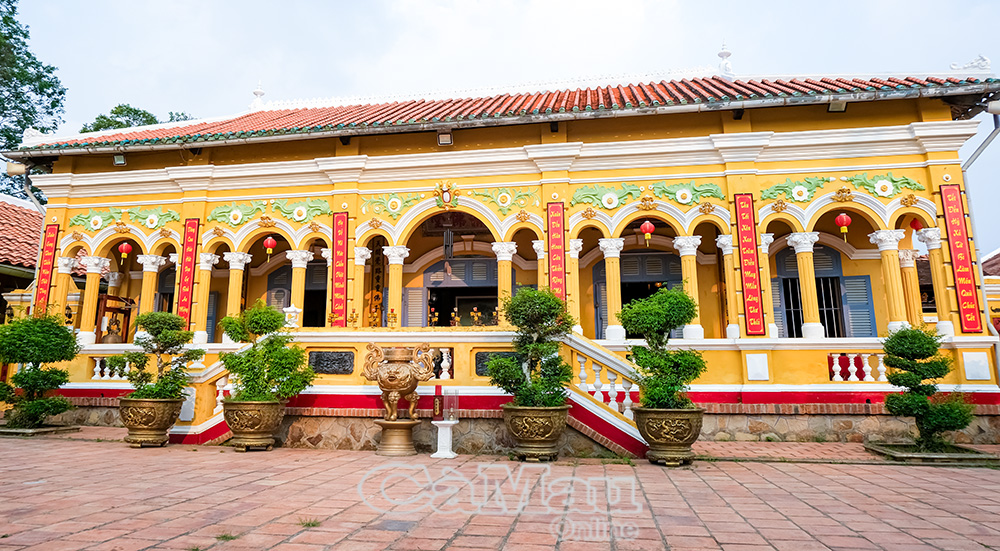
Also a temple reflecting both Eastern and Western cultures, Giac Hoa Pagoda is one of the first Buddhist institutions in Southern Vietnam. It was founded in 1919 by Venerable Nun Dieu Ngoc (real name Huynh Thi Ngo). In 1945, responding to President Ho Chi Minh's call for "rice to feed the troops," Venerable Nun Dieu Ngoc donated 2,000 bushels of rice to the revolution. In 1946, when the French returned to invade Vietnam, they carried out many brutal acts of repression and terror against revolutionary movements and those suspected of being Viet Minh members. During this time, Giac Hoa Pagoda served as a safe haven for those in need. With a spirit of Buddhist teachings always intertwined with the nation, besides spreading Buddhism, Giac Hoa Pagoda also sheltered revolutionary cadres and patriotic fighters, making it one of the Buddhist institutions that played a significant role in both periods of resistance against foreign invaders.
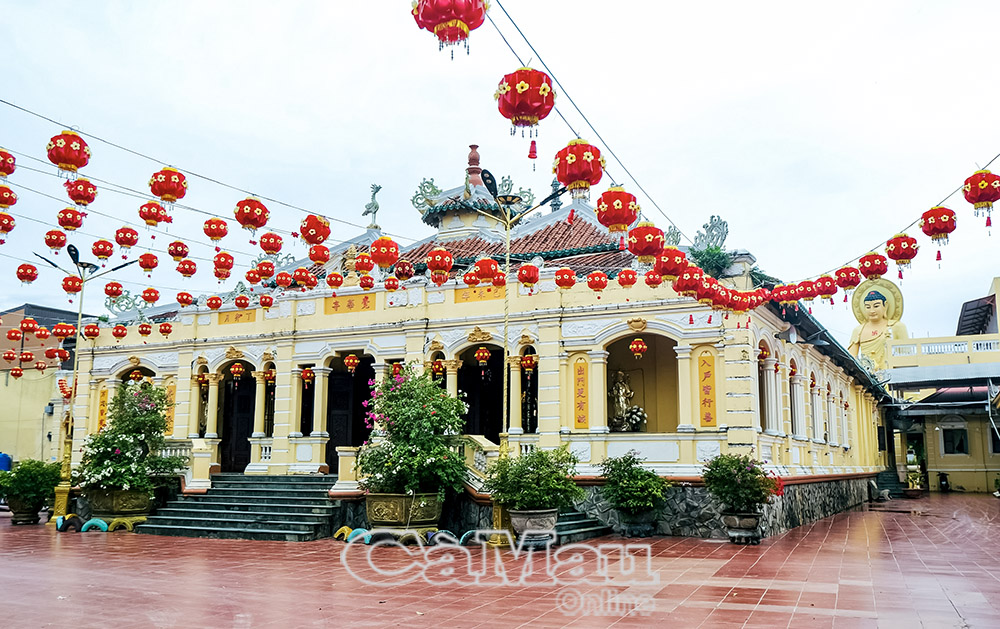
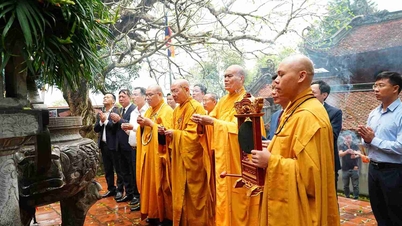
In peacetime, these temples remain serene, their bells still ringing, and incense smoke still wafting through the air. And hidden behind their simple, tranquil appearance are indomitable revolutionary traditions, powerful witnesses to a painful yet glorious era. The hearts of the abbots and Buddhist followers are not only filled with compassion but also with intense patriotism, a deep and inseparable bond with the revolution, contributing to the liberation of their homeland.
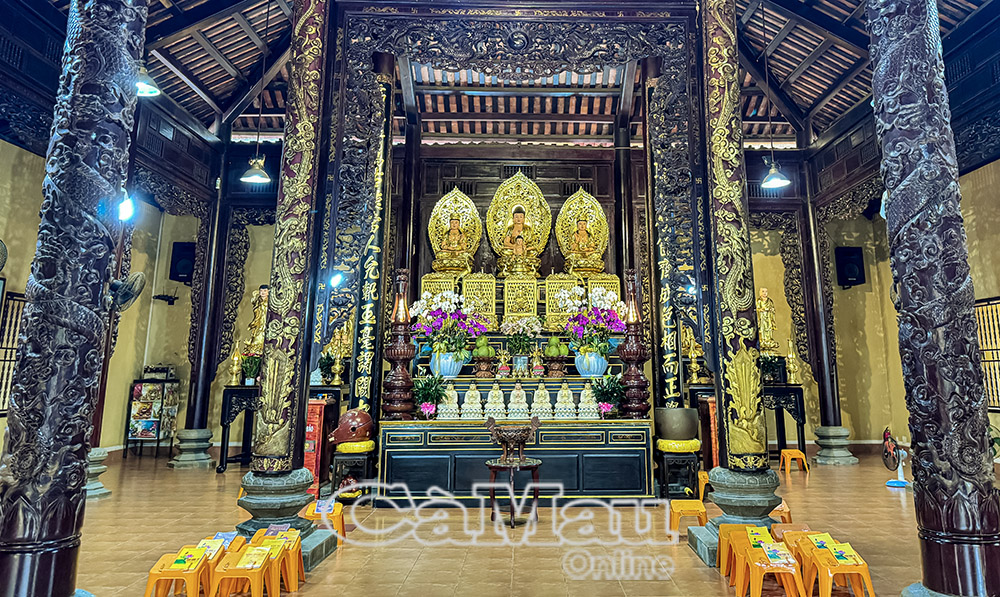
Today, many temples are recognized as provincial and national historical relics, receiving attention for restoration and preservation, not only as places of religious worship but also as significant sites for educating the younger generation about patriotism and national pride.
Huu Nghia
Source: https://baocamau.vn/nhung-mai-chua-nuoi-duong-ngon-lua-cach-mang-a122254.html
![[Photo] National Assembly Chairman Tran Thanh Man successfully concludes his participation in IPU-152](https://vphoto.vietnam.vn/thumb/1200x675/vietnam/resource/IMAGE/2026/04/18/1776502638199_vna-potal-chu-tich-quoc-hoi-ket-thuc-tot-dep-chuong-trinh-tham-du-ipu-152-8709975-jpg.webp)


















































Comment (0)