

These days, traveling through the newly merged communes of Krông Pắc, Cư M'gar, or Krông Năng... after the implementation of the two-tiered government system, it's not difficult to see people busily preparing for the new season. Some are hunched over weeding coffee plantations. Others are checking the drip irrigation system. Still others are tying up durian branches that are bearing fruit. The atmosphere of spring, in its own unique way, permeates every inch of the land, every breath of the people here. And along with this verdant season of the land and sky is a silent and persistent flow – bank capital – supporting the agriculture of the Central Highlands, helping farmers to prosper sustainably in this land of red basalt soil.
My first stop on this trip was Krông Pắc commune, a newly established administrative unit of Đắk Lắk province, formed in early 2025 by merging Phước An town with the communes of Ea Yông, Hòa An, and Hòa Tiến. A new commune, a new administrative structure, a new vitality accumulated over many seasons of farming. In the early morning in Krông Pắc, the wind carries the scent of forest flowers mingled with the smell of red soil. The specialized durian orchards stretch out, lush green like a giant carpet. As Tet (Lunar New Year) approaches, the young shoots begin to sprout, like the vibrant energy of spring.
An Agribank official took me on a tour around the commune to give me a more comprehensive view. Krông Pắc today is very different from the past. The roads are well-maintained, houses are built close together, interspersed with orchards and industrial crops that are just beginning to sprout. Hồ Xuân Bửu Tư, the director of Agribank Krông Pắc, who has been closely associated with this area for many years, shared that almost 100% of the loan balance is concentrated in the "three rural sectors" (agriculture, farmers, and rural areas). "The greatest joy for a credit officer is seeing the people use the capital effectively and their lives becoming increasingly prosperous," Mr. Tư said, his voice slow but his eyes shining with pride.
Krông Pắc has long been known as the "durian capital" of Vietnam. With this advantage, bank loans have become a springboard for tens of thousands of households to invest boldly and become wealthy on their homeland. Ms. Bành Thị Thu's family moved from Nghệ An to Đắk Lắk in the 1990s, unfamiliar with the land and people, and lacking capital in every way. "Back then, getting a 50 million dong loan from the bank to trade coffee was like a lifeline," she recalled.
With that initial capital, coupled with hard work and perseverance, Ms. Thu gradually bought land, planted durian trees, and then expanded into purchasing and processing. To date, in addition to her durian orchard which generates over half a billion VND annually, she also purchases over 1,000 tons of durian each season for processing and export to China and for domestic consumption.
Mr. Le Van Hai, from Krong Pac commune, earned over 1.6 billion VND from selling durian this year, with a profit of over 1 billion VND after deducting expenses. "If I hadn't borrowed money from the bank eight years ago to buy land and plant durian, I wouldn't be where I am today," Mr. Hai said excitedly. Now, his family has bought a car and is continuing to expand their cultivation area.
For example, Mr. Tran Minh Tuong, after many years of hard work, boldly borrowed capital from Agribank to invest in a durian orchard and buy more land. From a difficult situation, he now owns more than 3 hectares of durian trees, along with two warehouses covering over 3,000 square meters that he rents to businesses for packaging. "You have to borrow capital to do business. Agribank's procedures are quick and transparent, so I feel very secure," Mr. Tuong affirmed.
Most remarkable is the story of H'Dhăng Niê, who once had no land to cultivate and had to work as a farm laborer to make a living. After many years of saving, H'Dhăng Niê boldly borrowed from the bank to buy land and gradually accumulated wealth. Now, this Êđê woman owns more than 3 hectares of durian trees and has leased an additional 3 hectares of farmland. "Thanks to the bank's support, my family has been able to turn a new page," H'Dhăng Niê shared, her voice full of confidence and gratitude, blending with the rustling wind in the durian trees.
Leaving Krông Pắc, I continued my journey to Cư M'gar, where coffee plants begin to bloom with pure white flowers. The blossoms blanket the fields in white, like snow falling in the vast forest, emitting a pure, gentle fragrance. Beneath these blossoms, the locals are busy repairing irrigation nozzles, fertilizing, and grafting... Cư M'gar has long been famous for its high-quality coffee, but to maintain that reputation, farmers are forced to innovate: investing in drying machines, sorting machines, wet processing, and adopting green farming practices to save water and reduce emissions. And all of this requires capital.
Ms. H'Nhat Eban, an Ede woman from Sut M'Dung hamlet, Cu Sue commune (a former commune of Cu M'gar district), was once a struggling household with an old, low-yielding coffee plantation. Thanks to a 30 million VND loan from the Social Policy Bank branch in Dak Lak, H'Nhat Eban replanted her coffee garden. With proper care and techniques, after only 3 years, the coffee garden yielded a stable harvest, helping her family repay the loan on time and invest in avocados and durians. H'Nhat Eban recounted that she used to be very "afraid" of borrowing from the bank. "I was afraid of not having enough money to repay. But after the bank officials explained everything to me at home, I boldly borrowed to invest and achieved the results I have today," she said, smiling brightly like the spring sunshine rising over the hilltop.
 |
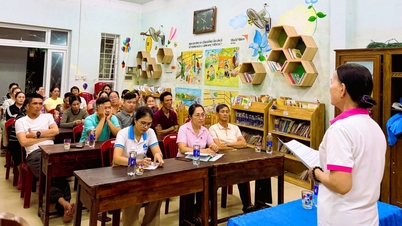
| Bank credit has been a key factor in the development of agriculture in the Central Highlands. |
In Cư M'gar, the sounds of spring are the bustling noise of machinery, the sounds of a deep processing industry for agricultural products aimed at increasing added value.
From the coffee plantations in Cư M'gar, bank capital followed me to Krông Năng, where pepper and macadamia nuts are reviving in a land that has experienced many ups and downs. There was a time when pepper prices plummeted, diseases ravaged the land, many pepper plantations were left barren, and many people considered abandoning their land and gardens. Then, replanting capital packages and incentives for organic farming models were implemented. Businesses received support to invest in clean processing plants, traceability systems, and solar-powered drying lines...
The once barren pepper plantations are now lush and green again. Nguyen Van Hung, a young farmer, points to his pepper garden with its new leaves: “Thanks to bank loans, I dared to change my farming methods. Now the plants are healthy, the soil is healthy, and so are the people.” Simultaneously, coffee, pepper, and macadamia processing businesses in Krong Nang are also undergoing transformations. Notable examples include Coffeecherry Vietnam with its specialty coffee farm in Ea Tan, and DAMACA Nguyen Phuong Joint Stock Company, which processes macadamia nuts for export to Japan. Many other establishments also contribute to increasing the value of local Robusta coffee.
Throughout the Central Highlands today, there are thousands of stories of women escaping poverty and becoming wealthy thanks to loans: from breeding cows, from coffee and pepper plantations, from houses with brick walls and tiled roofs built after years of hardship. Ms. Vo Thi Ngoc, Vice President of the Dak Lak Provincial Women's Union, said that preferential loans from banks play a particularly important role in supporting women's entrepreneurship, especially in agricultural models linked to community tourism and local culture.
In the Central Highlands during springtime, nothing is more beautiful than the roads lined with vibrant yellow sunflowers, their tender shoots swaying in the breeze. Children's laughter echoes from the coffee plantations, and villagers prepare their New Year's feasts – all reflecting the faith in the eyes of the people here.
The green Central Highlands, resounding with the sound of gongs and drums like the heartbeat of the vast forest, is nurtured by bank capital.
Source: https://thoibaonganhang.vn/nhung-mua-xanh-tren-mien-dat-do-177852.html















































































Comment (0)