

Le Van Nhan, a Dien Bien Phu veteran, from Ha Dong, Hanoi.
The fighting spirit was surging.
In October 1953, Le Van Nhan, a young man from Trieu Son district, Thanh Hoa province, who had just turned 18, heard that the army was recruiting soldiers. He eagerly volunteered to go to the front lines to defend his country.
He was selected and sent for training in Phu Tho for two months, then marched with the troops to the Northwest and was assigned to Company 17, Battalion 564, Regiment 165, Division 312. His company was a fire support unit, equipped with machine guns, .60mm mortars, and other types of firepower...
Upon arriving, to prepare for the attack on French strongholds at Dien Bien Phu, he and his comrades dug trenches and fortifications. Mr. Nhan recounted: “To maintain secrecy, we hid our troops during the day and worked at night, maintaining a distance of 2 meters from each other. We dug trenches in every possible position; sitting, crawling, whatever was necessary to get the job done. But it was unavoidable that the enemy would sometimes detect us and concentrate their firepower to stop our troops.” Despite the danger, no one wavered, maintaining their determination to fight and win, eagerly awaiting the order to charge and annihilate the enemy.

Immediately after the opening battle of Him Lam, the 165th Regiment (312th Division) – Mr. Nhan's unit – and the 88th Regiment (308th Division) were assigned the task of attacking the Doc Lap Hill stronghold. The 165th Regiment was responsible for the breakthrough attack from the southeast. At 3:30 AM on March 15th, the order to open fire was given. “Our artillery fired at enemy strongholds, supporting the infantry's assault. The battle only ended at dawn when our troops repelled the enemy infantry and tanks that came to relieve the siege. With courageous fighting spirit and overwhelming offensive power, at 6:30 AM on March 15th, we completely took control of the Doc Lap Hill stronghold, wiping out the reinforced North African battalion,” Mr. Nhan recounted.
The moment that Mr. Nhan remembers most vividly is the transition to the general offensive on the historic morning of May 7th. He recalled: “On May 6th, we completed the mission to attack outpost 506. After the attack, we held our position there. The next morning, around 9-10 a.m., I and a comrade were sent back to the rear base to get food for the unit. After getting the food, the two of us carried it back but got lost because the trenches were as dense as a chessboard. But wherever we went, we saw our soldiers pointing their guns at the enemy's bunkers. The French soldiers were defeated and panicked. Once we had surrounded them completely, the French had no chance to support each other anymore. The opportunity had arrived, the time had come. On the morning of May 7th, the order for the general offensive was given, and all firepower was used to bombard the remaining enemy outposts. By afternoon, the enemy surrendered in droves, like ants. At that moment, we were overjoyed.”
What Mr. Nhan is extremely proud of is that his family has four brothers who all participated in the resistance against the French. Three of them fought together on the Dien Bien Phu battlefield. They all dedicated themselves and fought wholeheartedly, contributing to the victory.
Nguyen Hien (recorded)
Pham Van Ngan, a veteran of the Dien Bien Phu battle, from Thanh Truong ward, Dien Bien Phu city.
Determined to go to war.
Seventy years ago, I was a soldier in the 249th Battalion, 174th Regiment, 316th Division. Back then, the young people of Hai Duong were brimming with enthusiasm to go fight the enemy! Everyone volunteered to go to the battlefield. Seeing that, I eagerly registered to join the army. At that time, I was small, lightweight, and young, so the local authorities wouldn't let me go. I insisted to the comrades in the village that if they wouldn't let me join the army, I would go to… an enemy outpost. That's how I managed to get to the battlefield!
Then I enlisted in the army, received training, and studied politics in Thanh Hoa province. It was then that I truly saw how much our country was suffering, how hungry and miserable our people were under colonial rule. I remembered the scenes of the French invaders shooting, killing, and burning everything. I witnessed it firsthand in my own village, and it was heartbreaking! From then on, my unwavering determination to go to the battlefield grew even stronger.
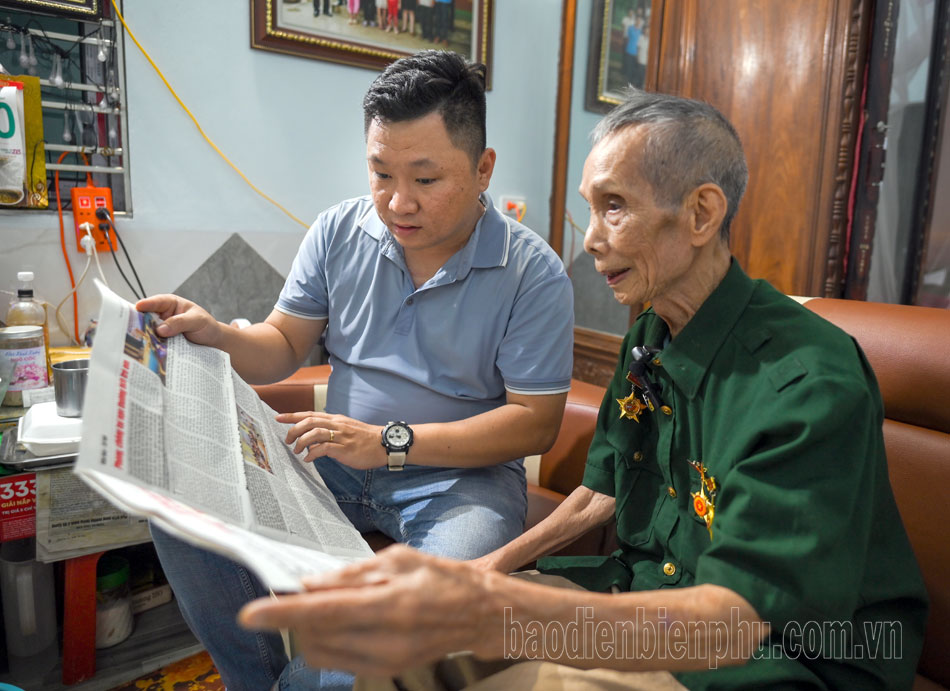
Upon arriving in Dien Bien Phu, my unit was stationed in the Ta Leng area, Thanh Minh commune, Dien Bien Phu city today. Every evening around 5 PM, we would go out to dig trenches, gradually encroaching on the enemy's resistance center. While we were digging, enemy flares illuminated the area as brightly as day. Enemy planes took advantage of this and dropped bombs continuously. Many of our soldiers were killed. But my comrades and I remained undaunted, steadfastly holding our ground. During the campaign, my unit participated in the attack on Hill A1 – the most protracted, fierce, and arduous battle of the entire Dien Bien Phu Campaign. As special forces soldiers, we were often assigned the task of planting explosives to breach the enemy's barbed wire fences, allowing our comrades to advance. But the battle was so fierce that our soldiers were killed wherever they advanced, as the enemy had the advantage of being on higher ground and fortified themselves in underground bunkers. My unit suffered heavy casualties as well. Yet, the soldiers' spirits remained unwavering; they only knew how to fight bravely. When the commander shouted "Advance!", the men charged forward, without a thought of casualties, treating death as nothing... In this battle, I was also wounded, losing a hand. At that time, I was young and full of energy, so I didn't feel any pain. After the medical corps provided first aid, the unit ordered us to withdraw to the rear for rest and recuperation, but I resolutely refused to go back, continuing to stay with my comrades. When my wound healed and I felt better, I fought alongside my comrades again. I remember the commander instructing us not to stay in the "frog bunker" when the explosives detonated, but to go to the trenches for shelter. When the explosives detonated, hearing the charge of our soldiers, I knew for sure that the campaign would be victorious. And indeed, just a few hours later, news of victory arrived, and my comrades and I cheered and danced in the joy of victory...
Mai Giap ( recorded)
Courier Pham Ngoc Toan, Tan Phong Ward, Lai Chau City , Lai Chau Province
Civilian workers act as guides.
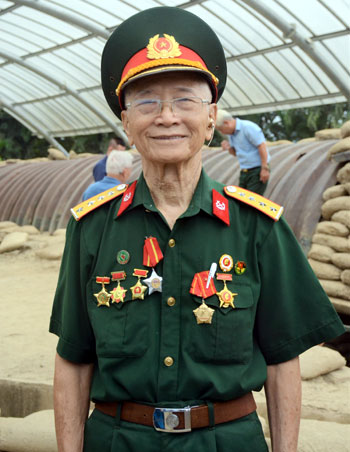 |
At the age of 13, Pham Ngoc Toan (from Dong Hung, Thai Binh province) witnessed the French bombing, leveling houses and temples, and killing dozens of people in his village, including his older brother. Burning with hatred for the enemy, Toan ran away from home to a neighboring village to enlist in the army. Later, he had the opportunity to go to the Northwest to work as a liaison, guiding civilian laborers across the "cauldron" of Co Noi (Son La province) to reinforce the Dien Bien Phu battlefield.
The young Pham Ngoc Toan of those days is now a nearly 85-year-old man. After many years of service to the country, he settled down in the Northwest region, establishing a stable life in Lai Chau province. Recalling his youth, Mr. Toan recounted: "When I was 13, I asked to join the army. The soldiers laughed and said, 'Come on, go home and eat two more sacks of rice from your mother, then come back, and we'll let you in.' But I stayed there and refused to go home. So, they assigned me to work as a liaison in a people's armed forces unit of the province, with duties similar to those of Kim Dong and Vu A Dinh. I didn't directly fight the enemy, but I needed courage and bravery. Once, I encountered a French officer and was detained, thinking I was going to be captured. They pretended to be gentle, cutting my hair while engaging in psychological warfare, speaking ill of the Viet Minh. But nothing could shake my hatred for the enemy."
In late 1953, Mr. Toan was assigned to the Northwest, continuing his role as a liaison, leading groups of civilian laborers carrying rice, supplies, and ammunition across dangerous routes heavily bombed by the enemy, especially at the Co Noi intersection, to transport food, medicine, and ammunition to the Dien Bien Phu front. When the Dien Bien Phu Campaign began, the Co Noi intersection was constantly bombarded. Hundreds of bomb craters appeared daily; before one bombing raid could be completed, another would strike.
Mr. Toan recalled: “My job at that time was to guide the evacuating forces to avoid bombs during the day, and to lead them to the logistics stations at night. Our civilian labor brigades were brave and full of heroic spirit. There were so many of them on the battlefield, marching noisily all night, without a moment's respite. Every evening they would go out to load supplies, each group only able to travel about 20km/night because of the large number of people, heavy loads, and many steep slopes. Going uphill was already difficult, but going downhill was even more dangerous and arduous. The men and women pushed and held the carts together, carried the goods… Seeing how brave they were, I became even more determined.”
By the time victory was achieved, liaison officer Pham Ngoc Toan had traveled thousands of kilometers, making countless trips leading civilian laborers to support the battlefield. He accompanied the forces through bombing raids and shelling, contributing to the resounding Dien Bien Phu Victory, "famous throughout the world, shaking the frontier."
Bao Anh (take note)
Nguyen Ba Viet, a Dien Bien Phu veteran, is from Dong Hai ward, Thanh Hoa city, Thanh Hoa province.
Remembering my teammates
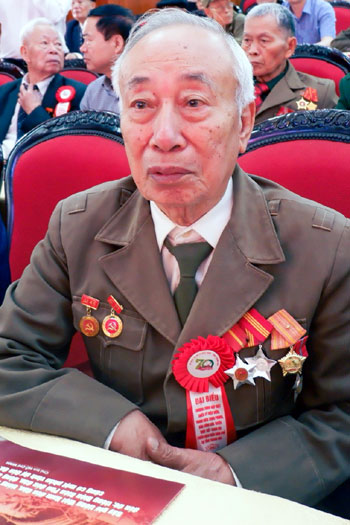 |
Around July or August 1953, responding to the call of the Party and President Ho Chi Minh, I, along with more than 10 young men from Dong Hai commune (Dong Son district, Thanh Hoa province), volunteered to enlist in the army. After the recruitment drive, we marched from Thanh Hoa to Dien Bien Phu, at a time when no one knew what our mission was. The march was arduous, involving crossing forests, streams, mountain passes, and dense woodlands, traversing places no one had ever set foot in before, having to clear mountains and build roads for the march…
Upon arriving at Dien Bien Phu, I was assigned to Company 388, Battalion 89, Regiment 36, Division 308, in charge of communications for Company 388. After some time, I was transferred to become a communications officer for Battalion 89. At that time, Comrade Le Chi Tho was the Deputy Commander of Battalion 89. From the moment we met, we became close, sharing and overcoming all the difficulties and hardships in the mountains and forests of Dien Bien Phu together.
The Dien Bien Phu campaign was about to begin. On March 13, 1954, after receiving orders from Comrade Le Chi Tho to launch the opening attack on the Him Lam stronghold, I immediately informed the three companies of my battalion, and we swiftly marched to attack the Him Lam stronghold. After three battles throughout the night, by dawn, our troops had completely captured the Him Lam stronghold. But that morning, upon hearing the news of the victory, I also heard the news that Comrade Le Chi Tho had bravely sacrificed his life along with many other brothers in Battalion 89. Comrade Tho's sacrifice brought tears to my eyes; I was heartbroken because a brother, a close comrade with whom I had shared hardships for so long, was no longer here…
Nevertheless, after the sacrifice of Comrade Tho and many other comrades in Battalion 89, the officers and soldiers became even more enthusiastic and determined to win, determined to liberate Dien Bien Phu as soon as possible.
Even though many years have passed, I, like any soldier who participated in the Dien Bien Phu Campaign, remain proud to have been part of that glorious campaign, a campaign that "shook the world and resonated across continents." And most importantly, I can never forget my comrade, my dear brother, who bravely fell in the opening battle of the campaign.
An Chi (recorded)
Nguyen Van Du, a Dien Bien Phu veteran, is from Son Vy commune, Lam Thao district, Phu Tho province.
Memories that will never be forgotten
I was the platoon leader of Platoon 1, Company 317, Battalion 249, Regiment 174, Division 316, directly involved in the attack on Hill A1. After many fierce battles without capturing the stronghold, from April 20th, Engineering Team 83 began digging tunnels. Company 317 was assigned the task of guarding the tunnel entrance, participating in digging and transporting the excavated soil out. To maintain secrecy, the tunnels were dug at night. Many nights I also participated in digging and transporting the soil. In about 10 days, the tunnel containing explosives, over 50 meters long, was completed. We also participated in bringing the explosives into the tunnel. On April 22nd and 25th, the enemy launched two battalion-scale counterattacks. Our troops, from the direction of Chay Hill, from the top of Hill A1, and from the foothills, concentrated firepower to block the enemy's advance, while the assault forces attacked the flanks to disrupt their formations. In one battle, they destroyed enemy tanks; in another, they shot down enemy aircraft, forcing them to retreat further to Muong Thanh.
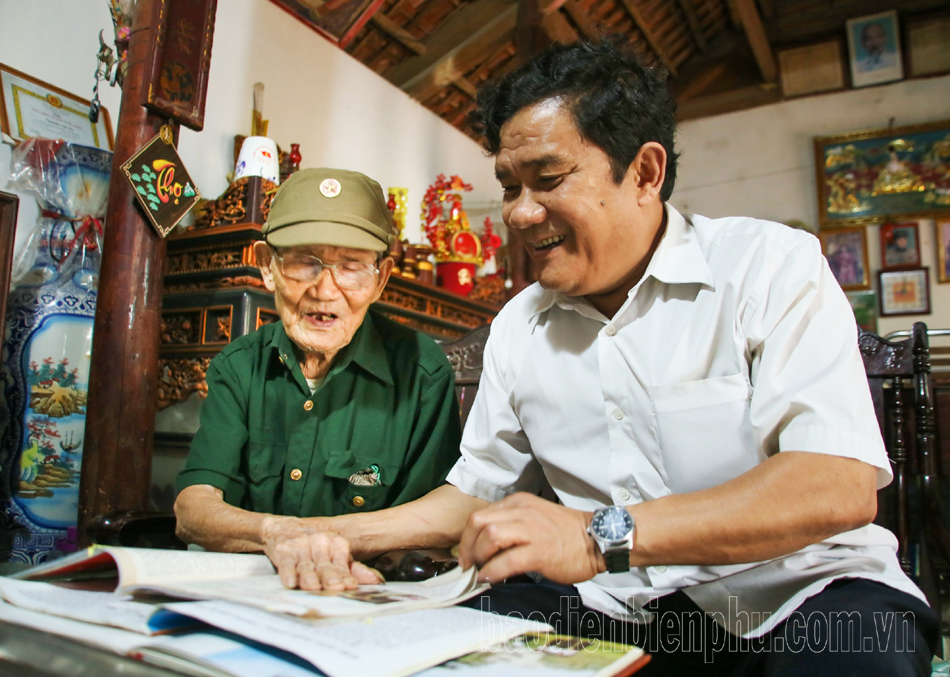
From 12 noon on May 1st, our artillery rained fire down on Muong Thanh - Hong Cum. On Hill D, our 75mm artillery fired directly at C1. We were ready to annihilate the enemy. Battalion 249 was ordered to occupy the battlefield around Hill A1. Our Company 317 was also assigned to guard the tunnel entrance, protecting the 83rd Engineering Unit as they successfully carried out the mission of detonating a nearly 1,000kg explosive charge to destroy the enemy's underground tunnel on May 6th. To ensure success, the Party Cell of Company 317 sent two volunteer party members to act as suicide bombers. In case the detonation failed, each comrade would carry a 20kg explosive charge and rush into the underground tunnel to detonate it. Fortunately, the plan to detonate it electrically was successful. At that time, I was lying not far from the tunnel entrance where the giant explosive charge was placed, with an old bamboo grove to my right and the two suicide bombers to my left, ready to rush into the tunnel as planned.
At the moment the explosive charge detonated, I heard nothing, only felt a force pushing me from beneath the hill, lifting me off the ground and along with the old bamboo thicket, before I fell back down. Blood gushed from my mouth and nose. I fainted in the night, amidst the gunfire, a few dozen meters from the foot of Hill A1. The next morning, people found me lying unconscious, next to an uprooted old bamboo thicket. Fortunately, when I was thrown up, the thicket didn't hit me; the earth and rocks covered me, leaving my face exposed. Seeing me covered in mud and blood but still breathing faintly, my comrades took me to the first aid station. On the afternoon of May 7th, I regained consciousness, my ears ringing and unable to hear anything. I saw the medics gesturing, and only then did I learn that Hill A1, the most important enemy stronghold, had been destroyed by our troops. That evening, I also learned that our troops had annihilated and captured all the enemy soldiers in Muong Thanh and captured General De Castries. It wasn't until the morning of May 8th, when my comrades transferred me to K5 Hospital, that I gradually regained consciousness and remembered my comrades from Platoon 1, Company 317, who survived and who perished in the final battle on Hill A1. Later, I learned that Company Commander Dang Duc Sa and six of my comrades from Platoon 1 had bravely sacrificed their lives. Even now, I haven't forgotten that battle and the comrades who dedicated their lives to the historic victory at Dien Bien Phu...
Phuong Thuy ( recorded)
Duong Chi Ky, a Dien Bien Phu veteran, District 7, Ho Chi Minh City.
The glorious battle of Hill A1
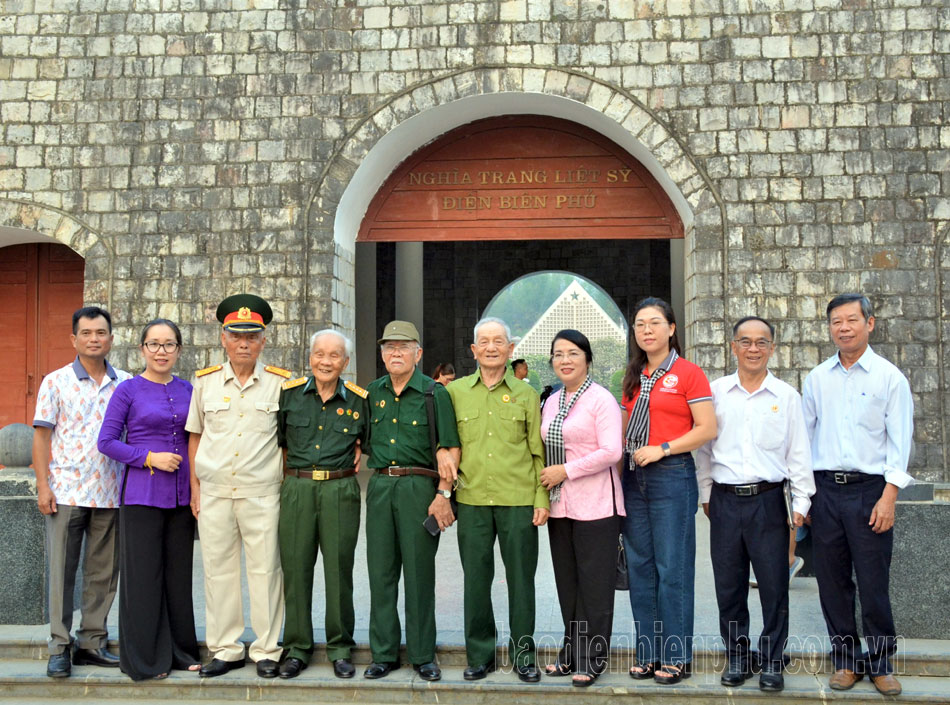
At the age of 90, Dien Bien Phu veteran Duong Chi Ky returned to visit the old battlefield. He was moved as he recalled the heroic memories of his youth.
In 1953, Mr. Ky, along with other young men his age, heeded President Ho Chi Minh's call and volunteered to join the army. He and his comrades received orders to march to the Northwest, where he directly fought on the Dien Bien Phu battlefield, assigned to the 174th Regiment, 316th Division.
He stated: “We participated directly in the final general offensive, building tunnels and trenches around the A1 stronghold. This was the most important high point in the eastern defense and was equipped by the French as the strongest stronghold in the entire complex of fortifications. Therefore, before that, our army, specifically the 174th Regiment (316th Division) and the 102nd Regiment (308th Division), had launched three attacks on A1 but had not yet captured it.”
From the night of March 30th, Regiment 174 launched its first fierce offensive against A1. The enemy counterattacked fiercely, reinforcing their positions with tanks, artillery, and air support. The regiment had to retreat, defending one-third of the stronghold. In the second and third offensives, both sides fought for every inch of trench, eventually each side holding half of the high ground. From April 3rd to May 6th, our troops repelled enemy counterattacks, holding onto the captured stronghold while simultaneously intensifying the attrition of enemy forces through sniping, surprise attacks, and the seizure of enemy supplies. During this time, the engineering corps secretly dug an underground tunnel to the enemy's fortified bunker on the hilltop. In two nights (April 4th and 5th), they transported and completed the installation of nearly 1,000 kg of explosives underground, ready for a new offensive.
Mr. Ky recounted: “My comrades and I brought the 82mm mortars to the battlefield on the evening of May 5th. At 8:30 PM on May 6th, when the order for the general offensive was given, the thousand-pound explosive charge was detonated, the explosion shook the hill, destroying several bunkers, many sections of trenches, gun emplacements, and a portion of the enemy forces. Seizing the opportunity, our troops opened fire and charged. The enemy fiercely resisted. The battle was extremely fierce, fought with guns, grenades, bayonets, and bare hands... By 4:30 AM on May 7th, our troops had killed and captured more than 800 enemy soldiers and many of their tanks and armored vehicles. On the night of May 7th, after the complete victory, we withdrew our troops back to the unit, collected the spoils of war, and then escorted the French prisoners of war back to the plains.”
After a few minutes, Mr. Duong Chi Ky's voice softened: "To defeat the foreign invaders, many of our officers and soldiers bravely sacrificed their lives in this battle. Back then, we all dedicated our youth, taking up arms and going to the battlefield, enduring hardships and sharing even a handful of vegetables and a grain of rice. Yet, some lie buried in our homeland, while others remain here. Since scheduling my return to Dien Bien this time, I've spent many sleepless nights, counting the days until I can see my comrades again and light incense for those who sacrificed their lives. Coming back here, I always remember my comrades, and I can't hold back my tears. I feel as if my departed comrades are here, listening to my heartfelt thoughts, hoping they rest in peace."
Nguyen Hien (recorded)
Source
![[Image] National Assembly discusses the implementation of the socio-economic development plan.](https://vphoto.vietnam.vn/thumb/1200x675/vietnam/resource/IMAGE/2026/04/20/1776696707422_ndo_br_img-20260420-185419-jpg.webp)
![[Photo] General Secretary and President To Lam meets with National Assembly delegates from ethnic minorities.](https://vphoto.vietnam.vn/thumb/1200x675/vietnam/resource/IMAGE/2026/04/20/1776696701056_a1-bnd-8331-3342-jpg.webp)













![[Infographic Series] Historical Sites in Dong Nai: Long Khanh Provincial Administrative Building, Long Khanh Town Party Committee Base, Xuan Loc Temple - Xuan Hoa Pagoda Complex](https://vphoto.vietnam.vn/thumb/402x226/vietnam/resource/IMAGE/2025/9/26/1331532306fb4ad18e4a849e5c64202a)

















































Comment (0)