In implementing Resolution 57-NQ/TW on the development of science , technology, innovation, and digital transformation, many localities in Ho Chi Minh City are innovating their methods of disseminating information, bringing official information closer to the people.

When grassroots officials engage in digital communication.
At four o'clock in the morning, while many people were still asleep, Ms. Vu Thi Nguyet, a specialist in charge of propaganda at the Party Building Department of the Tan Binh Ward Party Committee ( Ho Chi Minh City), had already begun a new workday.
The first thing Ms. Nguyet did wasn't to check documents or meeting schedules, but to update information from the neighborhoods and review the content that needed to be publicized that day on the "Tan Binh in My Heart" fanpage.
"I regularly monitor neighborhood groups and local information channels to keep up with activities and updates. There is information that needs to be processed, written, and published immediately to ensure timeliness," Ms. Nguyet shared.
Having worked in public relations for nearly 20 years, Ms. Nguyet has witnessed a significant change in how local authorities convey information to the people, from early electronic newsletters to today's social media platforms. After the implementation of the two-tiered local government model, the "Tan Binh in My Heart" fanpage was transferred to the ward for management and continues to be an important information channel for the locality.
Previously, propaganda work relied primarily on loudspeakers, billboards, posters, or community meetings; now, most information is disseminated through social media. This also means that those involved in propaganda work must change their methods of operation.
"People today access information very quickly, almost in real time. In just a few minutes, they can read dozens of different news sources. Therefore, the content of the information must be concise, easy to understand, engaging, and timely," Ms. Nguyet shared.

Each post goes through many stages, from selecting information and editing content to processing images and choosing the right time to publish.
"The hardest part is creating a catchy title that stays on track. The images sent by the businesses are of inconsistent quality, so sometimes I have to edit and crop them myself to make the posts more appealing," Ms. Nguyet said.
In addition to administrative announcements, the fanpage also posts community activities, best practices, examples of good people and good deeds, guides to online public services, warnings about online scams, and practical information related to people's lives.
Not only in Tan Binh ward, but in many localities of Ho Chi Minh City, grassroots officials are also taking on the role of digital communication. As one of the localities actively implementing digital transformation and applying technology in management and operation, Minh Phung ward is also stepping up its communication efforts on digital platforms. Mr. Dang Hieu, Member of the Standing Committee of the Party Committee and Chairman of the Vietnam Fatherland Front Committee of Minh Phung ward, is one of the officials directly involved in this work.

Since the two-tiered local government model came into operation, the Fatherland Front and the ward government began building community pages on social media to connect with 36 neighborhoods and tens of thousands of residents in the area. "The need to quickly and promptly convey information to each neighborhood put pressure on us to change our approach," Mr. Hieu recalled.
Currently, the ward's and the Fatherland Front's fanpages maintain 5-7 posts per week. The content includes not only administrative information but also social welfare activities, local movements, warnings about high-tech scams, fire prevention and control, urban order, and many other issues affecting people's lives.
According to Mr. Hieu, the biggest change in grassroots propaganda work lies in the speed of information dissemination. "Previously, to announce something, we had to go through neighborhood meetings or loudspeakers. Now, information can reach people's phones with just a click. Especially, people can even comment directly under the post," he said.
Many evenings after work, Mr. Hieu and his colleagues would still sit and review content before posting it on the ward's fanpage. "We are all part-time staff, without specialized training in communication. During the day we handle professional work and go to the grassroots level, and in the evenings we rush to write articles, select photos, and edit content. The biggest pressure is having to be both quick and accurate," Mr. Hieu shared.
To meet the new demands, many grassroots officials are forced to learn skills previously only familiar to journalists and media professionals. From writing short news articles and taking photos with their phones to designing infographics on Canva and editing videos with CapCut, all have become essential skills.

Building a digital media force from the grassroots.
This movement is not just happening in a few localities, but is being systematically promoted by Ho Chi Minh City.
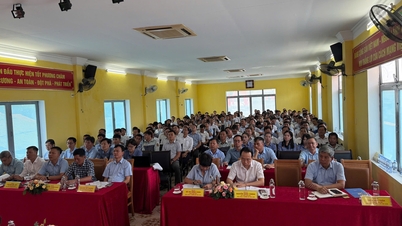
In late May, more than 200 officials and Party members working in propaganda and mass mobilization, neighborhood leaders, social opinion collaborators, and those in charge of social media pages in Tan Binh and Tan Son wards attended a specialized training course on "Skills in writing news and propaganda articles on social media platforms".
During the training session, many officials received guidance for the first time on how to title articles, select images, use hashtags, edit content, and create promotional materials suitable for social media information consumption habits. Participants also directly practiced writing news articles and taking photos, receiving feedback and corrections in class.


According to Mr. Nguyen Minh Hai, Head of the Propaganda, Press and Publishing Department of the Ho Chi Minh City Party Committee's Propaganda and Mass Mobilization Department, in the current context of digital transformation, grassroots propaganda work needs to drastically change its methods to suit people's new way of accessing information. Information on digital platforms must not only be accurate but also concise, visual, and highly interactive.
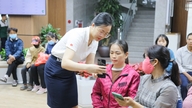

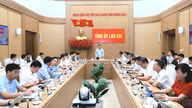
The goal of these training courses is not to train professional journalists, but to help grassroots officials acquire more digital communication skills, thereby improving the effectiveness of online communication. According to Mr. Dang Hieu, this is truly the "key" to helping grassroots officials standardize their methods.
"Previously, fan pages were usually just text. Now, our team members know how to design banners, create infographics, and incorporate short videos. As a result, interaction has increased significantly," he said.
Besides their professional duties, many local officials now also take on additional responsibilities such as managing fan pages, updating information, taking photos, writing news articles, and editing content for local media channels. Mr. Hieu shared: "Sometimes we call ourselves amateur journalists or frontline media. We also go out to find information, take photos, write articles, edit, and then time our posts accordingly."
According to Ms. Nguyet, many stories of good people, good deeds, charitable activities, or successful models at the grassroots level, posted on local fan pages, have subsequently become source material for media outlets to further explore and disseminate. From this initial information at the grassroots level, many reports and articles have been produced, creating a positive impact on the community.

Despite lacking professional journalistic training, they are becoming "information bridges" between the government and the people in the digital environment. From short news updates on fan pages, photos taken with mobile phones, to stories of good deeds shared daily, grassroots officials are contributing to bringing official information closer to the people. A digital media force from the grassroots is gradually forming, meeting the demands of propaganda in this new era.
Source: https://baotintuc.vn/thuc-hien-nghi-quyet-57/nhung-nguoi-lam-bao-o-co-so-20260620140634250.htm
![[Image] Schools organize meetings and introduce teaching models to students admitted to grade 10.](https://vphoto.vietnam.vn/thumb/1200x675/vietnam/resource/IMAGE/2026/06/25/1782368077271_ndo_br_z7970052192242-1ec8daeb77a6eed1a4e9f58c564ddd3e-jpg.webp)
![[Image] Ho Chi Minh City: Ma Lang area, Chicken-Rice Market about to change its appearance](https://vphoto.vietnam.vn/thumb/1200x675/vietnam/resource/IMAGE/2026/06/25/1782377698627_ndo_br_m1-jpg.webp)



![[Photo] General Secretary and President To Lam receives Palestinian Ambassador Saadi Salama](https://vphoto.vietnam.vn/thumb/1200x675/vietnam/resource/IMAGE/2026/06/25/1782365384740_a1-bnd-9423-8322-jpg.webp)