

During the winter solstice, when the scent of incense permeates the air, people often reminisce about the past. And in our conversations, we writers always talk about local scholars, those passionate about collecting and researching the culture of Ha Tinh .
Ha Tinh is a land rich in culture, and generations of inhabitants along the Ngan Hong River have cherished culture, each choosing their own way to express that love. Among these, the formation of the Local Studies Group (1991), initiated by Nguyen Ban, Vo Hong Huy, Thai Kim Dinh, Le Tran Suu, and Ho Huu Phuoc, brought together many people who love Ha Tinh culture throughout the province, inspiring creativity in many writers.
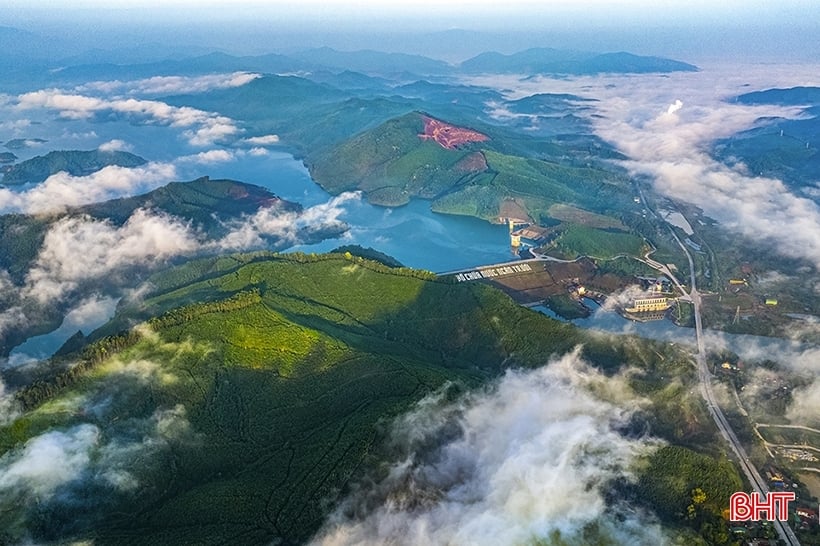
The beauty of Ngan Truoi Lake . Photo by Dau Dinh Ha.
Thanks to this, when cultural researchers compiled local geographical directories or conducted cultural research projects, they had the enthusiastic collaboration of these authors. Among them, writers such as Vo Giap, Bui Thiet, Dang Thanh Que, Tran Huy Tao, Dang Viet Tuong, Pham Quang Ai, and Nguyen Tri Son frequently appeared in the research works of Vo Hong Huy, Thai Kim Dinh, and in local geographical directories.
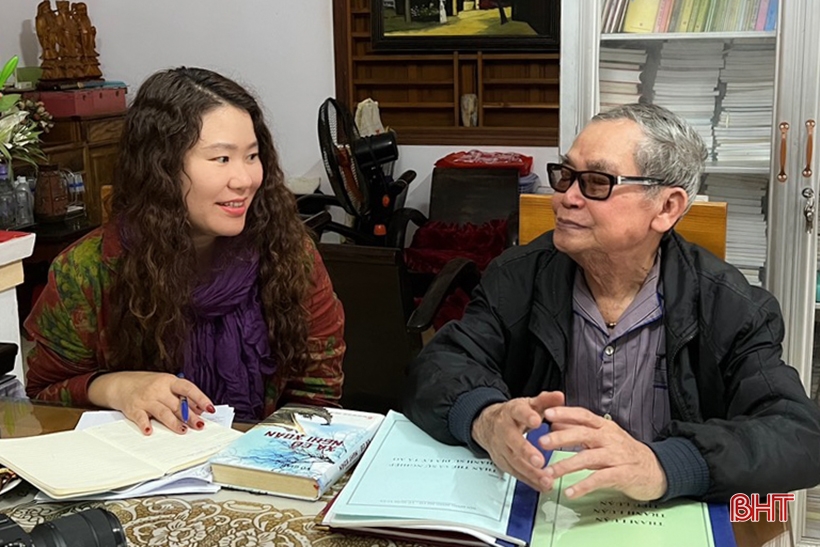
General Vo Giap converses with the author of this article.
In the warm atmosphere of the New Year, we returned to Xuan Dan village to visit Mr. Vo Giap (born in 1935) - one of the people with many valuable works and writings about the cultural land of Nghi Xuan. In Mr. Giap's small, simple house, the bookshelves are neatly and scientifically arranged. The books seem to silently tell stories of the long years spent by a man with a deep love for the ancient heritage of this land of poetry and music. Originally a teacher, Mr. Vo Giap only began his work as a local historian after retiring in 1992.
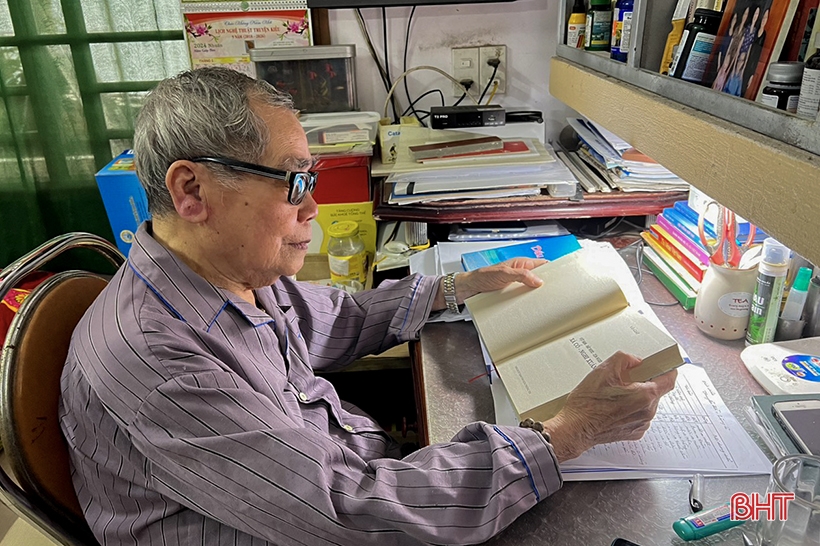
Despite being nearly 90 years old, General Vo Giap is still diligently engaged in research.
He shared: “During my years as a teacher in my hometown of Nghi Xuan, while visiting my students' homes, I met many elderly people and listened to them tell many ancient stories from the villages and communes. I found them interesting and recorded them to further my teaching. Later, after retiring, I met Mr. Thai Kim Dinh and Mr. Vo Hong Huy – people who have written many articles about local culture that I really enjoy reading. When I shared my source materials with them, they both encouraged me to write. From then on, I gained the confidence to begin this work.”
Besides the articles included in research works compiled by Mr. Vo Hong Huy and Mr. Thai Kim Dinh, Mr. Vo Giap also published several books independently and had many articles published in specialized journals. The most notable is the book "Ancient Villages of Nghi Xuan" (awarded the Nguyen Du Prize in 2015). This is the book he devoted the most effort to, with materials collected and researched over 20 years. The book is also a valuable source of information for villages in Nghi Xuan in the process of compiling local history.
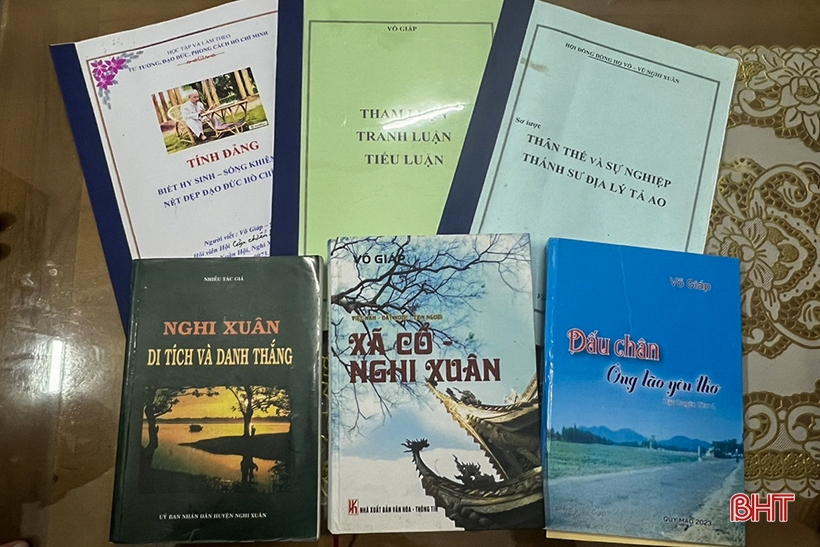
Some of the books and research works by General Vo Giap.
Now, at nearly 90 years old, despite declining health, General Vo Giap continues to read and write. His study is still overflowing with uncompiled collected materials, and many research projects remain unfinished. “Currently, I am focusing on researching Vietnamese worship customs, some issues surrounding Nguyen Du and The Tale of Kieu. I have many more plans for the traditional culture of Ha Tinh and the nation. I will continue working until my hands can no longer write and my eyes can no longer read,” General Giap shared.
Also a former teacher, Mr. Tran Quoc Thuong, former principal of Nguyen Bieu Secondary School (Yen Ho - Duc Tho), has recently become known as a rising star in the local cultural research community. Although he has never contributed articles to any cultural research projects by his predecessors, Mr. Thuong has had numerous research papers published in newspapers and magazines, which have been highly praised by researchers.
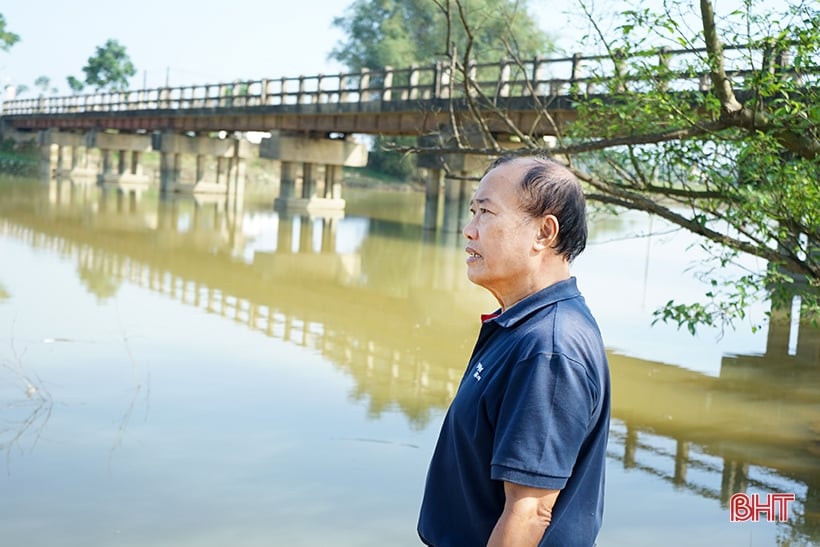
Teacher Tran Quoc Thuong by an ancient riverbank in Yen Ho village.
Teacher Thuong shared: “My writing career was inspired by the teacher and local historian Le Tran Suu. Teacher Suu is the son-in-law of Yen Ho village, and during his many visits to his hometown to research local culture, I had the opportunity to meet and chat with him. Knowing that I loved and wanted to learn about the village culture, Teacher Suu encouraged me: ‘Yen Ho has many interesting things, you should write about them.’”
Based on the collected and researched materials, I have written numerous research papers, expressing my views and perspectives on historical and cultural issues, prominent figures, and relics not only in Yen Ho but also in many other regions of my homeland, Ha Tinh. Among them, notable examples include: The relationship between Nguyen Bieu, Ho Quy Ly, and Nguyen Trai; The bell at Chuc Thanh Pagoda, a rare historical document; The three men who carried land in Yen Ho during the Can Vuong movement; Nguyen Bieu - the courageous envoy; The legend of Tien Do rice field; The origins of the Nguyen Tien Dien family; Did Su Hy Nhan actually pass the imperial examination to become a top scholar?
From his writings, in 2020, teacher Tran Quoc Thuong compiled and published the book "A Perspective." The book expresses a teacher's love for the culture and history of his homeland, showing readers the spirit of exploration, creativity, and the ever-evolving worldview of a former educator. While some perspectives may not be entirely accurate, it provides a useful reference for readers and those passionate about researching local culture.
“I want to preserve and promote the cultural heritage of my hometown, Yen Ho - Duc Tho, as well as of Ha Tinh province. Therefore, in addition to fieldwork to collect, research, and write, I also have another goal: to restore the ancient cultural space of the villages in Ha Tinh, starting with my hometown of Yen Ho. Currently, I am continuing to mobilize resources to restore some temples, historical steles, and ferry docks along the river. I want the younger generations of the village to be provided with more knowledge about the culture and history of their homeland through various forms,” Mr. Thuong expressed.
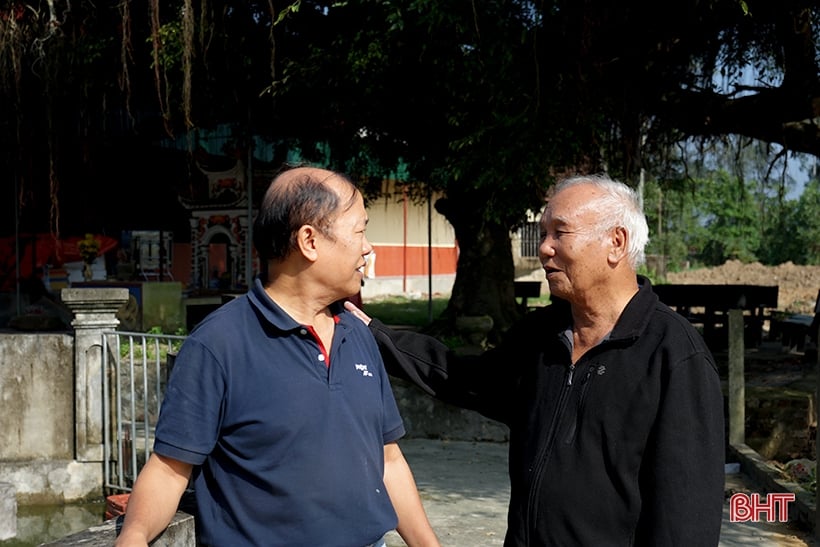
Talking to the village elders is one of the ways Teacher Quoc Thuong conducts his "fieldwork."
Identifying the value and promoting the role of culture in each locality is an extremely important task in the current national development strategy. Ha Tinh province has always considered culture as a source of internal strength, a resource for socio-economic development and an increase in soft power. Exploring, researching, and exploiting the values of traditional culture plays a crucial role in the socio-economic development process.
Fine cultural traditions play a crucial role in fostering community spirit and national identity. Without nurturing and continuity, they can lead to negative consequences for both culture and the human psyche. Therefore, local scholars and those passionate about researching local culture are invaluable resources. Through their research, many traditional cultural values are revived and strongly promoted in daily life.
Today, the first generation of the Ha Tinh Local Studies Group has passed away, but their influence still strongly impacts the thoughts and actions of subsequent generations working in local studies. In agencies, schools, and villages, many people still nurture a love and passion for cultural research and a sense of responsibility for preserving Ha Tinh's cultural heritage. They are the bridges connecting the old and the new in the cultural flow of their homeland.
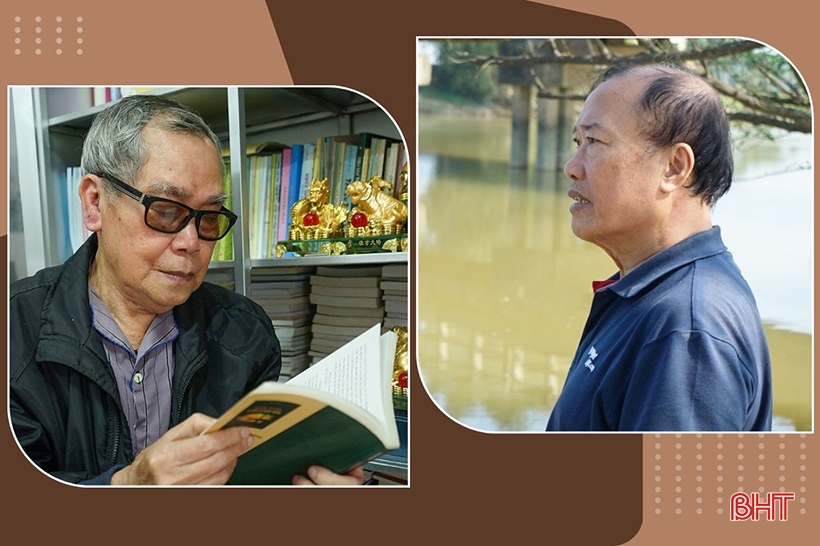
Mr. Hoai
Source
![[Photo] General Secretary and President To Lam presides over a meeting on preparations for the review of one year of operation of the three-tiered government system.](https://vphoto.vietnam.vn/thumb/1200x675/vietnam/resource/IMAGE/2026/06/02/1780391821195_a1-bnd-4595-9717-jpg.webp)
![[Image] Affirming the aspirations and new standards of the Vietnamese real estate market in the new era.](https://vphoto.vietnam.vn/thumb/1200x675/vietnam/resource/IMAGE/2026/06/03/1780441948766_giai-thuong-bat-dong-san-2026-minh-duy-6-7364-jpg.webp)





















































Comment (0)