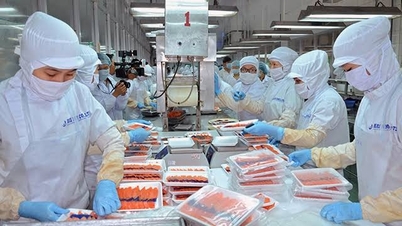
Ms. Tran Thi Yen (far right) is packaging products. Photo: THUY TRANG
This is one of the areas in Kien Luong commune where many families are still involved in the traditional craft of drying fish. Sunny days are the busiest times for these fish drying facilities. From early morning, fresh fish, after being purchased, are sorted, cleaned, sliced, marinated, and then neatly arranged on drying racks to dry in the sun. Each batch of dried fish is the result of the diligence and skill of the people who have been dedicated to this traditional craft for many years.
Ms. Tran Thi Yen, the owner of a dried fish processing facility, shared that the drying process here still retains traditional methods. To make delicious dried fish, the fish must be very fresh. After initial processing, the fish is marinated in the correct proportions and then rinsed with clean water before being seasoned with fish sauce and spices. This is the secret to preventing the fish from being too salty while preserving its natural flavor. If seasoning is used, chili powder is only added right before drying to maintain the fish's natural color. After marinating, the fish is dried in the sun. If it rains or there isn't enough sunlight, the fish is reprocessed and dried the next day to ensure product quality.


Using raw materials from the Kien Luong sea area, the facility processes many products such as dried scad, anchovies, silverfish, barracuda, various types of sun-dried fish, and candied anchovies. On average, Ms. Yen's facility produces about 400kg of finished dried fish products each month, with production increasing during holidays and Tet (Lunar New Year). Ms. Yen participates in promoting her dried fish products at many events and fairs, thereby gaining more recognition. Thanks to the quality, she has more customers and a more stable market. During peak times, the products produced are not enough to meet market demand.
Besides creating a distinctive local product, this traditional craft also provides a livelihood for many women during their free time. When raw materials are abundant, the facility mobilizes 5-10 people to participate in processing, filleting, drying, and packaging the fish. Ms. Luong Hong Phung takes advantage of her mornings to fillet the fish. “Each shift, from 8 to 12 hours, earns me an extra 100,000-120,000 VND. It's suitable for women because they still have time to take care of housework and children,” Ms. Phung shared. Although not the main source of income, this money helps many families cover living expenses, especially during the off-season or when the fishing industry faces difficulties.
However, according to many dried fish processing facilities in Kien Luong commune, the development of this traditional craft still faces many difficulties. These facilities are small-scale, family-run businesses lacking the financial capacity to expand production. Processing remains heavily dependent on weather conditions, primarily relying on natural sun drying. Raw material sources fluctuate seasonally, while the products have yet to establish a brand.
According to Tran Binh Trong, Deputy Secretary of the Party Committee and Chairman of the People's Committee of Kien Luong commune, to preserve traditional crafts, the commune continues to review and plan suitable production areas, creating conditions for households to link together into cooperatives to improve production capacity and gradually overcome the situation of small-scale production. At the same time, the commune coordinates with specialized departments to support people in accessing investment capital for equipment and applying drying technology to reduce dependence on weather; guiding the implementation of food safety standards, packaging, and labeling; focusing on developing OCOP products; and strengthening trade promotion activities to create stable outlets for products.



Source: https://baoangiang.com.vn/no-am-tu-nghe-ca-kho-a491109.html