

Just days before the new US administration officially imposed a 25% protectionist tariff on EU goods exported to the US market, Maros Sefcovic, EU Commissioner for Trade, traveled to Washington to meet with US Commerce Secretary Howard Lutnick. This was seen as a last-ditch effort by the EU to prevent a new round of trade conflict between the two sides.
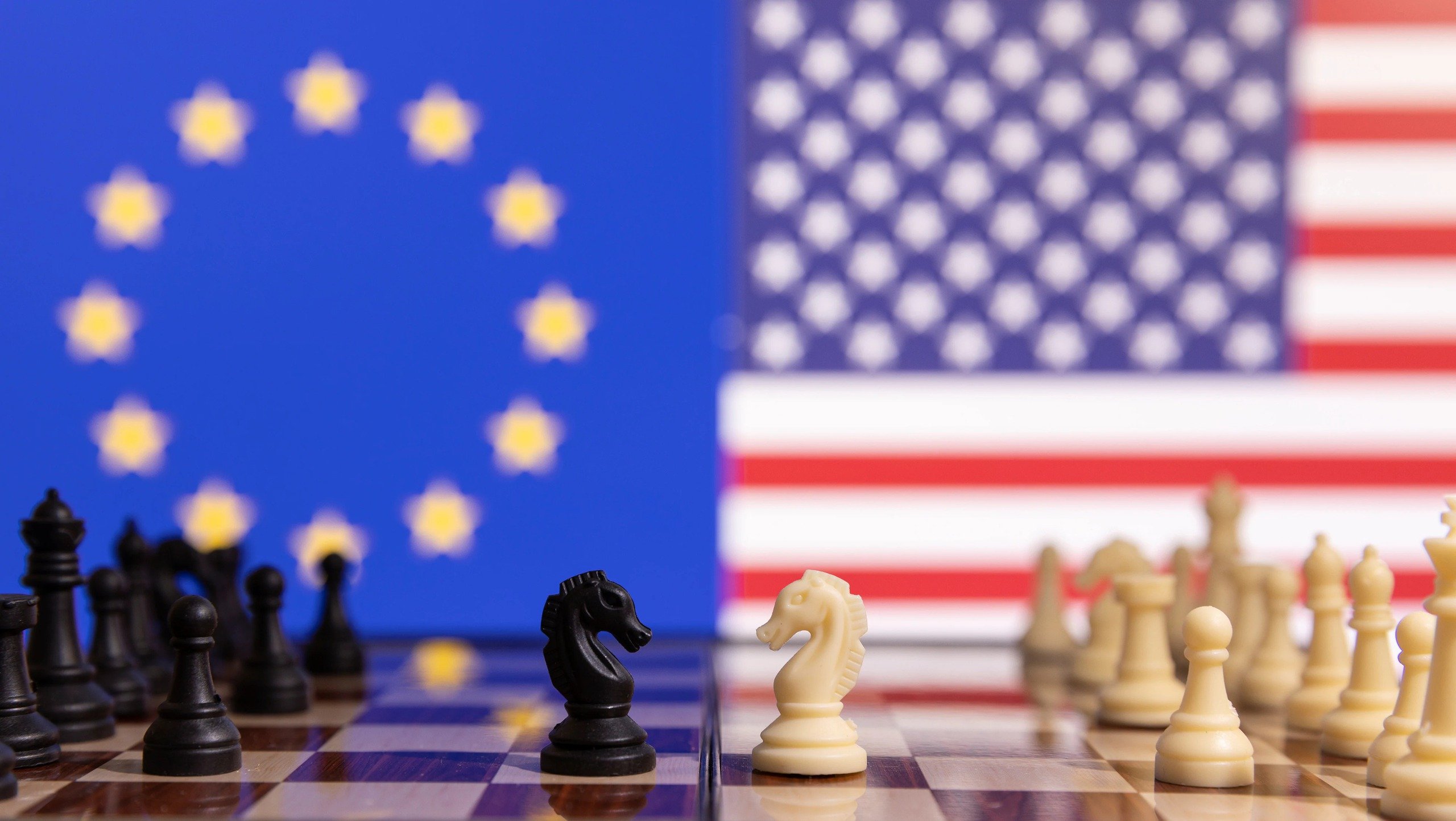
Trade conflicts are a game where both the US and the EU can only lose; neither can win.
Like Canada, Mexico, and China—all major trading partners of the US and targeted by the new US administration with protectionist tariffs—the EU is responding with a kind of "dual strategy" encompassing two measures: literally and figuratively retaliating against the US with a tit-for-tat approach, and simultaneously actively negotiating with the US to reach some political and trade agreement that could prevent the trade conflict between the two sides from escalating.
Such negotiations represent the last chance for both sides to prevent a trade conflict, and proactively seeking dialogue with the US on this matter, to a certain extent, also demonstrates goodwill on the part of the EU. This bloc is a union of 27 European countries, not a single nation like Canada, Mexico, or China. The EU acts on behalf of all its members when handling foreign relations. Therefore, the EU has no other choice but to retaliate against the US in kind when it unilaterally imposes protectionist tariffs.
Trade conflicts are a losing game for both the US and the EU; neither can win. Therefore, for the EU, avoiding harm is better than suffering harm along with the US. Such efforts could prevent a trade conflict with the US. Even if unsuccessful, the EU could still avoid internal difficulties and awkward situations, while also isolating the US globally and gaining international support on this issue.
Source: https://thanhnien.vn/no-luc-cuu-van-cuoi-cung-185250326210556266.htm
![[Photo] President Luong Cuong presides over the welcoming ceremony for the President of the European Council, Antonio Costa.](/_next/image?url=https%3A%2F%2Fvphoto.vietnam.vn%2Fthumb%2F1200x675%2Fvietnam%2Fresource%2FIMAGE%2F2026%2F01%2F29%2F1769662707713_ndo_br_1-jpg.webp&w=3840&q=75)


![OCOP during Tet season: [Article 4] Elevating local products](/_next/image?url=https%3A%2F%2Fvphoto.vietnam.vn%2Fthumb%2F402x226%2Fvietnam%2Fresource%2FIMAGE%2F2026%2F01%2F29%2F1769652810578_2935-z6982071462129_649e82db06fb2f2ea701388b1f5f5b0b-173322_176-185229-202804_457.jpeg&w=3840&q=75)


![OCOP during Tet season: [Part 3] Ultra-thin rice paper takes off.](/_next/image?url=https%3A%2F%2Fvphoto.vietnam.vn%2Fthumb%2F402x226%2Fvietnam%2Fresource%2FIMAGE%2F2026%2F01%2F28%2F1769562783429_004-194121_651-081010.jpeg&w=3840&q=75)

![OCOP during Tet season: [Part 2] Hoa Thanh incense village glows red.](/_next/image?url=https%3A%2F%2Fvphoto.vietnam.vn%2Fthumb%2F402x226%2Fvietnam%2Fresource%2FIMAGE%2F2026%2F01%2F27%2F1769480573807_505139049_683408031333867_2820052735775418136_n-180643_808-092229.jpeg&w=3840&q=75)



Comment (0)