

.jpg)
Unlocking credit flows is not only a growth objective for banks, but also creates momentum to boost the entire economy .
Businesses speak out…
Private enterprises, especially household businesses and small and medium-sized enterprises (SMEs), constitute a very large proportion of the business community in Vietnam. Hai Duong is no exception to this trend. However, these household businesses and enterprises often face several barriers when accessing bank capital.
For example, consider Hai Phat Auto (Tu Minh Ward, Hai Duong City). Despite dealing in used cars, a sector with a high capital turnover rate requiring significant working capital, the owner primarily borrows from banks by mortgaging personal assets. This is partly because bank credit products for household businesses are not as diverse as those for enterprises.
“Even if we want to transform into a business to expand our scale and standardize our financial operations, accessing bank credit is not easy. The biggest difficulty is collateral. Our inventory consists of used vehicles, each valued at 500 million VND or more. However, these vehicles are not recognized as collateral for bank loans because they are used,” shared Mr. Le Phu Da, a business owner.
Another reason is the source of supply, which is used cars, mainly purchased from individuals. “Car transactions are primarily conducted through notarized contracts, without input invoices. This makes it impossible to issue VAT invoices (value-added tax invoices). Therefore, we find it difficult to prove revenue and cash flow to banks,” Mr. Da further explained.
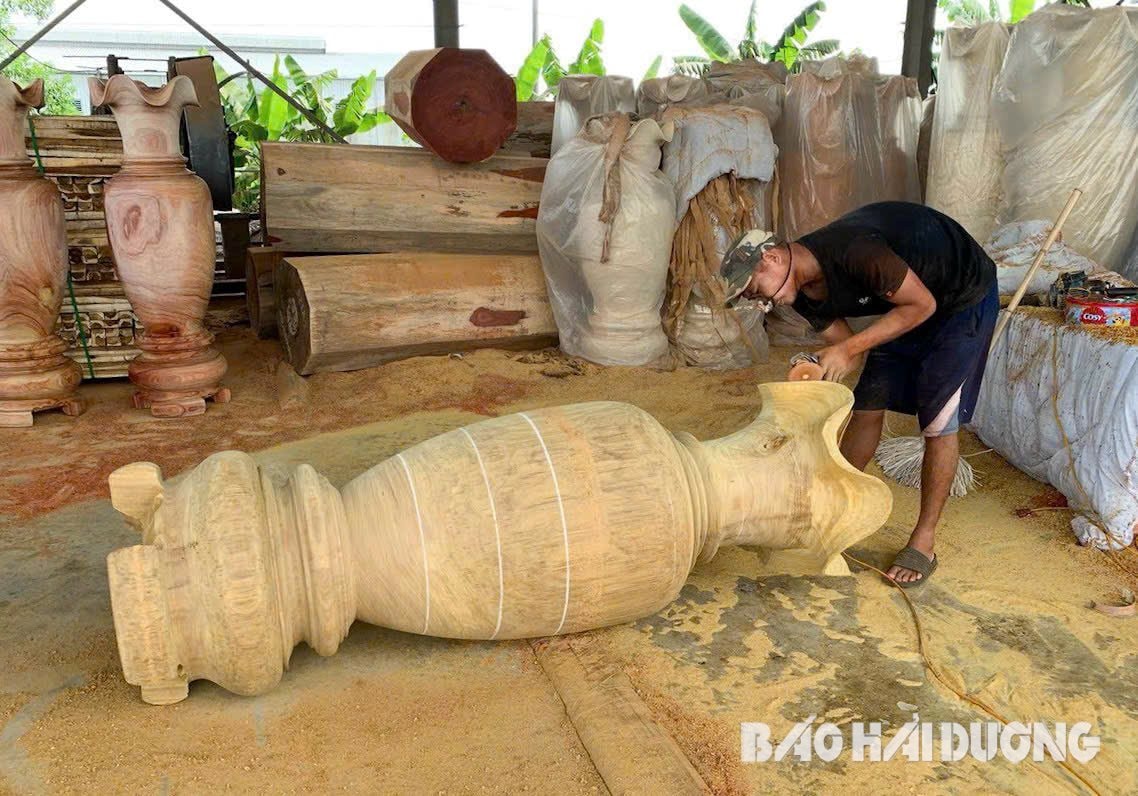
Facing similar issues with collateral, Moc An Hai Co., Ltd. in Luong Dien commune (Cam Giang district) has been struggling with the problem of securing bank loans for many years. Mr. Pham Van Chuong, the company's director, shared that since its establishment in 2022, the capital to maintain the company's operations has come entirely from personal sources.
“We have to borrow from personal loan packages, then use that capital to invest in the company. For large corporations, accessing capital can be easy. But for small businesses like ours, banks basically base their assessment on highly liquid assets, mainly real estate, which we don't own. Meanwhile, machinery and products we manufacture are not accepted as collateral for loans,” Mr. Chuong shared.
According to data reported by the State Bank of Vietnam, Region 6, by the end of the second quarter of 2025, the total outstanding loans of the banking sector in Hai Duong province were estimated at VND 163,434 billion, an increase of nearly VND 1,500 billion compared to the end of May 2025. However, total mobilized capital reached VND 228,590 billion, an increase of more than VND 1,800 billion compared to the end of May 2025. Therefore, the difference between mobilized capital and outstanding loans widened to nearly VND 65,160 billion, an increase of nearly VND 400 billion compared to the end of May.
...waiting for a response from the bank
Deposit interest rates in the first half of this year remained low, around 5% per annum for 12-month terms at non-state-owned banks and around 4.7% per annum for the same term at state-owned banks. This created favorable conditions for maintaining low lending interest rates. At some banks such as Agribank Hai Duong branch, BIDV Thanh Dong, MB Hai Duong, etc., short-term lending interest rates were commonly at 4-8.2% per annum, while medium and long-term lending rates ranged from 7.2-10% per annum.
Low deposit interest rates still attract deposits, while low lending rates remain high despite the significant difference between deposits and outstanding loans. “This shows that savings deposits remain attractive to people, driven by the desire for safe investment options amidst an unpredictable economic environment. On the other hand, the demand for loans and the capacity to absorb credit remain limited. In other words, the flow of credit to businesses may still be uneven,” analyzed Mr. Nguyen Duy Binh, Deputy Director of BIDV Thanh Dong branch.
Prioritizing loans to customers with high-value collateral and good credit histories is understandable and legal, because banks, by their very nature as capital businesses, are obligated to comply with strict regulations on credit safety.
"In addition to striving to maintain access to low-cost capital through preferential credit packages, we will implement a variety of credit products tailored to each industry and economic sector in the locality. This will boost credit growth and narrow the gap between deposit mobilization and lending," Mr. Binh said.
Many businesses are hoping that banks will develop specialized financial products such as unsecured loans based on business cash flow, loans based on assets created from borrowed capital, or loans based on output contracts...
Furthermore, banks should expand their credit assessment models to include real-world transaction data, rather than focusing solely on collateral. They could leverage big data and artificial intelligence to assess corporate creditworthiness based on transaction data, electronic invoices, payment history, and more.
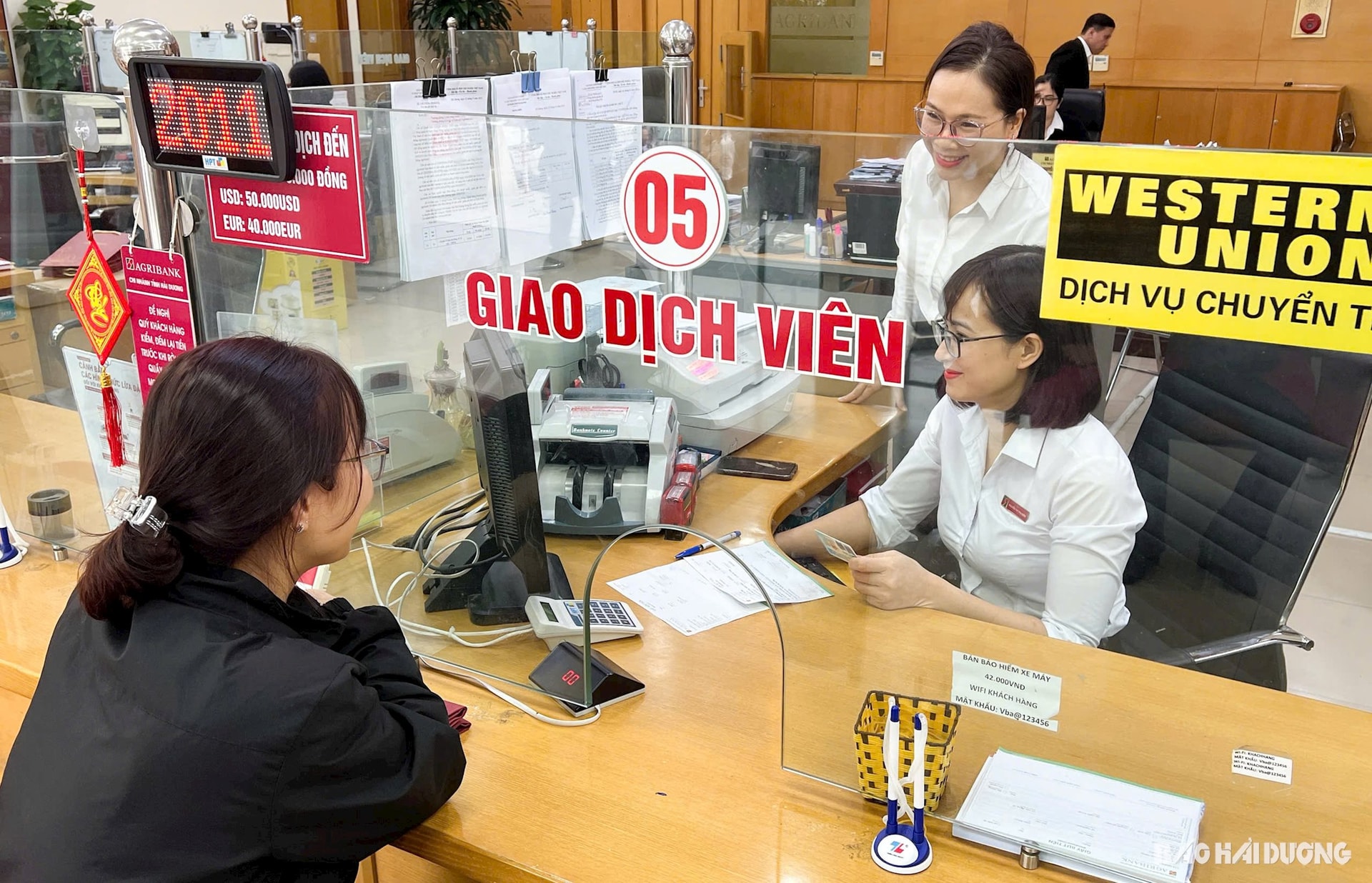
"However, to expand unsecured credit, a clearer and more specific legal framework is needed for cash flow-based lending," said a representative from a bank in the province.
In fact, over the past period, the banking system has implemented many practical policies to support private businesses, such as restructuring loan repayment terms, waiving or reducing interest rates, and assisting in recovery after the pandemic and natural disasters. Commercial banks have also continuously innovated, diversified credit products, and digitized lending processes.
Therefore, access to capital depends not only on the banks but also requires businesses to change. Businesses need to be transparent in their financial reporting, proactively develop clear and feasible business plans and capital utilization strategies. When trust and transparency go hand in hand, capital flows will be unlocked and operate smoothly, like the bloodstream nourishing the economy.
HA KIENSource: https://baohaiduong.vn/no-luc-khoi-dong-von-tin-dung-415190.html

![[Photo] Prime Minister Pham Minh Chinh receives the Chinese Ambassador to Vietnam](https://vphoto.vietnam.vn/thumb/1200x675/vietnam/resource/IMAGE/2026/04/05/1775397481797_ndo_br_dsc-5512-jpg.webp)
















































































Comment (0)