

The Hankyoreh newspaper (South Korea) published an analysis on July 16th stating that Israel has not yet been able to defeat the Hamas movement and that its tactics seem to be further empowering this Palestinian force.
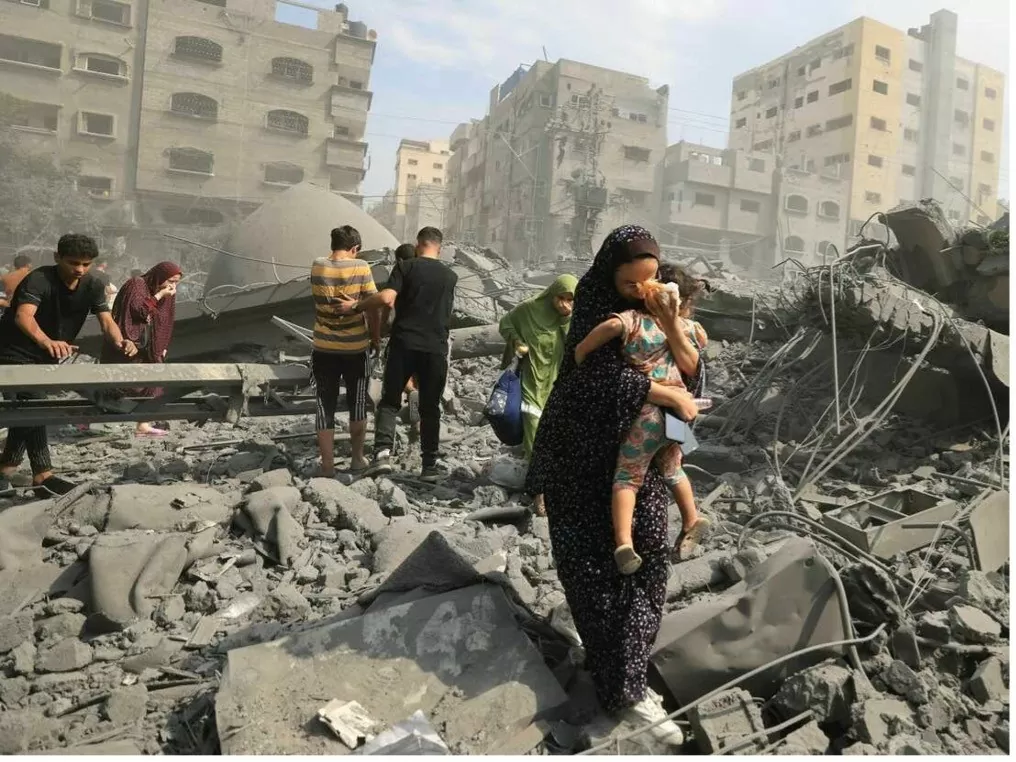 |
| Palestinians evacuate from the area targeted by Israeli airstrikes at the Sousi Mosque in Gaza City on October 9, 2023. (Source: AFP) |
According to the article, the Israel-Hamas conflict in Gaza (an occupied Palestinian territory), which erupted on October 7, 2023, is plunging the world into further chaos and dividing the international community into the largest "ideological battleground" since the Cold War. Israel has "flattened" Gaza but is being dragged into a quagmire after failing to end the fighting there.
Adverse effects
More than nine months have passed since the conflict erupted, yet Israel is still a long way from achieving its goal of eliminating Hamas. Meanwhile, the destruction has only increased Palestinian support for Hamas.
On July 10, the Israel Defense Forces (IDF) ordered residents of Gaza (the region's largest city) to evacuate south in preparation for an "anti-terrorism operation" targeting Hamas and the Palestinian Islamic Jihad (another Palestinian militant group) in Gaza.
At the start of the conflict, Israeli forces launched a large-scale offensive on the city in northern Gaza to evacuate most of its residents to the south and conduct a sweeping operation against the Hamas group.
Given the devastation caused at the time, Israel concluded that it had driven Hamas out of the area. However, Hamas has returned, and Israel is now once again carrying out deportations of those who have returned.
On June 24, Israeli Prime Minister Benjamin Netanyahu stated that the current phase of fighting between Israel and Hamas in Gaza was “nearing its end,” while also mentioning the possibility of moving troops to the northern part of the area (bordering Lebanon) to fight Hezbollah. These statements cast a shadow over the declaration of an end to large-scale fighting in the Gaza Strip.
To date, Israel has sent approximately 40,000 troops; about 80% of the 2.3 million people in the Gaza Strip have become refugees; at least 38,000 people (70% of whom were civilians) have been killed, and at least 70,000 tons of explosives have been dropped. This is more than the number of bombs dropped on London, Dresden, and Hamburg during World War II. More than half of the buildings in the area have been destroyed, and water, electricity, and fuel supplies have been cut off during the campaign, causing widespread starvation.
Israel's stalemate
The military conflict in Gaza has been at a stalemate since April 2024. In the initial phase, Israel launched a sweep operation from north to south, preparing for a full-scale attack, forcing 1.2 million Gaza residents to flee to the city of Rafah at the southern end of the strip.
However, Tel Aviv eventually changed its stance amid warnings and protests from the US and other members of the international community, fearing civilian casualties. At this point, Western media also began to suggest that although Israel may have won, it was actually losing.
The New York Times concluded in April that Israel had “failed to achieve its main goals: freeing hostages and completely destroying Hamas.” The newspaper also noted that “the suffering of the Palestinians is eroding support for Israel even among its allies.”
Of the 253 hostages initially captured, 109 were released in exchange for Palestinian prisoners during a week-long ceasefire in November 2023. Since then, only three more have been released through military operations, while 12 others have died. Among the dead were three who perished in Israeli operations. This means a total of 129 hostages remain, although Israel estimates that at least 34 of them have also died.
Nevertheless, appearing before the Knesset (Israeli Parliament) on July 17, Israeli Defense Minister Yoav Gallant declared that 60% of Hamas fighters had been killed or wounded. The Israeli military estimates that a total of 14,000 Hamas members have been killed so far (including 13,000 by April 2024).
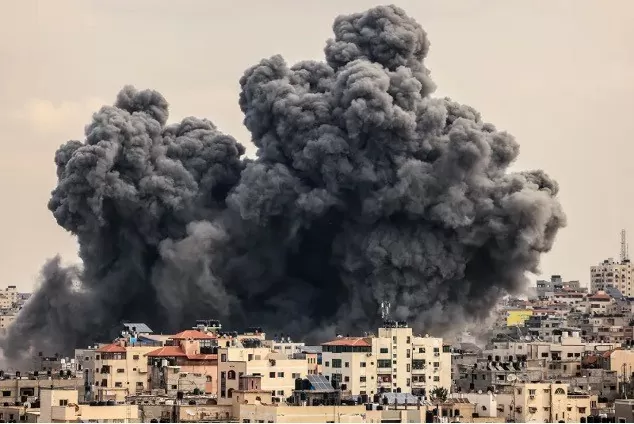 |
| Gaza City during an airstrike, October 9. (Source: AFP) |
Is Hamas becoming increasingly powerful?
In an article titled "Hamas Is Winning," Professor Robert Pape of the University of Chicago emphasized that Hamas is in good shape and gaining increasing popular support.
Hamas estimates its death toll at between 6,000 and 8,000, while US intelligence agencies estimate the figure at around 10,000. Hamas still has the capacity to mobilize around 15,000 members in the Gaza Strip, while 80% of its tunnels in the area remain operational.
Among the reasons for declaring Hamas victorious, Professor Pape cited the argument that although it has lost many members so far, Hamas is still able to replenish its forces (a capability built on growing popular support).
According to a survey by the Palestine Research Center for Policy and Surveys, support for Hamas has doubled since the surprise Israeli attack on October 7, 2023.
A survey conducted in March 2024 showed that 73% of Palestinian residents agreed that Hamas's retaliatory attack in October 2023 was justified; 53% even said they supported attacks targeting Israeli civilians. The reason for this may stem from the suffering and tragedy experienced by residents of the Gaza Strip since the start of the war, with 60% of Gazans having lost at least one family member and 75% having family members injured or killed.
The unavoidable "traps"
One trap for Israel in the Gaza conflict is that Tel Aviv has not yet developed any withdrawal plan or strategy. In late May, Israeli National Security Advisor Tzachi Hanegbi predicted that the Gaza conflict would continue throughout 2024 and last for “at least another seven months.”
Not only did Israel fail to achieve its goals, but Netanyahu himself had to resign after the conflict ended, and Israel had no plan or reason to end the fighting. In fact, Tel Aviv's plan was to wait for the results of the upcoming US presidential election.
The administration of incumbent President Joe Biden wants to hand over control of Gaza to the Palestinian Authority controlling the West Bank, but Netanyahu and his far-right cabinet strongly oppose this. Far-right figures such as National Security Minister Itamar Ben-Gvir have called for the complete occupation of the Gaza Strip and its incorporation into Israeli territory.
Since late 2023, Israel has been building a 1-kilometer-wide buffer zone in a corridor running through the outskirts and center of Gaza. For the people of Gaza, creating this buffer zone in and around an area only about 40 kilometers long and 5 to 12 kilometers wide means a significant reduction in their territory and, in effect, isolation and disconnection.
Israeli news outlets report that Tel Aviv is currently withdrawing troops from Gaza and deploying them to the northern border with Lebanon in preparation for a full-scale clash with Hezbollah. At the beginning of the Gaza conflict, Israel clashed with Hezbollah to avoid international condemnation, but this resulted in 100,000 of its citizens in the north becoming refugees. Now, a full-scale conflict with Hezbollah is becoming another trap that Israel cannot easily avoid.
Source: https://baoquocte.vn/xung-dot-israel-hamas-noi-dau-nhan-dao-xoi-mon-long-tin-279495.html








































































































Comment (0)