

The discovery of hundreds of tons of diseased pork in the cold storage of a well-known canning company in a northern province is one example. Immediately after this horrific truth was uncovered by the police, consumers nationwide turned their backs on the company, and the offending business has temporarily suspended production to rectify the problems.
Most recently, a newspaper published an investigative report exposing the use of expired food, "transforming" buffalo meat into pork and beef, and supplying it to schools in Ho Chi Minh City. On the morning of January 29th, many schools, without waiting for instructions, proactively changed their food suppliers. That same afternoon, a representative from the Department of Education and Training stated that the Department had immediately suspended school lunch services at schools that used food from this company. Simultaneously, the Department will review all food suppliers to schools in the city; those that do not meet standards will be disqualified. The Department of Education and Training also plans to develop a digital data management system for school food safety, enabling faster and more accurate traceability and assessment of supplier credibility.
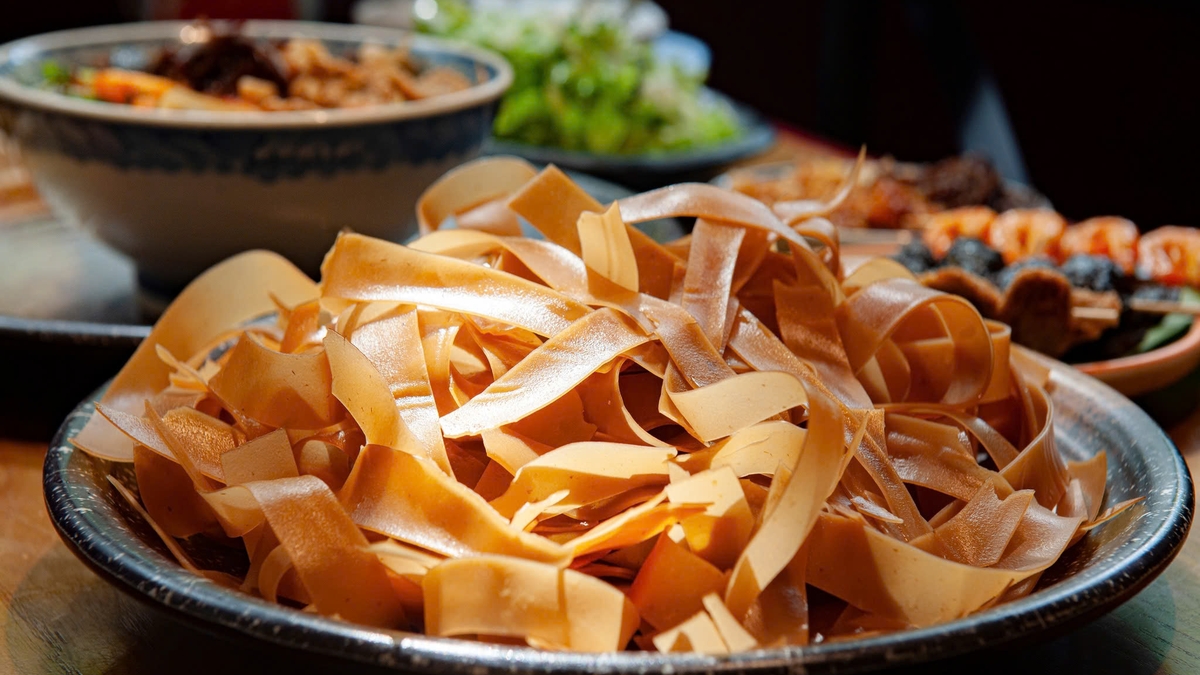
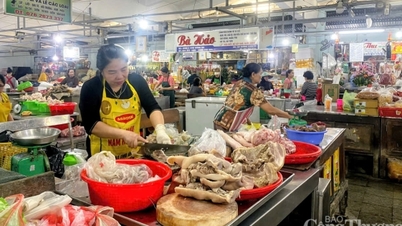
During the nationwide crackdown on unsafe food leading up to the Lunar New Year, numerous provinces and cities discovered establishments and networks violating regulations. In Thanh Hoa , a network supplying fish preserved with formaldehyde was uncovered. In Ho Chi Minh City, the most populous city in the country, a series of cases were discovered, ranging from pork being "transformed" into "ostrich or venison"; noodles mixed with chemicals; snails soaked in construction materials, etc. This reality shows that the food safety situation remains complex; it also demonstrates the determination of authorities in resolutely eliminating unsafe and toxic food to protect public health.
According to the annual report "Southeast Asian Food Delivery Platforms" published by a company in early January 2026, the size of the Vietnamese online food delivery market is projected to grow by 19% in 2025 compared to 2024, with the total transaction value of the three online food delivery platforms reaching approximately US$2.1 billion last year. This figure only includes orders placed through food delivery apps, excluding orders placed directly with restaurants. Eating out or ordering food through apps has become a common habit for many Vietnamese consumers, especially in Hanoi , Ho Chi Minh City, Da Nang, and other urban areas. This is an inevitable trend due to the increasing popularity of smartphones, busy lifestyles, and the preference for convenient dining options.
However, according to international surveys, in Southeast Asia, despite a population of over 100 million, Vietnam has the smallest online food delivery market among those surveyed, after Indonesia, Thailand, the Philippines, Malaysia, Singapore, etc. This may partly be due to the apprehension many people have about the safety of food from restaurants and food stalls. The resolute actions of authorities in combating unsafe food in recent times and the strong reactions of consumers show that in order to survive and develop the food and beverage industry, and to strengthen consumer trust, all suppliers, processors, brands, and restaurants must always keep in mind and implement the paramount principle of ensuring food hygiene and safety.
Source: https://baophapluat.vn/noi-khong-voi-thuc-pham-ban.html


























![[Infographic] Essential Information About Election Day](https://vphoto.vietnam.vn/thumb/1200x675/vietnam/resource/IMAGE/2026/03/14/1773454962599_ngay-bau-cu-095431_652-100257.webp)

























































Comment (0)