.jpg)
Scattered scrap metal
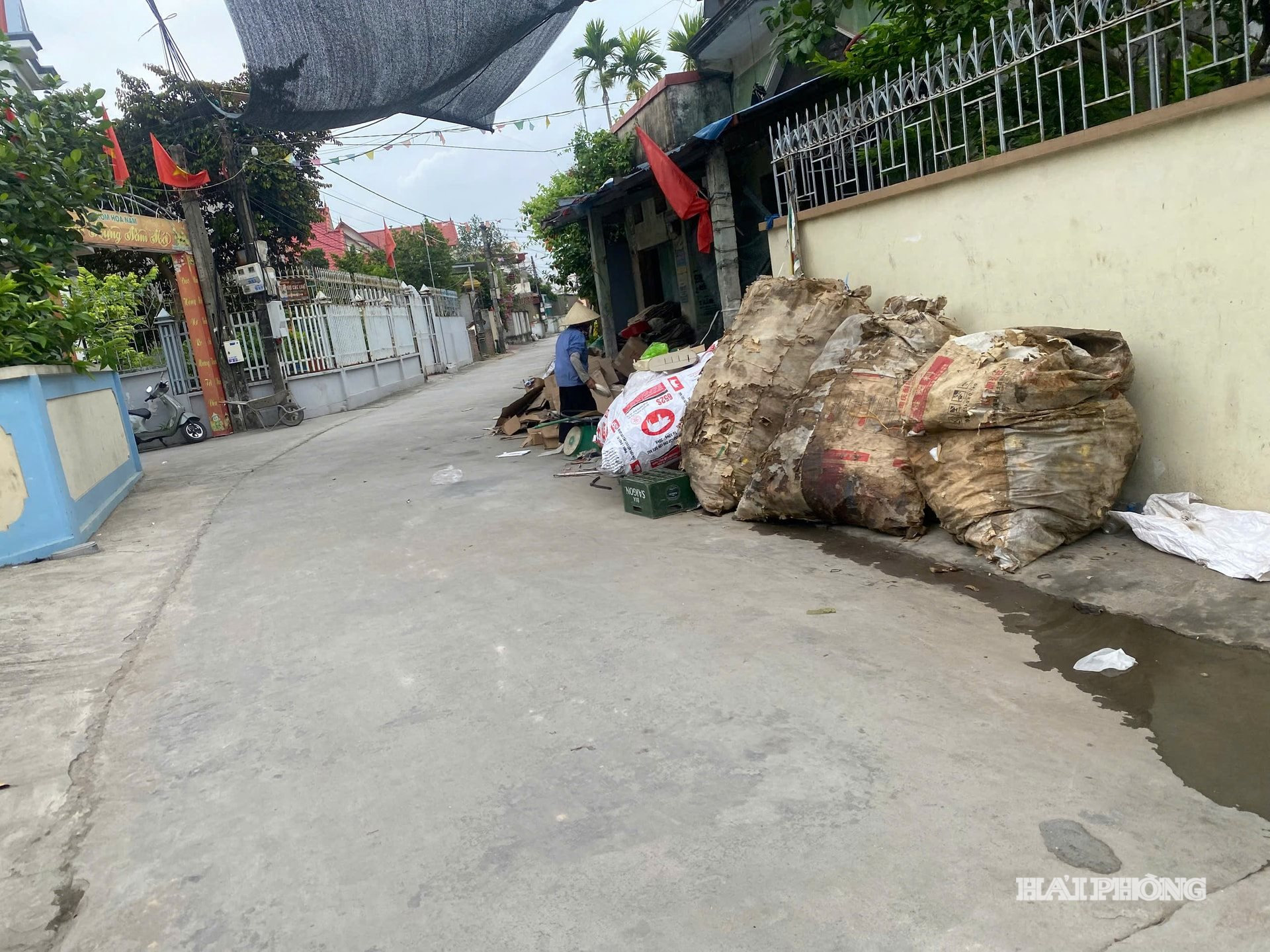
According to residents, along many roads in wards and communes such as Phu Thai, Ha Bac, Lai Khe, and some other localities, it is not difficult to find scrap collection points interspersed among residential areas. Here, all kinds of waste are piled up haphazardly, from scrap paper, cardboard, packaging, styrofoam, plastic, fabric scraps to iron, steel, old electrical equipment, etc.
Ms. Nguyen Thi Hanh, a resident of Phu Thai commune, said that the road in Quynh Khe 2 village serves the transportation needs of the people but is frequently used by a scrap metal business as a collection and trading point. Scrap metal is scattered everywhere, encroaching on the road, while many vehicles enter and exit to collect it, causing traffic congestion.
According to Ms. Hanh, there were times when goods and transport vehicles completely blocked the road, preventing people from moving normally. "Many times, when we reached this section of the road and saw that it was blocked, we had to turn back and take another route," Ms. Hanh said.
What worries residents is that many of these facilities are located close to residential areas, while the materials collected are mostly highly flammable. Just a small spark could cause a fire.
The scrap metal collection point is located next to Road 390B in Ha Bac commune, run by the households of Nguyen Huu Ngoan, Pham Sy Thiem, and Nguyen Huu Mai in Co Cham 1 village. Packaging and materials are also frequently dumped and spilled onto the streets. In hot weather, the risk of fire becomes even more worrying. Many residents living near scrap collection points say they are constantly on edge.
The risk has been warned about.



Over the years, fires related to scrap collection and recycling activities have occurred in many places. At the end of 2025, a fire broke out at a scrap collection facility in Truong Tan commune. This past April, another fire occurred at an open-air scrap yard in An Lao commune.
According to lawyer Nguyen Thanh Hai, Head of Bao Cong Law Office ( Hai Phong Bar Association), the activity of purchasing scrap materials falls under the category of waste collection, processing, and recycling. Therefore, businesses must register their operations and ensure compliance with environmental protection and fire safety regulations.
Government Decree 105/2025/ND-CP, which details some provisions and measures for implementing the Law on Fire Prevention, Firefighting, and Rescue, also stipulates that scrap metal purchasing facilities must have internal regulations, fire prevention and firefighting plans, on-site firefighting forces, and conditions to support firefighting operations.
According to our investigation, in addition to the risk of fire and explosions, many facilities also fail to comply with environmental hygiene regulations. Many scrap collection points occupy roads and sidewalks to store goods, causing urban blight and affecting traffic safety.
To prevent and combat violations by scrap collection and recycling facilities, local authorities and relevant agencies have conducted inspections and promptly reminded and rectified shortcomings and limitations. Mr. Pham Van Dien, Chairman of the People's Committee of Phu Lien Ward, said that in May, the ward carried out a comprehensive inspection and review of all households producing and trading scrap materials in the area.
According to preliminary statistics, the ward has approximately 80 households operating in this field. The Ward People's Committee has requested that scrap collection points located within residential areas be urgently relocated to other locations, maintaining a safe distance from residential areas, schools, medical facilities, and public buildings.
According to Colonel Pham Viet Dung, Deputy Director of the City Police, complacency is unacceptable in fire prevention and control at facilities, including scrap collection and recycling facilities. Functional forces, especially the Fire Prevention, Control and Rescue Police Department, will strengthen coordination with local authorities to inspect and guide activities, while resolutely and strictly handling violations of regulations.



According to Pham Van Thuan, Deputy Director of the Department of Agriculture and Environment, the collection and storage of scrap materials, if not strictly managed, poses many risks of environmental pollution, urban blight, and impacts on people's lives. Scrap collection facilities must fully comply with environmental protection regulations, arrange storage areas to ensure hygiene, prevent the dispersal of dust, wastewater, and odors into the surrounding environment; and collect, sort, and process generated waste according to regulations. "For cases where scrap materials are stored encroaching on roads and sidewalks, causing environmental pollution, or not meeting the required conditions, localities need to strengthen inspections and take strict action," Mr. Thuan said.
In addition to the above solutions, it is suggested that localities should promptly plan and relocate scrap metal collection points away from residential areas, moving them to designated areas with strict environmental and fire safety regulations. This is a key solution to prevent risks in case of incidents from these facilities.
MIGRATIONSource: https://baohaiphong.vn/noi-lo-tu-nhung-bai-phe-lieu-545437.html



![[Photo] "Hanoi Lotus Festival" honors the lotus flower that has been associated with Vietnam for thousands of years.](https://vphoto.vietnam.vn/thumb/1200x675/vietnam/resource/IMAGE/2026/06/27/1782516943048_sen-ha-noi-2026-minh-duy-1-jpg.webp)




























































![[Infographic] 16 fireworks display locations to celebrate the 50th anniversary of Ho Chi Minh City being honored with the name of President Ho Chi Minh](https://vphoto.vietnam.vn/thumb/402x226/vietnam/resource/IMAGE/2026/06/27/1782539591308_man-ban-phao-hoa-ruc-ro-dem-khai-mac-638jpg-17242995540161175940469.jpeg)