

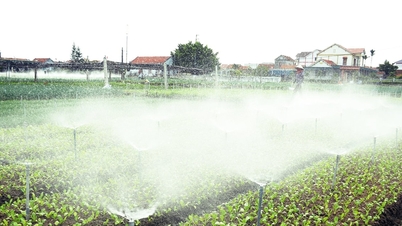
From 2026, the government will abolish the land price framework set by the Government every 5 years, replacing it with land price tables determined by the provinces, starting in 2026, and subsequently adjusted annually according to actual market fluctuations. The land price tables are developed according to strict government regulations and guidance from the Ministry of Agriculture and Environment regarding principles, procedures, methods, and criteria for areas and locations. The two most fundamental principles are determining prices closely reflecting market prices and ensuring independence between the consulting unit determining the price and the Price Appraisal Council with the competent authority for approval. The general price table includes 8 basic secondary tables according to 8 land types: 4 tables for agricultural land (annual crop land, perennial crop land, aquaculture land, and forestry land). 4 tables for non-agricultural land (residential land, commercial and service land, production facility land, and industrial park land). Furthermore, land prices can be further divided into smaller secondary tables, such as residential land and other non-agricultural land types categorized by urban and rural areas. Land price tables are also available for each administrative unit (commune/ward), with each unit further divided into several zones, each zone containing a number of categories. Each category has a number of locations. Each category of residential and other non-agricultural land commonly has 5 locations, while each category of agricultural land commonly has 3 locations. Location number 1 has the highest price, with subsequent locations decreasing in price.
The land price list serves as the fundamental basis for determining the value of state-owned land for lease or allocation (with payment), bidding prices, land use fees when converting land, taxes on buying and selling land, compensation when the state reclaims land, and other fees and charges related to land.
The proposed land price list for provinces in 2026 is close to market prices, with an average increase of 30%-70% for residential land and 20%-50% for agricultural land (compared to the land price list implemented until the end of 2025). The proposed increase for residential land in the plains is 30-40% for residential land and 15-30% for agricultural land. This rate is 15-30% and 10-25% in mountainous areas. Peak land prices in mountainous areas are significantly lower, only 10-30% of those in the plains. Notably, in cases of provincial mergers, land prices in central areas do not increase, and may even decrease when the provincial administrative center is relocated. Conversely, land prices in areas that become the common administrative center of the merged provinces increase sharply.
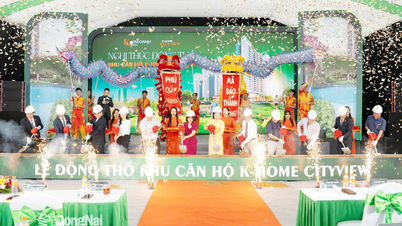
Several localities have become the focus of media attention. In the North, Hanoi proposes an increase in urban land prices of 2-26% (compared to the adjusted price in 2025), and an increase of 150-270% (compared to the unadjusted price in 2025). The peak price (per square meter) is 702 million VND for urban land in the city center and 290,000 VND for agricultural land. In Quang Ninh, urban land prices have increased by an average of 1.5-2 times, with some reaching over 5 times, peaking at 203 million VND; rural land prices have increased by an average of around 3 times, with some reaching 9 times. Hai Phong saw the highest increase of 370%, with urban land prices exceeding 200 million VND. In Bac Ninh, urban land prices have increased by an average of 2.4 times, peaking at 120 million VND. In Central Vietnam, in Nghe An province, land prices in some areas of the old and new Vinh city are calculated at 80% of market value, with peak prices exceeding 200 million VND. In Da Nang, urban land prices increased by 5-82%, peaking at 350 million VND; agricultural land prices of all types increased by an average of 140-150%, peaking at 300,000 VND. In Quang Ngai, urban land prices increased 2-3 times, peaking at 60 million VND. In Southern Vietnam, Ho Chi Minh City saw increases of 4%-280%. Peak urban land prices reached 687 million VND, and agricultural land 810,000 VND. In Dong Nai, residential land prices increased 1.3-2 times; agricultural land prices increased 1.1-1.8 times, with some areas seeing increases up to 9 times. Peak urban land prices reached 64 million VND, rural residential land 18 million VND, and agricultural land 396,000 VND/m2. In Tay Ninh, land prices in rural and urban areas have increased by 1.6 to 6 times, with urban land prices peaking at 83 million VND and agricultural land at 178,000 VND.
The provinces in the Northern Midlands and mountainous region belong to the group with low to medium land price increases. Urban residential land increased by an average of 15%-30%, with the highest increase being 5-8 times; agricultural land increased by an average of 5-20%, with the highest increase being 80%. Thai Nguyen province reached the highest peak, with agricultural land at 140,000 VND and urban residential land at 100 million VND. Phu Tho province had prices above 90,000 VND and 105 million VND. Lao Cai province had prices above 50,000 VND and 83,000 million VND. Dien Bien province had prices at 82,000 VND and 42.5 million VND. Lai Chau province had prices at 43,000 VND and over 9,000 million VND. Lang Son province had prices at 43,000 VND and 37.2 million VND.
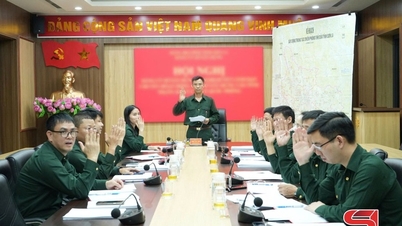
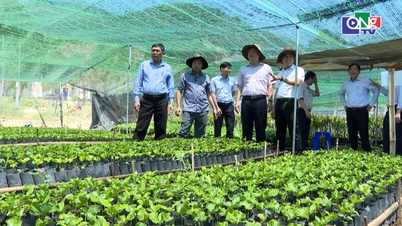
Son La is one of the provinces that announced its 2026 land price list early, and is currently soliciting feedback from all levels, sectors, organizations, and the public. The Provincial Fatherland Front Committee is also collecting opinions from members of the Advisory Council. Son La's land price list comprises eight price lists for eight land types. Agricultural land has four lists (annual crop land, perennial crop land, forestry land, and aquaculture land). Non-agricultural land has four lists: residential land, commercial and service land, non-agricultural production land, and industrial park/industrial cluster land). Non-agricultural land is categorized by 75 administrative units (communes and wards). Each ward typically has around 20 areas, and each commune has around 10 areas. Each area has many categories, with each category typically having 5 locations. Regarding agricultural land, the entire province has 75 communes and wards, which means 75 areas and 75 locations. Average residential land prices increased by 10-20%. Basic agricultural land prices increased steadily by about 30%. Residential land had the highest prices among all land types, with the highest in To Hieu ward, commonly at 15-20 million VND/m2, peaking at 54 million VND. The second highest price was 32 million VND, in Thao Nguyen ward (formerly Moc Chau town). Residential land at the commune level peaked at nearly 16 million VND (Mai Son commune, formerly Mai Son town). Agricultural land prices were highest for double-cropping rice land, averaging 45,000 VND/m2, peaking at 78,000 VND (Doan Ket commune, formerly Moc Chau district). Thus, compared to the projected land price lists of provinces nationwide, Son La's projected land prices are among the lowest, and the increase rate is also among the lowest. In the Northern Midlands and Mountains region, land prices and increase rates are in the middle range. This is consistent with the actual situation of the land market in Son La.
The land price list of Son La province has some differences compared to the rest of the country and the region. That is, (1) agricultural land prices increase steadily and at a higher rate than residential land prices, while in the rest of the country and the region, residential land prices increase more; (2) The land and non-agricultural land are divided into areas and locations according to each commune and ward, instead of dividing the list according to urban and rural areas; (3) Each commune and ward is used as both an area and a location to determine agricultural land prices. The issue of concern is that, before the merger, the province had 204 communes and wards, now there are only 75 communes and wards. Now many communes are merged from 2-3 communes, including communes belonging to different development zones (Zone I, Zone II, Zone III), but all share the same location, which is causing concern.
Land prices and price increases vary across regions and provinces/cities primarily due to differing levels of economic development, urbanization, infrastructure development, industrial zones, businesses, and investment projects. Generally, experts predict that if current land prices are around 70% of market value, prices in 2026 are expected to increase by approximately 85%. However, market prices are sometimes and in some places affected by negative factors (price manipulation, price inflation). Whether the projected land price increase is too rapid and will create a shock is a matter of debate. If the government "catches" the market price, the market price will also "follow suit." The safest and most reasonable approach is to have at least a 5-year cycle to achieve optimal price convergence. Bringing land prices closer to market value is an objective and necessary trend, but it is also a double-edged sword. The government will limit financial losses and increase budget revenue, but this will also increase compensation, support, and resettlement costs when land is reclaimed. Businesses are worried that the input costs of investment projects will increase due to rising land prices, reducing the competitiveness of their products in the market, which in turn affects attracting labor and generating budget revenue. The public is concerned, especially about the price of garden land when converted to residential land. The price of garden land attached to residential land is expected to increase 1.5 times the price of similar agricultural land, but when converted to residential land, the price increases 20 times, or even 50 times. Households wanting to separate and convert land to build houses for their children are helpless due to the financial burden exceeding their means. Many experts suggest raising the price of garden land to near the price of residential land (around 60-70%) to reduce the financial burden on the people. However, the Government is proposing, and the National Assembly is currently seeking opinions on, a policy of using financial incentives to resolve the issue more reasonably. Those who convert garden land to residential land within the prescribed limit are entitled to a 70% reduction, only having to pay 30% of their financial obligations. If the limit is exceeded less than once, they pay 50%; if it is exceeded one or more times, they pay 100%.
Regarding the increase in input costs for business investment projects due to rising land prices, Professor Dang Hung Vo, former Deputy Minister of Natural Resources and Environment, and many experts suggest that countries with good experience can learn from this. Specifically, business investment projects create infrastructure and attract labor, which are fundamental factors in increasing land prices in the area and generating revenue for the budget. Therefore, the financial burden on businesses can be reduced.
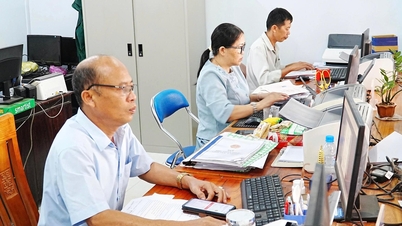
Another issue is that the process of establishing land price tables is less susceptible to negative influences, but determining specific land prices for each case based on land type, area, location, and time can be more prone to problems. This is because the specific land price is then calculated by multiplying the price in the land price table by a coefficient. An effective measure to prevent negative risks, unfairness, and potential complaints is to ensure that the determination of specific land prices is public and transparent, with community oversight and input. On the other hand, the transitional period leading up to land price adjustments, land procedures, buying and selling transactions, and land conversion often experience delays and disruptions, significantly impacting the rights of businesses and citizens. Government authorities at all levels need to ensure a transparent, smooth, and efficient transition process, directing relevant agencies (those handling land procedures and collecting land taxes, fees, and charges) to overcome delays caused by waiting for land price increases.
The land price lists for 2026 in the provinces are considered well-prepared and generally reflect market realities. However, these are only projections. By gathering feedback from key stakeholders (citizens and businesses), including opinions from organizations with review functions, and assessments from the appraisal council, the land price lists will undoubtedly be more complete, satisfying the government, businesses, and citizens, and making a significant contribution to promoting socio-economic development in each locality and the country as a whole.
Phan Duc Ngu
Source: https://sonla.dcs.vn/tin-tuc-su-kien/noi-dung/nong-bang-gia-dat-2026-cac-tinh-5699.html























































































Comment (0)