From the smartphone
Recently, smartphones have become an "extension" of the farmer's arm. Instead of just staying confined to barns and gardens, many households have learned to record videos, promote their products, and find customers online.
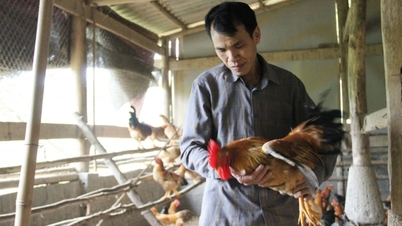
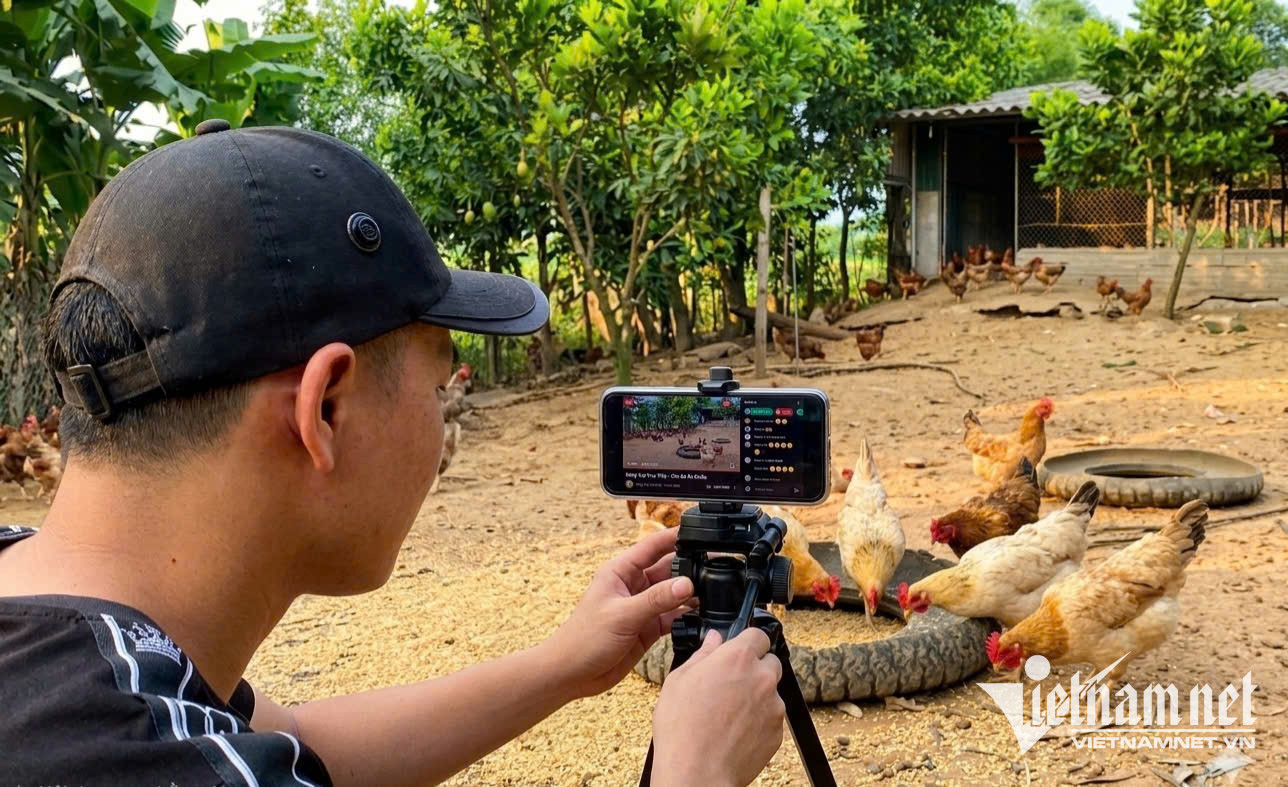
Mr. Ly Van Tiep, from Bang Ca village, Quang La commune, is one of the pioneers. His family's poultry farm maintains a scale of nearly 20,000 birds, selling over 1,000 commercial chickens each month. Previously, the output was almost entirely dependent on traders, so prices were often unstable.
In recent years, Mr. Tiep has proactively documented the process of caring for his chickens, posting the videos on Facebook, Zalo, and other social media platforms. Through these authentic videos of the farming process, his family's products have gradually gained the trust of consumers.
"Many customers watch the farming process and then proactively place orders in advance. Buyers, seeing the good quality, recommend it to each other, so the number of regular customers is increasing. Thanks to this, my family has reduced its dependence on intermediaries," Mr. Tiep shared.
Also in Quang La, the greenhouse grape cultivation model of Mr. Trieu Van Chuyen is showing clear effectiveness from digital transformation. Besides investing in a water-saving irrigation system and applying modern production processes, he has also built his own Fanpage to promote his family's 3-star OCOP product.
According to Mr. Chuyen, thanks to effectively utilizing Facebook, Zalo, and other online platforms, over 600 kg of grapes from his family's farm were sold in just three days. This result would have been very difficult to achieve previously if only selling through traditional methods.



Changing mindsets in ethnic minority areas
Not only in Quang La, digital transformation is gradually becoming present in the production and daily life of many mountainous and ethnic minority areas in Quang Ninh province.
In Pac Phai village, Dien Xa commune, Ms. Ly Thi Sen is familiar with livestreaming to introduce products, receive online orders, and process payments via QR code. Few would have imagined that just a few years ago, using smartphones for business was still quite unfamiliar to many people here.
According to Ms. Sen, through digital skills training courses organized by the local authorities and organizations, people have boldly embraced technology and confidently sold goods online. As a result, local agricultural products have become more widely known to customers, and consumption has increased significantly.
At Ha Lau market, the digital sales model is being effectively maintained. According to Mr. Luong Viet Hung, Deputy Secretary of the Party Committee and Chairman of the People's Committee of Dien Xa commune, digital transformation not only helps expand the consumer market but also contributes to changing people's perceptions about building product brands.
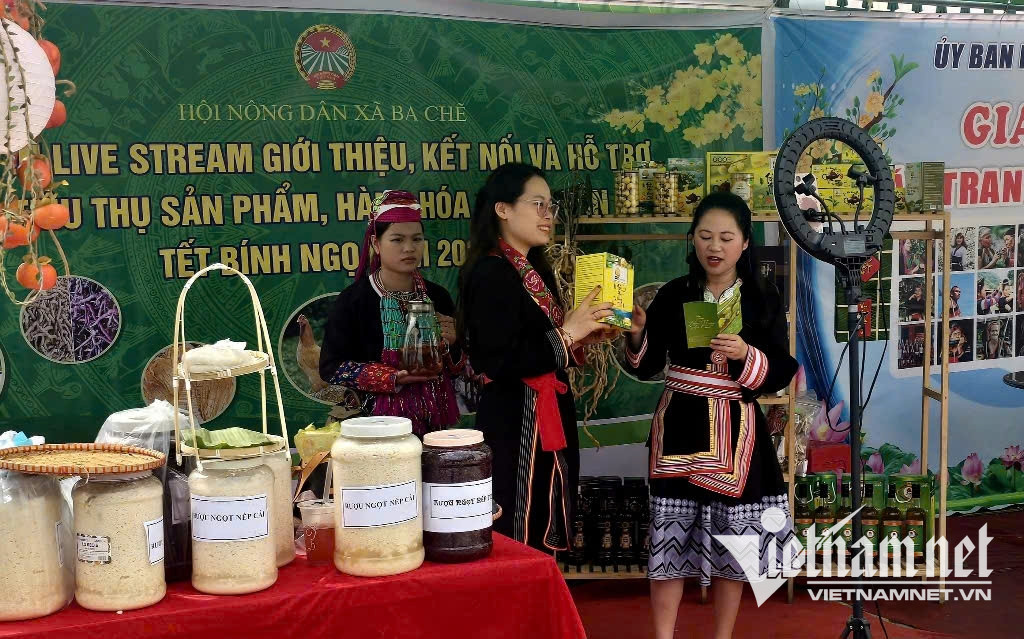
Producers are increasingly paying attention to packaging, labels, traceability tags, and product images in the digital environment. These are important factors that help increase the value of goods and enhance competitiveness in the market.
In Quang La commune, the Farmers' Association is implementing a "digital farmer" model with the motto "farmers teaching farmers". Successful farming and business households are selected as core groups to guide members in applying digital technology to production, promotion, and product consumption.



From remote highland villages, a new class of farmers is emerging who not only know how to produce but also how to tell the story of their products, build brands, and connect with customers.
Livestreaming sessions in the mountains and forests, and nationwide orders delivered with just a few taps on the screen, are bridging geographical distances and bringing highland agricultural products closer to the digital economy.
Source: https://vietnamnet.vn/nong-dan-day-nong-dan-chuyen-doi-so-2528749.html


![[Photo] Strengthening character and expertise: Intense training for artillery soldiers.](https://vphoto.vietnam.vn/thumb/1200x675/vietnam/resource/IMAGE/2026/06/30/1782815602541_lu-368-1875-4571-jpg.webp)