

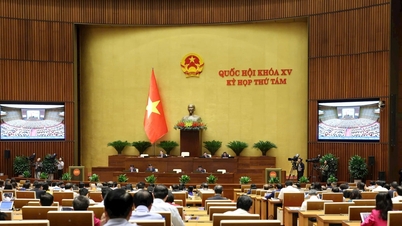
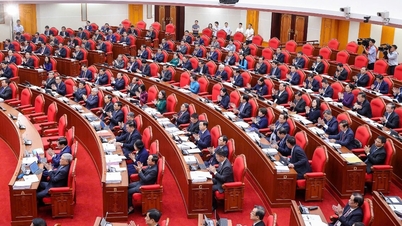
On November 6th, the National Assembly held a plenary session to discuss the draft Law on Public Investment (amended).
Ensure the principles of assignment and coordination are followed.
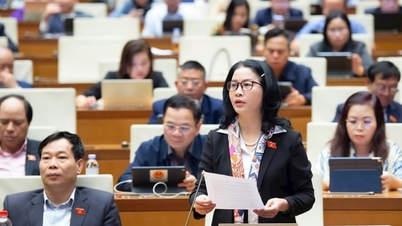
Representative Nguyen Thi Tuyet Nga ( Quang Binh Delegation) argued that, regarding the criteria for classifying projects as nationally important, adjusting and increasing the investment capital of public investment projects is necessary. However, a specific assessment is needed to provide the basis for increasing the investment capital to meet the nationally important criteria, and an assessment of policy impacts is required to determine appropriate criteria.
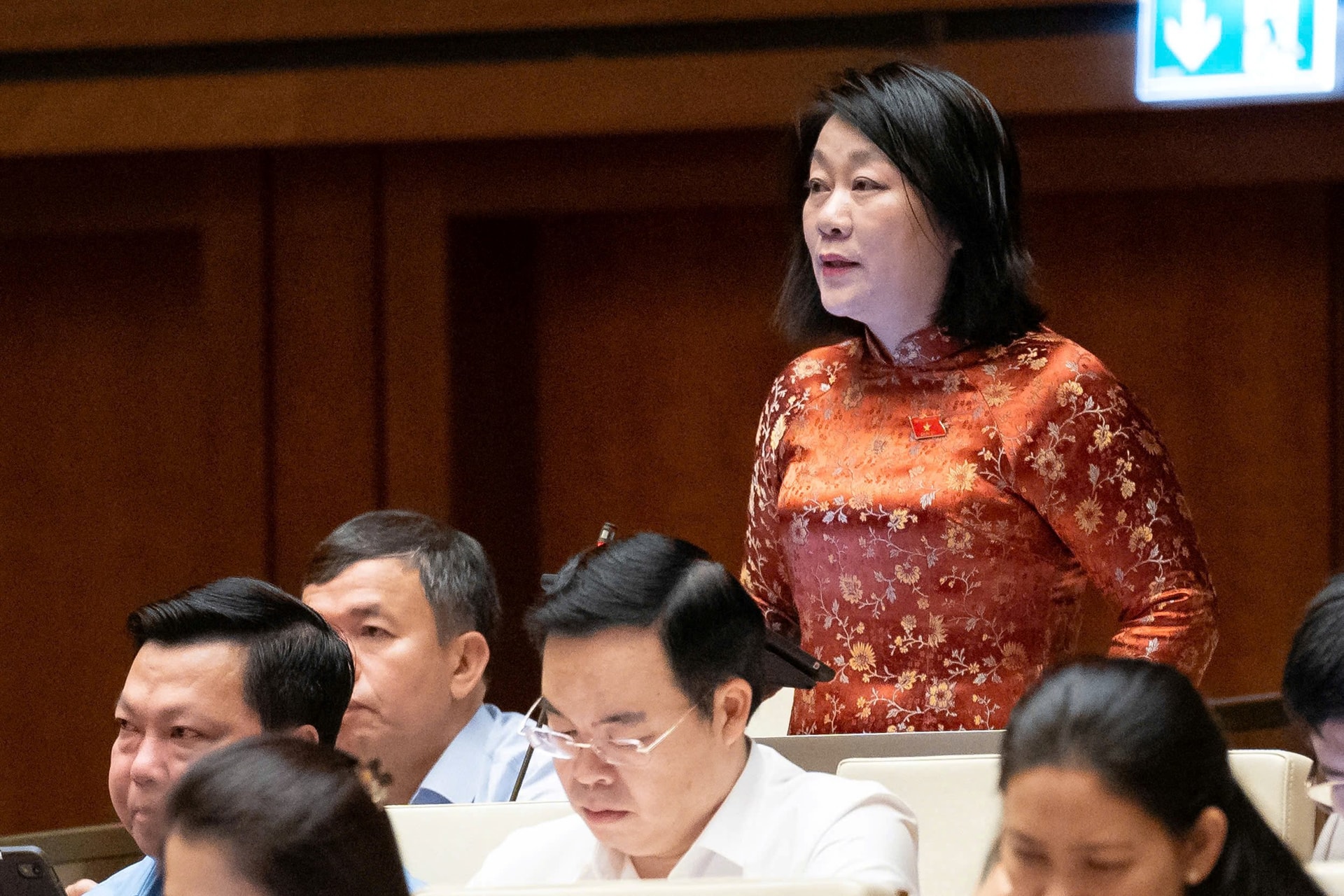
Regarding decentralization and delegation of power to create proactive flexibility in management, Ms. Nga stated that it is necessary to ensure the principle of division of labor, coordination, and control of power as stipulated in the Constitution and laws, and to improve the efficiency of the apparatus in managing public investment. “Decentralization and delegation of power must be consistent with the functions, tasks, and organizational capacity for implementation. For example, transferring authority for Group B and C projects from the People's Council to the People's Committee at the same level is a major change that requires a comprehensive impact assessment. Because the People's Council is the body that decides on the budget, it is a measure to control power. In cases where the People's Council deems a project needs decentralization, delegating authority back to the People's Committee is a flexible measure, suitable for each locality, to decide on investment policies while ensuring supervision and control of power,” Ms. Nga said, adding that the transfer of authority for Group B and C projects from the People's Council to the People's Committee should be carefully considered.
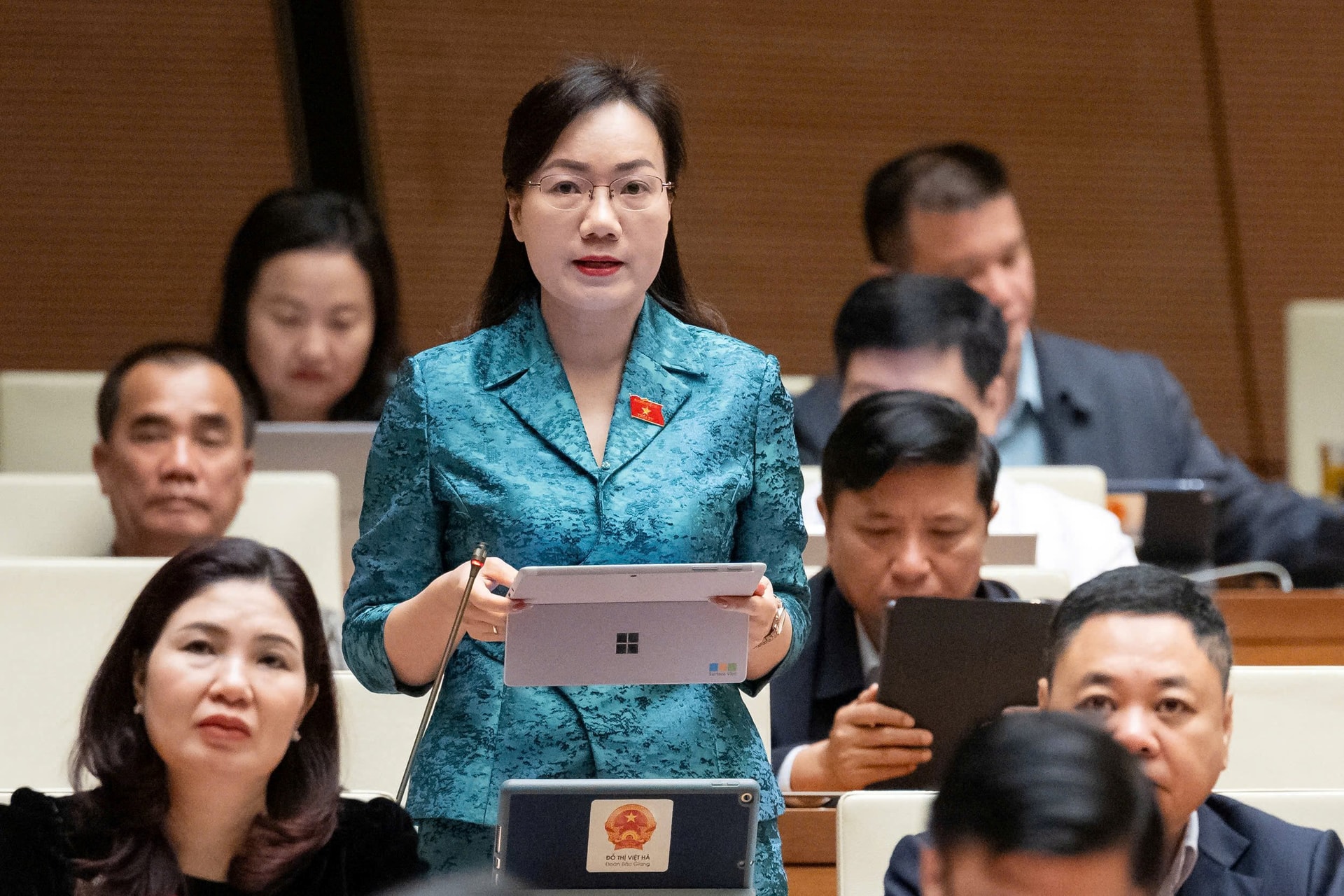
According to National Assembly Deputy Do Thi Viet Ha ( Bac Giang Delegation), a comprehensive revision of the Law is absolutely necessary to address issues that are "already mature and clear" in order to immediately remove obstacles and free up public investment resources to achieve the highest possible results in fulfilling the goals set by the 13th National Congress of the Party.
Ms. Ha suggested that the Government continue to thoroughly review the provisions of the Law to ensure stability, long-term validity, and compliance with the Law on the Promulgation of Legal Normative Documents, which stipulates that the Law only prescribes basic, principled policies, while the procedures, criteria, standards, conditions, and technical details should be clearly defined by the Government, the Prime Minister, and the Ministers of the relevant ministries.
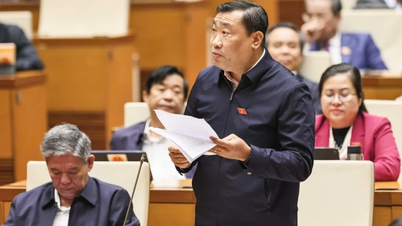
Representative Nguyen Tuan Thinh (Hanoi Delegation) raised the issue that the agency that decides on the investment policy should also decide on the adjustment of that policy to ensure consistency. At the same time, this draft law needs to ensure consistency with the Law on the Capital City recently passed by the National Assembly.
Meanwhile, National Assembly Deputy Nguyen Truong Giang (Dak Nong delegation) noted that decentralization and delegation of power must comply with legal regulations and not contradict the Constitution. In particular, it must ensure the principle of checks and balances, as well as be appropriate to the actual circumstances and conditions.
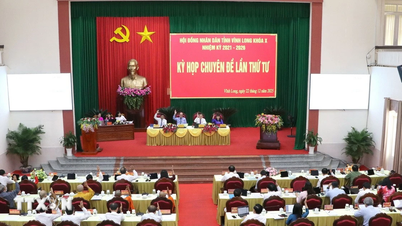
Consider transferring the decision-making authority regarding investment policies from the People's Council to the People's Committee at the same level.
Representative Hoang Van Cuong (Hanoi Delegation) also suggested considering decentralizing the authority to decide on investment policies from the People's Council to the Chairman of the People's Committee at the same level. Because People's Councils at all levels hold meetings quite frequently and can hold extraordinary meetings when necessary, there is no fear of wasting time waiting if projects have to be submitted to the People's Council for approval. If submitted to the People's Council for approval, the project must be prepared more thoroughly, with input from many relevant agencies and departments, thus taking more time than submitting directly to the Chairman for approval. However, having to gather input from many agencies and departments will lead to more thorough evaluation and better preparation, ensuring smoother implementation and better results. "This is a necessary step, because according to international experience, investment projects are always evaluated and prepared very carefully before implementation," Mr. Cuong said.
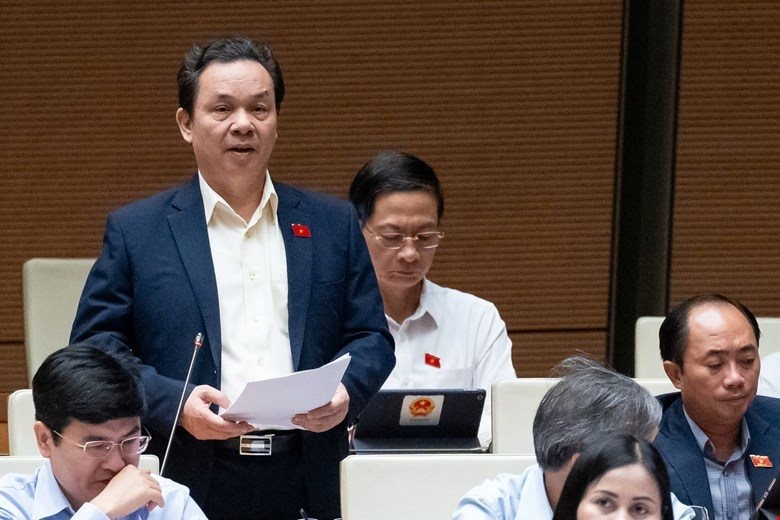
Mr. Cuong emphasized that the approval of investment policies through the People's Council is a mechanism for controlling power, creating independence between the agency deciding on investment policies and the person approving the investment project, to avoid the risk of violations and reduce the burden of responsibility for the project approver.
Therefore, Mr. Cuong suggested that the draft law should be amended to allow People's Councils at all levels to decide on specific solutions that are appropriate to the local reality and the particular requirements of each project. This is also entirely consistent with the General Secretary's directive to delegate decision-making power to localities. At the same time, it should stipulate that People's Councils at all levels can delegate to the People's Committees at the same level the authority to decide on investment policies for projects under their jurisdiction, in order to suit the conditions of each locality.
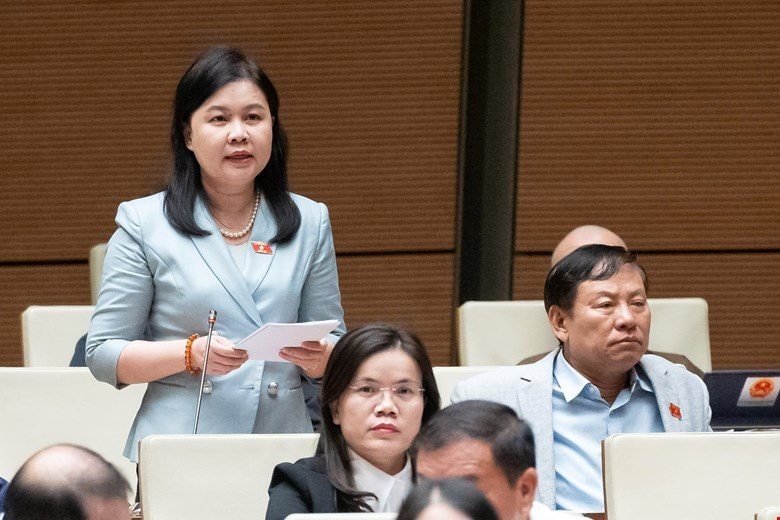
Representative Nguyen Phuong Thuy (Hanoi Delegation) argued that the decision on investment policy and the decision on investment should be assigned to two different agencies to ensure effective supervision and control of power. Currently, the People's Council is responsible for deciding on investment policies for public investment projects using local budget funds. Because the People's Council is a state power body at the local level, deciding on important local issues, representing the people in deciding on the use of local budgets, and exercising supervisory power, the process of the People's Council deciding on the investment policy, followed by the Chairman of the People's Committee deciding on and organizing the implementation of the investment project, is a very reasonable procedure.
Taking the practical example of Hanoi City, based on statistics from the beginning of the 2021-2026 term to date, the Hanoi City People's Council has held approximately 20 sessions. When the People's Committee requests it, the People's Council proactively arranges and schedules meetings as soon as possible to exercise its powers as prescribed by law. Ms. Thuy suggested that the regulations on the authority to decide on investment policies for projects using local budget funds should not be amended as proposed in the Law, which is to decentralize the authority to decide on investment policies from the People's Council to the Chairman of the People's Committee at the same level.
Source: https://daidoanket.vn/nong-voi-phan-cap-phan-quyen-quyet-dinh-chu-truong-dau-tu-du-an-nhom-bc-10293898.html























































































Comment (0)