In the "Global Wealth and Lifestyle Report," Paris ranked 8th among the world's most extravagant cities for the ultra-wealthy in 2024.
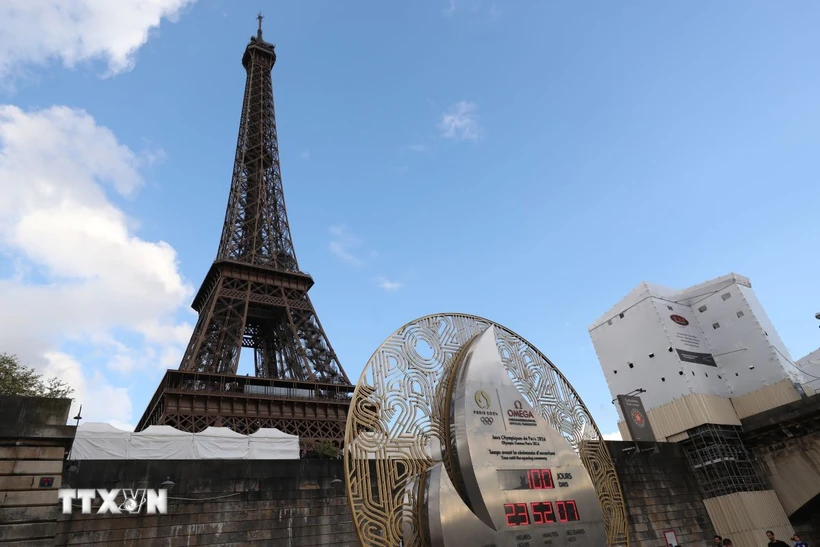
Among the European Union (EU) member states, France is in the group of countries with extremely high living costs. In particular, when compared to other European countries such as Italy, Portugal, or Spain , the French capital, Paris, is ranked as one of the most expensive cities in the world.
In the “Global Wealth and Lifestyle Report” published on June 26th by Julius Baer, a bank specializing in serving the wealthy, Paris also ranked 8th among the cities with the highest spending levels in the world for the ultra-rich in 2024.
However, not everything in Paris is overly extravagant and magnificent, and this year's Olympics also presented a very different image of the French capital.
Compared to other sporting events, most recently the 2022 Asian Games which a VNA reporter attended last year in Hangzhou (China), the Paris 2024 Olympics are much "simpler".
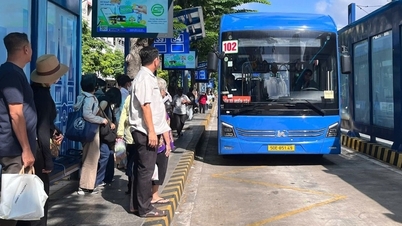
For example, while at the 2022 Asian Games, the organizing committee arranged a whole system of short-distance buses to transport journalists from the Main Press Center (MPC) to the competition venues, in France, the Paris 2024 Olympic organizing committee only issued journalists a pass for using public transport such as buses, subways, and trams.


Regarding drinking water at the Paris Olympics, a familiar sight for Parisian fans in particular, and European fans in general, when attending Olympic venues is carrying thermos flasks or water bottles.
Here, free drinking water is provided from fountains located inside the stadium, similar to the free drinking water fountains commonly found at Noi Bai Airport. Those who don't bring their own water bottles can drink directly from the taps, and even in the restrooms, there are signs in red clearly stating that the tap water is safe to drink.
Not only fans, but also reporters can share the free water dispenser with the fans if they need a drink, and the filtered water provided to reporters at the press center at the competition venue is also taken directly from this dispenser and poured into glass bottles, creating a familiar feeling like drinking water at home.
And when we arrived at the rowing competition venue in Vaires-sur-Marne, a suburb of Paris, we also saw a sign in the press area that said to write your name on a disposable paper cup so that it could be reused multiple times, instead of throwing it away after one use.
To prepare for the 2024 Paris Olympics, the host country has built an entirely new subway line to supplement Paris's already comprehensive public transport system.
But alongside the new, cool trains with full air conditioning, there are still some older trains with worn-out seats and no cooling system, so whenever the train slows down or stops to pick up passengers, the air inside the cabin becomes extremely hot.
Normally, trains have LED route display boards and loudspeakers at each station to let passengers know the approximate location of their destination, but that's only the case with newer train routes.



On older routes, there were no LED display boards showing the route or even announcement speakers; passengers even had to open the doors themselves to get on or off, as they weren't automatic.
Therefore, when traveling on these old train routes, passengers must either be very familiar with them or very focused, otherwise they risk missing their train or getting off at the wrong destination.
However, these things don't seem to have affected the level of enthusiasm that Europeans have for the Paris 2024 Olympics, as we still see large crowds getting on and off at every train station heading towards the Olympic venues with the same eagerness and ease as people happily queuing for free drinks at the stadiums.


![[Image] National conference summarizing one year of operation of the overall organizational model of the political system, the three-tiered government model.](https://vphoto.vietnam.vn/thumb/1200x675/vietnam/resource/IMAGE/2026/07/01/1782882811691_ndo_br_1-jpg.webp)