

With a spirit of sportsmanship rooted in ancient Greek athletic competitions over 2,500 years ago, the modern Olympic Games are not only a contest of athletes but also a symbol of unity and peace among nations.
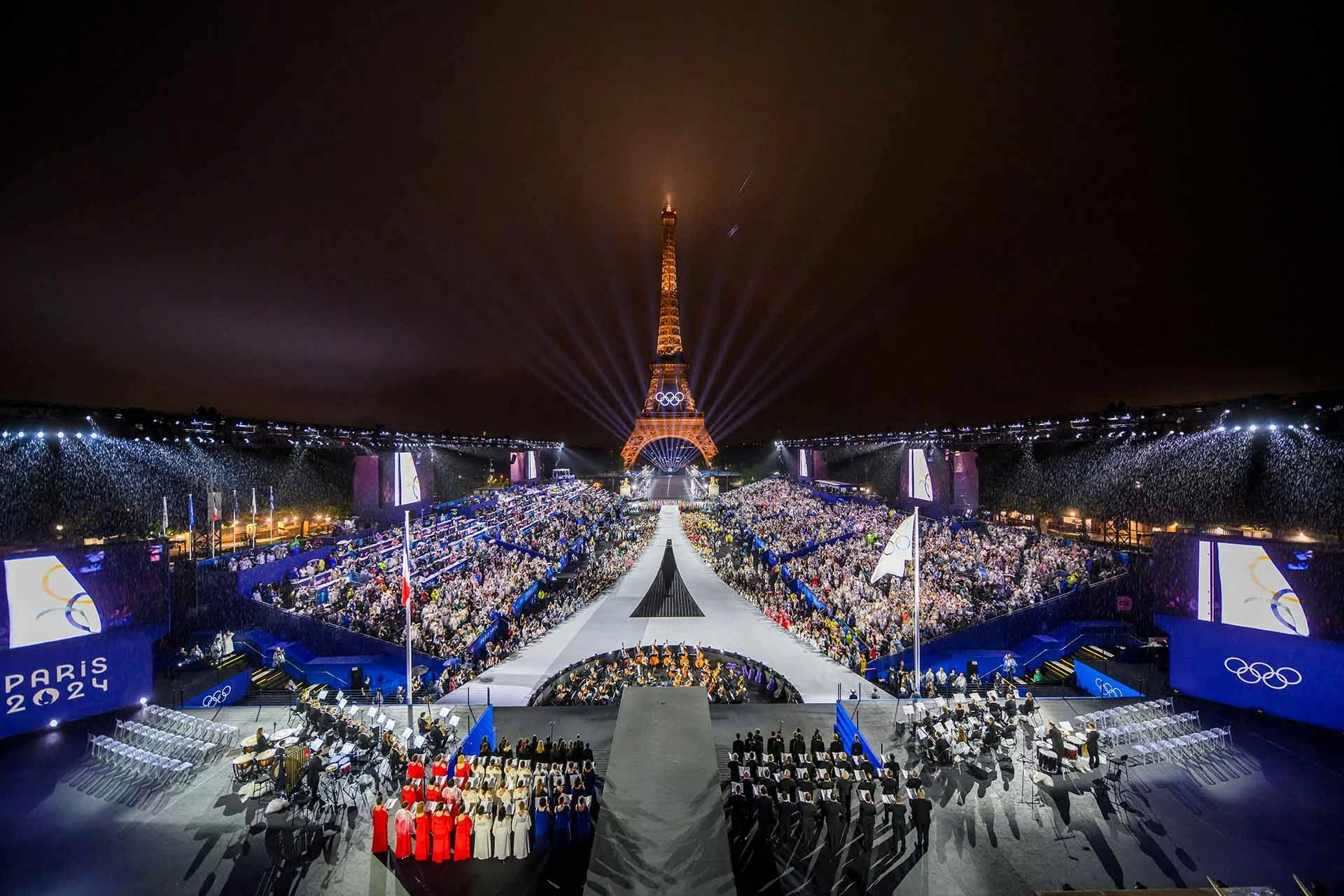 |
| The 33rd Summer Olympic Games opened on July 26 on the Seine River in Paris, France. (Source: Reuters) |
From around 700 BC, sporting competitions took place in ancient Greece, with the first Olympic Games held in 776 BC. The Olympic Games were then held every four years until 394 AD, when Roman Emperor Theodosius I, a devout Christian, abolished them for religious reasons.
The revival
In 1894, the French thinker, Baron Pierre Frèdy de Coubertin, proposed restoring these sporting competitions, arguing that the ancient Greek Olympic Games needed to be revived to celebrate peace and unity among all humanity. Two years later, in 1896, the first modern Olympic Games were held in Athens, with 300 athletes from 15 countries competing in nine sports.
To restore the organization of the Olympic Games, in 1894, a committee of 15 members representing the member countries was established in Paris, called the International Olympic Committee (IOC), with its headquarters in Lausanne, Switzerland. The IOC's functions included overseeing and deciding on the venue, establishing regulations and programs during the Games...
Initially, the Olympic Games only featured summer sports, taking place every four years starting in 1896. In 1924, the Winter Olympics were introduced, coinciding with the Summer Olympics. Since 1994, the Winter and Summer Olympics have alternated between two years, held in even-numbered years.
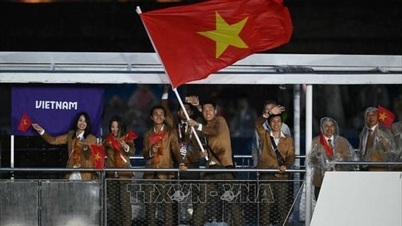
The 2024 Paris Olympics, the 33rd Summer Olympic Games in history, opened in Paris on July 26th and will conclude on August 11th. This marks the third time France has hosted the Games, following 1900 and 1924. The 2024 Paris Olympics welcomes 10,500 athletes, with absolute gender equality (5,250 men and 5,250 women), from 206 countries and territories competing in 32 sports. The Vietnamese delegation participates in the Paris Olympics with 16 athletes competing in 11 sports.
For France, a notable aspect of this year's Olympic Games is the combination of organizing Olympic activities and events with promoting the landmarks and attractions of the capital, Paris. Most notably, the opening ceremony is planned to take place on the Seine River, with approximately 160 boats carrying sports delegations and officials parading along the river. This marks the first time in history that the Olympics have been inaugurated on a river, instead of in stadiums as is traditional.
Political disagreements cast a shadow.
With a history spanning over 100 years, the Olympic Games, embodying the spirit of "sports outside politics," foster unity and bring people and nations closer together. However, some Olympic Games have been overshadowed by political disagreements.
The very first Olympic Games, held in Athens in 1896, were marred by controversy when Türkiye refused to participate due to geopolitical disputes with host nation Greece. The 1936 Berlin Summer Olympics are a prime example of how sport has been used as a propaganda tool. The German capital was chosen by the IOC as the host city in 1931, two years before Adolf Hitler came to power.
Due to Hitler's anti-Semitic policies, many countries demanded that the IOC withdraw Germany's hosting rights, but ultimately the Olympics were held in Berlin. The United States and the vast majority of European countries participated, but that year's Games took place in an atmosphere of German nationalism, heavily tinged with racial discrimination.
This only subsided when Jesse Owens, the young African-American athlete, won four gold medals, including a victory over German athlete Lutz Long in the long jump.
Following the Berlin Olympics, World War II broke out, interrupting the Olympic Games for 12 years. The Olympics resumed in London in 1948. This time, the IOC and host nation Great Britain did not invite Germany, and the Soviet Union was also absent. Soviet sports only officially joined the Olympic movement at the 1952 Helsinki Olympics in Finland, amidst the Cold War. However, in their very first appearance, the Soviet Union won 71 medals, second only to the United States.
The 1956 Melbourne Olympics also held the record for the most boycotts due to political reasons. China did not participate because the IOC and the host country allowed Taiwanese athletes to compete. The Netherlands, Spain, and Switzerland did the same to protest Soviet intervention in Hungary. Egypt, Iraq, and Lebanon also abstained to protest the French, Israeli, and British attack on Egypt after the country nationalized the Suez Canal.
Following the 1956 Melbourne Olympics, the subsequent Summer Olympic Games in Rome, Italy (1960), Tokyo, Japan (1964), and Mexico (1968) proceeded relatively smoothly, although the matches between East and West representatives or between rival nations still contained underlying tensions.
At the 1972 Munich Olympics, violence erupted again, this time stemming from the Israeli-Palestinian conflict. On the morning of September 5, 1972, a group of Palestinian militants from the "Black September" movement stormed the Olympic village and took nine Israeli athletes hostage to demand the release of 200 Palestinian prisoners. German police attempted to intervene, but tragically, all nine Israeli hostages, one German police officer, and five of the hostage takers were killed.
The 1976 Montreal (Canada), 1980 Moscow (Soviet Union), and 1984 Los Angeles (USA) Olympic Games saw a return of widespread boycotts. Refusing to participate in the Olympics was used by many countries as a weapon of the Cold War.
The Montreal Summer Olympics were boycotted by 22 African countries in protest against New Zealand's participation, due to their rugby team's participation in South Africa, a country then under apartheid. Because of apartheid, South African sports were excluded from the Olympics from 1960 until the end of apartheid in 1990.
Four years later, at the 1980 Moscow Summer Olympics, the United States and Western countries such as West Germany, Canada, Japan, and South Korea boycotted the Games in protest against the Soviet Union's invasion of Afghanistan the previous year. In retaliation, at the 1984 Los Angeles Summer Olympics held in the United States, socialist countries, with the exception of Romania, also boycotted the Games.
After relatively successful Olympic Games in the late 1990s and early 21st century, the ban on some countries participating in the Games due to political factors has returned in 2024. Due to the conflict in Ukraine, the national sports teams of Russia and Belarus will not be allowed to compete in the 2024 Paris Olympics.
Athletes from these two countries will only compete as neutral individuals, with a very small number selected through a screening process: Russia has 15 athletes, and Belarus has 11. Furthermore, the national flags and anthems of Russia and Belarus will not be used in the opening and closing parades, nor in the medal presentations of any athletes.
Move closer together
Although numerous political disagreements have limited opportunities for athletes to compete at the highest level, there have been Olympic Games that have provided chances for countries to come closer together. At the 1988 Seoul Summer Olympics, North Korea refused to participate after Pyongyang proposed co-hosting with South Korea, but the IOC did not accept the proposal.
However, at the Sydney 2000 Summer Olympics, Athens 2004, and the Salt Lake City 2002 Winter Olympics (USA) and Turin 2006 (Italy), North and South Korea marched together under a white flag with a blue image of the Korean Peninsula, wearing identical uniforms on the opening day. Unfortunately, this meaningful symbol of unity was not repeated at the Beijing 2008 Summer Olympics.
Beyond the unfortunate incidents and events, the Olympic Games have often demonstrated a spirit of unity and a commitment to bringing peace to the world .
Most recently, the Tokyo 2020 Olympics made history in the modern Olympic movement when host nation Japan demonstrated its utmost determination and effort to ensure the event ran smoothly amidst the global Covid-19 pandemic. Japan and the IOC issued rules of conduct for athletes, such as prohibiting "political" gestures, including hand gestures or kneeling. These actions demonstrated the efforts of the IOC and Japan to maintain a "non-political" competition environment.
Continuing the spirit of sportsmanship rooted in the ancient Olympic Games and as Chapter 5 of the Olympic Charter states: "No political, religious, or ethnic activity is permitted at the Olympic Games," the Olympic torch is expected not only to illuminate the venues for sporting competitions but also to symbolize the spirit of unity and love of peace for all humanity, reflecting the theme of the Paris 2024 Olympics: "Open Play" for all nations and peoples.
Source: https://baoquocte.vn/olympic-va-giac-mo-hoa-binh-280957.html

![[Video] Sunset at Lap An Lagoon – Where the sun sets over the fishing nets](https://vphoto.vietnam.vn/thumb/1200x675/vietnam/resource/IMAGE/2026/05/31/1780192137701_beach-landscape-sea-water-nature-grass-745871-pxhere-com.jpeg)















![[Video] Sunset at Lap An Lagoon – Where the sun sets over the fishing nets](https://vphoto.vietnam.vn/thumb/800x450/vietnam/resource/IMAGE/2026/05/31/1780192137701_beach-landscape-sea-water-nature-grass-745871-pxhere-com.jpeg)


































![[Video] Sunset at Lap An Lagoon – Where the sun sets over the fishing nets](https://vphoto.vietnam.vn/thumb/402x226/vietnam/resource/IMAGE/2026/05/31/1780192137701_beach-landscape-sea-water-nature-grass-745871-pxhere-com.jpeg)































Comment (0)