

The mandatory target is to disburse 100% of public investment funds.
One of the issues of concern to many delegates was the disbursement of public investment capital. Delegate Trieu Quang Huy (Lang Son delegation) noted that, in the past, the Prime Minister had given very close direction, accelerating the progress of public investment in key projects and the disbursement of public investment capital. However, many ministries, sectors, and localities still have low disbursement rates. To achieve the growth target of 8% in 2025 and double-digit growth in the 2026-2030 period, the delegate proposed that the Government direct ministries, sectors, and local authorities to pay more attention to the preparation and investment planning of projects. This is to ensure that once the investment policy and investment decisions are approved by the competent authorities, the projects can be implemented smoothly, taking into account the actual situation, ensuring progress and adherence to the approved total investment amount, maximizing the effectiveness of public investment, and contributing to the country's economic growth.
Representative Duong Khac Mai ( Dak Nong Delegation) also suggested that the Government needs specific solutions and measures, assigning responsibility to each entity to innovate public investment management, ensure timely and effective disbursement of public investment capital, and have comprehensive solutions to attract social investment, successfully implementing the policy of "using public investment to lead private investment".
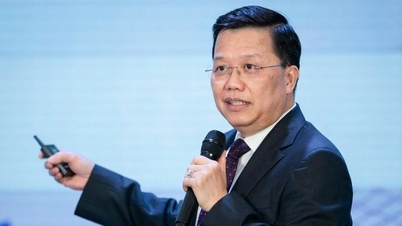
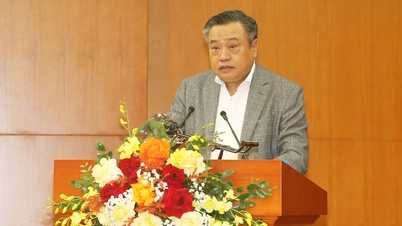
Regarding this issue, Minister of Finance Nguyen Van Thang stated that the Government and the Prime Minister are very determined in urging the disbursement of public investment capital. The Government has directed the establishment of 7 working groups under the Prime Minister, 26 working groups of Government members, and implemented numerous solutions to promote the disbursement of public investment capital. To date, the situation of scattered and fragmented public investment has been fundamentally resolved, concentrating capital on large, strategic projects of the country.
He cited that at the beginning of the term, ministries, sectors, and localities submitted 12,000 projects for the 2021-2025 period, but the Government cut it down to only 5,000 projects, and in the near future, the Government plans to have only 3,000 projects. Thanks to this focused approach, we have had many breakthrough projects, especially in transportation infrastructure.
Another highlight of this term is that all key national projects have met or exceeded their deadlines. These are valuable lessons for us to do better in the next term, focusing investment capital on key and priority projects.
"Regarding the budgets of localities, we will have to continue reviewing public investment projects funded by local budgets to ensure that they are focused and prioritized in order to guarantee effectiveness," the Minister added.
According to Minister Nguyen Van Thang, the mandatory goal is to disburse 100% of the funds, so the Government is currently focusing on very decisive solutions to maximize its contribution to economic growth.
Private sector participation in railway investment is necessary.
Later that afternoon, during the plenary session discussing the draft Law on Railways (amended), National Assembly Deputy Nguyen Huu Thong (Binh Thuan delegation) pointed out that the draft law's provisions create a mechanism for mobilizing private sector participation in investing in the development of railway infrastructure and industry. This is accompanied by a mechanism for strict management and supervision by the National Assembly, the Standing Committee of the National Assembly, and the participation of ministries and agencies from the investment preparation phase to the project's completion and commissioning.
Representative Hoang Van Cuong (Hanoi City Delegation) also welcomed the regulation encouraging organizations and individuals to participate in investing in railway projects using non-state capital. However, according to the Representative, the draft Law only stipulates direct contracting for investors in railway projects proposed by the investors themselves or railway projects invested under the public-private partnership (PPP) method. For railway projects that the State is proposing to invest in using state capital, there is currently no mechanism to allow private investors to participate. A typical example is the North-South high-speed railway project, which has already received investor proposals, but we do not yet have a mechanism to allow for the selection of participants.
Therefore, the delegate suggested adding a method for selecting private investors to participate in state-funded railway projects, whether fully or partially funded. Alternatively, it could be stipulated that the Prime Minister will issue regulations on the criteria for selecting private investors for railway projects planned for state budget funding, based on three principles: the project's objectives and technical requirements must not change; the investment cost, with private participation, must not exceed the initial state budget estimate; and the operational efficiency must be higher for the state than if the state invested directly.
In a report clarifying some issues of concern to the delegates, Minister of Construction Tran Hong Minh stated that developing the railway industry, promoting science and technology transfer are among the prominent policies of this draft law. To develop the railway industry, we must stand on our own two feet, be self-reliant, self-sufficient, and especially self-sufficient. The Minister emphasized that self-sufficiency requires the participation of the State, the people, and businesses alike.
According to the Minister, regulations on investing in railway projects using non-state funds to institutionalize Resolution 68 of the Politburo on the development of the private economy will open opportunities for the private sector and mobilize private resources for railway investment and development. This will help reduce the pressure on the state budget in allocating capital to this sector. However, the Ministry still maintains the role of state management, which is for the State to approve the standard framework to control technology, while retaining the authority of specialized construction agencies to conduct appraisals and quality inspections. Importantly, annual audits by the State Audit Office ensure that there will never be any "private companies selling to foreign entities."
"As a governing body assisting the State, I, as the Minister, affirm to my colleagues that the contract must fully meet the conditions based on the law, so I hope that the National Assembly deputies will understand and not worry too much," the Minister emphasized.
Source: https://baophapluat.vn/phai-thuc-hien-cho-duoc-chu-truong-lay-dau-tu-cong-dan-dat-dau-tu-tu-post552254.html




















































































Comment (0)