At the request of the Prime Minister , in order to strengthen carbon credit management to promote the development of this market and harmonize the interests of the state, businesses, and people, many ministries and agencies must urgently issue plans to mitigate greenhouse gas emissions, to be completed in the third quarter of this year.
Furthermore, it is urgent to study and establish a national carbon credit registration system, manage greenhouse gas emission reduction activities, and create carbon credits to support pilot implementation and development of a domestic carbon market.
Establish a national carbon credit registration system.
In early May, Prime Minister Pham Minh Chinh signed Directive No. 13/CT-TTg dated May 2, 2024, on strengthening carbon credit management to implement the Nationally Determined Contribution.
In 2023, Vietnam successfully sold 10.3 million forest carbon credits (10.3 million tons of CO2) through the World Bank (WB), generating $51.5 million (approximately VND 1,200 billion).
The directive states: To fulfill its commitment to achieving net emissions of "zero" by 2050 at the 26th Conference of Parties to the United Nations Framework Convention on Climate Change (COP26), Vietnam has updated its Nationally Determined Contribution (NDC), specifying international commitments on emission reduction. To ensure the fulfillment of the commitment to reduce greenhouse gas emissions by 2030 under the NDC and achieve net emissions of "zero" by 2050, the development and implementation of greenhouse gas emission reduction plans across sectors; the development of carbon markets and carbon credit management mechanisms are crucial.
In Vietnam, from the mid-2000s to the present, many businesses have implemented programs and projects to generate carbon credits and exchange them with the world on the voluntary market, especially carbon credits from programs and projects under the Clean Development Mechanism (CDM). However, in recent times, there has been much information and public opinion that is not truly complete, comprehensive, or accurate regarding the carbon market and carbon credit management mechanisms, particularly the creation and management of carbon credits from forests and some other sectors. Many organizations, businesses, and individuals do not have a correct understanding of the carbon market and the methods of generating carbon credits for trading on the market.


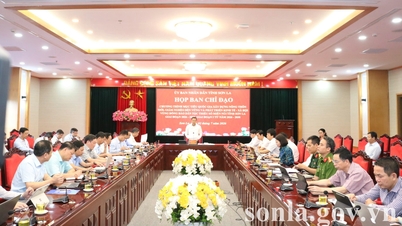
Therefore, to strengthen carbon credit management to promote the development of the carbon market, ensure the implementation of the NDC, harmonize the interests of the state, businesses, people, and participating partners, and provide accurate and complete information about the carbon market and methods for creating carbon credits for trading, the Prime Minister requests the Ministries of Industry and Trade, Transport, Construction, Agriculture and Rural Development, and Natural Resources and Environment to urgently issue plans for mitigating greenhouse gas emissions, to be completed in the third quarter.
The Prime Minister also requested the Ministry of Natural Resources and Environment to urgently study the establishment of a national carbon credit registration system, managing programs, projects, and activities to reduce greenhouse gas emissions and create carbon credits for pilot implementation and development of the domestic market, as well as international exchange.
The Ministry of Agriculture and Rural Development and relevant agencies and localities with forests will identify the potential for reducing emissions and carbon sequestration from forests to contribute to the implementation of the NDC targets, serving as a basis for forest carbon credit exchange activities with international partners; to be completed before October 31st; develop national standards for forest carbon credits and detailed regulations on measuring, reporting, and assessing forest carbon sequestration; and develop pilot policies and a results-based carbon credit payment mechanism for high-quality, low-emission rice cultivation areas.
Vietnam could sell carbon credits worth approximately $300 million per year.
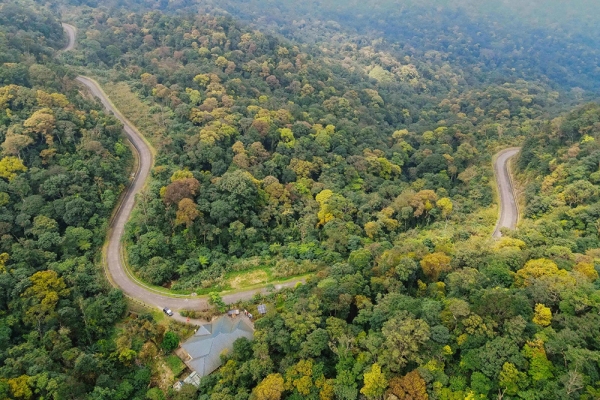
According to the Ministry of Agriculture and Rural Development, with a total forest area of approximately 14.7 million hectares and a forest cover rate of 42%, it is estimated that Vietnam's forests absorb an average of nearly 70 million tons of carbon annually. Through the carbon market, forests can generate a significant source of revenue to support management and protection efforts, as well as improve the income of communities that depend on them.
In October 2020, the Ministry of Agriculture and Rural Development and the International Bank for Reconstruction and Development (IBRD) – the trustee of the Forest Carbon Partnership Fund (FCPF) – signed an agreement on payments for greenhouse gas emission reductions in the North Central region (ERPA). Accordingly, Vietnam transferred 10.3 million tons of CO2 emissions reductions from forests in six provinces of the North Central region to the FCPF for the period 2018-2024. The FCPF will pay US$51.5 million for this service. Vietnam is also the first country in the Asia-Pacific region and the fifth country in the world to reach this important agreement with the FCPF.
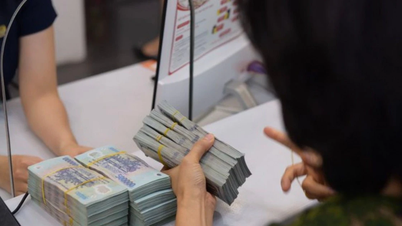
The Vietnamese government is currently negotiating with the Alliance for Emission Reduction (LEAF), and is expected to secure funding from this alliance in the future through forest protection activities in the Central Highlands and South Central regions. In March 2024, the World Bank transferred US$51.5 million (equivalent to VND 1,200 billion) to Vietnam after purchasing 10.3 million forest carbon credits. Vietnam is also the first country in the East Asia-Pacific region to receive this payment from the World Bank for the sale of forest carbon credits.
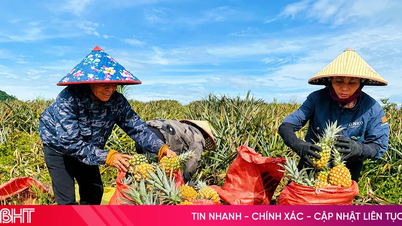
Besides forests, Vietnam's agricultural sector also has the potential to generate 57 million carbon credits annually, particularly in rice cultivation. Recently, several localities have begun adopting low-emission rice farming models. This model not only increases productivity and reduces costs but also generates additional carbon credits. A prime example is the project to cultivate 1 million hectares of high-quality rice in the Mekong Delta.



According to the Ministry of Agriculture and Rural Development, during the implementation of the Project, several new policies, in line with global trends, will be piloted, such as performance-based carbon credit payments for 1 million hectares of high-quality, low-emission rice linked to green growth and circular production. Associate Professor Dr. Nguyen Dinh Tho, Director of the Institute of Strategy, Policy and Resources and Environment, stated that, according to calculations, if commensurate transactions are implemented, Vietnam could sell carbon credits worth approximately 300 million USD per year.
Mr. Tho informed that statistics from the Center for Human and Nature show that, as of the end of November 2022, nearly 29.4 million carbon credits had been issued, belonging to 276 projects within the framework of the clean development mechanism under the mandatory carbon market, mainly hydropower projects (204 projects). A voluntary carbon market has also been formed, with 32 projects and a total of 5.75 million carbon credits issued. Hydropower projects still account for the largest share (22/32 projects).
According to Associate Professor Dr. Nguyen Dinh Tho, in the near future, many developed countries will support Vietnam in exploiting carbon credits related to blue seas and wetlands, and related to the sequestering and separation of carbon at sea.
Source