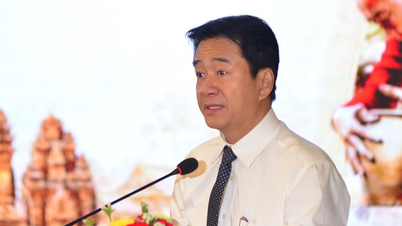
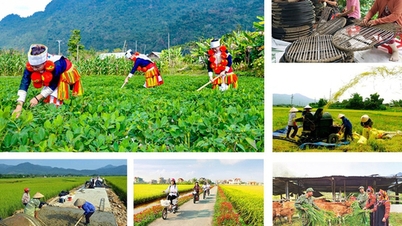
According to Tran Binh Trong, Deputy Secretary of the Party Committee and Chairman of the People's Committee of Kien Luong commune, after the merger, Kien Luong has many advantages in building new rural areas because all three localities before the merger achieved outstanding results in building new rural areas. Specifically, Binh Tri commune achieved the new rural area standard, Binh An commune achieved the model new rural area standard, and Kien Luong town achieved the urban civilization standard. Thanks to this, Kien Luong commune meets many important criteria regarding income, environment, and digital transformation in the set of criteria for building new rural areas in the 2026-2030 period. The rural transportation system is seamlessly connected, forming a convenient infrastructure network for the circulation of goods and promoting the development of trade and services. The commune takes advantage of its land area to build concentrated commodity production areas linked to the consumption of agricultural products, developing OCOP products and local specialties.
One of the highlights in the new rural development program in Kien Luong is the focus on administrative reform and digital transformation. Through various associations and organizations, many digital transformation models have been implemented in hamlets, such as the smart hamlet model and the digital family model, making it easier for people to access digital applications serving their lives. Ms. Huynh Thi Uc My, Secretary of the Party Branch of Hon Chong hamlet, shared: “In April 2026, Hon Chong hamlet launched the digital family model, receiving a positive response from the people. Many people, including the elderly, are gradually accessing and skillfully using digital utilities in their lives such as online shopping, cashless payments, residence registration, and medical examinations and treatment through the VNeID application.”
To promote economic development and increase people's income, Kien Luong commune has planned a high-quality rice cultivation area with guaranteed product sales in Song Chinh and Lung Kha Na hamlets, covering an area of 940 hectares. Simultaneously, it is developing effective high-tech and circular economy agricultural models such as two-stage shrimp farming using bottom liners and biological bedding pig farming; and implementing the development of OCOP products linked to the commune's unique characteristics and strengths.


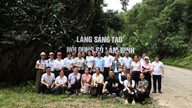
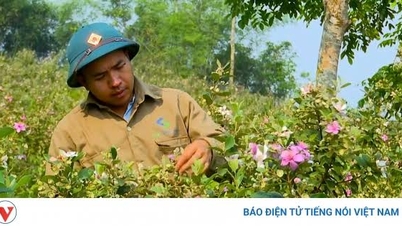
Ms. Tran Kim Lien developed her family's economy through a model of producing wild grape wine that meets OCOP 3-star standards. Photo: THUY TRANG
Ms. Tran Kim Lien, owner of the Kim Lien wild grape wine production facility in Hon Chong hamlet, said: “Our products have achieved OCOP 3-star certification and are gradually establishing our brand in the market. To increase the value of our products, we have invested in building a rest stop for tourists, combining it with the display and introduction of local specialty products. The facility also contributes to creating jobs for local workers.”
Besides the achievements, the locality continues to improve and enhance the quality of several criteria: The rate of people participating in health insurance in the commune is only about 86%; the work of guiding students after lower secondary school faces difficulties; and the security and order situation needs to be strengthened to ensure the sustainability of the criteria.
According to Mr. Tran Binh Trong, leveraging existing advantages, the commune continues to promote rural economic development in a green, ecological, and sustainable direction; supporting the development of OCOP products, and encouraging digital transformation in production, business, and people's lives. Digital transformation models such as cashless markets and cashless bus stations are being maintained and expanded to gradually form a synchronized digital economic environment. The locality focuses on environmental protection, landscape beautification, investment in public lighting systems, upgrading basic information systems, and developing cultural, educational , and health facilities to serve the people. In the field of poverty reduction, programs supporting livelihoods, vocational training, job creation, preferential credit, and housing support continue to be implemented synchronously. The goal is to ensure that poor and near-poor households with needs and eligibility have access to state support policies.



THUY TRANG
Source: https://baoangiang.com.vn/phan-dau-dat-chuan-nong-thon-moi-nam-2026-a490687.html

![[Photo] General Secretary and President To Lam works with the Party Committee of the Government on the work of preventing and combating storms, floods, extreme natural disasters and climate change.](https://vphoto.vietnam.vn/thumb/1200x675/vietnam/resource/IMAGE/2026/06/29/1782729441945_a1-bnd-0385-9454-jpg.webp)
![[Image] A look back at the capital's preparations for the century-long master plan.](https://vphoto.vietnam.vn/thumb/1200x675/vietnam/resource/IMAGE/2026/06/29/1782750453122_quy-hoach-100-nam-minh-duy-1-2118-jpg.webp)