

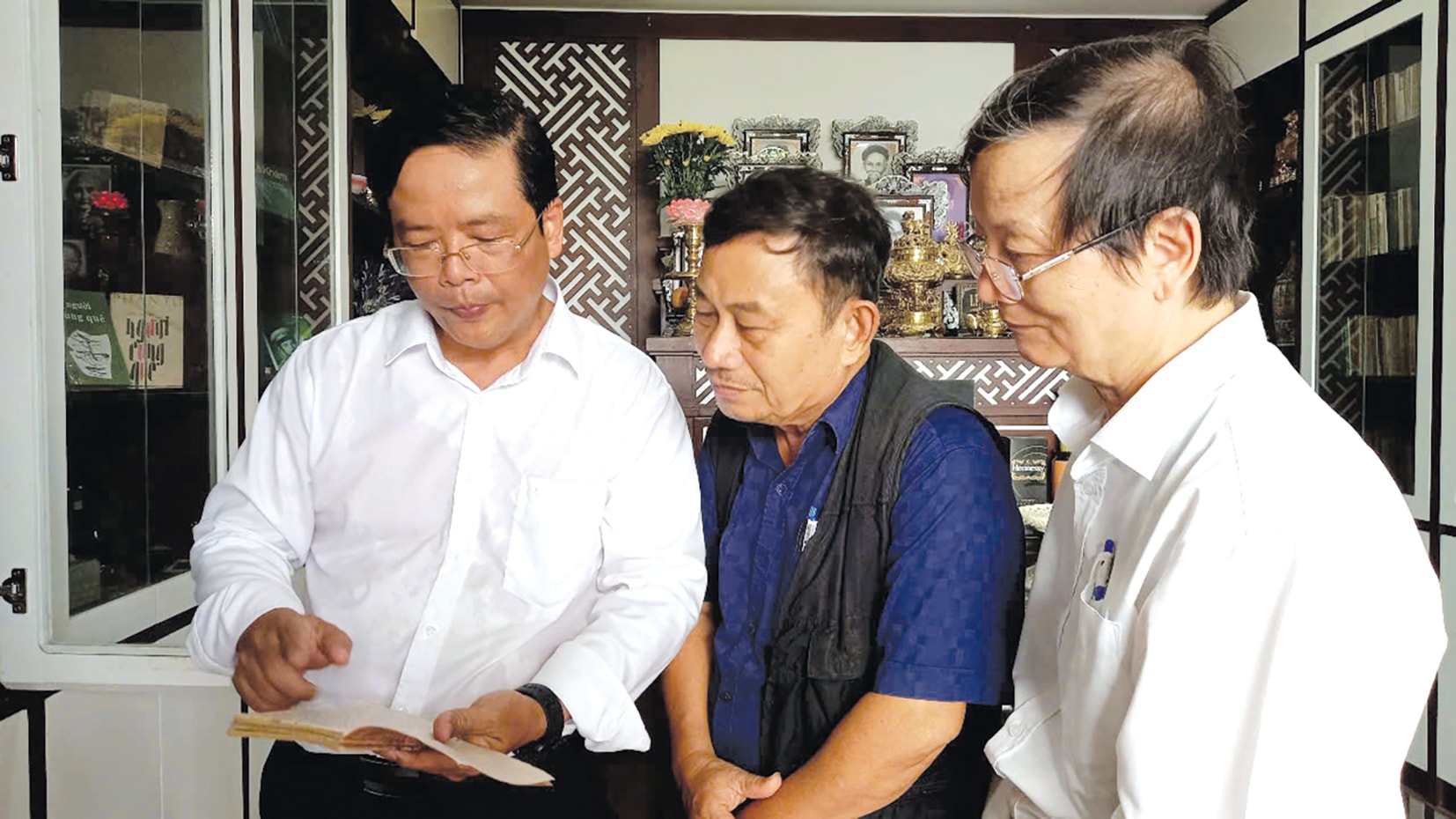
From the literary space of Tu My - Ky Sanh
In 1961, writer Phan Tu set off for the South, heading to the fierce battlefield of Zone 5. Upon arriving in Quang Nam , he immediately went to the Tu My - Ky Sanh area, the first liberated delta region of Zone 5 at that time.
Writer Ho Duy Le believes that writer Phan Tu's approach right after the opening of the Tu My - Ky Sanh liberated zone was of great significance in his literary career.
“The materials that writer Phan Tứ collected at that time were as precious as gold. The writer had the opportunity to access many revolutionary families, examples of courageous guerrillas and liaisons, and mothers who wholeheartedly dedicated themselves to the revolution… from which he wrote valuable novels such as “Mẫn and I,” “Mother Bảy’s Family,” and “Returning to the Village,” said writer Hồ Duy Lệ.
Regarding Tu My, Phan Tu was introduced by the organization to live and work in the family of Mrs. Tran Thi Tranh - the real-life inspiration for the character Mother Bay in the novel "Mother Bay's Family". Mrs. Bui Thi Loi - Mrs. Tran Thi Tranh's youngest daughter (80 years old), still cannot forget the image of writer Phan Tu, full of memories with her family.
Mrs. Loi recalled: "Everyone who didn't know Phan Tu said he was difficult because he was very serious and rarely joked around. But he was also genuinely affectionate. My mother treated Phan Tu like her own son."
Back then, Mrs. Tran Thi Tranh's house was just a simple thatched-roof structure. Mrs. Tranh dug a cellar at the end of the garden for the writer to hide in and conceal documents whenever there was trouble or enemy bombing.
Ms. Bui Thi Loi said: "During the day, writer Phan Tu would sit and write alone in his thatched hut on the hill. He wrote hundreds, even thousands of pages in various languages."
From the land of Tu My - Ky Sanh, the writer lived among the people, participated in revolutionary movements and organizations, and recorded information.
In his diary, the writer wrote: "Private calculations are quickly overshadowed by the dazzling examples of heroism..."
While working, he also wrote short stories inspired by the fighting, giving them to cadres, soldiers, and the people to read. The collection "Returning to the Village" was thus created.
Literary researcher Pham Phu Phong said: “The novel “Mother Bay’s Family” is the first novel written about the uprising movement in the South. The author was very sincere and honest in his writing, depicting all the events of life and the struggles of the people at that time. I believe Phan Tu is one of the most representative writers of Vietnamese revolutionary literature.”
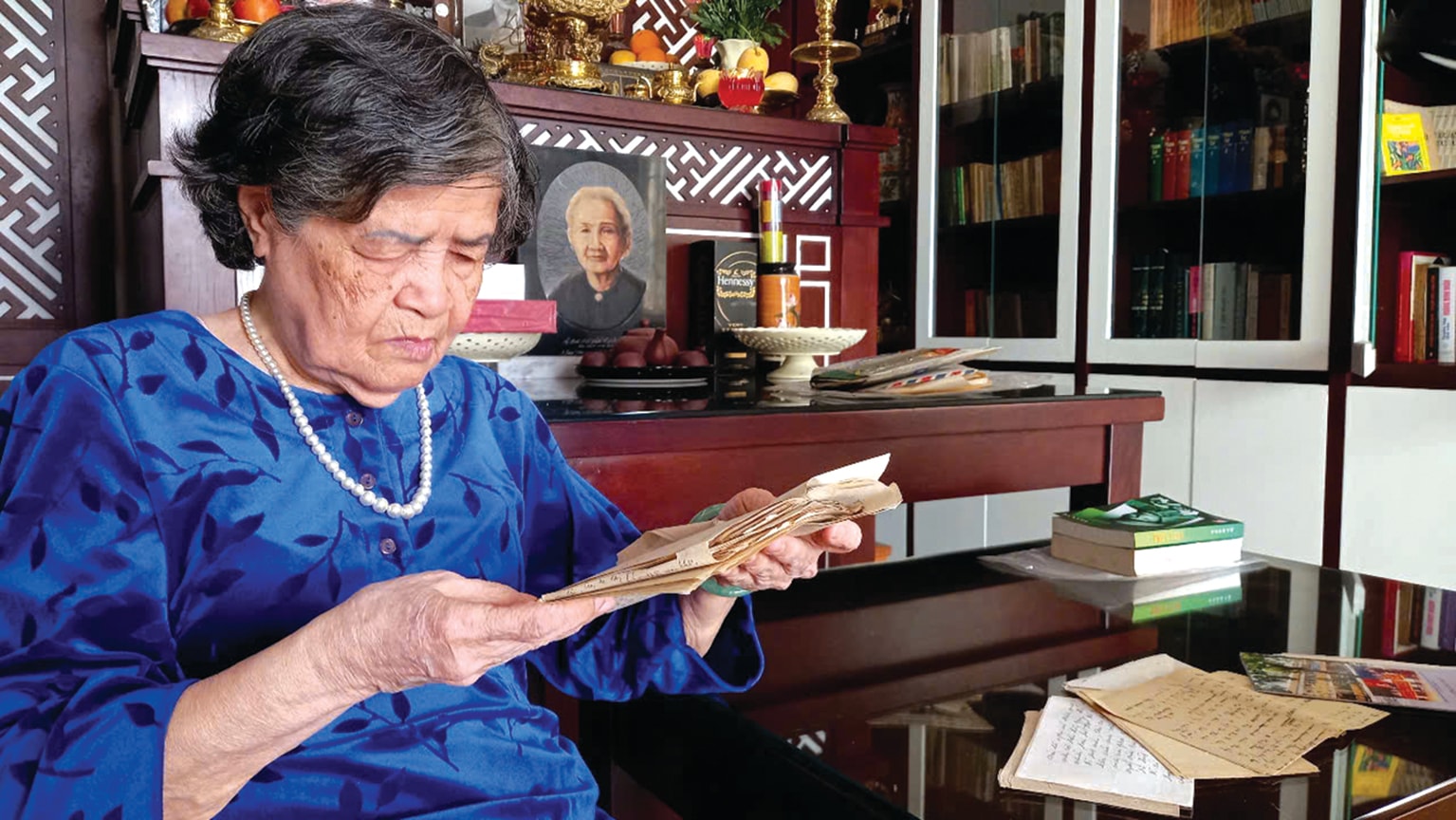
...to the Chu Lai fire zone
Along with the novels "Mother Bay's Family" and "Returning to the Village," his novel "Man and I" created a great sensation and captivated readers. Poet To Huu called it "the bedside book of young people in the North."
Through the two main characters, Mẫn and Thiêm, who represent the young, courageous, and intelligent cadres, the author realistically recreates the fierce battles fought by the army and people in the area surrounding the Chu Lai base.
“Isn’t that right, Mẫn, even though I travel to the ends of the earth, every time I go to battle we meet again; isn’t it true that right now you are clinging to me, so close that I only need to place my finger on my heart to hear my beloved’s voice whispering in my ear, telling me that our homeland won the war against America so well and that we two are like silver flowers waving two fingers in the middle of the stream… (excerpt from “Mẫn and I”).
Writer Ho Duy Le observed: “‘Man and I’ is a work that possesses both literary and practical value regarding the fighting in the Nui Thanh area at that time. The practical aspects in the writer’s work served the fighting during that period and later. It reflects the unwavering loyalty of the people of Quang Nam in particular, and the entire South in general, to the revolution…”
Writer Bui Xuan, from the Vietnam Writers Association and former Deputy Head of the Propaganda Department of the Da Nang City Party Committee, stated: "The female characters in Phan Tu's novels are exceptionally special, typical of the Quang Nam character, such as Man, Mother Bay, etc."
Because of the immense value that "Mẫn and I" achieved, when writer Phan Tứ passed away, among the many wreaths brought to bid him farewell, there was one inscribed with the words: "Mẫn and I live forever."
And according to poet Thanh Que, that is the greatest happiness in a writer's life…
It was also from the Nui Thanh fire zone that writer Phan Tu recorded thousands of diary entries in English, French, German, Lao, and other languages, which his family later compiled into the diary collection "From the Battlefield of Zone 5".
Writer Thai Ba Loi said: "When creating this diary, besides needing writers who understood the battlefield, we also needed people who were proficient in foreign languages to complete it. This is my strong impression of a writer with profound knowledge and meticulous work..."
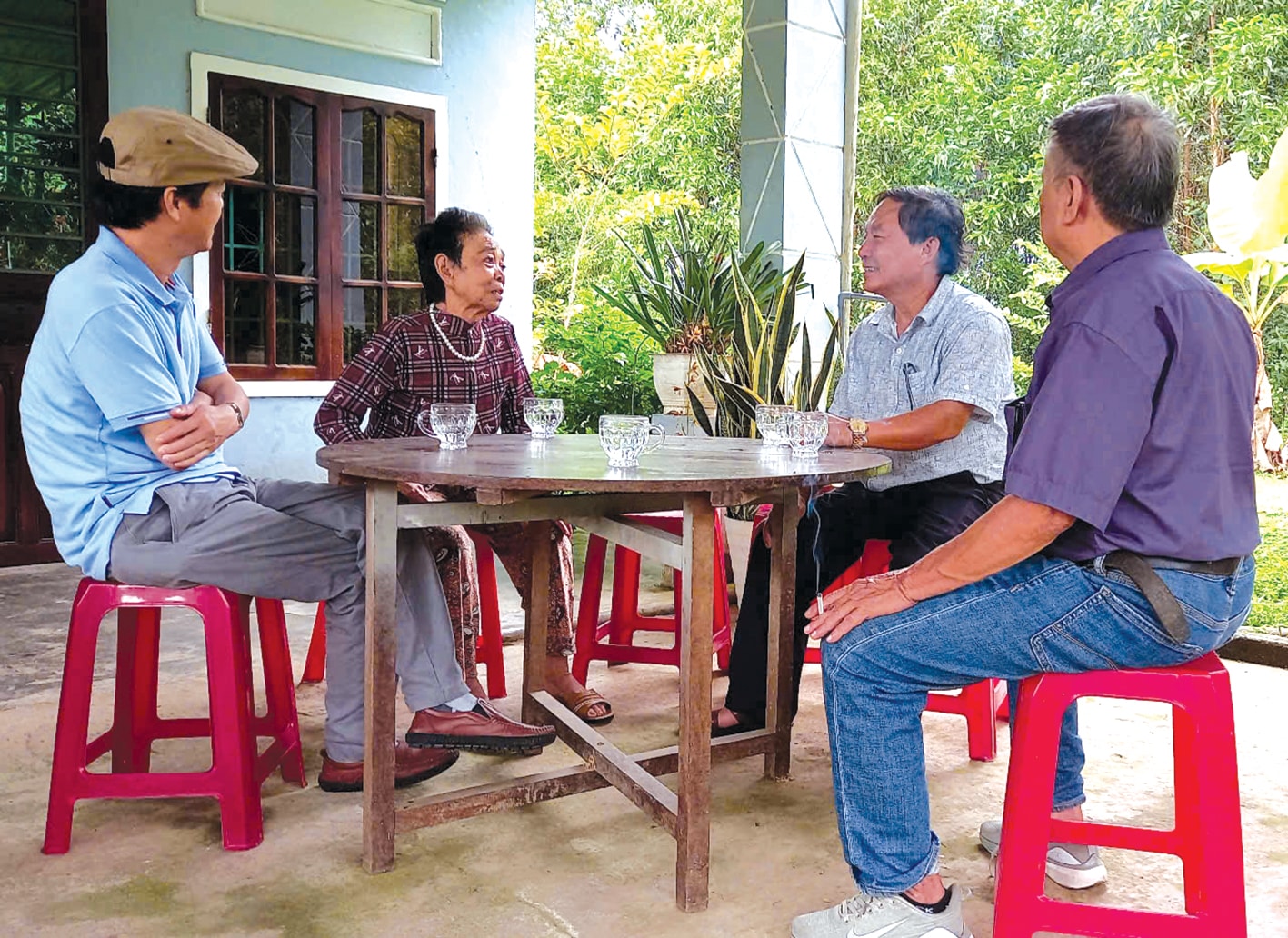
Epilogue...
It can be said that writer Phan Tứ's influence on the land of Quảng Nam, especially on the Chu Lai and Núi Thành areas, is immense.
Upon returning to Tu My - Ky Sanh (now Tam My Tay), we were deeply moved to find that the secret cellar behind Mrs. Tranh's old house – where the writer had taken refuge – still remained.
Sadly, there is still no memorial plaque commemorating the bunker, the hut, and the garden filled with memories of writer Phan Tu, to remind future generations of the contributions and sacrifices of their forefathers for national independence...
Source: https://baoquangnam.vn/phan-tu-va-dau-an-o-vanh-dai-lua-nui-thanh-3151703.html


![OCOP during Tet season: [Part 3] Ultra-thin rice paper takes off.](/_next/image?url=https%3A%2F%2Fvphoto.vietnam.vn%2Fthumb%2F402x226%2Fvietnam%2Fresource%2FIMAGE%2F2026%2F01%2F28%2F1769562783429_004-194121_651-081010.jpeg&w=3840&q=75)


Comment (0)