

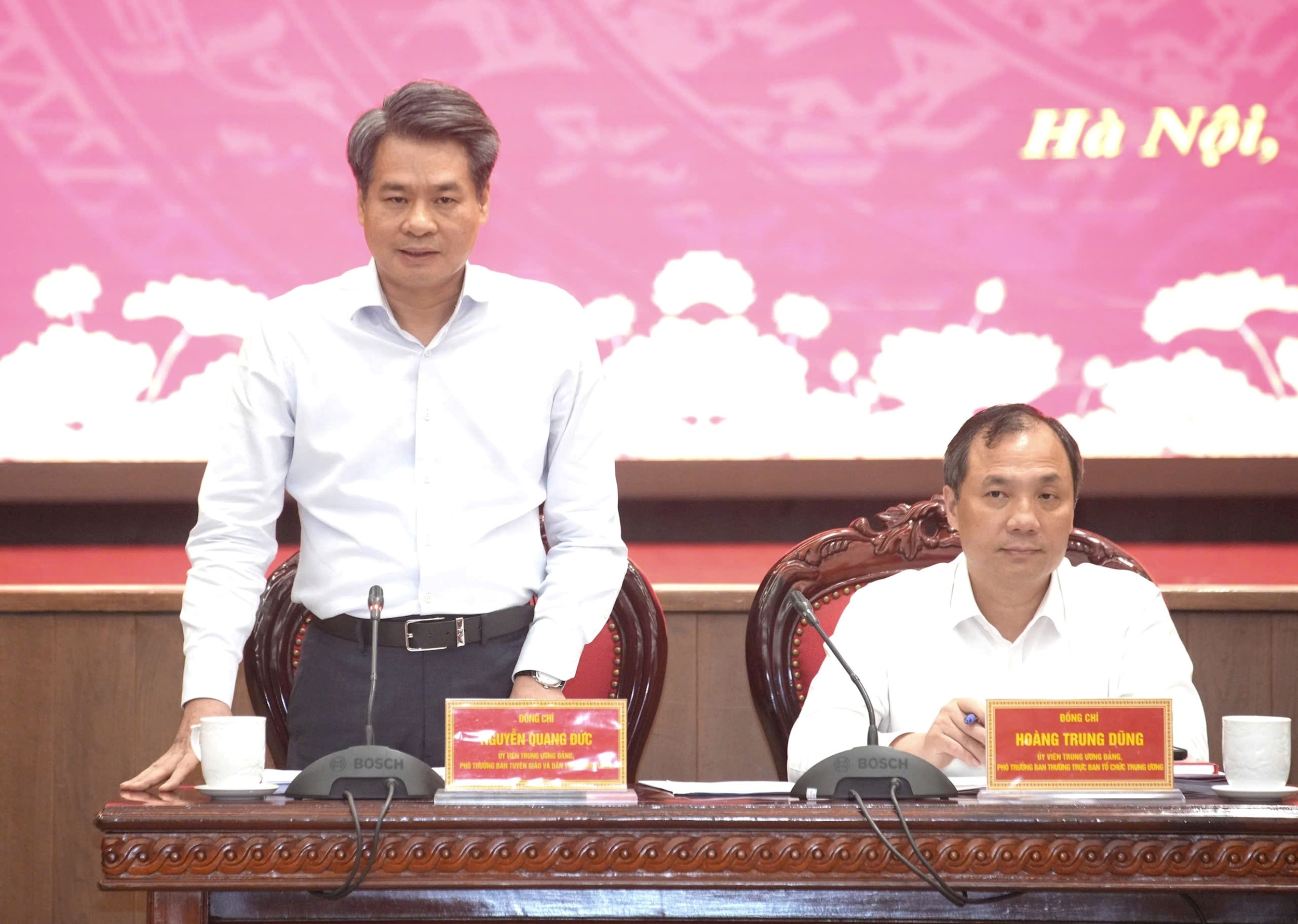
Also attending were members of the Central Committee of the Party: Deputy Head of the Central Internal Affairs Commission Le Hong Quang; and Deputy Head of the Central Propaganda and Mass Mobilization Commission Nguyen Quang Duc.
Receiving and working with the delegation, on the Hanoi side were Central Committee member and Standing Deputy Secretary of the City Party Committee Nguyen Trong Dong; members of the Standing Committee of the City Party Committee: Chairman of the Vietnam Fatherland Front Committee of Hanoi City Bui Huyen Mai; Chairman of the City Party Committee's Inspection Committee Tran Dinh Canh; Head of the City Party Committee's Organization Department Vu Dang Dinh; Standing Vice Chairman of the City People's Council Tran The Cuong; Standing Vice Chairman of the City People's Committee Duong Duc Tuan; Secretary of the Party Committee and Chairman of the People's Council of Ba Dinh Ward Pham Quang Thanh...
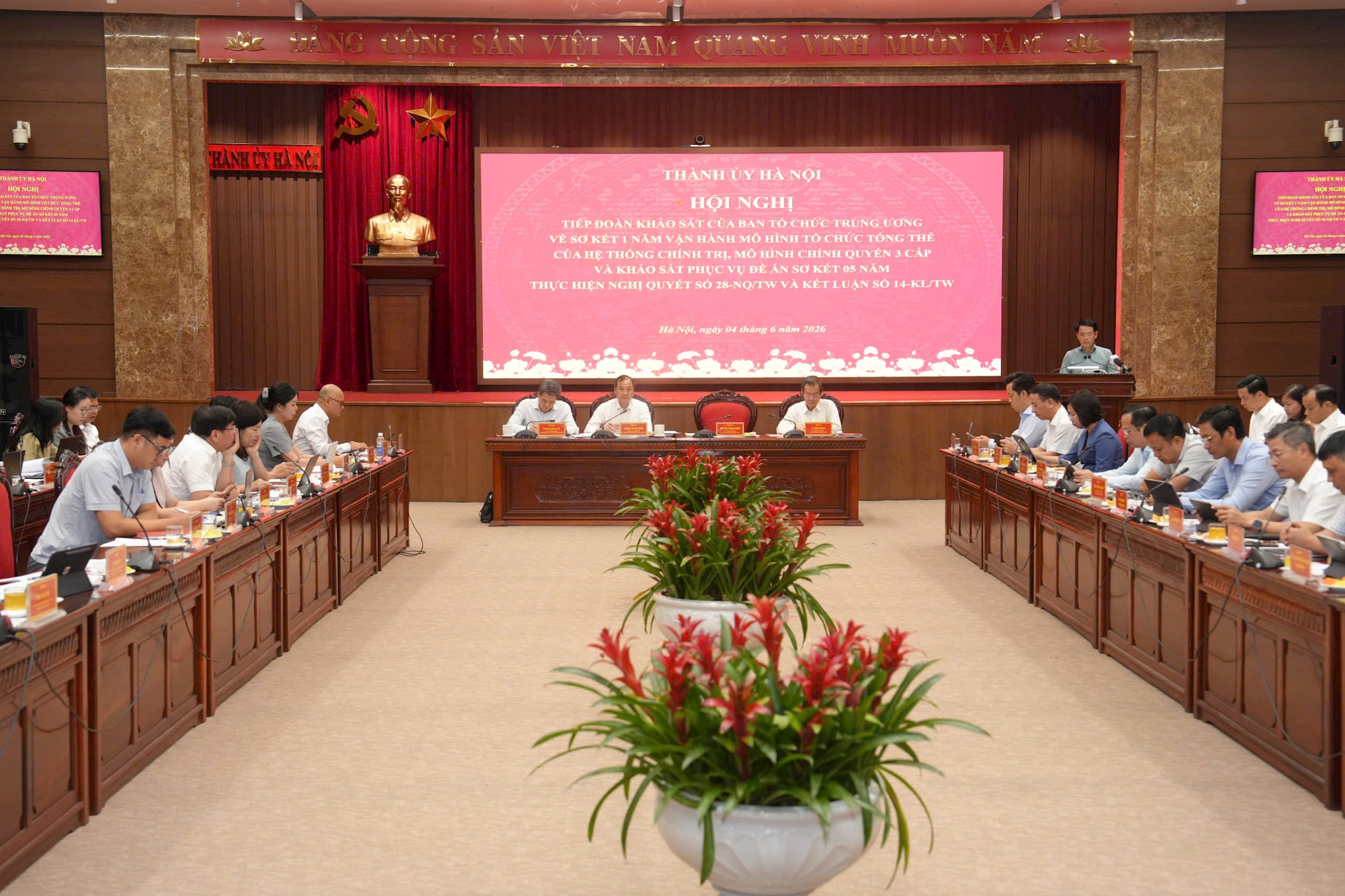
The political system operates continuously and smoothly.
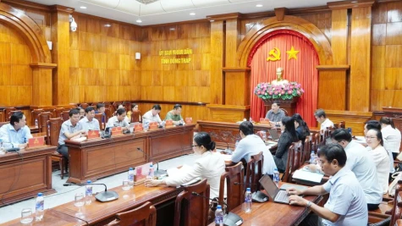
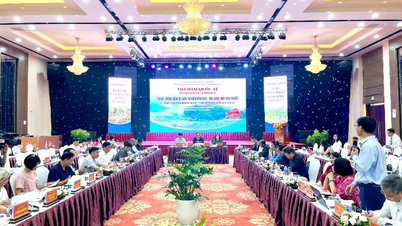
Reporting at the conference, Deputy Head of the Standing Committee of the Hanoi City Party Committee's Organization Department, Trieu Thi Ngoc, stated: After one year of operating the two-tiered local government model, Hanoi has basically completed the goal of reorganizing the administrative apparatus in accordance with the Central Government's policy; ensuring the political system operates continuously, smoothly, and without interruption in serving the people and businesses.
The city has reduced the number of communes, wards, and towns from 526 to 126. Most notably, the leadership, governance, and administration methods have been progressively reformed towards a more direct, interconnected, data-driven approach that is closely aligned with the grassroots, and centered on the people. The coordination mechanism between the four pillars – Party, People's Council, People's Committee, and Fatherland Front – has become increasingly substantive; many difficulties and obstacles are resolved at the grassroots level.
Significant progress has been made in decentralization, delegation of authority, administrative reform, and digital transformation. Following the reorganization of administrative units, the city reviewed 2,007 state management tasks, of which 928 were carried out at the commune level; the city decentralized and delegated 160 tasks to the commune level, implemented 664 administrative procedures under the delegation mechanism, and carried out 2,077 administrative procedures throughout the city; 100% of communes, wards, and agencies within the political system have been connected to digital infrastructure, using electronic document management systems, digital signatures, and online operating platforms.
Furthermore, after five years of implementing Resolution No. 28-NQ/TW and Conclusion No. 14-KL/TW, the leadership methods of the City Party Committee have undergone significant changes in various aspects. The activities of the political system have been carried out comprehensively across all fields, linked to the City Party Committee's work programs, key tasks, and breakthroughs of the city; and placed within the overall context of the renewal, building, and rectification of the Party and the building of a strong political system.
By linking the implementation of Conclusion No. 14-KL/TW with addressing key tasks and development bottlenecks, the city is gradually creating a practical environment for officials to be challenged, trained, and improve their leadership skills, organizational capacity, inter-sectoral coordination abilities, and ability to handle complex and sensitive issues; while also contributing to a transformation in leadership thinking, management methods, and personal responsibility in handling work.
The application of digital platforms, electronic task assignment, paperless meetings, task tracking on operational dashboards, and "Digital Party Branch" and "Digital Party Committee" models have initially proven effective, contributing to improved transparency, accountability, and governance efficiency in the area.
The entire city currently has 556 effective models and practices. These include 50 models focusing on innovating leadership, guidance, and management methods, and 231 models on improving the quality of Party activities, managing Party members, and building a team of grassroots officials.
Despite achieving many positive results, the operational process still reveals some systemic difficulties and obstacles such as: organizational structure and staffing; The quality of the staff is uneven, with some localities lacking staff with in-depth expertise in certain fields.
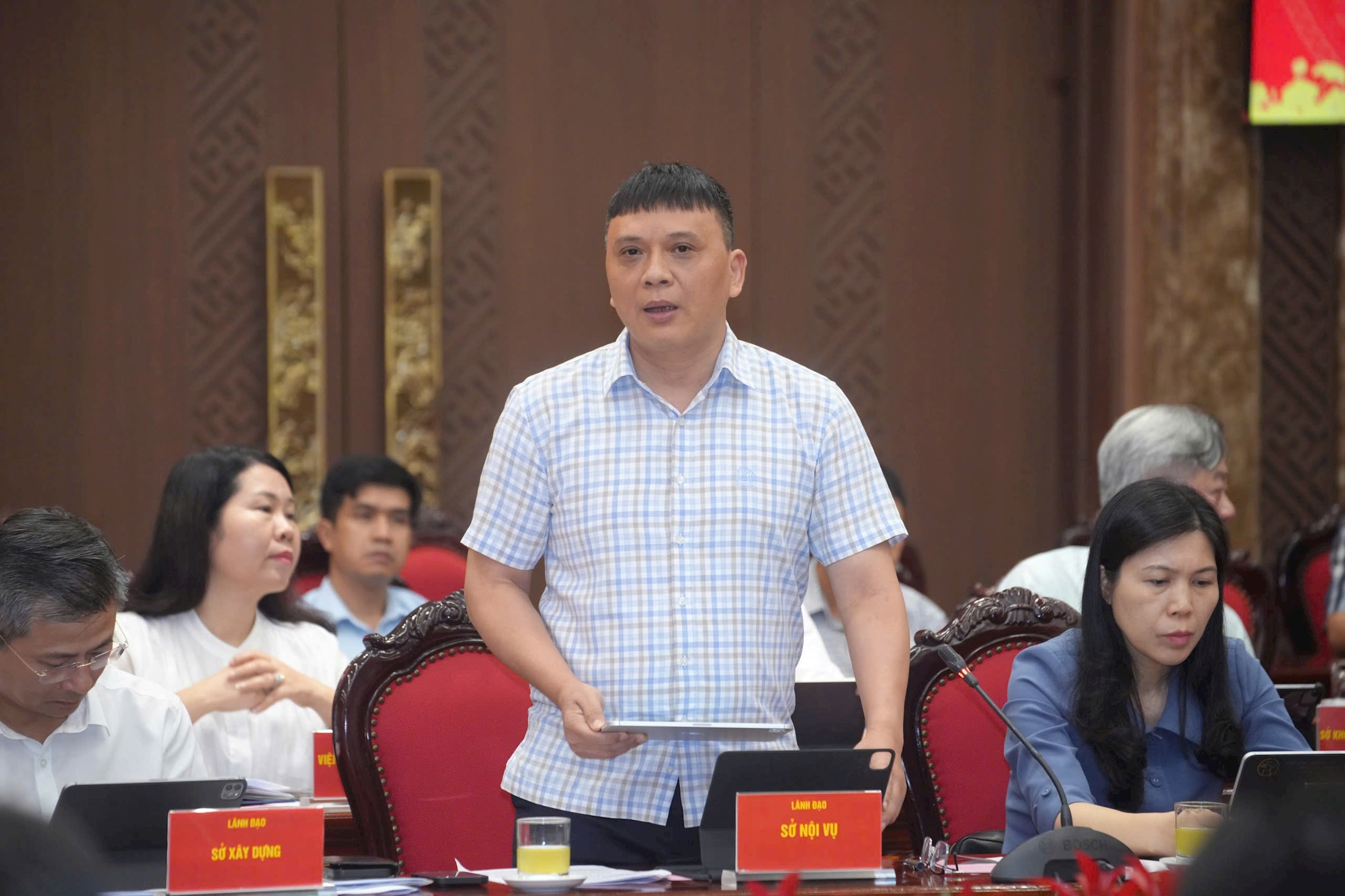
In some areas, decentralization and delegation of authority have not been synchronized with the available resources, guidance, accompanying data, technological infrastructure, and conditions for implementation. Furthermore, the level of autonomy varies among public service units. Many units remain dependent on the state budget. The socialization of public services has not been commensurate with the potential and advantages of the capital city…
Towards perfecting a modern and professional model of government.
After hearing the report, members of the working group, representatives of several city and local departments and agencies, exchanged views, answered questions, and analyzed many groups of issues. Hanoi City proposed that the Central Government study and improve the organizational model suitable for the specific characteristics of a special urban area; continue to review and improve the decentralization and delegation mechanism in a way that clearly defines authority and responsibility, linked to conditions ensuring implementation; and classify tasks according to the capacity of the commune level…
Speaking at the conference, Standing Deputy Secretary of the Hanoi Party Committee Nguyen Trong Dong stated that, after five years of implementing Resolution No. 28-NQ/TW and Conclusion No. 14-KL/TW, and especially after one year of operating the two-tiered local government model, Hanoi deeply understands that the greatest achievement is not only the streamlining of the organizational structure, but more importantly, the strong transformation in leadership thinking, governance thinking, and methods of implementation throughout the entire political system…
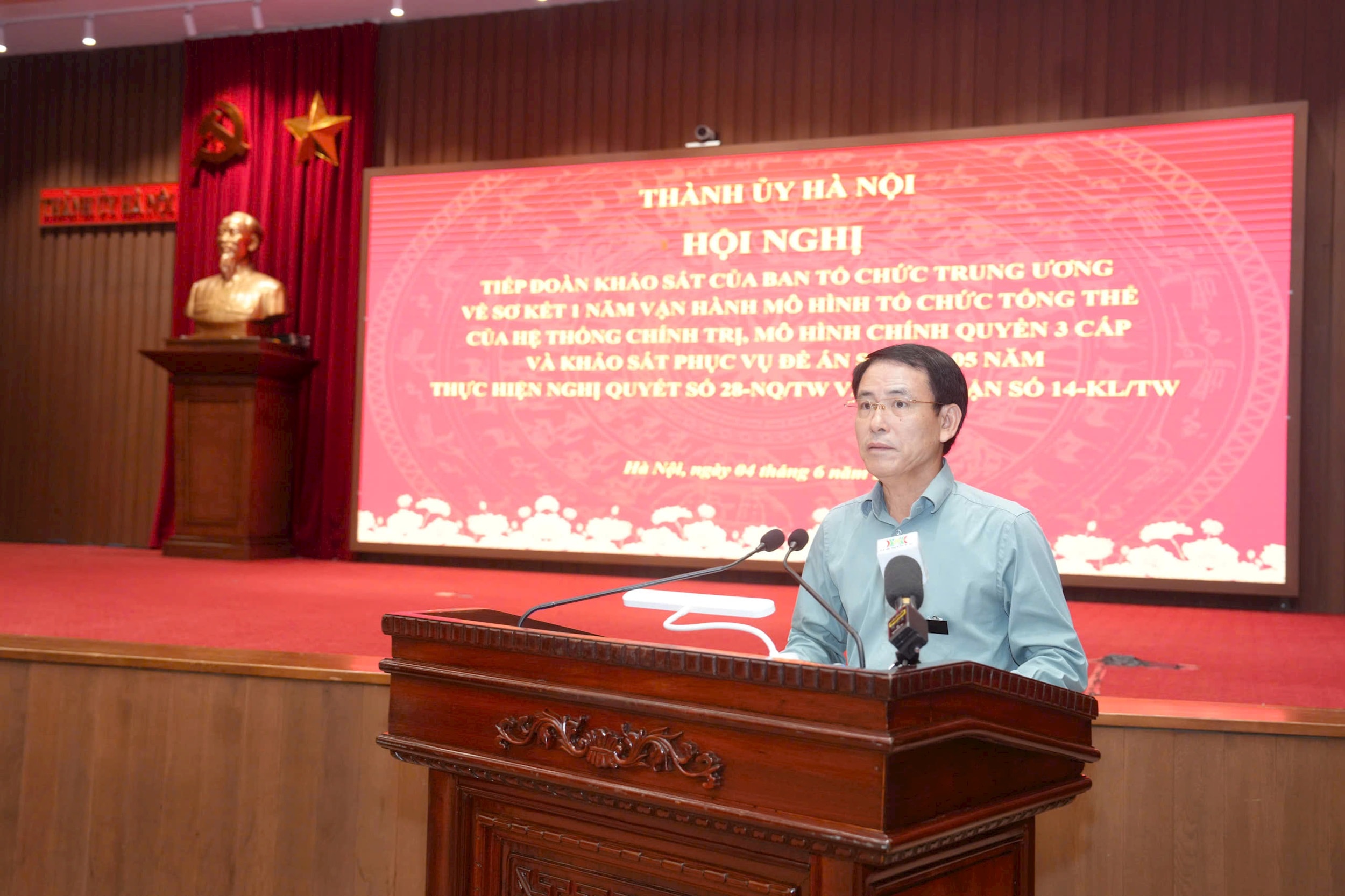
The city's regulations and work procedures continue to be improved; the "six clear principles" are strictly implemented. Citizens have a positive assessment of the performance of the two-tiered local government. The level of satisfaction with government operations, the quality of service provided by officials, and the application of digital technology have all shown significant improvement.
Through practical implementation, Hanoi city has drawn some important lessons learned.
Firstly , the political will of Party committees and governments at all levels, and the exemplary role of leaders, are decisive factors. Where leaders are decisive, willing to take responsibility, and able to harness collective strength, the system operates effectively and creates consensus among the people.
Secondly, establishing a two-tiered local government system is not simply about reducing organizational layers, but rather a comprehensive restructuring of local governance methods. The commune level must truly become the center of local governance, a place close to the people, directly addressing the needs of citizens and businesses.
Third, digital transformation must become a new leadership and governance model for the political system. Data must become a resource for development; governance must be based on data, results, and accountability.
Comrade Nguyen Trong Dong stated that in the coming period, Hanoi will actively and effectively implement the Central Committee's policies on Party building and rectification, organizational restructuring, and the construction of a two-tiered local government, in conjunction with the implementation of Resolution No. 02-NQ/TW of the Politburo on building and developing Hanoi in the new era, the 2026 Law on the Capital City, the 100-year vision for the Capital City, and the tasks for the development of the Capital City in the new period.
With strong political determination, a spirit of innovation, creativity, and responsibility to the Party Committee, government, and people of the Capital, Hanoi will strive to perfect the two-tiered local government model towards a modern, professional, efficient, and effective operation.
Nguyen Trong Dong, Standing Deputy Secretary of the Hanoi City Party Committee
Deputy Secretary of the City Party Committee Nguyen Trong Dong emphasized that the city will build a streamlined and strong political system; continue to affirm its role as the leading engine of national development, and make increasingly significant contributions to the cause of national construction and defense.
Proactively leverage the special mechanisms from the Capital City Law of 2026.
Concluding the working session, Deputy Head of the Standing Committee of the Central Organization Department Hoang Trung Dung highly appreciated Hanoi's achievements and practical experience in implementing the Central Committee's policies. He affirmed that major policies on reforming the Party's leadership methods, building a two-tiered local government, and encouraging and protecting cadres who dare to think and act are gradually being put into practice and yielding positive results.
However, given the increasingly demanding requirements in the coming period, Hanoi needs to continue effectively implementing Resolution No. 28-NQ/TW and Conclusion No. 14-KL/TW. This includes clearly defining the distinction between Party leadership and State management; between strategic direction and handling specific administrative tasks; and between comprehensive leadership and promoting the initiative and responsibility of each specific agency and unit.
Hanoi continues to research and add new content to leadership methods in the context of digital government, digital society, and digital economy; shifting from process-based management to governance based on objectives, data, outputs, and accountability; using the effectiveness of serving citizens and businesses as a measure. It will refine mechanisms to protect the right people, the right actions, and the right motives, while strictly handling cases of exploiting policies to violate discipline and order.
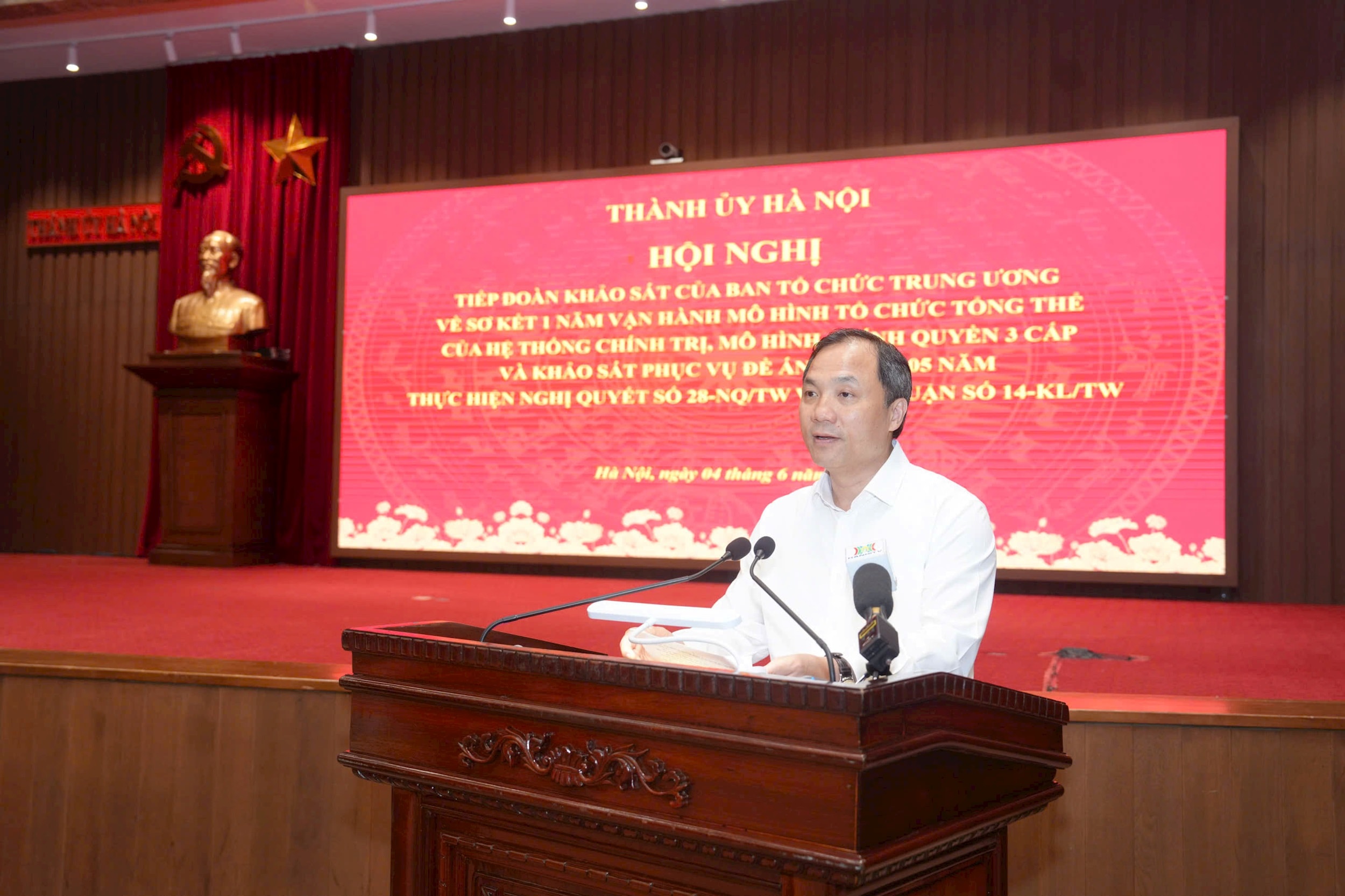
Regarding the operation of the three-tiered political system and two-tiered local government model, new governance methods are required. Practical surveys reveal bottlenecks that need to be addressed, especially in the areas of decentralization and delegation of power. Comrade Hoang Trung Dung emphasized the principle of "local authorities decide, local authorities act, local authorities are responsible." Accordingly, local authorities must be granted clear authority, with sufficient resources, personnel, data, and conditions for implementation, while also having a robust mechanism for checking, supervising, controlling power, and ensuring accountability.
Comrade Hoang Trung Dung suggested that Hanoi city should continue to strengthen the advisory bodies of the Party committees; improve the effectiveness of the People's Council, People's Committee, and Fatherland Front; build a team of cadres based on job positions, job title standards, and output results, in conjunction with reforming the recruitment, evaluation, training, and rotation of cadres…
According to Comrade Hoang Trung Dung, one of the major bottlenecks today is digital transformation and data. In the future, the leadership and governance capacity of localities will be measured by the quality of data and the ability to exploit that data. Therefore, it is necessary to focus on investing in digital infrastructure, building a synchronized and interconnected data system to effectively serve leadership, direction, management, and the people.
Based on Hanoi's experience, the Deputy Head of the Standing Committee of the Central Organization Department stated that the survey team would fully consider all opinions and recommendations; noting that, with the specific mechanisms and policies stipulated in the 2026 Capital City Law, Hanoi needs to proactively promote its autonomy and accountability, and boldly implement solutions within its authority to create momentum for development in the new phase.
Source: https://hanoimoi.vn/phat-huy-co-che-dac-thu-tao-dong-luc-phat-trien-thu-do-1158965.html








































![[Video] Sunset at Lap An Lagoon – Where the sun sets over the fishing nets](https://vphoto.vietnam.vn/thumb/1200x675/vietnam/resource/IMAGE/2026/05/31/1780192137701_beach-landscape-sea-water-nature-grass-745871-pxhere-com.jpeg)




























Comment (0)