

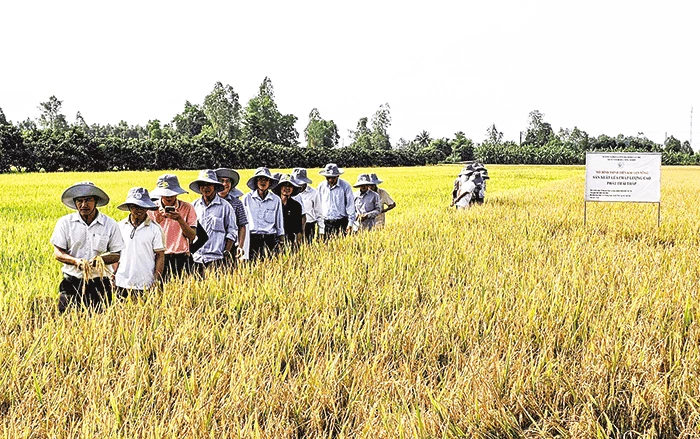
The CLC and PTT rice cultivation models were implemented in the 2024-2025 winter-spring crop season in Truong Xuan commune, Thoi Lai district, Can Tho city.
Positive results
After one year of implementation, the Project has affirmed its correctness and necessity, and has initially yielded very noteworthy results in transforming agriculture towards a modern, sustainable, and climate-resilient approach. Farmers' rice production habits have gradually changed towards increasing value, reducing emissions, and protecting the environment. The Project has received attention, support, and technical assistance from international organizations and development partners, including credit and market development. Businesses, cooperatives, and farmers have focused more on production linkages, improving product quality, and transitioning to sustainable farming practices (such as advanced irrigation water management, rational fertilizer use, and straw treatment). These practices are being increasingly widely applied, aiming to build a Vietnamese rice brand associated with quality, sustainability, and environmental protection.
To create a model for scaling up the project, starting from the 2024 summer-autumn crop season, the Ministry of Agriculture and Environment, in coordination with local authorities and relevant parties, implemented seven pilot models at the central level in five provinces and cities: Can Tho City, Soc Trang, Tra Vinh , Dong Thap, and Kien Giang. The results have yielded clear benefits in both economic and environmental aspects. According to the Ministry of Agriculture and Environment, these models helped reduce production costs by 8.2% to 24.2% by reducing seed usage by 30-50%, saving 30-70 kg of fertilizer per hectare, reducing pesticide spraying by 1-4 times, and cutting irrigation water by 30-40%. Simultaneously, yields increased by 2.4-7%, farmers' income increased by 12-50%, equivalent to a profit increase of 4-7.6 million VND per hectare compared to traditional farming. Farmers also benefited from guaranteed rice purchase prices from businesses, higher than the market rate. The model has helped reduce greenhouse gas emissions, with reductions ranging from 2-12 tons of CO₂ equivalent per hectare.
With the positive results achieved, the pilot models have received strong support from farmers, cooperatives, and stakeholders. Based on this, the Ministry of Agriculture and Environment has agreed with localities to continue expanding the model to all 12 provinces and cities participating in the project, aiming to build a high-quality, environmentally friendly rice production system with high competitiveness in the international market. Accordingly, 5 localities with central-level pilot models have proactively expanded and implemented 53 models, covering an area of 3,653 hectares in the 2024-2025 winter-spring crop. Provinces without central-level models (such as Long An, Tien Giang, Hau Giang, An Giang, and Bac Lieu) have also implemented 48 models under the project, covering an area of over 865 hectares…
Continue to build
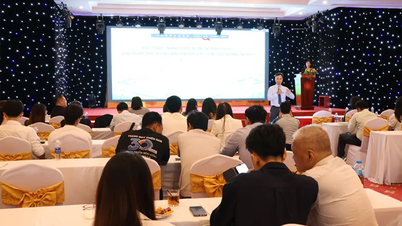
In Can Tho City, the Ministry of Agriculture and Environment recently held a conference to review the first year of the project's implementation. The conference aimed to assess the achievements, difficulties, and obstacles encountered, and to outline key tasks for the future to achieve the project's objectives. At the conference, many delegates noted that despite initial positive results, the project's implementation still faces challenges and obstacles that need to be addressed promptly to ensure progress and effectiveness. Relevant agencies need to focus on strengthening training for farmers and stakeholders. Support and encouragement should be provided to farmers, businesses, and cooperatives to enhance linkages along the value chain to implement successful models, projects, and best practices, thereby achieving the goal of having 1 million hectares of high-quality and semi-high-yield rice varieties linked to branded rice products.
Mr. Nguyen Cao Khai, Director of Tien Thuan Cooperative in Vinh Thanh District, Can Tho City, said: “To replicate the model, farmers urgently need more support from the State in terms of capital to invest in developing infrastructure and machinery and technology for rice production and straw collection and processing. From the 2024 summer-autumn crop, the cooperative participated in the pilot model on an area of 50 hectares and has maintained its implementation in the 2024 autumn-winter and 2024-2025 winter-spring rice crops. The results have been beyond imagination; farmers have reduced seed usage by 50%, significantly reduced fertilizer, pesticide, and irrigation water usage… while improving rice yield and quality, and increasing income by removing straw from the fields to grow straw mushrooms and produce organic fertilizer.” According to Ms. Nguyen Thi Thu Huong, Deputy Director of the Department of Crop Production and Plant Protection under the Ministry of Agriculture and Environment, awareness of the project is not uniform among localities. Although the project has initially been implemented effectively, some localities still do not fully understand its core content and implementation methods, leading to confusion. Some localities focus too much on carbon credits without paying sufficient attention to sustainable production and cost reduction. Irrigation infrastructure in many areas has not been invested in comprehensively to effectively apply the rice cultivation techniques outlined in the project. Awareness among businesses and farmers remains limited, and production linkages are weak. Investment resources for the project are limited, mainly from local budgets, businesses, and a portion from the central government; mobilizing additional financial resources remains challenging.
Can Tho was selected by the Ministry of Agriculture and Environment to implement the first pilot model of the Project, covering an area of 50 hectares in Vinh Thanh district starting from the 2024 summer-autumn crop. By the 2024-2025 winter-spring crop, the city had expanded six models across three districts: Vinh Thanh, Co Do, and Thoi Lai, covering an area of 170 hectares. These models have helped increase productivity, improve product quality, reduce production costs, decrease emissions, and increase profits for farmers. According to Mr. Duong Tan Hien, Standing Vice Chairman of the People's Committee of Can Tho City, in 2025, the city will focus resources on improving the quality of the project area, expanding it to approximately 35,000 hectares. Simultaneously, a specific plan will be developed to mobilize resources for the project's implementation in the 2026-2030 period. To ensure the project's effectiveness, Can Tho proposes that the Ministry of Agriculture and Environment and other ministries and agencies promptly and continuously pay attention to the implementation of the infrastructure investment project under the Plan. This will provide a foundation to help rice farmers have favorable conditions to improve production efficiency.
Mr. Do Duc Duy, Minister of Agriculture and Environment, urged localities to promptly approve their projects and plans, along with support policies within their authority and capabilities, to assist farmers, businesses, and cooperatives in expanding the area participating in the 1 million hectare rice project to achieve the goals registered with the Ministry of Agriculture and Environment and the Government. Businesses and cooperatives should closely link with localities and farmers to form sustainable supply chains from production, harvesting, processing, consumption, and export. International organizations should continue to accompany and support localities, businesses, and farmers in implementing the project…
Text and photos: KHANH TRUNG
Source: https://baocantho.com.vn/phat-huy-mo-hinh-cach-lam-hay-tu-e-an-1-trieu-hec-ta-chuyen-canh-lua-chat-luong-cao-a185574.html


![[Photo] Prime Minister Pham Minh Chinh presides over the conference announcing the establishment of the International Finance Centre in Vietnam.](/_next/image?url=https%3A%2F%2Fvphoto.vietnam.vn%2Fthumb%2F1200x675%2Fvietnam%2Fresource%2FIMAGE%2F2025%2F12%2F21%2F1766309817714_ndo_br_dsc-3400-jpg.webp&w=3840&q=75)
![[Photo] Prime Minister Pham Minh Chinh presides over a meeting on private sector economic development.](/_next/image?url=https%3A%2F%2Fvphoto.vietnam.vn%2Fthumb%2F1200x675%2Fvietnam%2Fresource%2FIMAGE%2F2025%2F12%2F20%2F1766237501876_thiet-ke-chua-co-ten-40-png.webp&w=3840&q=75)
























































Comment (0)