

Within the framework of the film seminar "The Role of Young Filmmakers in Positioning Vietnamese Cinema" at the launch ceremony of the Vietnamese Short Film Competition - Vietnamese 2026 on May 16th, People's Artist Nguyen Thi Thanh Thuy, Deputy Director of the Department of Culture and Sports of Ho Chi Minh City - with the perspective of someone directly involved in building the dossier for Ho Chi Minh City to join the UNESCO Creative Cities Network in the field of cinema - submitted a paper on developing a team of young filmmakers in the context of the increasingly vibrant Vietnamese film industry. Thanh Nien newspaper respectfully presents this paper as an encouragement and hope for the new generation of creative Vietnamese filmmakers.
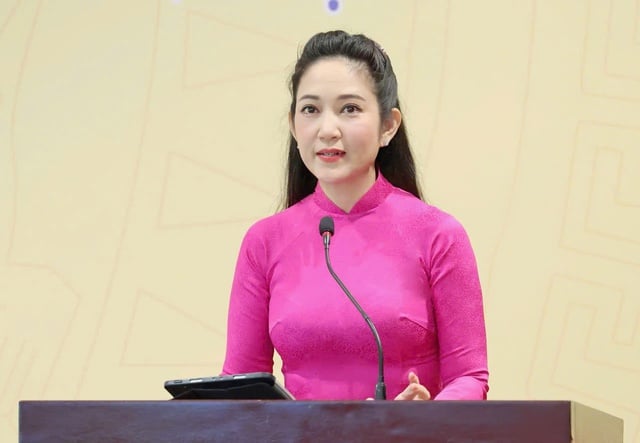
People's Artist Nguyen Thi Thanh Thuy, Deputy Director of the Department of Culture and Sports of Ho Chi Minh City.
PHOTO: HO CHI MINH CITY DEPARTMENT OF CULTURE AND SPORTS
First of all, on behalf of the Ho Chi Minh City Department of Culture and Sports, I would like to extend my congratulations to Thanh Nien Newspaper and its partners for continuing to organize the Vietnamese Short Film Competition 2026. This is a meaningful initiative, creating more space for young filmmakers to experiment, tell their stories, reach the public, and gradually enter the professional film industry.
Since last season, the competition has shown a very encouraging sign: short films are not just a first attempt or an experimental genre, but can become a place to discover talent, nurture new cinematic languages, and connect the younger generation of creators with the market, media, and film festivals. The success of the works emerging from the competition is vivid proof that a short film platform can open up a longer journey for young filmmakers.
1. Ho Chi Minh City and the need to build a young film industry ecosystem.
Ho Chi Minh City is currently entering a new phase of development for its film and cultural industries. Being recognized as a Creative City in the field of cinema is not only a source of pride but also a responsibility. This title demands that the city develop cinema as an ecosystem encompassing creativity, training, production, the public, the market, infrastructure, and appropriate mechanisms and policies.
This also shows that, if we want Ho Chi Minh City to truly become a film city, we cannot simply rely on big films, major events, or established producers. A film city must start with young people, with short films, with schools, with the creative community, with very new, small ideas that have the potential to spark a new generation of filmmakers.
Therefore, the theme of supporting young filmmakers today is not just about a competition, but is part of Ho Chi Minh City's long-term development strategy. In this strategy, competitions like Vietnamese 2026 serve as the first "point of contact" to discover talent; while training, mentoring, screening, media, and market connection mechanisms will be the "pathways" for those talents to continue developing.

The Vietnamese Short Film Competition is considered a practical and meaningful initiative, creating more space for young filmmakers to tell their stories and gradually enter the professional film industry.
PHOTO: NHAT THINH
2. Some key policy platforms the City is moving towards
Over the past period, the city has been gradually perfecting important policy foundations for the development of the cultural industry, including film. The city's orientations for the development of the cultural industry until 2030 have identified film as one of the key areas, along with performing arts, fine arts, photography, exhibitions, advertising, cultural tourism, fashion , and other creative fields.
Furthermore, specific mechanisms from the central government for Ho Chi Minh City allow the city to explore ways to mobilize social resources, public-private partnerships, and develop cultural institutions in a more flexible manner. This serves as a foundation for gradually proposing models to support young filmmakers: from creative spaces, filming locations, script labs, school film screening programs, to mechanisms connecting businesses to partner with short film projects.
The city's overarching philosophy is that the state plays a facilitating, guiding, and streamlining role, creating an environment where necessary procedures are streamlined; while media outlets, professional associations, schools, businesses, digital platforms, and the creative community all participate to form an open, dynamic, and sustainable ecosystem.
3. Practical support solutions for young filmmakers
Firstly, support is needed regarding creative spaces, filming locations, and access procedures. One of the major difficulties for young film crews is the lack of access to suitable filming locations, especially public spaces, architectural heritage sites, distinctive residential areas, cultural spaces, and locations that reflect the identity of Ho Chi Minh City. The city is gradually developing mechanisms to support information, guide procedures, and connect suitable filming locations for short films, student films, and independent projects with artistic, educational , and promotional value for the city. Specifically, the Department of Culture and Sports has collaborated with the French Embassy to launch a bilingual English-Vietnamese guide, "Ho Chi Minh City, a Destination for Film Production," in 2025. This publication provides comprehensive basic information for film production needs in the city.
Secondly, support in training, mentoring, and project development is crucial. Young filmmakers need more than just funding. Equally important are mentors, a learning environment, opportunities for script critique, and feedback on production, post-production, sound, copyright, digital distribution, and strategies for bringing their work to the public. Therefore, in addition to competitions, Ho Chi Minh City will develop short film workshops, script development labs, and workshops on pitching, independent production, post-production, sound, intellectual property, and distribution.
Thirdly, support in terms of media, screening, and audience reach is crucial. Even the best short film struggles to make an impact without a channel to reach the public. Introducing these works on online newspapers, YouTube, social media, cinetalks, schools, cultural centers, libraries, creative spaces, and community events will help young filmmakers gain a real audience, genuine feedback, and real data.
Fourth, support the connection of social resources and partner businesses. Film is a field that requires significant resources. The State plays a role in creating policies, providing direction, and supporting the development environment; but for the sustainable development of the young film ecosystem, the participation of businesses, social funds, technology platforms, brands, cinemas, post-production units, equipment, media, and international organizations is needed.
Fifth, support the development of Vietnamese content identity within the context of integration. The theme "Vietnamese" is a very good suggestion. Because in a world where filmmaking technology is increasingly widespread, what makes a filmmaker different is not just the camera, special effects, or budget, but the cultural perspective. Ho Chi Minh City is home to 54 ethnic minorities, forming many layers of memory within the flow of history, and many domestic and international cultural communities living together contribute to creating incredibly rich material for creative activities.

Public film screenings within the framework of the Ho Chi Minh City International Film Festival (HIFF)
PHOTO: BTC
4. School Film Initiative: From Audience Development to Talent Nurturing
In this context, I believe that the School Film Initiative – one of Ho Chi Minh City's commitments upon joining the UNESCO Creative Cities Network – is a very suitable approach to connect the Vietnamese 2026 short film competition with the city's long-term strategy. If the competition is a place to discover new works and talents, then the School Film Initiative is the foundation for preparing a new generation of audiences and creators for Ho Chi Minh City's film industry.
School film programs should first and foremost provide students with access to good films. Secondly, this initiative needs a broader approach, encompassing the education of cinematic aesthetics, the development of visual appreciation skills, the cultivation of visual storytelling abilities, and the enhancement of cultural, historical, and social understanding through film. Simultaneously, it should create a safe environment for students to experiment with and create short films.
At the secondary school level, school cinema begins with screenings of selected, age-appropriate short films, followed by post-screening discussions with directors, critics, teachers, or artists. The content should prioritize works with humanistic values, reflecting family life, school life, urban life, the environment, cultural heritage, life skills, and civic spirit. This helps students develop the habit of thoughtful film viewing, encouraging them to ask questions and distinguish between mere entertainment and valuable works of art.
At the university and college level, especially in schools with majors in media, fine arts, technology, design, music, theater, tourism, culture, and humanities, school filmmaking can develop into practical modules: writing short film ideas, developing scripts, shooting with common equipment, basic editing, sound design, organizing small-scale productions, promoting the work, and public screening. This approach helps filmmaking become an interdisciplinary creative language, not just for film school students.
In terms of mechanism, the Department of Culture and Sports can coordinate with the Department of Education and Training, the City Youth Union, the Student Association, universities, media agencies, professional associations, cinemas, and businesses to build a pilot model. In the initial phase, a number of exemplary high schools, universities, and cultural centers could be selected for testing, then evaluated for effectiveness before being expanded.
In fact, a suitable school film program for Ho Chi Minh City could include four components: firstly, a library of selected short films for education and exchange; secondly, a series of film screenings and dialogues at schools; thirdly, workshops on short filmmaking for students; and fourthly, a mechanism to connect outstanding school films with platforms such as Vietnamese 2026 , the Ho Chi Minh City Short Film Festival, the Ho Chi Minh City International Film Festival, digital platforms, and international exchange programs.
With this approach, school cinema not only serves the goal of art education. This initiative also directly contributes to three major goals of the city: developing a quality film audience, nurturing young creative human resources, and building Ho Chi Minh City's identity as a dynamic, open film city where every young person has the opportunity to tell their story through visual language.

Young filmmakers are increasingly being given opportunities to develop their film careers.
PHOTO: NHAT THINH
5. Expectations and Commitment to Partnership
Ladies and gentlemen, to better support young filmmakers, we need a holistic approach: from policy to training, from filming locations to post-production, from competitions to distribution, from media to the market, from schools to public spaces. But most importantly, we need belief: young people are not just the successors, but the force directly creating a new face for Vietnamese cinema.
The Ho Chi Minh City Department of Culture and Sports highly appreciates the efforts of Thanh Nien Newspaper in organizing the Vietnamese Short Film Contest - Vietnamese 2026. This activity is in line with the city's cultural industry development orientation, consistent with Ho Chi Minh City's position as a Creative City in the field of cinema, and especially suitable for the need to create an open, dynamic, youthful, and integrated film ecosystem.
We hope this year's competition will not only discover outstanding short films, but also uncover promising young directors, screenwriters, cinematographers, editors, and producers with long-term potential. We also expect that after the competition, the best works will continue to be showcased at film screenings, film festivals, cultural exchange activities, digital platforms, and cultural spaces throughout the city.
On behalf of the Ho Chi Minh City Department of Culture and Sports, we are ready to cooperate in providing guidance, connection, and facilitating opportunities within our functions and responsibilities; and we will continue to advise the city on appropriate mechanisms to support the development of cinema, especially youth cinema, short films, and new creative models.
I believe that from competitions like Vietnamese 2026 , from school film screenings, from small workshops in schools, we will see the great directors of tomorrow. And from the small stories of young people, Ho Chi Minh City will have more images, more memories, and more voices to contribute to the map of Vietnamese and international cinema.
Wishing the Vietnamese Short Film Contest 2026 great success. May the young filmmakers always maintain their passion, kindness, creativity, and confidence in telling the story of Vietnamese culture.
Source: https://thanhnien.vn/phat-trien-doi-ngu-lam-phim-tre-tai-tphcm-185260515221555562.htm

















































































Comment (0)