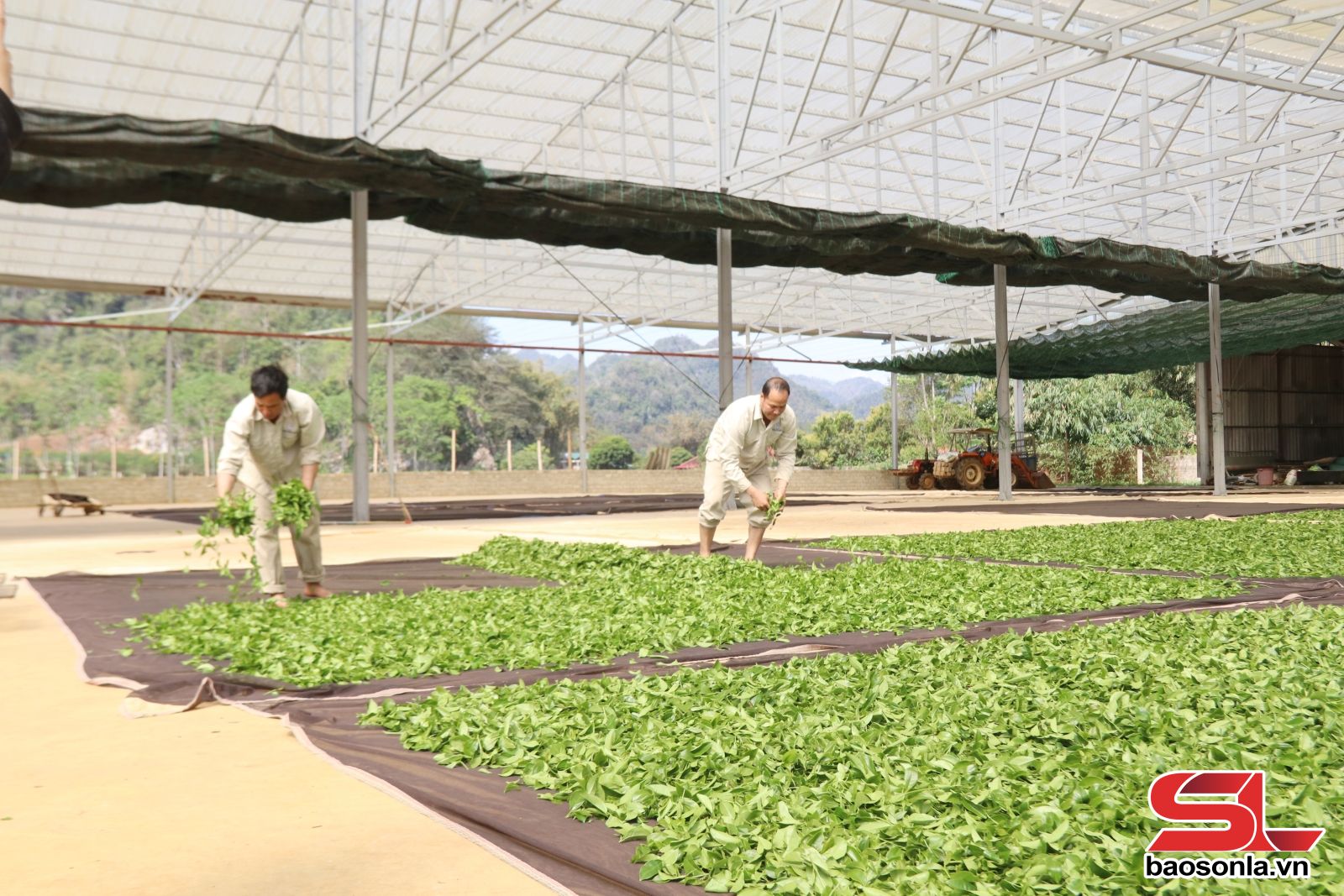
These days, the tea hills in Kien Xuong, Quynh Tien Hung, and Nong Lao villages of Binh Thuan commune are covered in a lush green, attracting many tourists to visit and experience the area. Located at the foot of Pha Din Pass, the locality is blessed with a cool climate, suitable for tea plant growth and development. Currently, tea has become the main crop of the commune with over 800 hectares, producing approximately 8,000 tons of fresh tea leaves per year. Not only focusing on developing the raw material area, businesses and cooperatives in the area have gradually completed the value chain from production and processing to product consumption, with many tea products achieving OCOP 4-star standards. This also serves as a foundation for the locality to exploit and develop experiential tourism associated with the tea region.
Ms. Ca Thi Ngoc, Acting Chairwoman of the People's Committee of Binh Thuan Commune, said: Along with developing green agricultural economy , the locality always focuses on preserving and promoting the cultural identity of the six ethnic groups living together in the area. In particular, the commune successfully organized the Binh Thuan Commune Culture, Sports and Tourism Week and the "Binh Thuan Green Journey" race through tea hills and villages. As a result, from the beginning of the year until now, the commune has welcomed more than 44,800 tourists to visit and experience. This is an important foundation for the commune to continue encouraging the development of organic agriculture associated with sustainable community tourism.

Nguyen Khanh Linh, a tourist from Hanoi, shared her experience visiting the tea hills of Binh Thuan for the first time with her family: "I am truly impressed with the scenery here. The lush green tea hills stretching along the foot of the pass are very pristine and beautiful. The air is incredibly fresh and peaceful. Taking a stroll through the tea plantations, taking photos, and chatting with the locals is a very enjoyable experience, completely different from the hustle and bustle of the city."
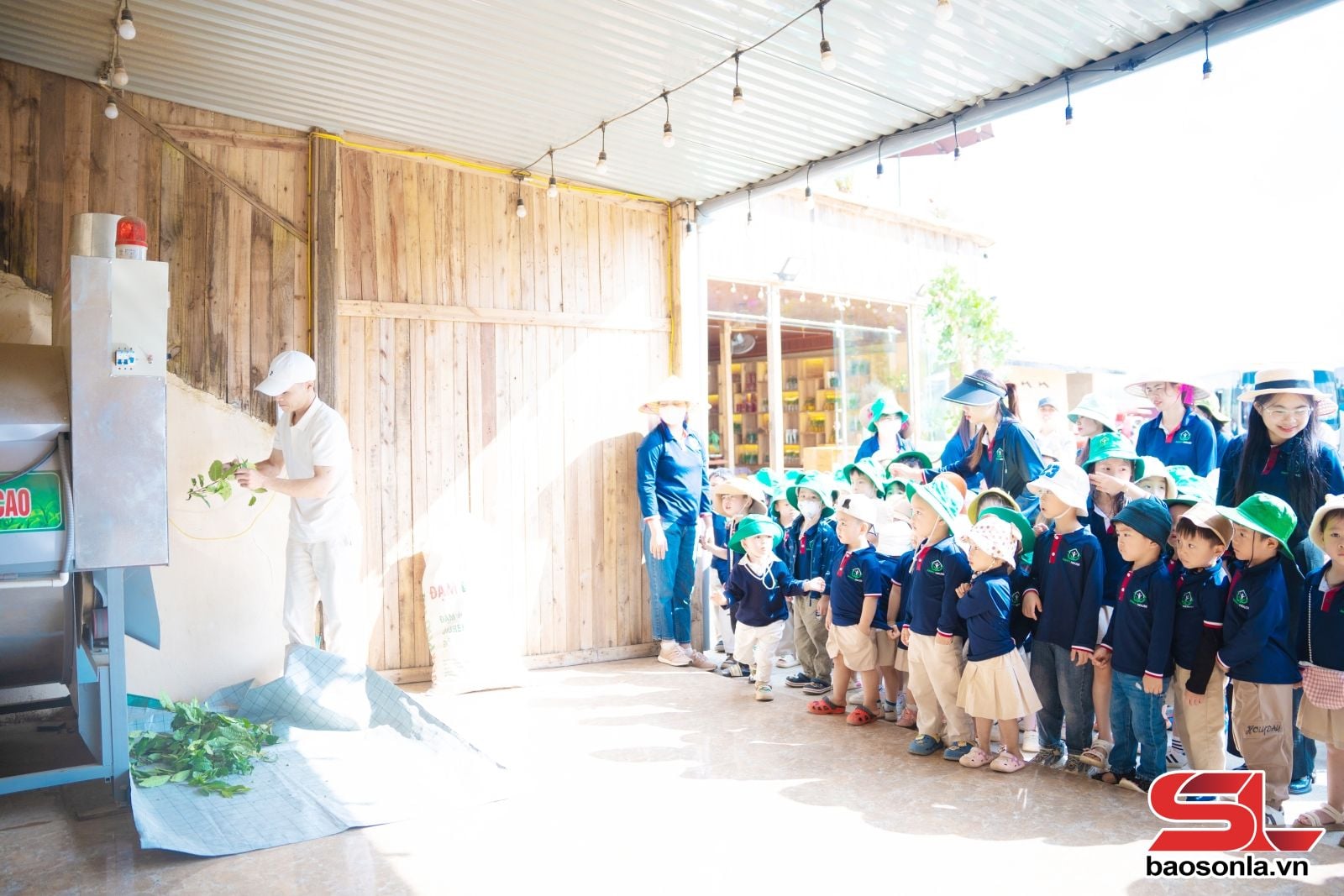
Meanwhile, in the Moc Chau plateau, with over 2,100 hectares of tea plantations, many well-invested ecotourism models have been developed, such as Vinatea Moc Chau's Tea Village, the Heart-shaped Tea Hill, the Fingerprint Tea Hill, the high-quality raw material area of Moc Suong Tea Company Limited, and Mocha Hill tea hill… These have become familiar destinations for domestic and international tourists. Here, the tea hills serve as both production sites and unique experiential spaces for visitors to explore, take photos, enjoy tea, learn about the process of planting, caring for, and processing tea; and discover the cultural beauty of the local ethnic groups.


Mr. Ngo Tien Huong, Director of Mocha Hill Tourist Area, said: "At Mocha Hill, visitors can experience picking tea buds themselves, learn about the traditional tea processing combined with modern techniques, and enjoy fragrant, pure cups of tea amidst a fresh natural environment. This model not only creates clean products but is also an effective way to promote tourism, contributing to the direct and vivid promotion of Moc Chau tea products to domestic and international tourists."
Tea growers in the Moc Chau plateau have focused on improving the landscape, helping tourists capture beautiful and memorable moments amidst the tea hills. Mr. Hoang Duc The, owner of the heart-shaped tea hill in residential area 1/5, Van Son ward, said: "Along with focusing on caring for and pruning the tea plants to create an attractive heart shape, we have also arranged tea-tasting spaces and offered rentals of local ethnic costumes. This both promotes the image of Moc Chau tea hills and provides farmers with a stable source of income from these supplementary services."
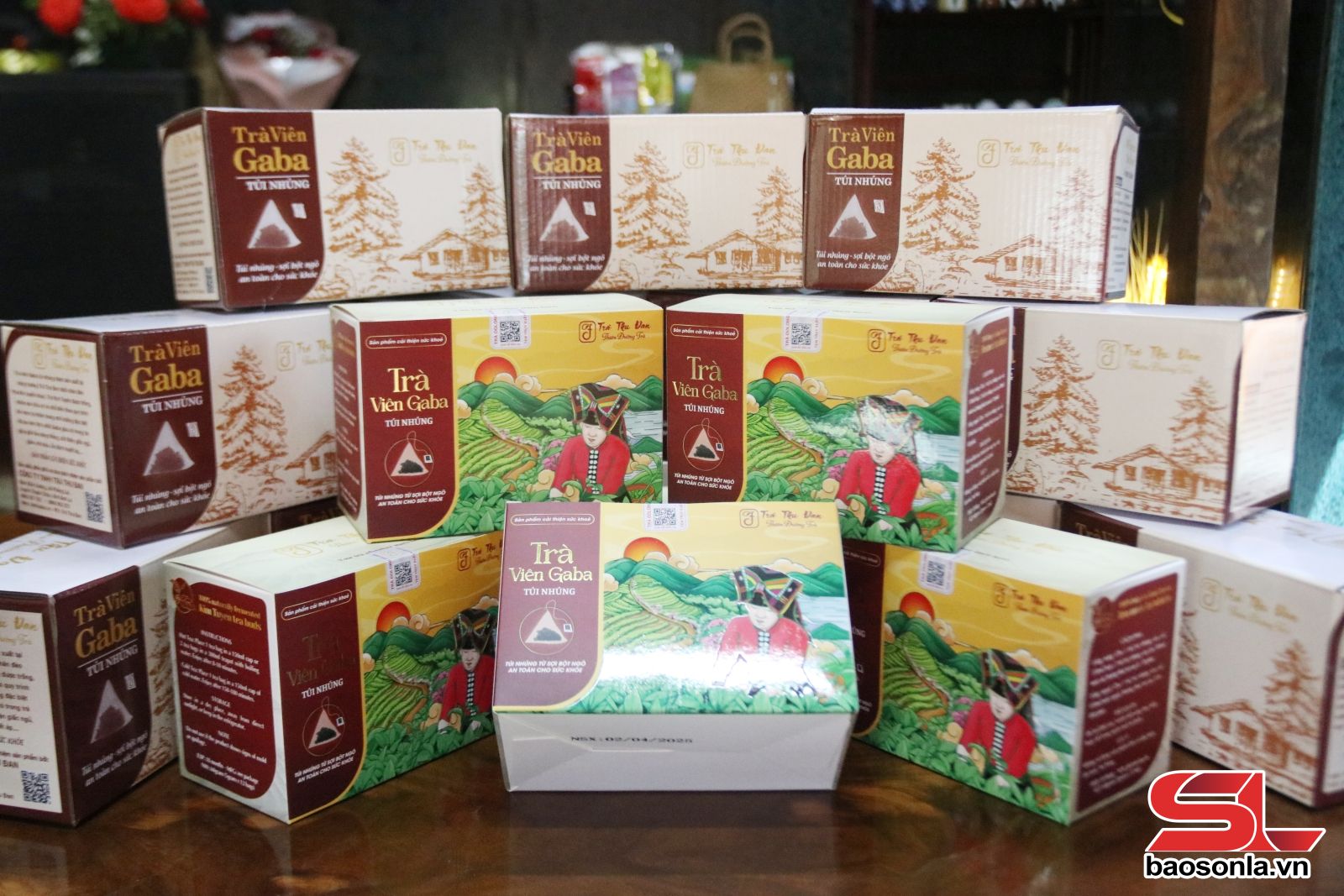
The province currently has 6,132 hectares of tea plantations, with an estimated annual production of over 56,000 tons of fresh tea leaves. These plantations are concentrated in communes and wards on the Moc Chau plateau, including Binh Thuan, Muong E, Phieng Cam, Ta Xua, Phieng Khoai, and To Mua communes. Many eco-tourism and experiential tourism products related to tea cultivation have been developed here. Visitors will be impressed by the lush green beauty of the tea hills and can participate in agricultural activities to experience life as a real farmer, from picking and processing tea to enjoying fragrant cups of tea.
Mr. Pham Hong Thu, Deputy Director of the Department of Culture and Tourism, said: In the coming time, the tourism industry will continue to promote the tourism potential of the tea-growing region; encourage businesses, cooperatives, and tea-growing households to invest in developing experiential service products, building tea-tasting spaces, accommodation services, cuisine, and gift products associated with tea to enhance attractiveness for tourists.


Tea plants are gradually becoming a bridge between agriculture, culture, and tourism. The connection between agricultural production and tourism development has contributed to increasing the value of tea and opening up a direction for green, sustainable economic development, creating long-term livelihoods for tea growers.
Source: https://baosonla.vn/du-lich/phat-trien-du-lich-sinh-thai-vung-che-hNtDmYbvg.html

![[Image] Ho Chi Minh City: Ma Lang area, Chicken-Rice Market about to change its appearance](https://vphoto.vietnam.vn/thumb/1200x675/vietnam/resource/IMAGE/2026/06/25/1782377698627_ndo_br_m1-jpg.webp)
![[Photo] General Secretary and President To Lam receives Palestinian Ambassador Saadi Salama](https://vphoto.vietnam.vn/thumb/1200x675/vietnam/resource/IMAGE/2026/06/25/1782365384740_a1-bnd-9423-8322-jpg.webp)
![[Image] Schools organize meetings and introduce teaching models to students admitted to grade 10.](https://vphoto.vietnam.vn/thumb/1200x675/vietnam/resource/IMAGE/2026/06/25/1782368077271_ndo_br_z7970052192242-1ec8daeb77a6eed1a4e9f58c564ddd3e-jpg.webp)






















![[Photo] General Secretary and President To Lam attends the 13th National Congress of the Ho Chi Minh Communist Youth Union](https://vphoto.vietnam.vn/thumb/1200x675/vietnam/resource/IMAGE/2026/06/25/1782356968989_ndo_br_1-jpg.webp)