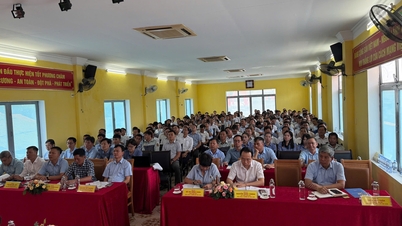
The plan to establish a counter-terrorism force was endorsed by the ECOWAS chiefs of staff at a meeting in February in Freetown, Sierra Leone.
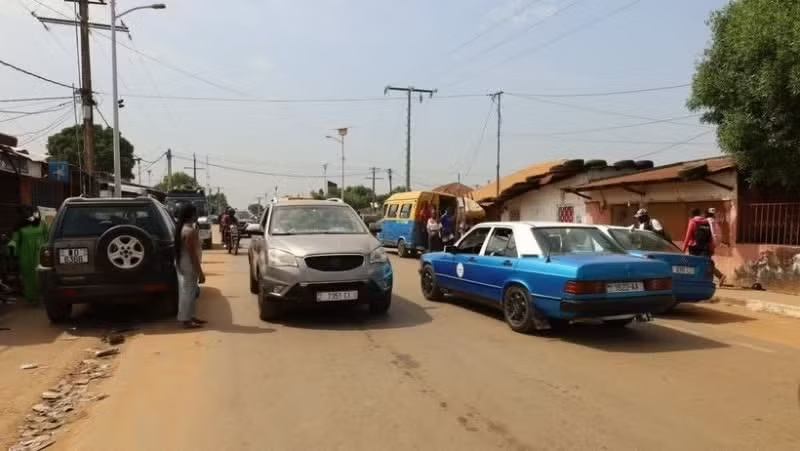
Although this notoriously impoverished West African nation has ended its civil war, it still faces significant security risks due to political instability, crime, and daily violence.
Therefore, regional military leaders have the idea of establishing ECOWAS' counter-terrorism force headquarters in Freetown, with the goal of mobilizing approximately 2,000 soldiers by the end of 2026 to counter extremist and jihadist armed groups.
According to the plan currently being discussed by ECOWAS member states, the initial core force will be a counter-terrorism brigade of 1,650 soldiers, placed under the direct command of the ECOWAS Reserve Force, ready to be deployed under a rapid response mechanism.
Previously, ECOWAS had announced what it considered an ambitious idea for a large-scale counterterrorism effort with an annual budget of approximately $2.5 billion. However, financial constraints prevented this bold idea from becoming a reality. ECOWAS had to shift to a more practical approach: building a small core force for early deployment.

Countries such as Benin, Cote d'Ivoire, Gambia, Ghana, Nigeria, and Senegal have declared their readiness to contribute troops, with units stationed within their own territories, on standby awaiting deployment orders.
However, analysts have consistently faced the biggest challenge in mobilizing funding, with many of Africa's previous security mechanisms, such as the Accra Initiative or the G5 Sahel Joint Force, being hampered by a lack of budget, logistics, and over-reliance on international aid.
In addition to financial issues, ECOWAS also needs to quickly resolve the political divisions in the region following Mali, Burkina Faso, and Niger's departure from the bloc to form the Sahel Union.
Military leaders of the bloc also acknowledged the need to maintain coordination with the aforementioned three-country alliance if they want to effectively control the borders and transnational operational areas of jihadist armed groups.
ECOWAS's push to establish a counter-terrorism force is essential, but it comes at a time when funding for UN peacekeeping operations is being drastically cut.
This is not only a "headache" for West Africa but also a difficult problem for the entire African continent. The tightening of aid from the United Nations is adding pressure to the security issue, as many hotspots in Africa still need international presence to maintain stability.
Furthermore, in addition to seeking funding, it is necessary to build security mechanisms that are appropriate to the realities of conflict in Africa, capable of harmonious coordination among countries, regions, and the international community. West Africa is currently one of the world's most serious terrorist hotspots.

ECOWAS's plan to establish a counter-terrorism force is seen as a crucial test of the region's future security autonomy.
Source: https://nhandan.vn/phep-thu-ve-nang-luc-tu-chu-post970324.html




![[Image] Ho Chi Minh City: Ma Lang area, Chicken-Rice Market about to change its appearance](https://vphoto.vietnam.vn/thumb/1200x675/vietnam/resource/IMAGE/2026/06/25/1782377698627_ndo_br_m1-jpg.webp)



























![[Image] Schools organize meetings and introduce teaching models to students admitted to grade 10.](https://vphoto.vietnam.vn/thumb/1200x675/vietnam/resource/IMAGE/2026/06/25/1782368077271_ndo_br_z7970052192242-1ec8daeb77a6eed1a4e9f58c564ddd3e-jpg.webp)