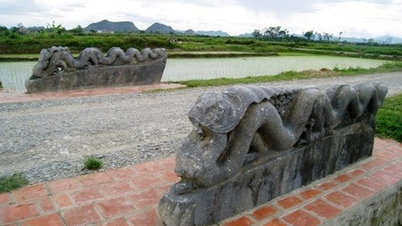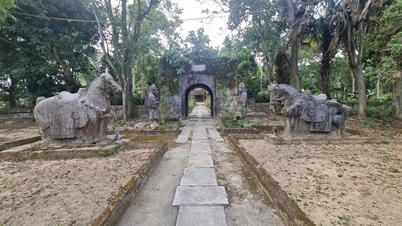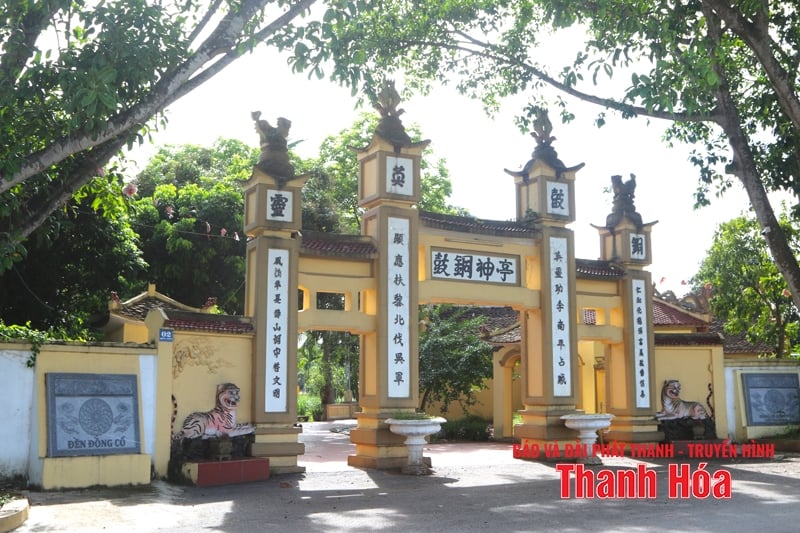
The Đồng Cổ temple is located in Mỹ Đà village.
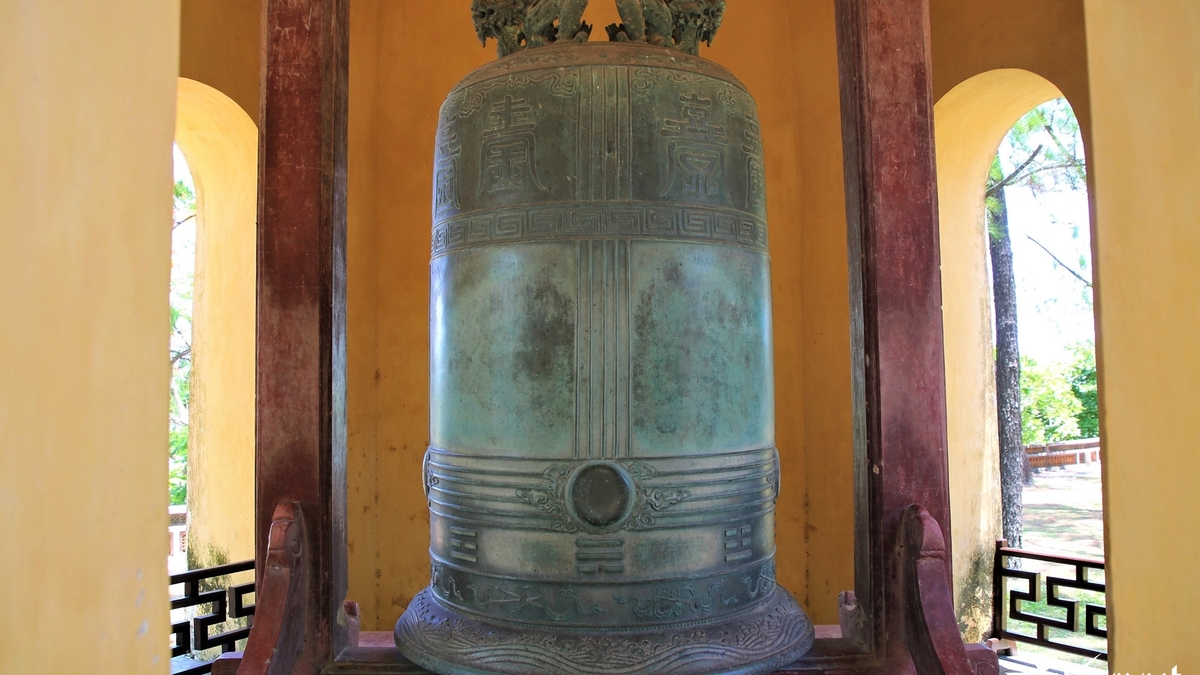
My Da is an ancient land in Hoang Hoa district. Long ago, it was known as Ke Co, isolated from other villages in the commune. To reach the village, one had to follow winding paths across the Tam Tong rice fields – once a vast, sprawling rice paddies. My Da village was once considered a region of "prosperity and abundance, with bountiful rice crops." Previously, My Da village had a Confucian temple and a three-chambered pagoda dedicated to Buddha. The pagoda housed five precious wooden Buddha statues, a bronze bell, and many other artifacts. However, over time, the pagoda disappeared, leaving only a natural well; the Confucian temple also vanished, leaving only a stone pedestal. Only the Dong Co temple, having weathered the vicissitudes of history, remains standing at the edge of the village, becoming a spiritual anchor for generations of its inhabitants.
The Dong Co Temple in My Da village is a historical and cultural relic of significant spiritual and traditional value in nation-building and national defense, associated with the legend of the divine Dong Co deity's "manifestation." Legend says that in 1020, Prince Ly Phat Ma (son of King Ly Thai To) led his army to fight the southern invaders. Passing through Hoang Hoa, he arrived at My Da village at midday when suddenly a fierce storm with thunder and lightning struck, preventing his troops from advancing. The Prince ordered his army to rest there. Looking around, the Prince noticed the terrain resembled a lotus flower, considering it an unusual occurrence, so he ordered his attendants to set up an altar for a sacrifice. That night, the divine Dong Co deity appeared, declaring: "I am the Mountain God Dong Co, accompanying the king to suppress the rebels. Now, seeing this sacred land, I have manifested myself," before disappearing. On the day of battle, during the fighting, the sound of bronze drums resounded, and the Vietnamese army achieved a great victory. Upon their triumphant return, the Prince feasted his troops at My Da village. In remembrance of the deity's merits and the sacredness of the My Da region, the imperial court issued a decree to the village, instructing the people to build a temple. The king bestowed the honorary title of "Supreme Blessed Deity" upon the deity, and it has been worshipped for a thousand years. Through countless historical events and the ravages of nature, the Dong Co Temple no longer exists, but its architectural scale remains. Around 2000, the temple was restored. In 2004, the Dong Co Temple was classified as a national historical and cultural relic.
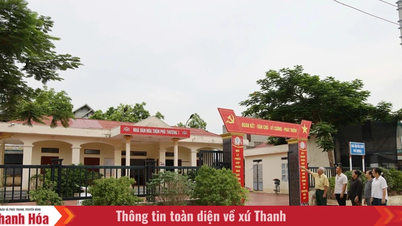
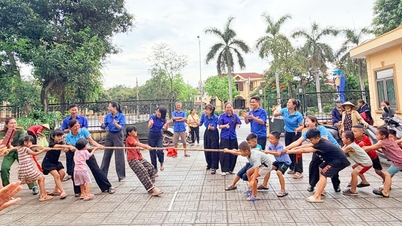
According to Le Viet Von, Party Secretary and Head of My Da village, “For a long time, Dong Co Temple in My Da village has been a place of spiritual and cultural activity for the people in the area. In particular, the Dong Co Temple Festival, held on the first day of the second lunar month, is a major festival for the village. In 2023, the villagers generously contributed to repairing the temple grounds, surrounding fence, replacing roof tiles, and re-laying the interior floor. That same year, the villagers were all delighted when the My Da village gate was built with funds contributed by the villagers and their children living away from home. The beautiful architecture added vibrancy to the village. At the same time, the villagers voluntarily exchanged agricultural land behind the village gate to consolidate it into a single plot, creating a land reserve for the future construction of a landscaped village area. Along with government incentives, the villagers also contributed over 550 million VND to build drainage ditches and roads to improve the landscape of their homeland.”
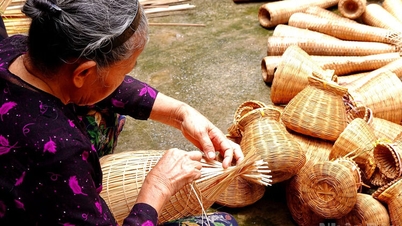
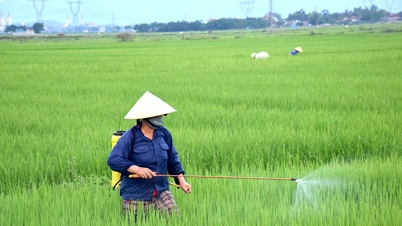
My Da village currently has 388 households with over 1,400 inhabitants. The younger generation works in factories, while the older generation diligently works in the fields. Many of the villagers' children have achieved academic success and become accomplished individuals. In the course of development, the most valuable aspect is the strong community connection; the shared customs, traditions, and culture of the villagers are always preserved and promoted. In particular, the village has undergone a significant transformation since the implementation of the New Rural Development program.
From here, My Da, along with other hamlets of Hoang Duc commune, will merge with But Son town and the communes of Hoang Dong, Hoang Dao, Hoang Ha, and Hoang Dat to form a new commune called Hoang Hoa. The concerns arising from this change also carry the hope for a space of development in the new phase. Regardless of the changes, the ancient cultural features and historical imprints of this land will surely continue to be preserved and promoted. So that the village will always remain a place to remember, to love, a place to return to, as the inscription on the village gate reminds us: "Welcome the descendants back to the village to gather / We honor our ancestors in this place of reunion."
Text and photos: Minh Hien

Source: https://baothanhhoa.vn/phia-sau-cong-lang-253498.htm