

Cleanliness is essential for welcoming guests, and cleanliness is also important for ourselves.
In early June, we were in Cua Lo ( Nghe An province ) preparing for the national environmental event. It was incredibly sunny. The sun gilded the sea, blazing down on the endless stretch of sand, making each grain of sand sparkle like glass. And the wind, strong and salty, swept through the casuarina trees.
In the sunshine and breeze, Cua Lo emerged with the expansive and bustling appearance of a tourist city. And, it was truly moving to see banners and flags fluttering along the wide avenues leading to Binh Minh Square (Cua Lo). The seaside town seemed to be joyfully awaiting a series of national events on the environment and the ocean, with the highlight being the art program "Vietnamese Sea - A Journey to Green Space".
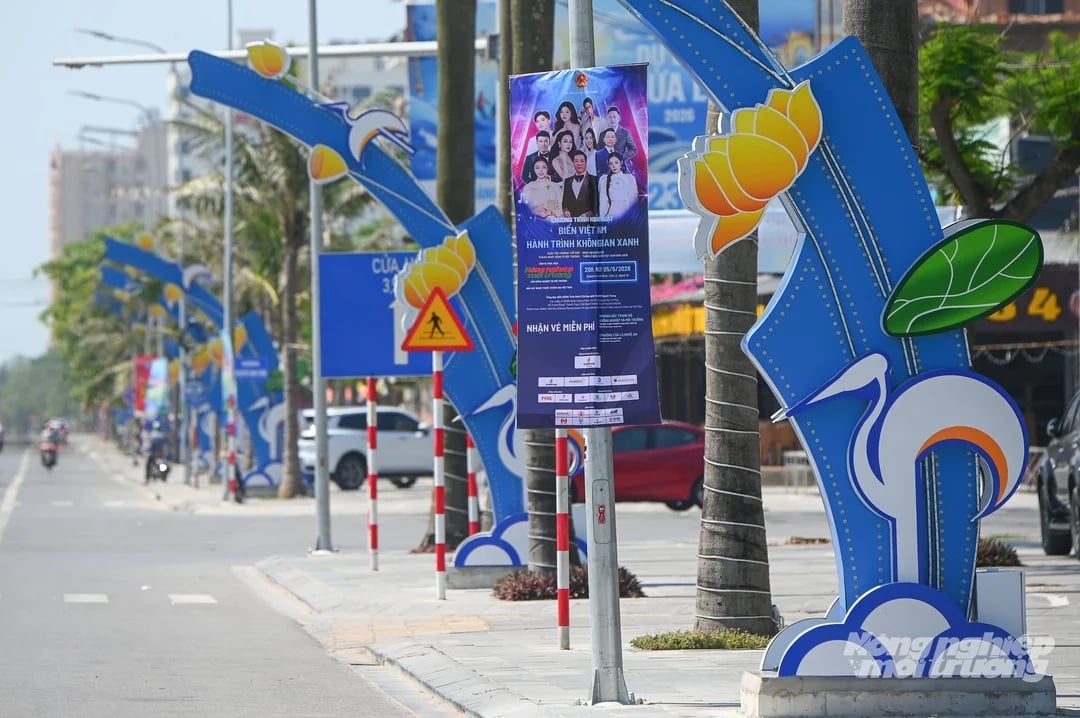
The coastal roads of Cua Lo are decorated ahead of the art program "Vietnamese Sea - A Journey to Green Space". Photo: Dinh Tung.
From a coastal town, after administrative reorganization, Cua Lo ward was formed by merging Nghi Hai, Nghi Hoa, Nghi Huong, Nghi Tan, Nghi Thu, Nghi Thuy and Thu Thuy wards, carrying with it the spirit of a coastal city reaching out to the wider world.
Under the breezy eaves, over cups of slightly bitter green tea, the lively conversation among the locals revolves around the upcoming music night. "Thousands of tickets sold out in a flash, it'll be packed," "All famous singers and actors ," "They're practicing intensely, singing about the pandemic and the environment too, that's what makes it so intriguing..." The women whispered to each other. They talked about the expected influx of guests, the magnificent stage being prepared for the artistic program...
But it's not just excitement; these ordinary people are rolling up their sleeves to make the seaside town greener in preparation for the event. Main roads and small alleys are being cleaned up, and shops are tidied up. Every yard and street corner in front of houses is also neater and cleaner. People in Central Vietnam in general, and coastal residents and the people of Cua Lo in particular, are known for their kindness and hospitality. This hospitality is always shown through actions: cleaning up their "houses" to welcome guests and cleaning up their homes to support the event. Ms. Ha Thi Nga (a business owner in Cua Lo ward) said: "The people from far away came to promote the preservation of the sea and the environment, and even brought music to entertain us. We have a responsibility to make the beach, the streets, and our houses cleaner to show our gratitude."
This spirit spread to the fishing ports as well. At Nghi Thuy fishing port at 4 am, life was already bustling and hectic. Traders from all directions flocked in, and the fishermen's boats, having arrived overnight, lined up to dock. Baskets of fresh fish and trays of squid were hastily passed from hand to hand. Around 9 am, when the market quieted down, the docks gradually returned to a peaceful atmosphere. Surprisingly, the streets were free of litter or the suffocating smell of fish. This cleanliness and tidiness were partly encouraged by the atmosphere of the upcoming event, but more importantly, it didn't happen by chance; it was the result of a persistent journey to change old habits.
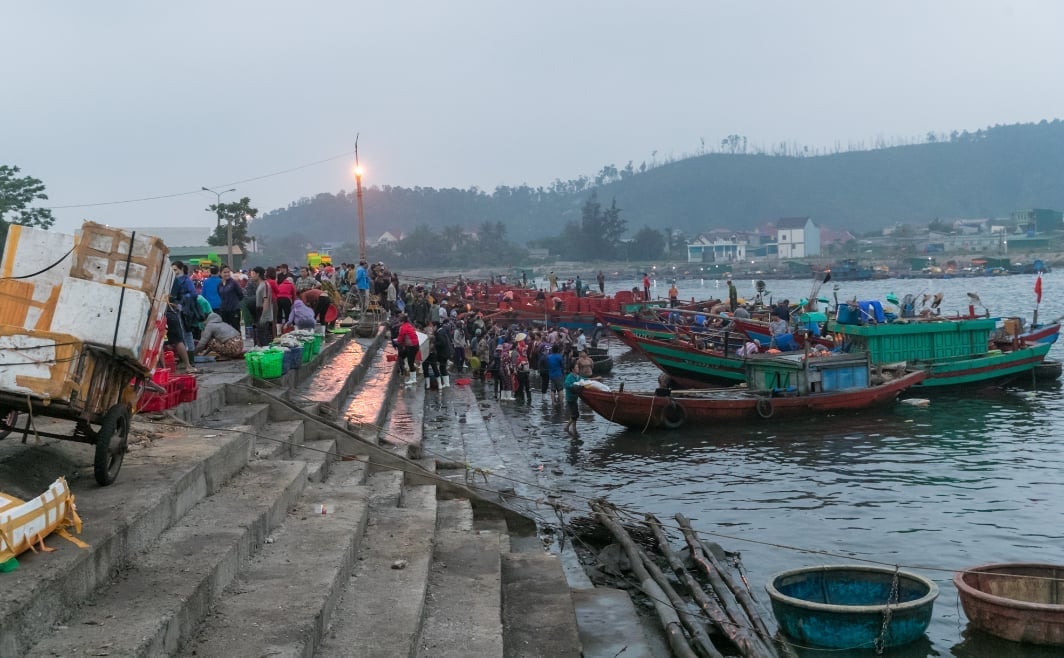
At Nghi Thuy fish market in the early morning, buyers and sellers bustle about. Photo: Hoang Trinh.
When talking about keeping the village roads, alleys, and docks clean in Doan Ket Hamlet, people immediately mention Mr. Phung Ba Huynh (born in 1962). This sun-tanned man from the coastal area has spent many years diligently and quietly collecting discarded plastic bags and styrofoam containers that drift ashore after each high tide. Formerly the head of Yen Dinh Hamlet, he has always been deeply concerned about community affairs. From a messy, makeshift garbage dump, he mobilized and worked with the villagers to clean it up and transform it into a spacious volleyball court for young people. He and his neighbors also planted over 50 trees that provide shade around the community center with their own money. Not only did he contribute labor, but he also pioneered the demolition of his fence and voluntarily donated 7 square meters of his family's land so that the hamlet could have a wide, clean, and beautiful concrete road.

"When working together, don't think about personal gain or loss. We live by the fish market, and every day we see trash floating in. If the roads are dirty, our people suffer first. If everyone makes a little effort and reminds each other a little, the neighborhood will become clean and beautiful, and our children and grandchildren will benefit," Mr. Huynh shared.
If you live clean, you should eat even cleaner.
The man piqued our curiosity, so we decided to follow him all the way home to avoid interrupting our conversation. Turning away from the fish market and entering Mr. Huynh's family production facility, we stepped into a space permeated with the aroma of fish sauce. In the sun-drenched courtyard, dozens of earthenware jars and sealed plastic containers sat side by side, each holding the essence of the vast ocean.
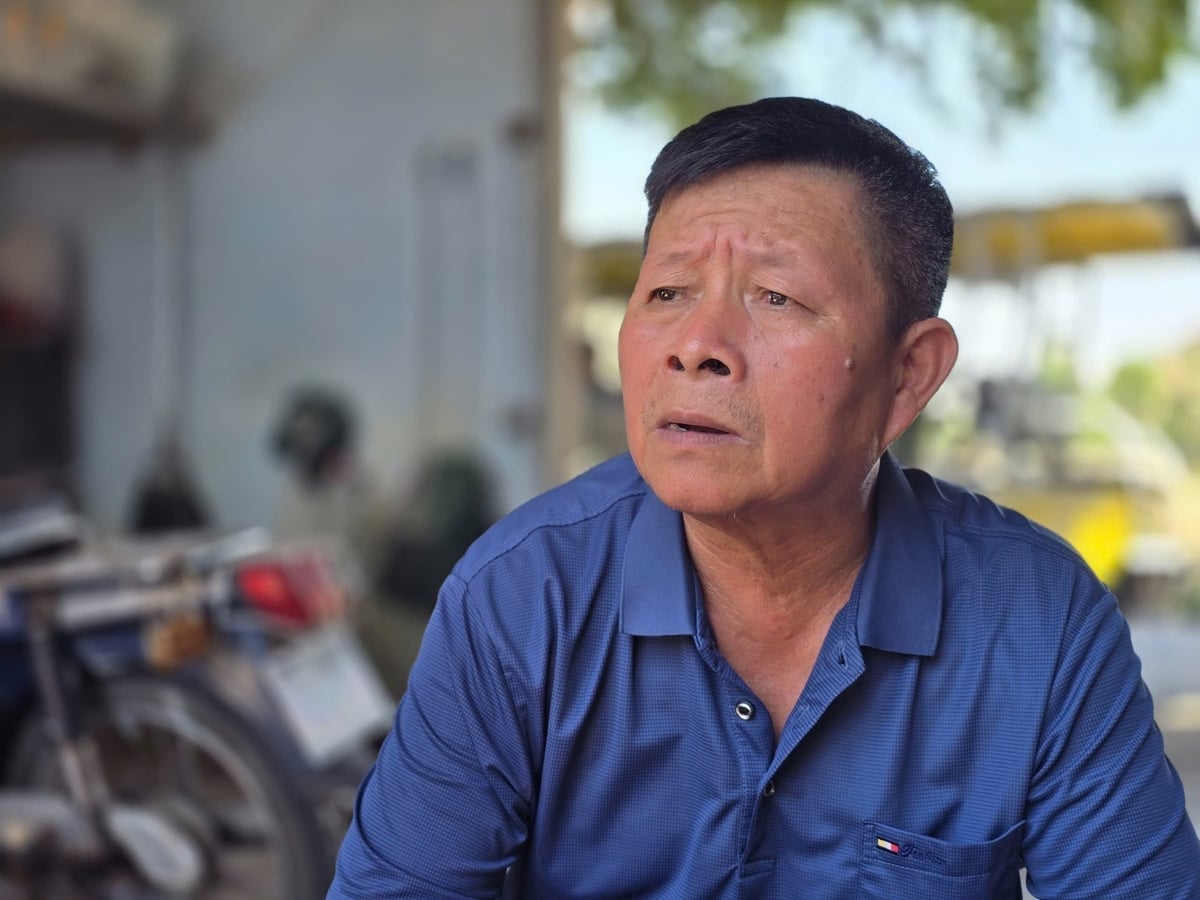
Mr. Pham Ba Huynh, residing in Doan Ket Hamlet, Nghi Thuy fishing village, Cua Lo ward, shared his journey of transforming the appearance of the docks and fishing village. Photo: Xuan Ha.
Recounting his family's traditional craft, Mr. Huynh said that, counting from his generation to his children's, there have been three or four generations involved in the trade, and he can't even remember the time of his great-grandparents. He only knows that extracting a single drop of delicious fish sauce requires meticulous effort and patience. From the raw materials stage, everything must be carefully selected; the fish caught must be fresh and whole.
The sea salt, once purchased, is not used immediately for marinating. It must be left to absorb the bitter taste, leaving only the mild, pleasant saltiness. Once the fish and salt are in the fermentation tank, the fishmaker must adjust the care according to the weather. In the hot summer, when the water evaporates quickly, less salt must be added; in the colder winter, more is added to maintain the fish sauce's quality.
They regularly expose the fish to the sun and stir it vigorously for one to two years. Only when the fermentation vats begin to release glistening drops of fish sauce, with its naturally sweet and mellow flavor of sea fish, do the producers truly breathe a sigh of relief and confidently welcome a batch of perfectly flavored fish sauce.
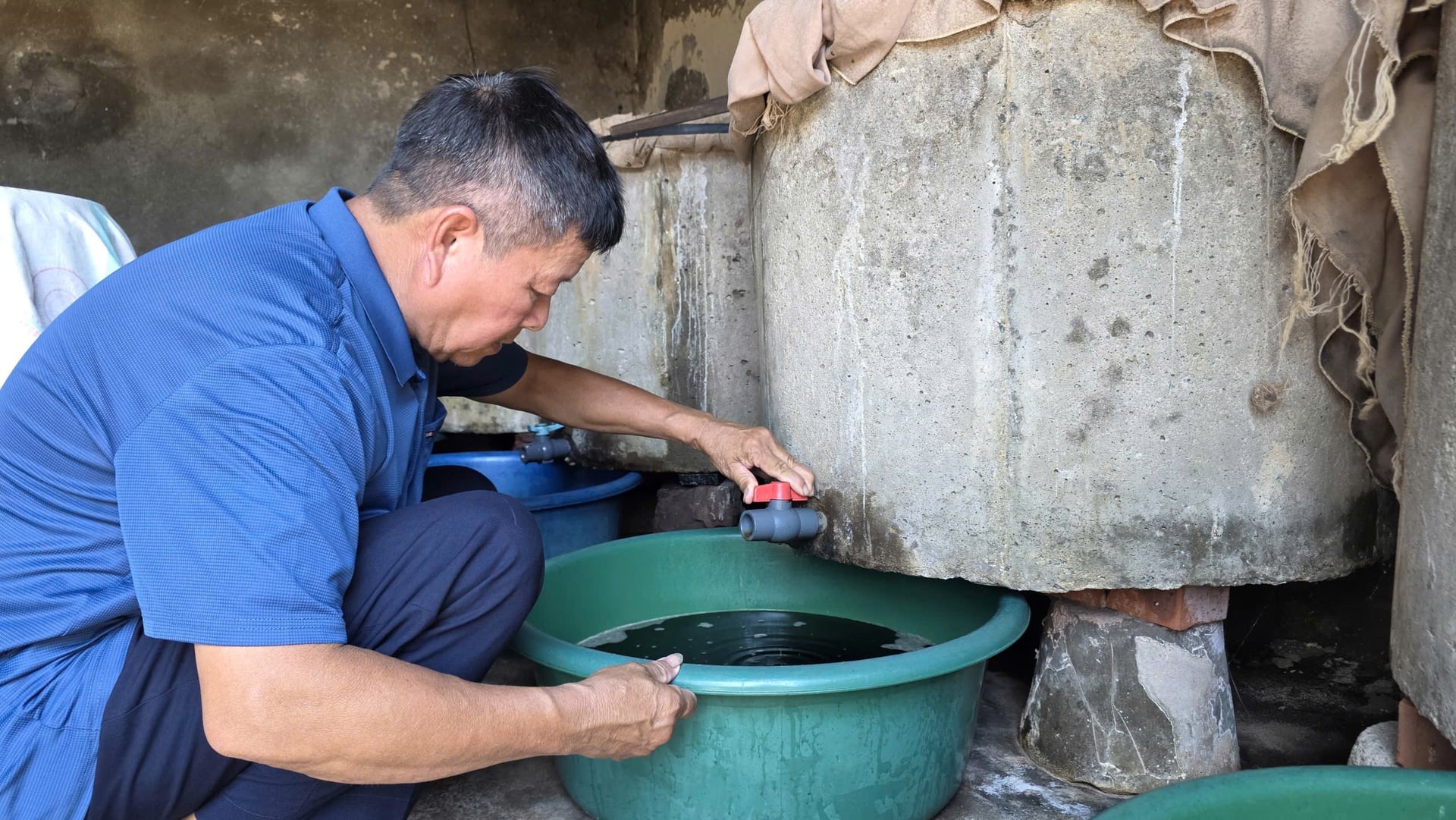
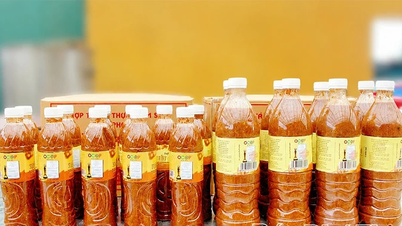
Mr. Phung Ba Huynh inspects and filters traditional fish sauce at his family's processing facility. Photo: Tu Thanh.
While preserving and promoting the value of traditional handcrafted fish sauce making, the fishermen in the village absolutely refuse to close the doors to outdated practices. Their spontaneous, casual way of doing business is lagging behind the strict standards of the new era. Regularly each year, Mr. Huynh's facility and those of his neighbors participate in training courses organized by local authorities and specialized agencies. From covering and drying the fermentation tanks, cleaning the filters and fish-catching tools, to collecting and treating wastewater from the processing plant, everything must be done meticulously, ensuring both food safety and hygiene standards as well as protecting the coastal environment.
"This profession requires dedication and hard work. The fish must be fresh, the salt must be just right, and the fermentation process must be meticulous so that the fish sauce tastes naturally sweet. Even in this traditional craft, cleanliness, maintaining reputation, and protecting the environment are essential for customer trust and for future generations to want to continue the trade," Mr. Huynh explained.

Thanks to that strictness, orderliness, and neatness, Mr. Huynh's family's fermentation yard is not only a production site but also an interesting stop. In Cua Lo, passing by the neatly stacked fish sauce fermentation vats, inhaling the fragrant aroma of fish sauce under the sun, and listening to the artisans tell stories about their traditional craft, tourists are delighted by this simple, endearing aspect of the coastal people's culture.
The majority of the fish sauce produced by Mr. Huynh's family is sold wholesale. Traders' trucks come directly to the yard to pick up the goods, then distribute them to markets throughout the province and beyond. By consistently maintaining his reputation, this arduous profession has brought him a decent income. In good years, after deducting expenses, his business earns around 500 million VND. Even in years with fluctuating prices, the family still manages to secure a profit of over 300 million VND. This money allows his children and grandchildren to confidently continue the family business and provides stable employment for several workers in the neighborhood.
The story of Mr. Huynh's family and the coastal town of Cua Lo's environmental protection begins with a sincere mindset and small actions in daily life and production. A clean street or alleyway is not just for welcoming tourists, but for themselves as well; a clean drop of fish sauce, a garbage-free dock... all contribute to preserving the sea. A tourist town like Cua Lo, wanting to thrive, needs more than just bustling infrastructure and convenient services; it also needs to be green, clean, and safe. This is the most genuine invitation to tourists and a way to elevate the value of a transforming tourist town.

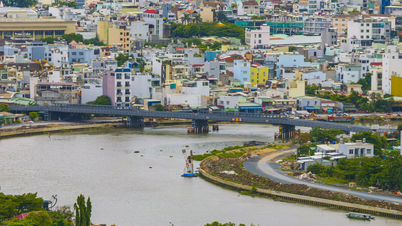
A view of Cua Lo. Photo: Nghe An Newspaper.
Source: https://nongnghiepmoitruong.vn/pho-bien-cua-lo-da-thuc-xanh-d814812.html














































![[Video] Sunset at Lap An Lagoon – Where the sun sets over the fishing nets](https://vphoto.vietnam.vn/thumb/1200x675/vietnam/resource/IMAGE/2026/05/31/1780192137701_beach-landscape-sea-water-nature-grass-745871-pxhere-com.jpeg)


























Comment (0)