

Ask:
I understand that if facial nerve paralysis (cranial nerve VII) is detected late, the chances of a cure are low. Could you please advise on how to identify this condition and how it is treated?
Nguyen Hoang ( Hanoi )
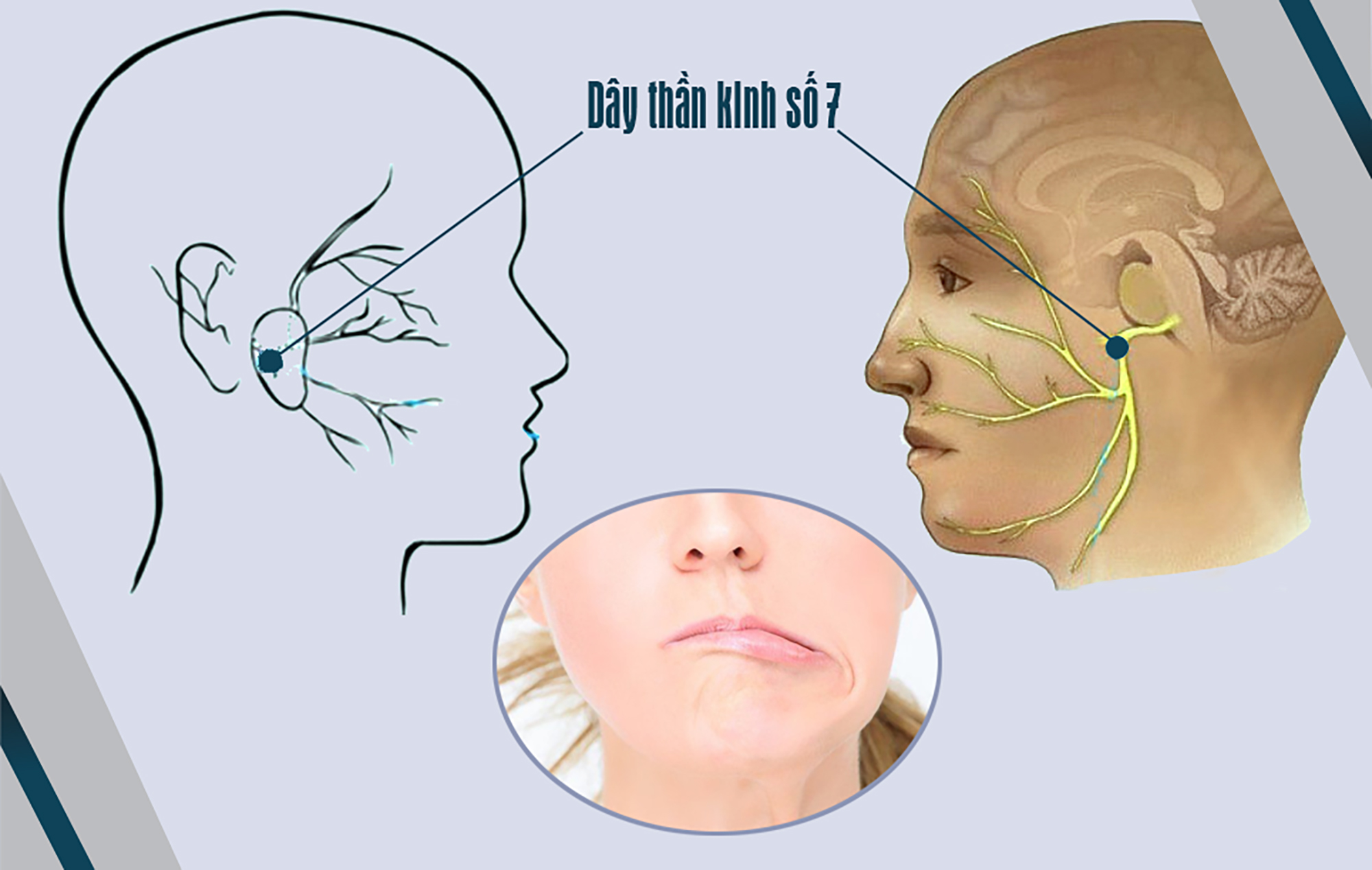
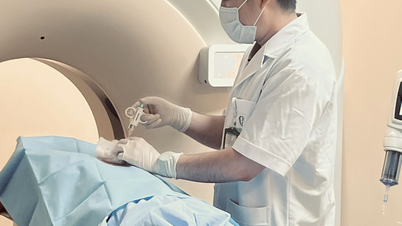
Illustrative image.
MSc. Dr. Hoang Duy Luan, Department of Traditional Medicine, Bach Mai Hospital, answers:
Peripheral facial nerve palsy (facial paralysis) is a syndrome involving damage to the seventh cranial nerve. This results in reduced or lost movement of the facial muscles (total facial paralysis). The condition can occur at any age and is caused by various factors.
Up to 80% of cases of facial nerve paralysis (cranial nerve VII) are caused by sudden exposure to cold or wind. In addition, the condition can be caused by other factors that compress the nerve, leading to swelling and inflammation, such as untreated mastoiditis, shingles, trauma, or surgical effects in the temporal, mastoid, facial, or ear regions.
The symptoms of peripheral facial nerve palsy (cranial nerve VII) are also easily recognizable and common, ranging from partial to complete paralysis of one side of the face, progressing over hours or days, including: Inability to close the eye completely, tearing; Reduced or absent forehead wrinkles and nasolabial folds; Water leaking from the corner of the mouth on the affected side when rinsing, food getting stuck between teeth and in the cheek; Numbness on half of the face, around the jawbone, or behind the ear; Headache, increased sensitivity to sound in the affected ear; Reduced taste sensation in the anterior two-thirds of the tongue on the affected side, accompanied by decreased saliva and tear production.
Facial nerve paralysis (cranial nerve VII) requires early detection, timely and proper treatment; otherwise, it will take longer to heal and may cause various complications.
In addition to modern medical treatments such as corticosteroids, high-dose vitamin B, and nerve conduction enhancers, patients will receive combined therapy using acupuncture, moxibustion, massage and acupressure, hydroacupuncture, thread embedding, herbal decoctions, and cupping therapy. Each method is flexibly prescribed to suit each patient and each stage of the disease to achieve the best results.
To prevent this, you should exercise daily to improve blood circulation. During hot weather, when going to bed, avoid turning on fans or air conditioners so that cold air doesn't blow directly on your face or the back of your neck. It's also important to note that you shouldn't shower late at night, especially in winter. After showering, you must dry your hair thoroughly before going to bed or going outside.
Source: https://www.baogiaothong.vn/phong-ngua-liet-day-than-kinh-so-7-cach-nao-192241202235949997.htm


































































































Comment (0)