

TP - Some people who have been away from Saigon for decades ask if the old charm of Saigon still remains? What's so great about Saigon in the 21st century? Meanwhile, some people who have been away from Saigon for only a few years are already asking what's new in the city? Even those who live in this city every day are wondering what makes Saigon so attractive to locals and visitors alike?
I'm the same; born in Saigon, I've spent more than half my life here, and my address is still in Ban Co, District 3. Yet, sometimes I absentmindedly wonder what is so unique about this metropolis that attracts me and so many generations, near and far, to be so attached to it?
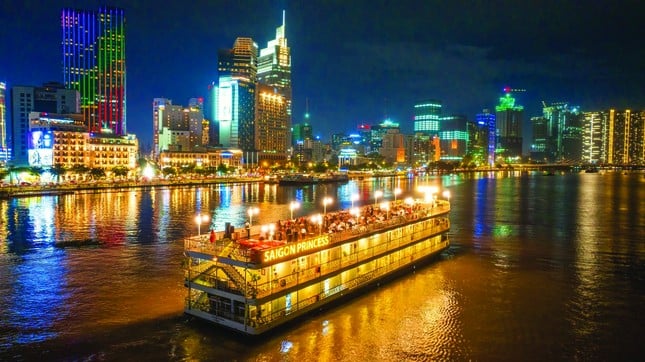 |
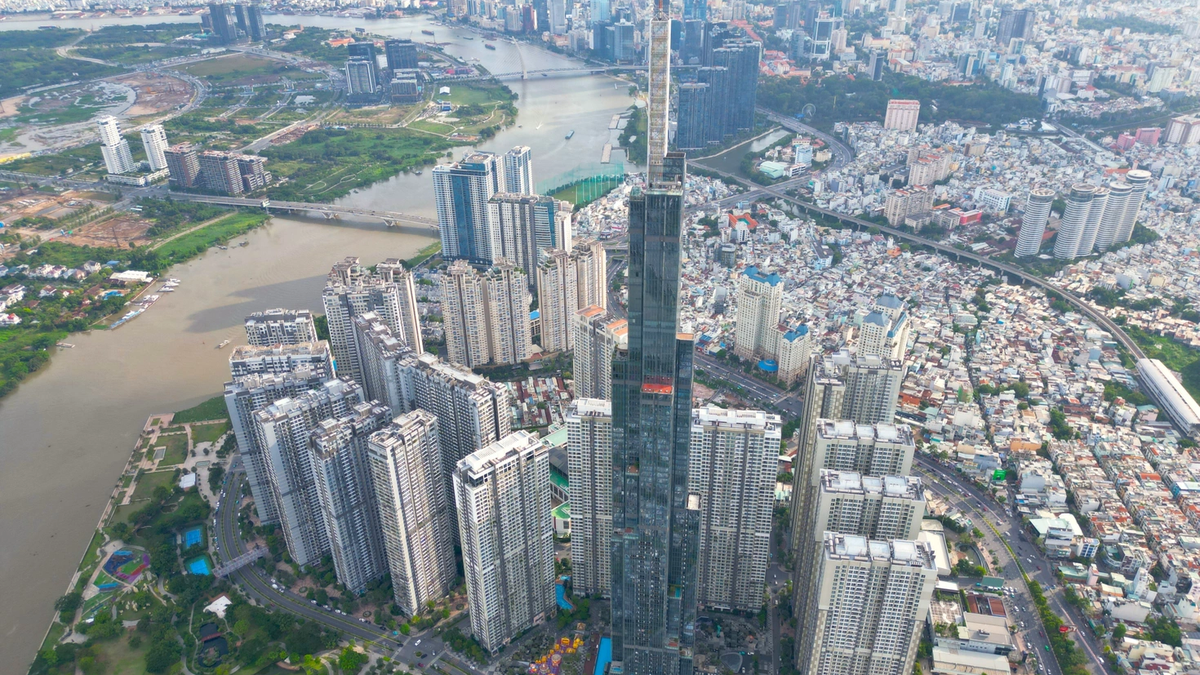
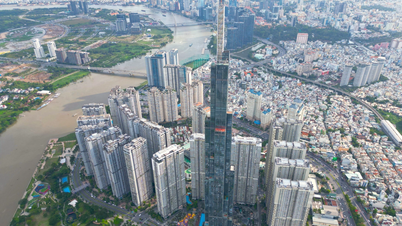
The Saigon River in the heart of Ho Chi Minh City. Photo: Phuc Le |
Loving Saigon is like loving a beautiful woman.
Loving Saigon is like loving a beautiful woman; it can begin with "love at first sight" from its stunning location or its natural and architectural beauty. The Saigon River, with its vigorous, graceful curves connecting the Dong Nai region to the sea, provides a natural advantage. Without the Saigon River, there would be no Ben Nghe or Ben Bach Dang, the vast waterfront where Vietnamese people "stopped at the wharf" (as in Y Van's immortal song "Saigon is so beautiful") since the 17th century. There would be no lush, wild Thu Thiem peninsula, now awakening to become a modern city. There would be no Can Gio estuary connecting to the ocean and the outside world . There would be no system of rivers, canals, and waterways spreading to the Mekong Delta rice granary and connecting to Cambodia, Thailand, and Lower Laos.
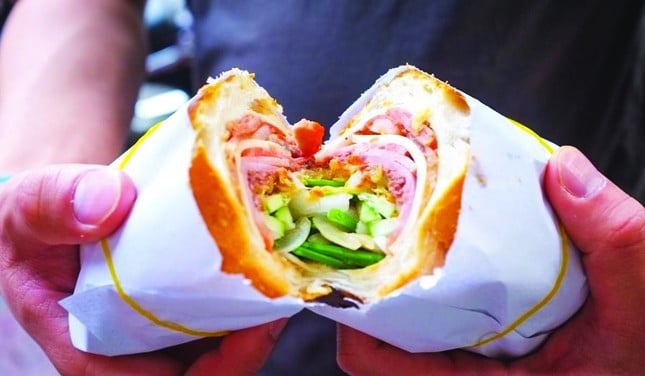 |
Bread |
On the other hand, after numerous wars, Saigon no longer has the Gia Dinh Imperial Citadel (1790) and many ancient Vietnamese architectural structures like those of Thang Long - Hanoi. However, Saigon boasts many beautiful urban landscapes and architecture, reflecting the cultural fusion of East and West since the mid-19th century. Visiting Saigon, remembering Saigon, one cannot forget the image of Ben Thanh Market with its massive, unique clock tower. One cannot forget Notre Dame Cathedral – the "pink heart in the city" – and the "city hall castle" (the headquarters of the People's Committee). Next are the Post Office, Gia Long Palace (City Museum), the Nguyen Hue - Le Loi roundabout, the Independence Palace, and the Opera House. And then there's the Thu Ngu flagpole, Nha Rong Wharf, the Mausoleum of Ông, Tao Dan Garden, and the Zoo. These are structures that have long been "ranked in the hearts of the people" as beautiful heritage sites that cannot be lost!
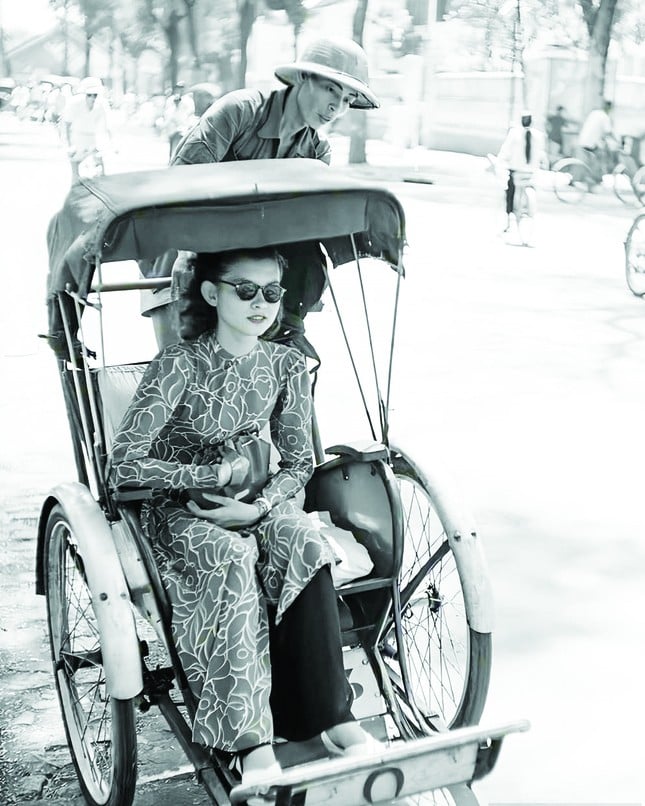 |
Old Saigon cyclo |
A convergence of customs and traditions from all corners of the world.
Many people are drawn to Saigon because of its unique eating and living habits, rarely found in other cities. Let's not even talk about food; let's talk about drink. Original Saigon didn't have the habit of sipping a hot cup of tea in the morning. In both rainy and sunny seasons, adults, from intellectuals to laborers, started their day with coffee, most commonly iced coffee. Coffee was introduced to Vietnam by the West, originating in Saigon. But Saigon coffee has a unique blend, a rich and diverse blend of influences. First and foremost is "phin coffee," the authentic Parisian style, a tradition now lost in France itself.
People in the West only drink hot black coffee or café au lait (coffee with fresh milk). Saigonese people don't stop there; they make iced coffee, coffee with condensed milk, and coffee with butter. But Saigon is also famous for its "filter coffee," "super-sized coffee," and "traditional Chinese medicine coffee," originating from Cholon. Saigonese people don't hesitate to order a small cup of "xay chung" (a small cup of black coffee) or a "bac xiu" (less coffee, more milk) when they go to a cafe. In recent decades, Saigon has added "machine-made coffee," "salted coffee," "egg coffee," and most recently, "durian coffee," imported from various places.
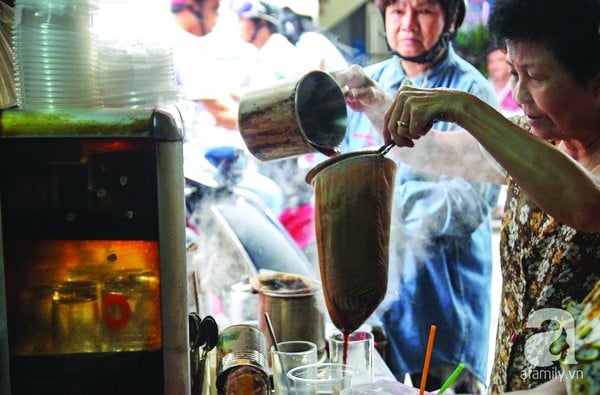 |
Vietnamese filter coffee |
After coffee, we must mention bread, theater, books, cinema, and today, the Internet. Food, drinks, and cultural media from anywhere are adapted and "recycled" in Saigon. Saigon is not a rural area or a garden city, but a major industrial and service city. It is a melting pot of talent and resources from all corners of the country, creating many innovative products and consumer tastes that spread throughout the nation. Saigon "plays and learns" from people of all three regions of Vietnam, as well as the French, Chinese, Indians, and the indigenous Khmer and Cham people. In cuisine , language, religion, and culture in general, many elements blend and merge harmoniously, becoming the essence of Saigon, always fresh, diverse, and not conservative.
Integration and Inclusivity
Saigon's charm also lies in the free-spirited atmosphere of a major city, a hub of trade and interaction with the world from a very early age. From the time of their migration to this new land, Saigonese people knew how to live harmoniously with both locals and newcomers. They knew how to support and protect each other in the face of natural and historical adversities. They knew how to fight against foreign invaders, how to resist injustice, and at the same time, how to love and be tolerant of their fellow countrymen and women. This character was evident from an early age in the story of Mr. Thu Hoang – who voluntarily built a raft and set up food and supplies for free at the river junction. This was a "zero-cost supermarket," to use contemporary Saigon terminology, giving birth to the simple yet meaningful name "Nha Be" (Raft House).
In the 21st century, Saigon continues to be Vietnam's largest immigration hub, a magnet for livelihoods and entrepreneurship for Vietnamese people. It's also a convergence point for various flows of money, technology, talent, and new cultural and artistic influences. The unique character of Saigon has been enriched and refined, creating a vibrant and diverse humanistic life. If you don't know how to enjoy it, inherit its richness, and contribute to its development, then you're not a true Saigonese citizen or a genuine lover of Saigon!
My Saigon, and our Saigon, continues to struggle amidst unprecedented challenges. Therefore, it is essential to cherish and mobilize the good qualities we already possess, learning from them and utilizing them to overcome the multifaceted difficulties we face when confronting climate change, massive population growth, traffic congestion, urban pollution, and unbalanced development.
My Saigon, and our Saigon, continues to struggle amidst unprecedented challenges. Therefore, it is essential to cherish and mobilize the good qualities we already possess, learning from them and utilizing them to overcome the multifaceted difficulties we face when confronting climate change, massive population growth, traffic congestion, urban pollution, and unbalanced development.
Source: https://tienphong.vn/phong-vi-sai-gon-post1633537.tpo

























































Comment (0)