

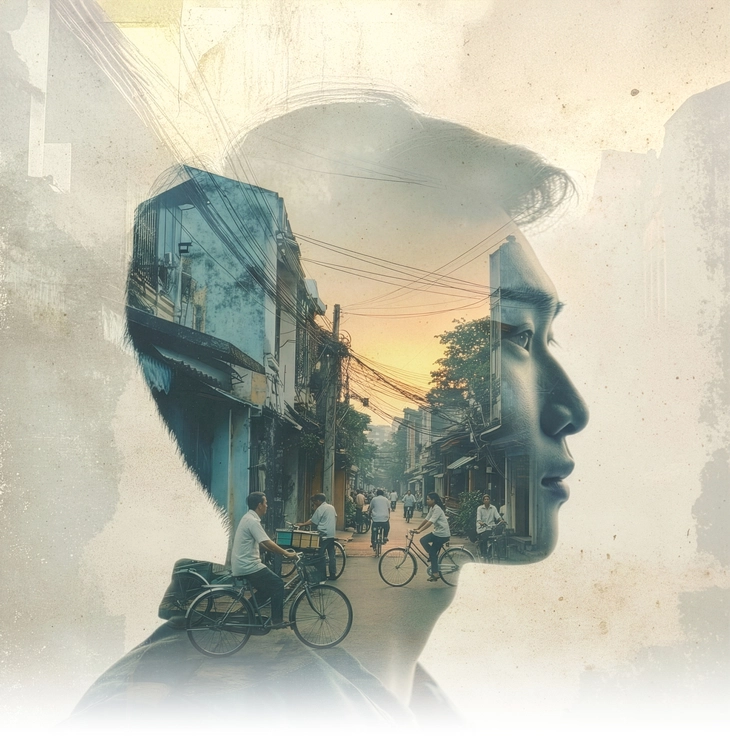
Illustration: THIEN BAO
Houses stretched endlessly, one after another. I told Hoanh, my friend who was with me, that perhaps no city on Earth had as many alleys as this one. Hoanh laughed and said he didn't know either. Maybe it was due to family circumstances and the times that people flocked here.
Reading the documents, I learned that previously the entire Saigon area had less than two million inhabitants. Then the war spread, and many people evacuated. Houses sprang up. The alleys lengthened and became more numerous. They didn't follow any specific plan. Over time, they became a familiar sight, and also a characteristic urban feature of this city.
1. I went to Saigon to study, but you could also call me a refugee. Central Vietnam was being ravaged by bombs and bullets at the time, and my parents wanted me to seek refuge in Saigon. I became a resident of Saigon, starting from a small alley at number 68 Thich Quang Duc Street, in the former Phu Nhuan District (now Duc Nhuan Ward, Ho Chi Minh City).
The alley was too narrow for cars to enter. During school breaks, I would often go out onto the balcony, curiously gazing at the alley, which was about 200 meters long. At the end, the alley split into two branches that disappeared from view. Opposite was a blue house.
At first, it felt a bit stuffy. In the morning, it was blocked by one wall, in the afternoon by the opposite wall. Luckily, there was a breeze. On days when the weather changed, the wind would freely blow into the house. Sometimes it even brought with it sparkling dew drops. They didn't quickly dissipate but lingered by the window...
From the breeze and the dew, I gradually realized that the alley was as familiar as my hometown. Amidst the noisy rhythm of life passing through the alley each day, I still managed to notice the smell of food from the neighbors wafting over, and the sound of children playing echoing back.
By the second month, I could proudly say I knew almost all the neighbors in the alley. I won't name each person because it would be too long, but they really helped me, a newcomer.
Aunt Six next door helped me "tame" my rebellious teenage stomach, because she had a small stall selling rice, sugar, fish sauce, and salt that I could run out of at any time. Sister Huong across the street brought a family atmosphere to someone far from home; she sat at her sewing machine and patiently listened to me pour out my heart.
Mr. Thoi, whose house is diagonally opposite, is a watch repairman. Early in the morning, he carries his wooden toolbox out to the sidewalk at the Phu Nhuan intersection and takes it back home at six o'clock in the evening. His punctuality reminds me to stop living in a fantasy world. Uncle Thanh, who lives two houses away and drives a motorbike taxi, taught me to appreciate every drop of sweat from hard work… And you, too, inspired me to write poetry, because even amidst the hardships of life, there are moments when the heart can find peace and love can flourish.
That's it, living in the small alleys of Saigon, I didn't lose myself, but instead found simple, kind souls coming to my doorstep.

A small alley in Ho Chi Minh City on a morning.
2. I forgot to tell you what was deep inside the alley. Before I even settled in, I wanted to explore . From the final intersection, I followed the right branch, winding my way along the road until I reached Ngo Tung Chau Street (now Nguyen Van Dau Street). The next day, I continued along the left branch, encountering many other intersections.
I kept walking, filled with the excitement of discovery and the nervousness of being lost, like in the old fairy tales where a prince gets lost in a witch's labyrinth. And it really was a labyrinth, because at times I felt completely disoriented. After more than half an hour, I was back on Nguyen Hue Street, only about a hundred meters from my alleyway 68. It's true, "Why wander around aimlessly and tire yourself out?" What a relief!
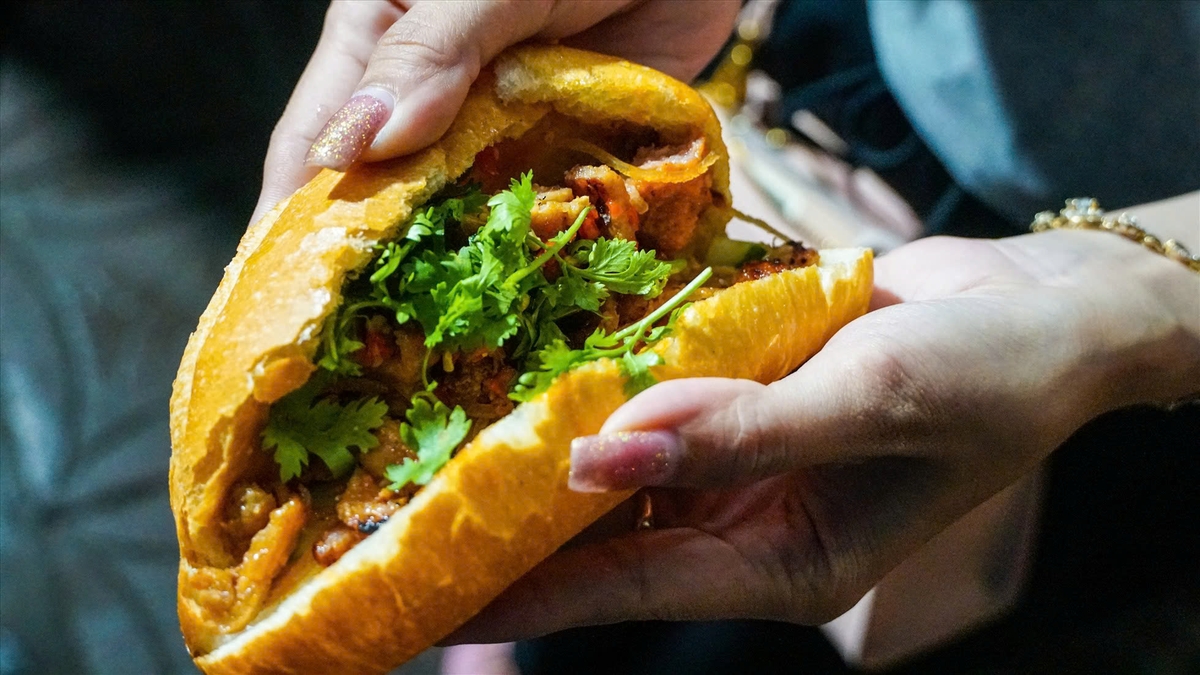
The alleys near my house are so familiar to me that I know them by heart, but even now, each time I walk through them, I still feel a new emotion. Each step reveals a hidden corner of Saigon's face. Here you'll find a humble noodle stall, there a small roadside coffee shop…
Small chairs are placed close together against the wall, with customers sitting shoulder to shoulder, perhaps that's why the conversations they share feel more intimate. Occasionally, you'll come across a small barbershop with just one chair, beckoning customers in.
You sit down and let your eyes drift off as you listen to the barber chatting while cutting your hair—from the neighbor's daughter getting married to the manhunt for a drug lord in the West. You might also chuckle to yourself when you spot a small sign hanging in front of someone's house that says "Hue-style pastry making classes"... These hidden corners reveal a more intimate, authentic Saigon.
One time, while walking, my steps suddenly halted. The gentle sound of a piano drifted from behind a door shaded by a row of tea bushes. Only then did I realize that the sounds of life in these small alleyways, though subtle, were profound enough to stir my heart.
3. The sense of community has transformed me from a transient into a true resident of Saigon's alleyways. From merely observing, I feel a responsibility to contribute to building life here as my second home. This awareness formed naturally within me, without coercion.
I remember one evening, Ms. Xuan, the youth union secretary of the neighborhood, came to my house and invited me to teach at the ward's charity class. I agreed immediately. At that time, I was studying at a teacher training college, a "young teacher" about to graduate. The classroom was the house of Uncle Ba, the neighborhood leader.
The students came from diverse social backgrounds and age groups, each with their own unique and challenging circumstances – that was the general situation in the early years after 1975. And from those evenings in the charity school, I sensed that one day, not far off, dawn would break over the alleyway. A dawn illuminated by the radiant eyes of these children. The alleyway would gradually dispel the darkness. And even now, those eyes still shine brightly in the room of my memories.
Then there were the Mid-Autumn Festival celebrations, where people would contribute mooncakes to poor children or wrap Tet gifts for lonely elderly people… These community connections brought the residents of the alley closer together. People who were once strangers in the alley are now as close as a full bowl of water. When Aunt Six passed away, almost everyone in the alley came to pay their respects.
We bid farewell to Aunt Six as if she were a close relative. Or the day Ms. H. from across the street got married, we set up a tent and sang and celebrated like it was a festival. Back then, we were poor, and not everyone could afford a wedding reception. But thanks to those memories, we'll cherish them forever. Now, when we meet and reminisce about the old days, Ms. H. gets teary-eyed. The small alley was full of warmth and kindness. The alley felt like home. So many people from the alley grew up and went far away, but their hearts remained.
I think it would be very interesting to conduct a survey on the lifestyles of Saigon's alleyway residents. Perhaps 70-80% of Saigon's population lives in alleyways. These alleyways are the defining characteristic of Saigon's lifestyle, the very soul of Saigon.
Source: https://tuoitre.vn/hem-pho-hon-nguoi-20260202174910462.htm
![[Photo] Prime Minister Pham Minh Chinh receives the Chinese Ambassador to Vietnam](https://vphoto.vietnam.vn/thumb/1200x675/vietnam/resource/IMAGE/2026/04/05/1775397481797_ndo_br_dsc-5512-jpg.webp)





































































Comment (0)