

Like a "shining gem" in the night, the Presidential Palace, after the installation of its new lighting system, seems to have "donned a new coat," especially in preparation for the 79th anniversary of National Day on September 2nd.
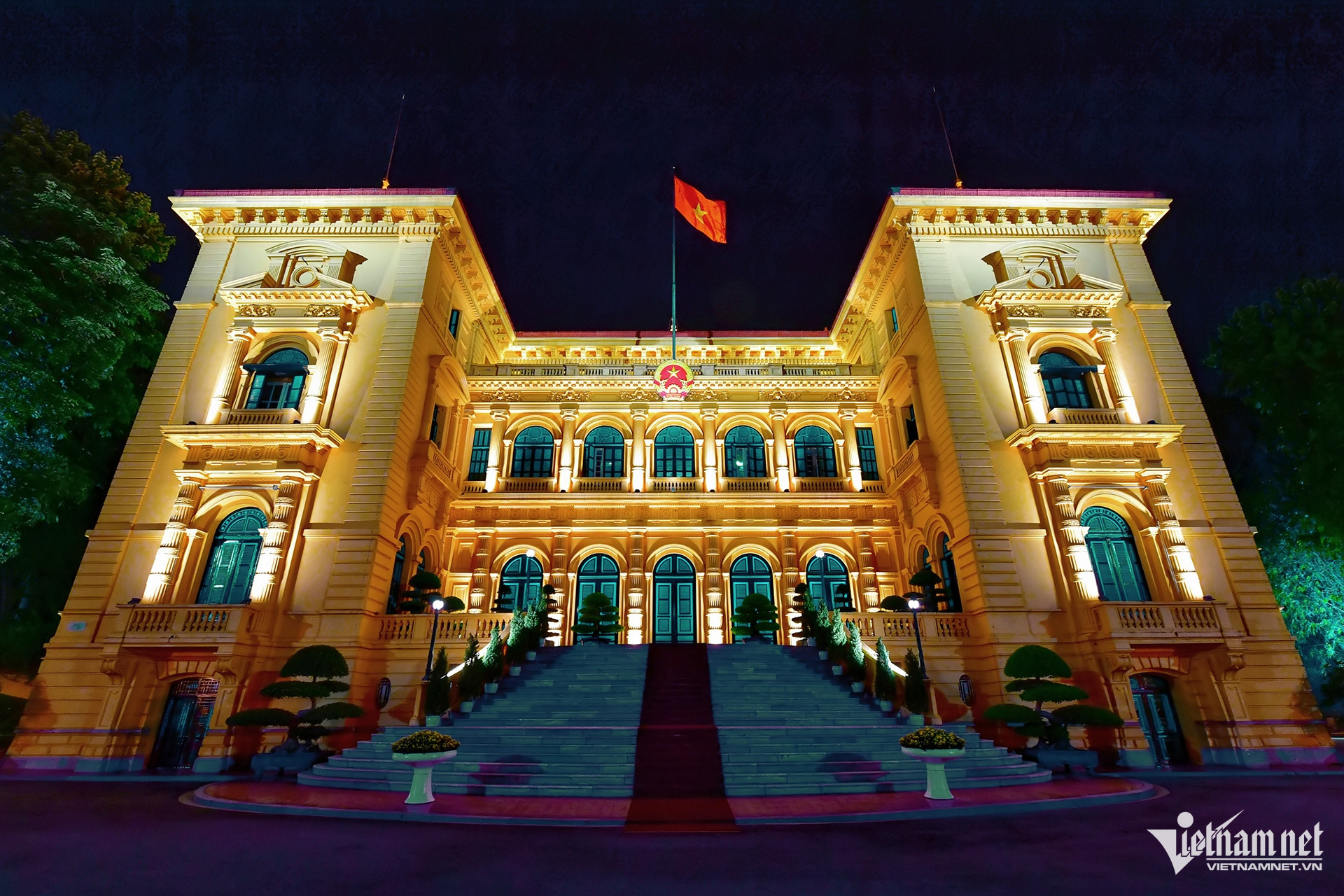 As Hanoi descends into night, many historical sites and buildings shine with dazzling lighting systems, creating a breathtaking spectacle. During the historic month of August, locals and tourists passing along Hung Vuong Street are impressed by the sight of the Presidential Palace each evening, adorned with a new lighting system.
 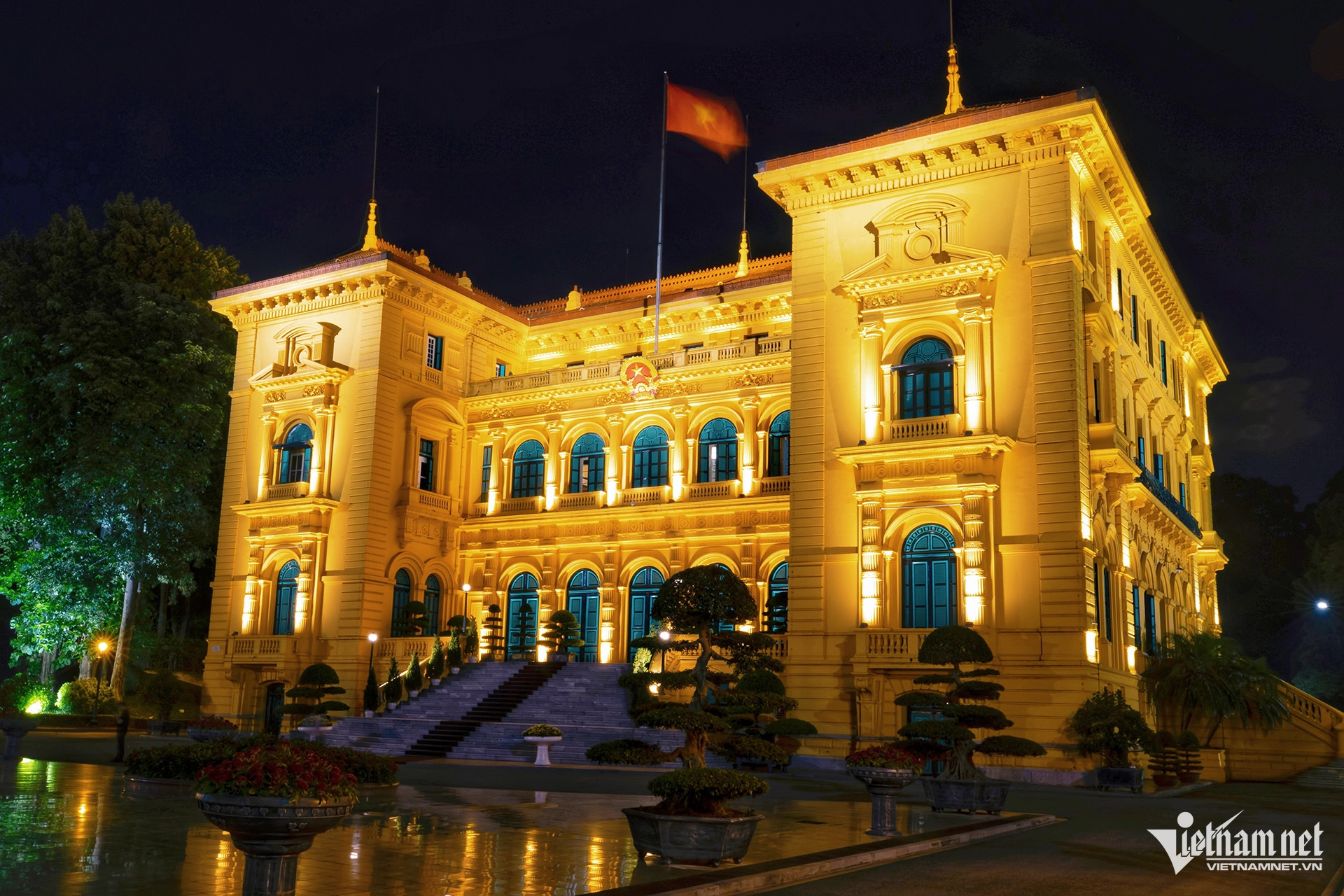 Seen from afar, the Presidential Palace resembles "a shining gem" adorning the landscape of the Ba Dinh political district. Even during the day, hundreds of locals and tourists visit every evening to admire and photograph the Presidential Palace, which stands out prominently in the night sky.
 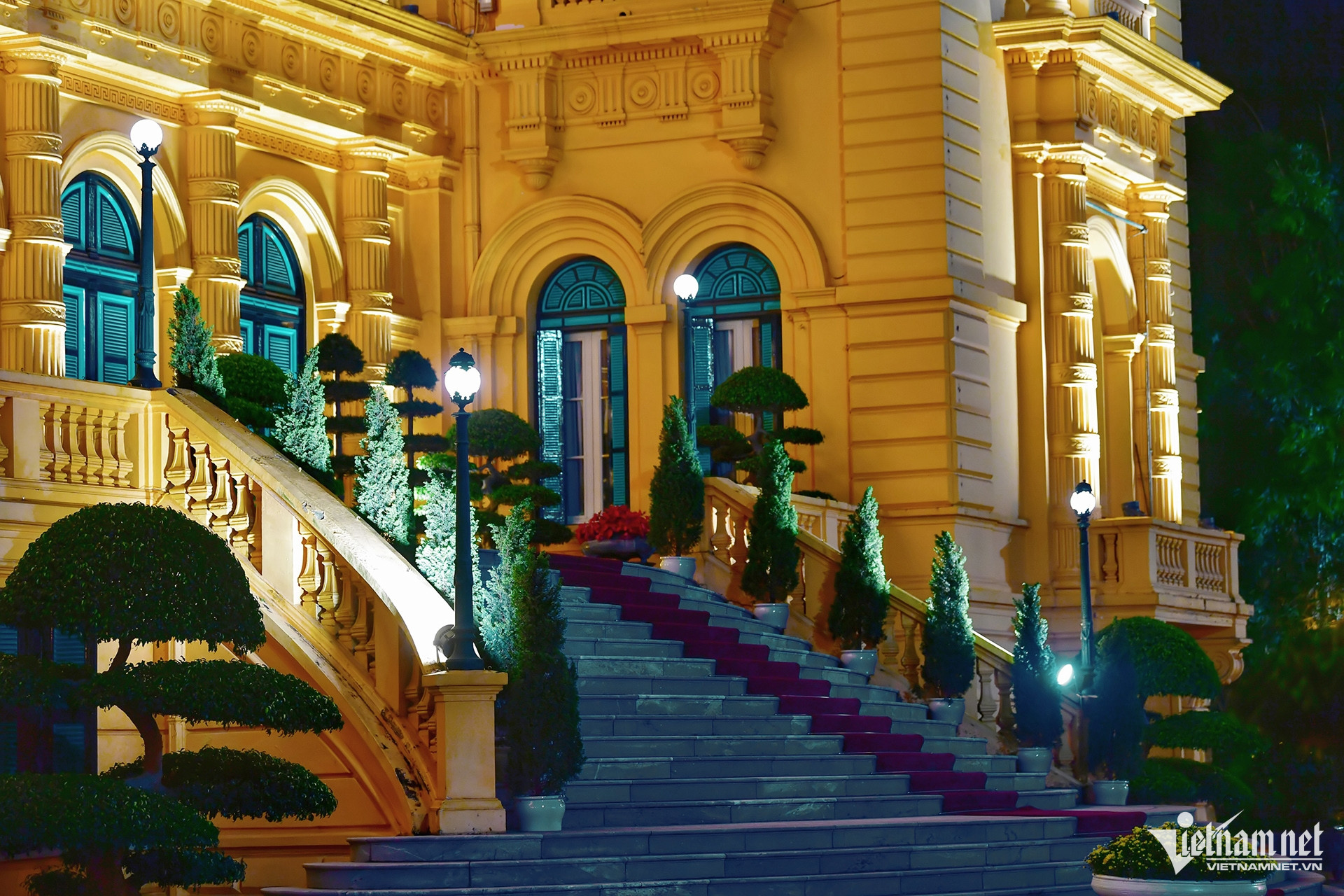 To commemorate the 79th anniversary of the August Revolution and National Day on September 2nd , and the 70th anniversary of the Liberation of Hanoi, the Office of the President decorated the Presidential Palace with a new lighting system. After 36 hours of installation, the lighting system was officially put into operation on August 26th.
 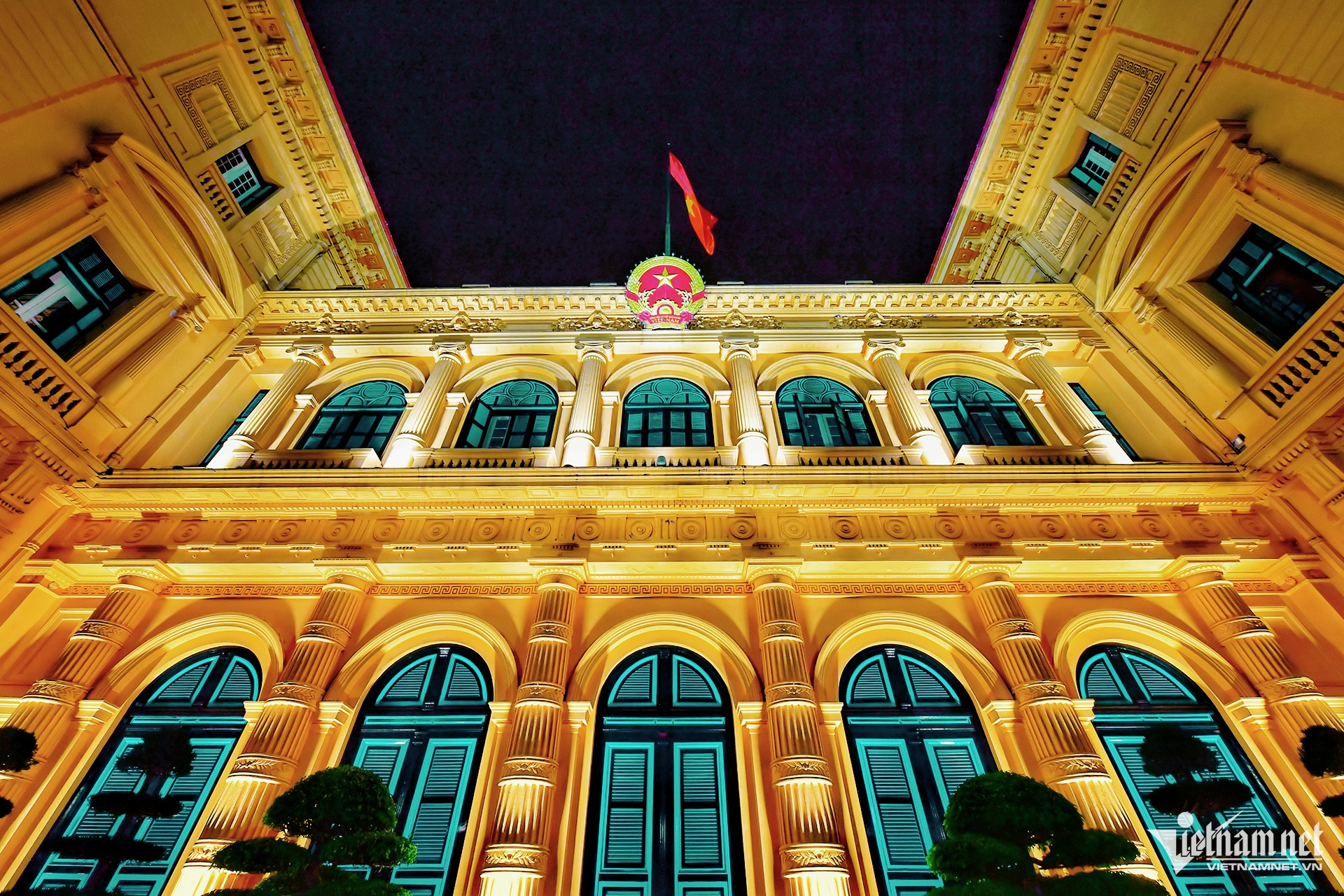 With its French-style architecture, the new lighting system, using warm yellow accent lights, preserves the building's color at night while highlighting its details, patterns, and overall design. The new lighting system is also more artistic; even from a distance, one can discern the meticulously crafted details, patterns, and lines.
  Even in the evening, the national emblem and the building's design stand out clearly and distinctly when illuminated.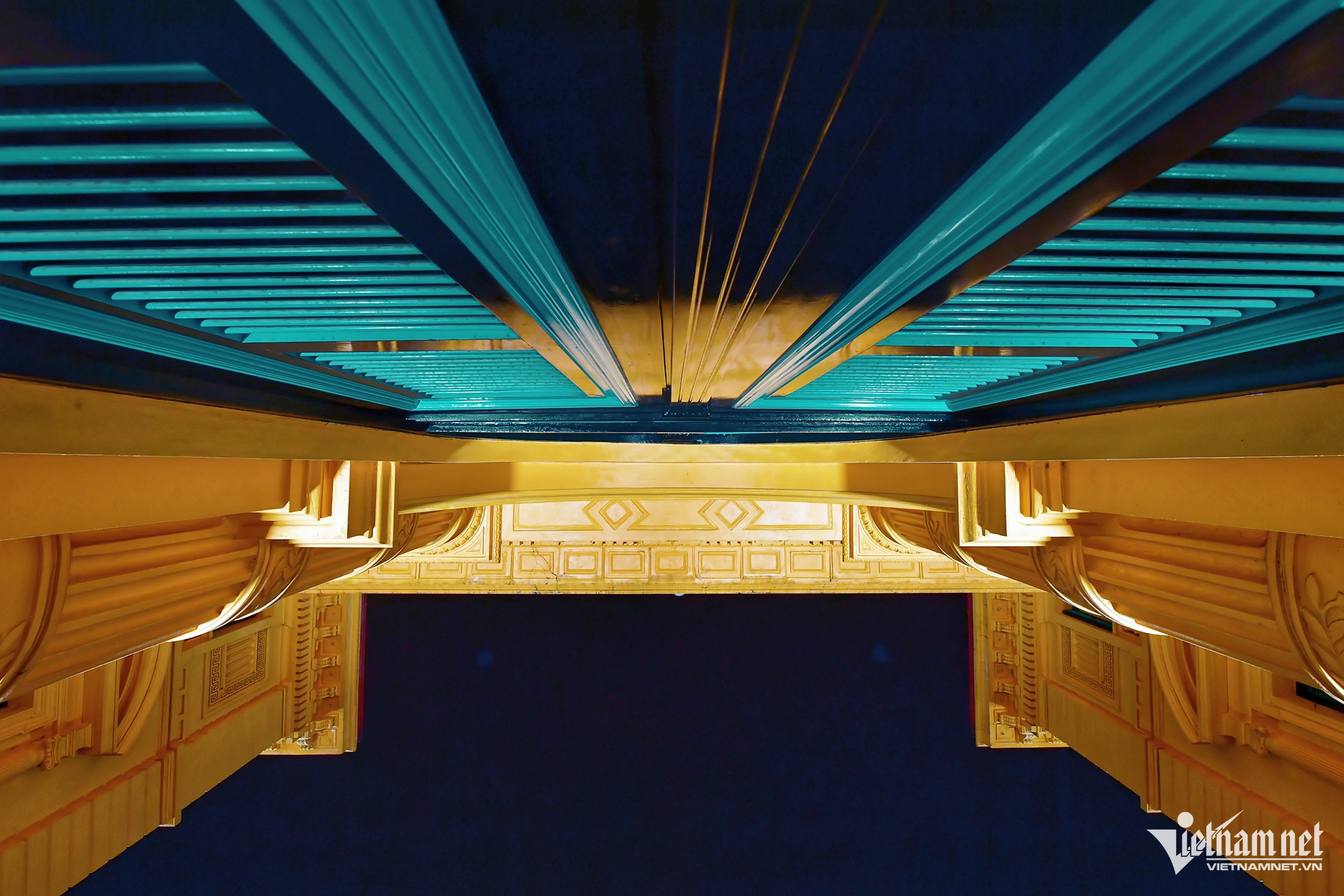
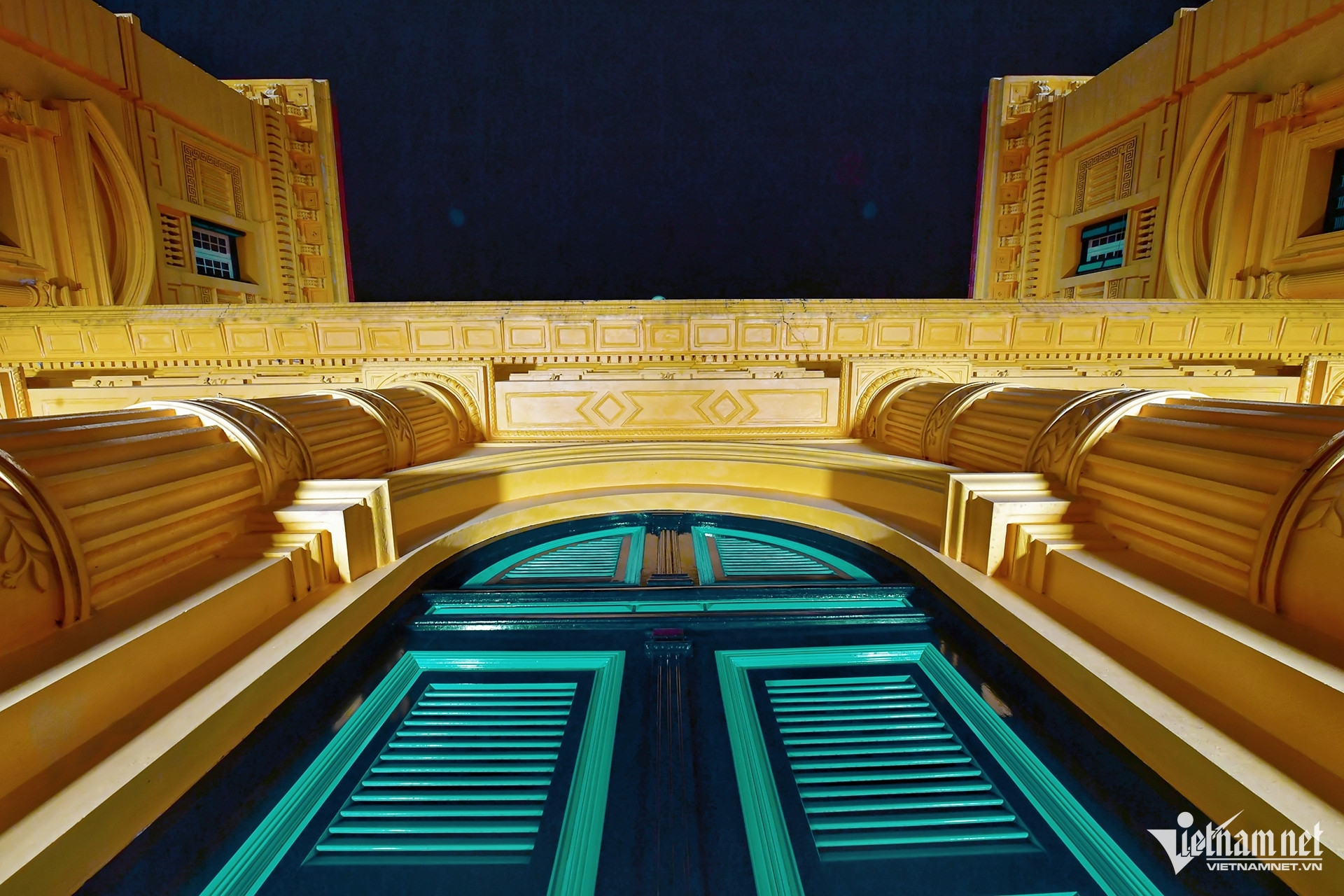
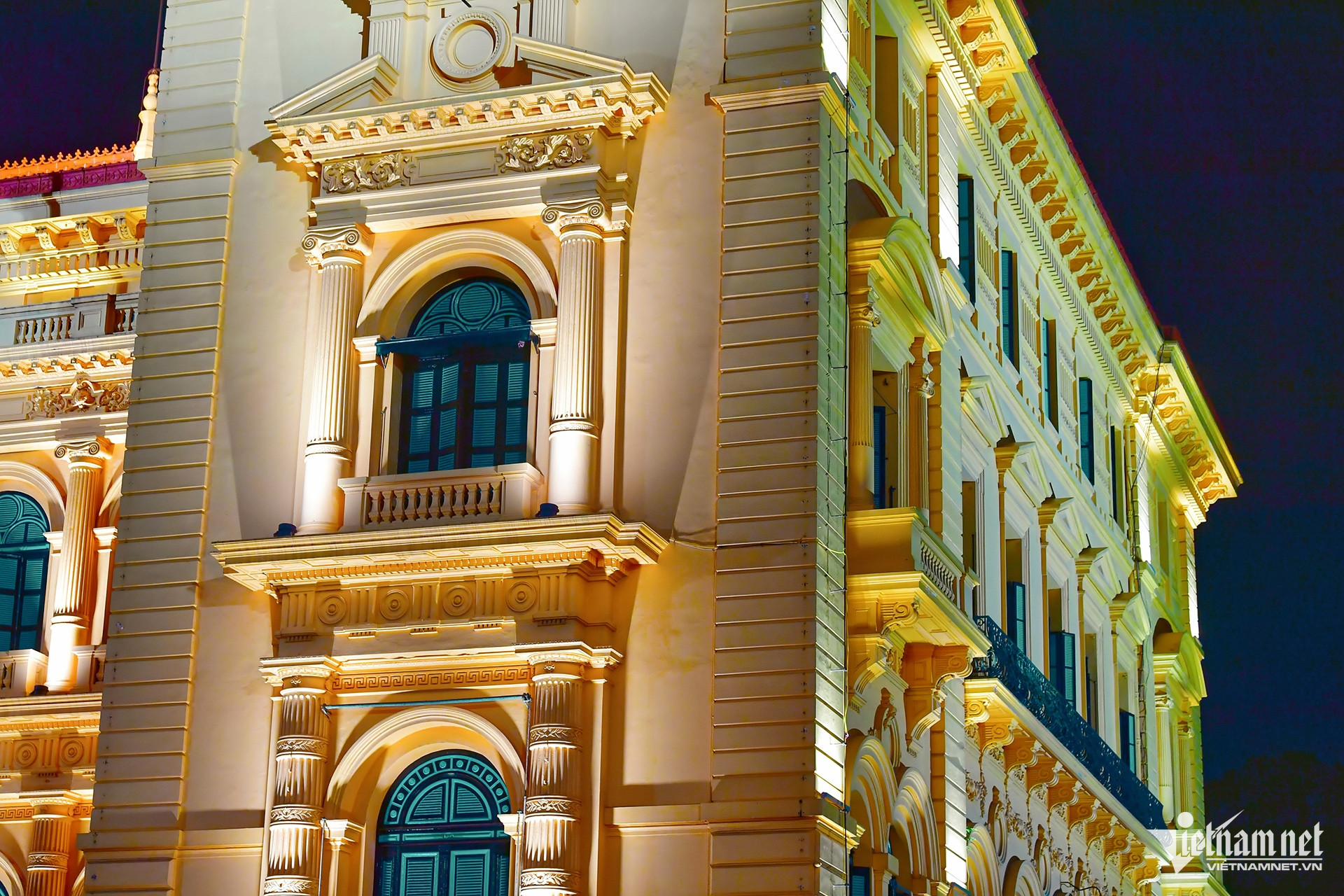
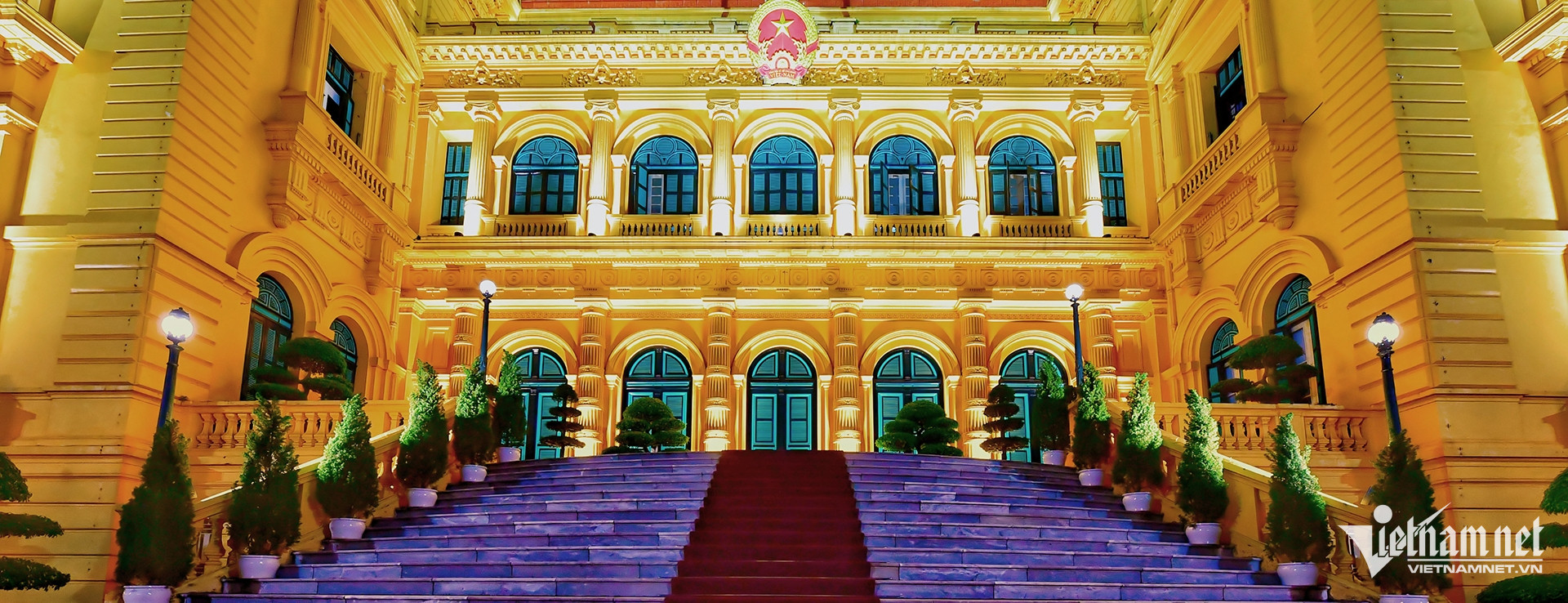 In addition, the landscaping and greenery within the Presidential Palace grounds are illuminated by a system of white lights, providing a backdrop for the main building. This lighting system operates from 6:30 PM to 11:00 PM every night and is only used on special and important national occasions.
 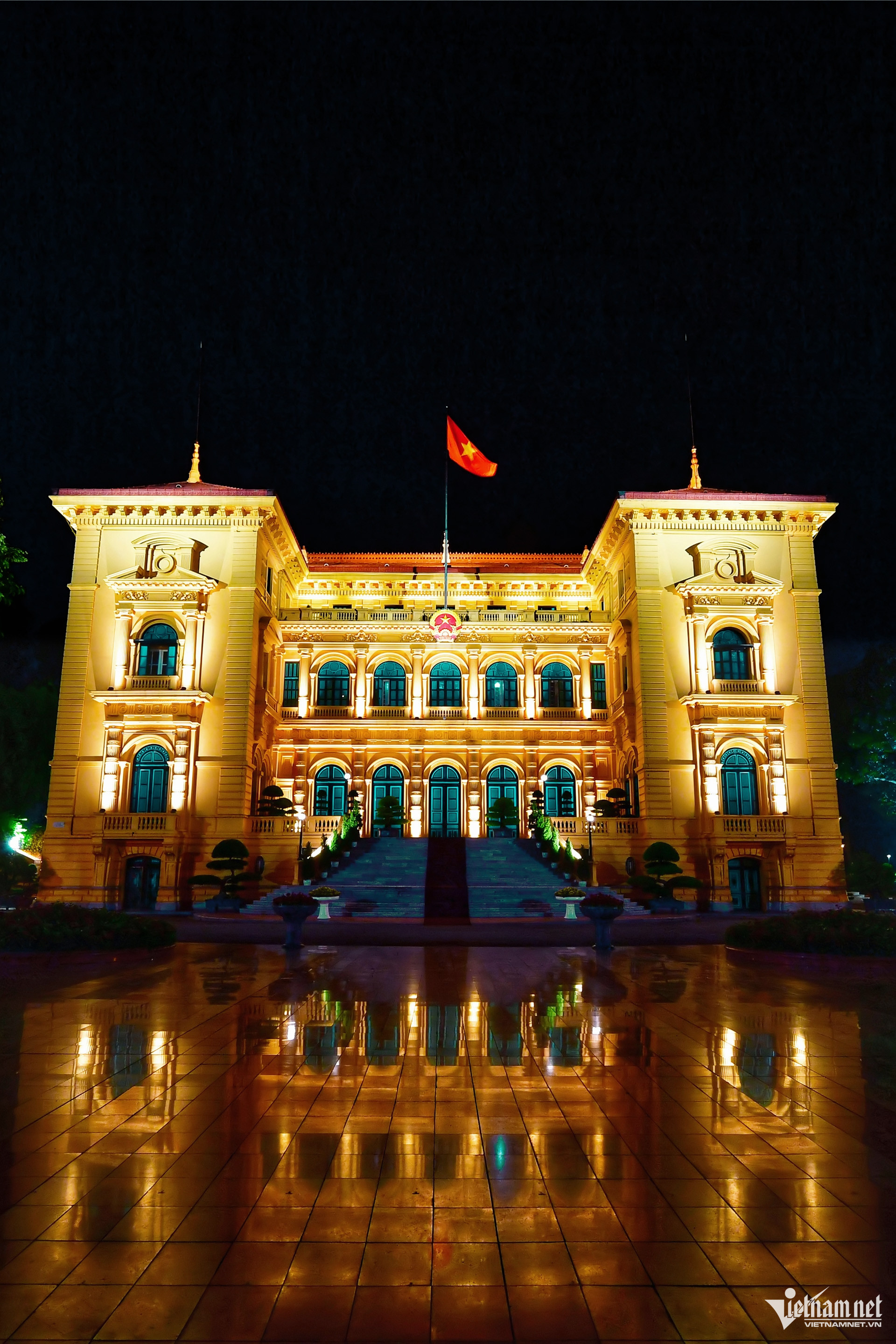 After its inauguration, senior leaders, officials, staff of the Office of the President , and the public felt that the Presidential Palace had "put on a new coat of light," solemn yet subtle and approachable.
 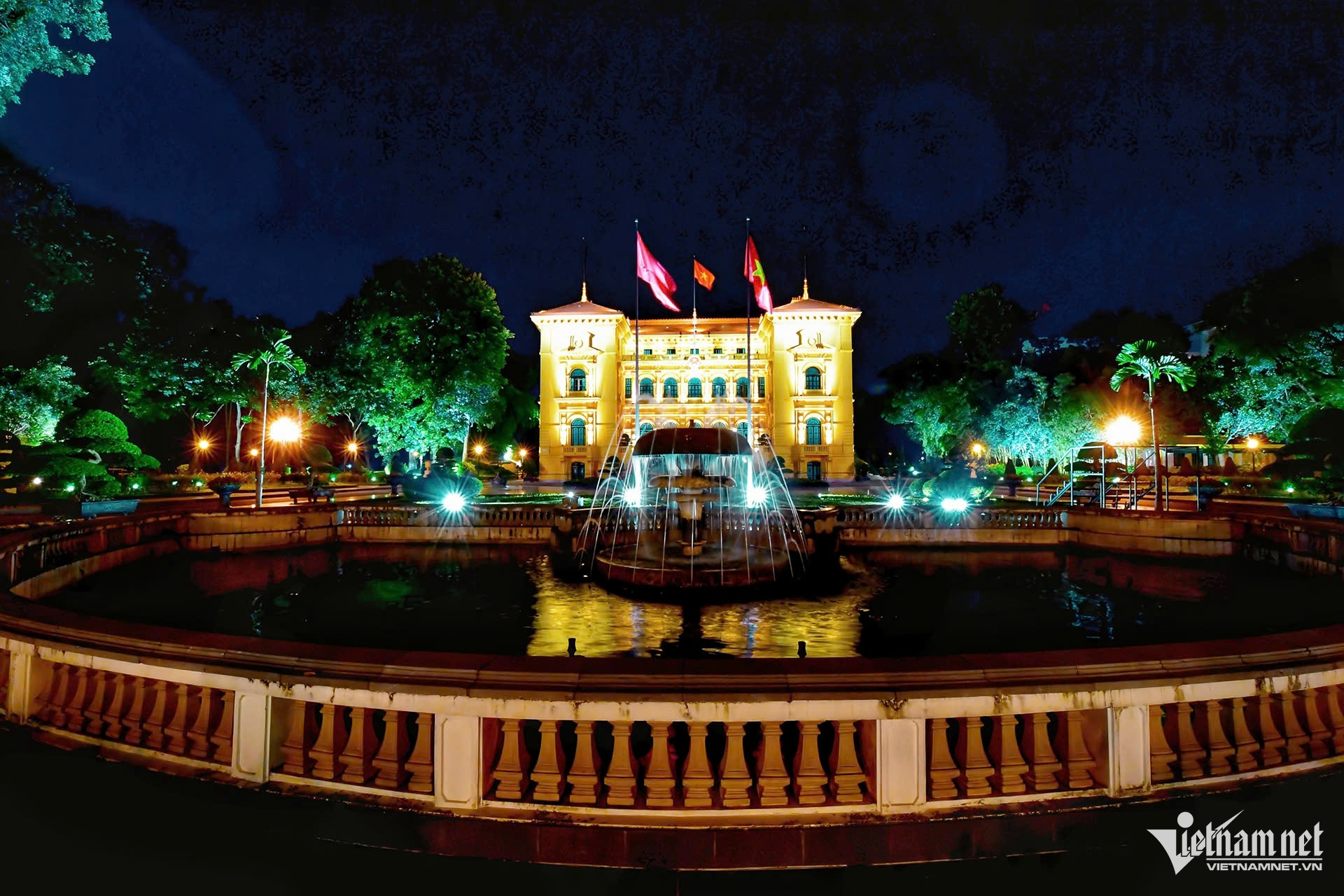 The Presidential Palace is the workplace of the President and Vice President, and important activities of our Party and State are still conducted solemnly here.
  The Presidential Palace, along with the Ho Chi Minh Mausoleum, the National Assembly building, and other surrounding historical sites, has become an indispensable tourist attraction for Vietnamese people, soldiers, and international visitors whenever they visit the capital city.
 Looking back at history, on October 10, 1954, Hanoi was liberated, and President Ho Chi Minh, along with the Government and the Central Committee of the Party, returned to the capital from the Viet Bac war zone. According to the introduction at the Ho Chi Minh Presidential Palace historical site, President Ho Chi Minh once said: “Previously, this was the Governor-General's Palace, but the construction of this architectural work was done by the hands of Vietnamese craftsmen. Now that the people are free and the country is independent, the ownership of this building must belong to the people.” He proposed using the building as a workplace and reception area for the Government and State of Vietnam. From then on, the building was called the Presidential Palace. The Presidential Palace has become one of the memorial sites related to him, classified by the State as a particularly important historical site. Currently, this building is the workplace of the President and Vice President, and important domestic and foreign activities of the Party and State are still conducted solemnly here.
Vietnamnet.vn
Source: https://vietnamnet.vn/phu-chu-tich-khoac-chiec-ao-anh-sang-moi-2316553.html


























![[Photo] Closing Ceremony of the 15th Conference of the Central Committee of the 13th Party Congress](https://vphoto.vietnam.vn/thumb/402x226/vietnam/resource/IMAGE/2025/12/23/1766462841764_a1-bnd-3731-1647-jpg.webp)














Comment (0)